wayground logo

Free Printable Worksheets

Font size

S
M
L
XL
Worksheets

EOY Review 1

Total questions: 150

Worksheet time: 3hrs 30mins

Name
Class
Date
1.

This macromolecule carries hereditary information and instructions for building molecules

a)

carbohydrate

b)

lipids

c)

protein

d)

nucleic acid

2.

Which of the following statements is true about catalysts (enzymes)?

a)

Catalysts slow down the rate of chemical reactions.

b)

Enzymes help regulate pH.

c)

Catalysts are used up during a chemical reaction.

d)

Catalysts lower the activation energy of a chemical reaction.

3.

An enzyme and substrate can be compared to

a)

lock and key

b)

a faucet

c)

a door hinge

d)

light switch

4.
What type of macromolecule are enzymes?
a)
Protein
b)
Carbohydrate
c)
Lipid
d)
Nucleic Acid
5.
What is the purpose  of an enzyme?
a)
give permission for the reaction
b)
raise activation energy
c)
speed up reactions
d)
control how many reactions occur
6.
After the enzyme and substrate bind together and perform the reaction, what does the substrate become?
a)
a substrate
b)
an enzyme
c)
a product
d)
an active site
7.
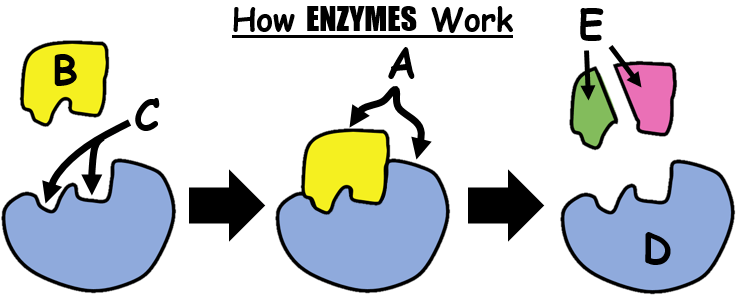
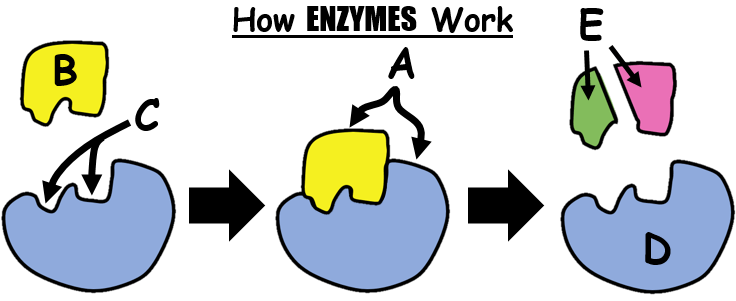
Letter D...
a)
active site
b)
enzyme
c)
substrate
d)
products
8.
Letter B...
a)
active site
b)
enzyme
c)
substrate
d)
products
9.

Changes in pH and temperature can ___________________ an enzyme which causes it to lose its shape and affects its function.

a)

puncture

b)

denature

c)

double

d)

delete

10.

Which macromolecule is used as our main source of energy?

a)

Lipids/Fats

b)

Nucleic Acids

c)

Proteins

d)

Carbohydrates

11.
Monosaccharides are monomers of
a)
Carbohydrates
b)
Lipids
c)
Proteins
d)
Nucleic Acids
12.
Proteins are made of monomers called ___________
a)
Nucleotides
b)
Monosaccharides
c)
Amino Acids
d)
Glycerol and fatty acids
13.
_________ are composed out of carbon (C), hydrogen (H), oxygen (O), nitrogen (N), and phosphorus (P)
a)
Carbohydrates
b)
Lipids
c)
Proteins
d)
Nucleic Acids
14.
Waxes, oils and fats are examples of
a)
Carbohydrates
b)
Lipids
c)
Proteins
d)
Nucleic Acids
15.
Which macromolecule is shown?
 View Figure 3 (if not visible)
a)
lipid
b)
protein
c)
nucleic acid
d)
carbohydrate
16.
Which macromolecule is shown?
 View Figure 4 (if not visible)
a)
lipid
b)
protein
c)
nucleic acid
d)
carbohydrate
17.
Proteins are made of... 
a)
C H O
b)
C H O N
c)
C H O N P
d)
C H O N S
18.
What 3 letters do enzymes typically end in?
a)
-ose
b)
-ase
c)
-ese
d)
-tic
19.

Refer to the figure above. What temperature would be considered the optimum temperature for this enzyme's activity rate?

a)

20 Degrees Celsius

b)

60 Degrees Celsius

c)

40 Degrees Celsius

d)

30 Degrees Celsius

20.

Which of the following macromolecules are a prominent part of animal tissues that function in insulation, helping animals conserve heat?

a)

Proteins

b)

Lipids

c)

Carbohydrates

d)

Nucleic Acids

21.

Which of the following is NOT a function of proteins?

a)

Make up antibodies

b)

Serve as catalysts that control the rate of chemical reactions in the cell

c)

Store genetic information

d)

Form parts of tissues such as bone and muscle

22.

According to the graph, addition of the enzyme amylase causes the reaction to -

a)

slow down

b)

speed up

c)

take in heat

d)

give off heat

23.

Select polymers

a)

Nitrogen

b)

Amino acids

c)

Nucleic acids

d)

Glucose

e)

Cellulose

24.

Select examples of lipids

a)

cholesterol

b)

waxes

c)

amino acids

d)

saturated fat

25.
What is the monomer of carbohydrates?
a)
Amino Acid
b)
Nucleic Acid
c)
Triglyceride
d)
Monosaccharide
26.
What type of molecule is this?
a)

protein

b)

carbohydrate

c)

lipid

d)

nucleic acid

27.

This macromolecule is made of CHO and provides quick energy to the cell.

a)

carbohydrates

b)

proteins

c)

nucleic acids

d)

lipids

28.

Unsaturated fats are lipids that are ____ at room temperature?

a)

solid.

b)

liquid.

c)

gas.

29.

This macromolecule can form many highly complex structures.  Some of the many functions include structural support, speed up chemical reactions, and cell membrane channels.

a)

carbohydrates

b)

proteins

c)

nucleic acids

d)

lipids

30.
This molecule is a ____.
a)
adenosine triphosphate
b)
polysaccharide
c)
phospholipid
d)
nitrogen base
31.
What type of fatty acid is shown here?  Note that the (b) is just another way of showing the same thing as (a)
a)
saturated
b)
unsaturated
32.
The molecule show is a ______ and is the building block of _____.
a)
monosaccharide, carbohydrate
b)
fatty acid, lipid
c)
nucleotide, nucleic acids
d)
amino acid, protein
33.
What type of carbohydrate is shown?
a)
monosaccharide
b)
disaccharide
c)
polysaccharide
34.
The molecules shown here are all examples of _____.
a)
polypeptides
b)
disaccharides
c)
polysaccharides
d)
triglycerides
35.
Which macromolecule is shown?
a)
lipid
b)
protein
c)
nucleic acid
d)
carbohydrate
36.
Identify the macromolecule in the picture
* cholesterol and triglycerides
a)
carbohydrate
b)
protein
c)
lipid
d)
nucleic acid
37.
Contains a phosphate, sugar and nitrogen base
a)
nucleic acid
b)
lipid
c)
carbohydrate
d)
protein
38.
Which macromolecule is shown in the image?
a)
Carbohydrate
b)
Lipid
c)
Protein
d)
Nucleic Acid
39.
Which macromolecule is shown in the image?
a)
Carbohydrate
b)
Lipid
c)
Protein
d)
Nucleic Acid
40.
Which macromolecule is shown in the image?
a)
Carbohydrate
b)
Lipid
c)
Protein
d)
Nucleic Acid
41.

What is the function of the molecule shown?

a)

make up cell membranes

b)

energy storage in humans

c)

energy shuttle

d)

speed up chemical reactions

42.
Which elements are found in a carbohydrate?
a)
C, H, O (with the same number of C as O)
b)
C, H, O, (with a different numbers of C and O)
c)
C, H, O, N
d)
C, H, O, N, P
43.

What are the monomers that make up lipids?

a)

monosaccharides

b)

glycerols and fatty acids

c)

amino acids

d)

nucleotides

44.
Nucleotides are monomers of
a)
Carbohydrates
b)
Lipids
c)
Proteins
d)
Nucleic Acids
45.
Examples of which biological macromolecule include glucose, fructose, starch, and glycogen?
a)
Lipids
b)
Carbohydrates
c)
Nucleic Acids
d)
Proteins
46.
What does POLY- mean?
a)
Two
b)
A name for a parrot
c)
Many
d)
One
47.
Why are macromolecules also known as "polymers?"
a)
 Many organisms have macromolecules.
b)
They are large molecules added together. 
c)
There are many types of macromolecules. 
d)
They are large molecules made up of many monomers.
48.
_______ is a carbohydrate that forms plant cell walls, and _______ makes hard shells.
a)
Chitin, cellulose
b)
Phospholipid, chitin
c)
Cellulose, chitin
d)
Amino acid, phospholipid
49.
__________________ provide us with quick energy, while _________________ are our secondary energy source.
a)
Lipids, proteins
b)
Carbohydrates, nucleic acids
c)
Proteins, carbohydrates
d)
Carbohydrates, lipids
50.

If this property of a protein is changed, the protein will denature and will no longer function properly

a)

Number of carbon and hydrogen atoms

b)

size

c)

shape

d)

color

51.

Oils are liquid at room temperature because they are...

a)

saturated fats

b)

unsaturated fats

c)

have a high boiling point

d)

they are not liquid

52.
Which biomolecule is responsible for insulation and energy storage?
a)
Protein
b)
Nucleic Acid
c)
Lipid
d)
Carbohydrate
53.

Which are examples of proteins?

a)

glucose, pasta, bread

b)

fats, oils, waxes

c)

meats, enzyme, lactase, eggs

d)

DNA, RNA

54.

Which is not a monomer?

a)

Lipids

b)

nucleotide

c)

monosaccharide

d)

amino acid

55.

Which biomolecule makes up cell membranes?

a)

Protein

b)

Carbohydrate

c)

Lipid

d)

Nucleic acid

56.
In an Exergonic reaction, heat is ________.
a)
Absorbed
b)
Created
c)
Destroyed
d)
Released
57.
In an Endergonic reaction, heat is ________.
a)
Released 
b)
Absorbed
c)
Created
d)
Destroyed
58.

Which of the following is(are) true?

a)

Simple sugars are made of polysaccharides.

b)

RNA molecules are made of nucleotides.

c)

Glycerol is made of fatty acids.

d)

Proteins are made of amino acids.

59.

___________a molecule that is present in all living cells and that contains the information that determines the traits a living thing inherits and needs to live.

a)

Cell

b)

Stimulus

c)

Homeostasis

d)

DNA

60.
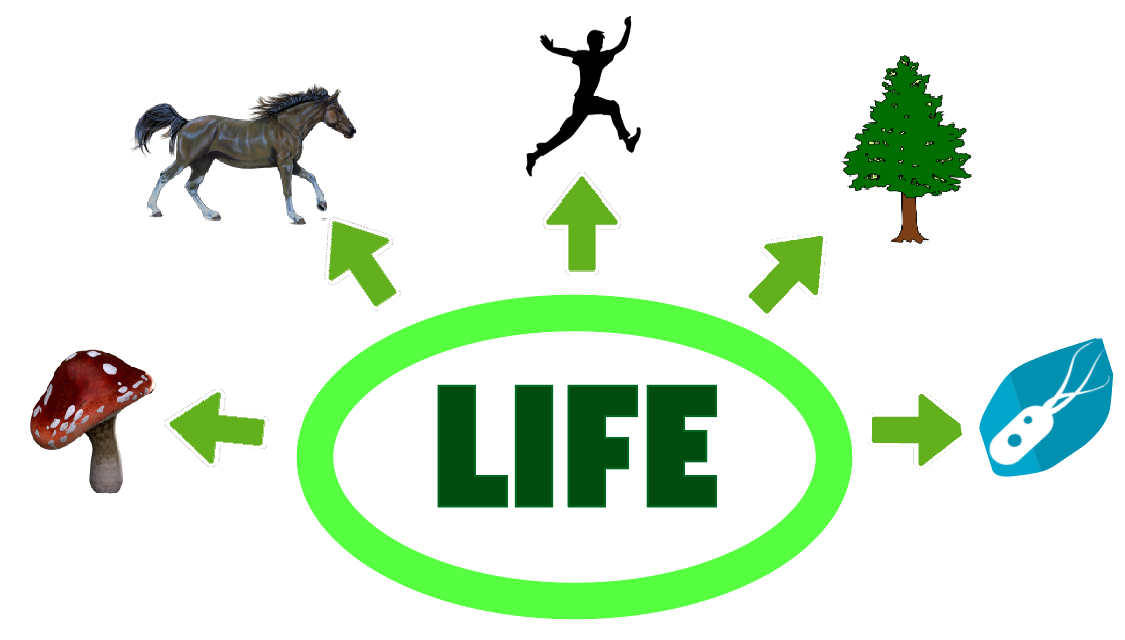
When you step out into the cold, your body shivers in order to keep its temperature at 98.6F.
a)
All living things use energy
b)
All living things contain cells
c)
All living things maintain homeostasis
d)
All living things grow
61.

Plants produce their own food through the process of photosynthesis.
a)
All living things use energy
b)
All living things contain cells
c)
All living things maintain homeostasis
d)
All living things grow
62.
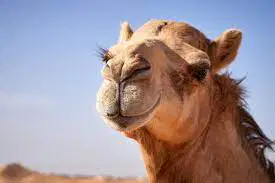
A camel has eyelashes that work to keep the dust and sand out of its eyes.
a)
All living things adapt to their environment
b)
All living things grow
c)
All living things have cells
d)
All living things use energy
63.
Over three years, Tim's height has increased from 5'4" to 5'11".
a)
All living things contain cells
b)
All living things maintain homeostasis
c)
All living things use energy
d)
All living things grow
64.
The roots of a plant grow towards a source of ground water.
a)
All living things use energy
b)
All living things reproduce
c)
All living things respond to their environment
d)
All living things grow
65.
YOU are a multi-celled organism but an amoeba is a single celled organism.
a)
All living things have cells
b)
All living things grow
c)
All living things use energy
d)
All living things respond to their environment
66.
Rocks are not living because
a)
they never move
b)
they aren't needed for humans
c)
they are not made of cells
d)
they don't break down
67.
The basic unit of structure and function in the human body is the....
a)
organ
b)
organ system
c)
cell
d)
tissue
68.
Which is an example of an organism?
a)
a beetle
b)
a lake
c)
a rock
d)
a shell
69.
What is the dependent variable on the graph (y-axis)?
a)
Metro Bicycle Shop Weekly Sales
b)
Bicycles Sold
c)
Types of Bicycles
70.

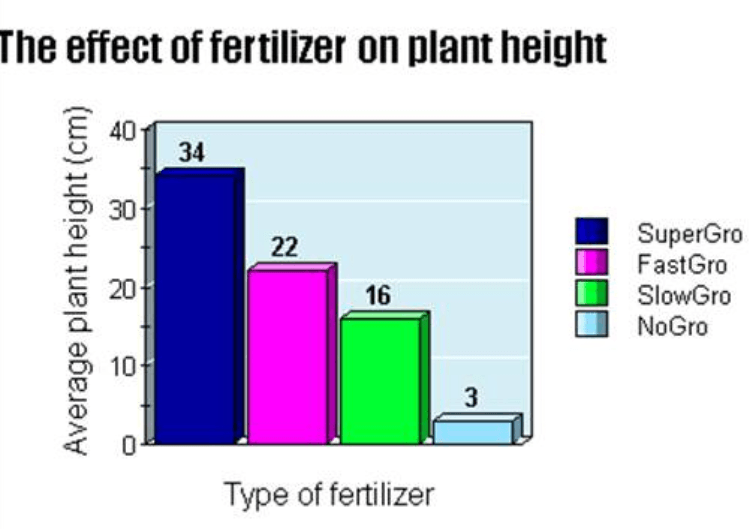
What is the independent variable?

a)

Type of fertilizer

b)

Average plant height

c)

The effect of fertilizer on plant height

d)

The effect of plant height on fertilizer

71.
The independent variable is the ONE thing you _____.
a)
change on purpose
b)
control or keep constant
c)
measure
72.

The variable that is being measured or observed is called the _______________. Hint: this is the variable that is the result or effect

a)

independent variable

b)

dependent variable

c)

control variable

73.

How many independent variables should you have in an experiment?

a)

two

b)

as many as possible

c)

four

d)

one

74.
Josie was performing an experiment where she grew the same kind of tomatoes in the same soil and amount of water.  She sat one in the sun and one in a closet for 14 days.  What is the independent variable in Josie's experiment?
a)
tomatoes
b)
soil
c)
sunlight
d)
water
75.

Which of the following shows the correct sequence for the scientific method inquiry?

a)

Conclusion, Experimentation, Hypothesis, Observation

b)

Observation, Experimentation, Hypothesis, Conclusion

c)

Observation, Hypothesis, Experimentation, Conclusion

d)

Experimentation, Conclusion, Observation, Hypothesis

76.
A series of steps used by scientists to solve a problem or answer a question. 
a)
scientific method
b)
recipe
c)
data collection
d)
metric system
77.

A baby song bird hatches from its egg with both parent songbirds watching. Which characteristic of life does this represent?

a)

All living things reproduce

b)

All living things maintain homeostasis

c)

All living things use energy

d)

All living things grow

78.

The following are all characteristics of life EXCEPT:

a)

made of cell(s)

b)

eat food

c)

respond stimuli

d)

reproduce

79.

Which item listed is NOT a characteristic of life?

a)

adjusting to stimuli

b)

getting and using energy

c)

growing and developing

d)

breathing

80.
A reaction to a stimulus is a ______________.
a)
hiccup
b)
response
c)
metabolism
d)
homeostasis
81.

Which organelle contains genetic material?

a)

Endoplasmic Reticulum

b)

Golgi Complex

c)

Nucleolus

d)

Nucleus

82.
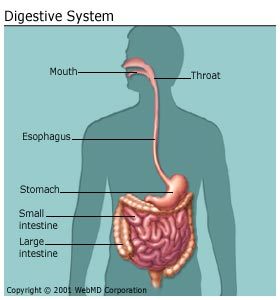
This is a example of ........
a)
cell
b)
tissue
c)
organ 
d)
organ system
83.

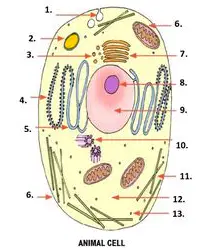
Which organelle supplies energy to the cell?
a)
Endoplasmic Reticulum
b)
Nucleus
c)
Mitochondria
d)
Nucleolus
84.
What is the function of the vacuole?
a)
Sac that stores water, nutrients, and waste products
b)
Sac filled with digestive chemicals
c)
Jelly-like substance within the plasma membrane
d)
stack of membranes that packages chemicals
85.

What is the function of structure 8?

a)

Structure that organizes number of chromosomes. 

b)

Site of ribosome synthesis

c)
Membrane that surrounds and protects the cell 
d)

Packages and exports proteins

86.

I make proteins for the cell by joining amino acids together. What am I?

a)
ribosome
b)
mitochondria
c)
chloroplast
d)
lysosome
87.

What structure is shown in Diagram B?

a)

Cilia

b)

Flagella

c)

Pseudopod

d)

Nucleus

88.
What can only be found in plant cells?
a)
Cell membrane
b)
Vacuole
c)
Chloroplast
d)
Mitochondrion
89.
The two kinds of cells are Prokaryotes and Eukaryotes. How are they different?
a)
Prokaryotes have a nucleus.
b)
Eukaryotes have a nucleus.
c)
Prokaryotes are plant cells.
d)
There is no difference.
90.
What is the correct order of organization
a)
tissues-cells-organs-organ systems-organism
b)
cell-tissue-organs-organ systems-organism
c)
organism-cells-tissues-organ systems-organism
d)
tissues-cells-organs-organ sytems-organism
91.
What cell part is NOT found in all cells?
a)
Cell Wall
b)
Cell Membrane
c)
Cytoplasm
d)
Genetic Material
92.
Complex cell. Can be plant or animal. Contains membrane bound organelles. 
a)
Eukaryotic Cell
b)
Prokaryotic Cell
c)
Bacteria
d)
Blood cell
93.

This organelle takes food and turns it into ATP ENERGY for plant and animal cells.
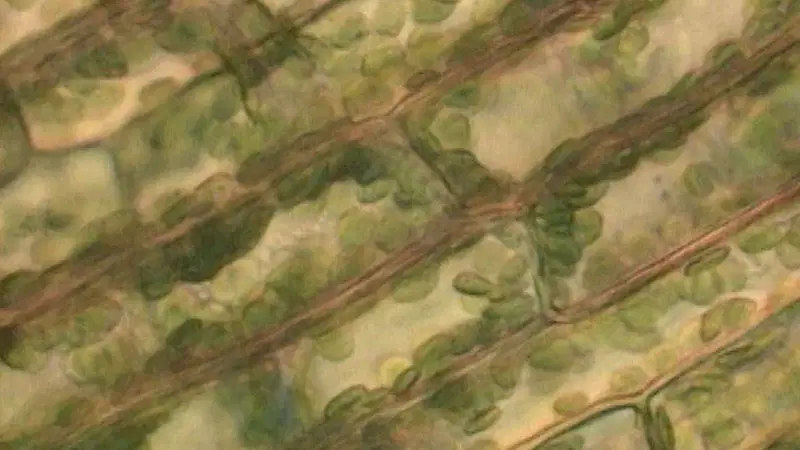
a)
Chloroplast
b)
Mitochondria
c)
Lysosome
d)
Ribosome
94.
The site of photosynthesis
a)
ribosome
b)
mitochondria
c)
chloroplast
d)
nucleus
95.

Ribosomes are found on the Rough Endoplasmic Reticulum and _________.

a)
Golgi body
b)

Smooth ER

c)

Outside the cell membrane

d)

Cytoplasm

96.

A rigid layer that lies outside the plant cell's membrane is...

a)
Cytoskeleton
b)
Cilia
c)
Cell Wall
d)
Flagella
97.
Only eukaryotic cells have....
a)
membrane-bound organelles 
b)
DNA
c)
ribosomes
d)
cell membranes 
98.

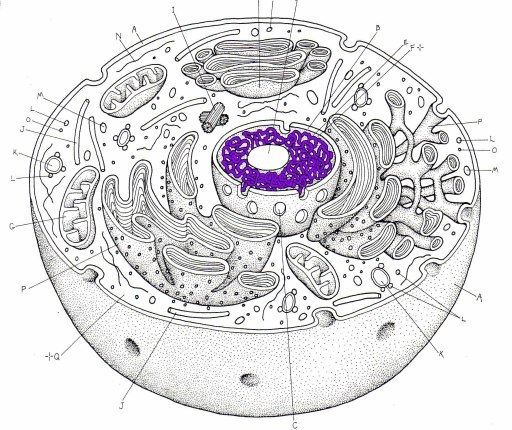
What is #11?

a)

Golgi bodies

b)

smooth endoplasmic reticulum

c)

rough endoplasmic reticulum

d)

Nucleus

e)

Nucleolus

99.
What is the fluid inside a cell called? 
a)
Endoplasimic Reticulum
b)

Cytoskeleton

c)
Water
d)
Cytoplasm
100.
Which of these is NOT a part of the Cell Theory?
a)
All cells are independent.
b)
Cells are the basic unit of living things. 
c)
All living things are one or more cells.
d)
Cells come from cells.
101.
This organelle eliminates waste. 
a)
Nucleus
b)
ER
c)
Vacuole
d)
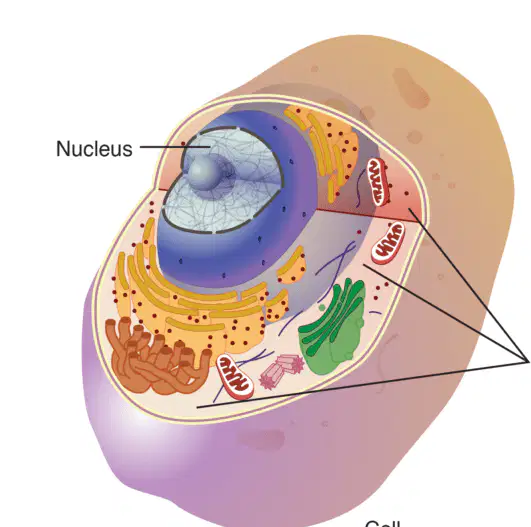
Lysosome
102.
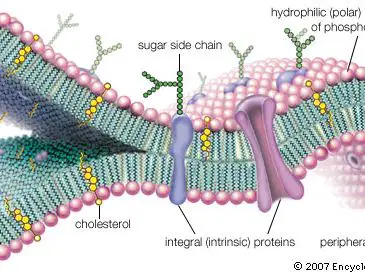
This is a double layer of phospholipids that creates a barrier between the cells internal and external environments; it controls what comes in or out of the cell (selective permeable)
a)
Nucleus
b)
Cilia
c)
Cell membrane
d)
Flagella
103.

Which statement IS a part of Cell Theory?

a)

Only animals are made of one or more cells.

b)
The cell is the basic unit of structure and function in all living things.
c)
All organisms are made of many cells.
d)

Cells come from non-living factors.

104.

Which type of cell is this?

a)

Prokaryotic Cell

b)

Eukaryotic Cell

105.
I am the organelle that makes proteins and lipids.
a)
endoplasmic reticulum
b)
ribosome
c)
nucleus
d)
microtubules
106.
I help to keep the shape of the cell and maintain structure.
a)
cytoplasm
b)
nucleus
c)
vesicle
d)
cytoskeleton
107.

My job is to package proteins into vesicles for transport throughout the cell.

a)
ribosome
b)

Golgi body

c)
endoplasmic reticulum
d)
nucleus
108.
What is true of plant cells compared to animal cells?
a)
Animal cells are more box-shaped.
b)
Plant cells are more rounded.
c)
Plant cells are more box-shaped.
d)
Plant cells are larger.
109.
Bacteria are made of __________________ cells.
a)
plant
b)
animal
c)
prokaryotic 
d)
eukaryotic
110.

The first statement of Cell Theory states that all living things are made of ____________.

a)

one or more cells

b)

multiple cells

c)

one cell

d)

atoms

111.

The second statement in Cell Theory says that cells are the basic unit of structure and ___________ /organization in all living things.

a)

function

b)

support

c)

energy

d)

life

112.

The third statement of Cell Theory states that all cells come from ____________.

a)

no where

b)

parents

c)

pre-existing cells

d)

thin air

113.

Robert Hooke looked at _____________ under the microscope and saw the first cells.

a)

plants

b)

bacteria

c)

animals

d)

cork tissue

114.

Anton van Leeuwenhoek saw the first _____________ cells.

a)

non-living

b)

living

c)

dead

d)

divided

115.
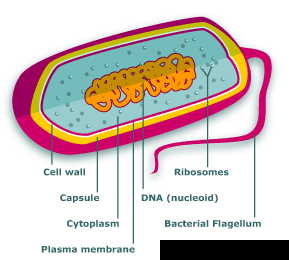
Which type of cell?
a)
Prokaryote
b)
Eukaryote
116.
Where is the DNA found in a prokaryotic cell? 
a)
floating around in the cytoplasm 
b)
in the nucleus 
117.
Has membrane bound organelles
a)
Prokaryote
b)
Eukaryote
c)
both
118.
Animal, fungi, plant, and protista cells are all examples of which type of cell?
a)
Eukaryotic
b)
Prokaryotic
c)
Both prokaryotic and eukaryotic
119.
What kind of cell is this?
a)
Eukaryotic
b)
Prokaryotic
120.
Which is true of prokaryotic and eukaryotic cells?
a)
Prokaryotic cells are larger than eukaryotic cells.
b)
Eukaryotic cells do not have nuclei, and prokaryotic cells do have nuclei.
c)
Prokaryotic cells lack membrane-bound organelles, and eukaryotic cells contain membrane-bound organelles.
d)
Eukaryotic cells are simpler than prokaryotic cells.
121.

Which do BOTH prokaryotes and eukaryotes contain?

a)

nucleus

b)

mitochondria

c)

ribosomes

d)

cell wall

122.
Prokaryotes are _____ than Eukaryotes because they have fewer organelles and no nucleus.
a)
Smaller
b)
Bigger
c)
Same Size
d)
Undefined
123.
Which type of cell?
a)
Prokaryote
b)
Eukaryote
124.
All plants are made of cells.  This was discovered by....
a)
Matthias Schleiden
b)
Rudolf Virchow
c)
Robert Hooke
d)
Aristotle
125.
Rocks are not living because
a)
they never move
b)
they aren't needed for humans
c)
they are not made of cells
d)
they don't break down
126.

This early cell theory scientist looked in a microscope and discovered "animalcules" in the gunk from his teeth and pond water.

a)

Schleiden

b)

Leeowenhoek

c)

Hooke

d)

Virchow

e)

Schwann

127.

Who noted that all animals are made of cells and helped write the first two parts of cell theory?

a)

Rudolf Virchow

b)

Anton van Leeuwenhoek

c)

Theodor Schwann

d)

Robert Hooke

128.

Who discovered that all cells come from other living cells and had research that lead to the last major principle of cell theory?

a)

Matthias Schleiden

b)

Theodore Schwann

c)

Robert Hooke

d)

Rudolf Virchow

129.

Contains cytoplasm

a)

prokaryotic

b)

eukaryotic

c)

both

d)

neither

130.
This is a example of........ 
a)
organ system
b)
cells
c)
organ
d)
tissue
131.

Structures in a cell that have specialized jobs.

Similar concept to organs for the human body.

a)

Tissue

b)

Molecule

c)

Atom

d)

Organelles

132.

Any single living individual, and can refer to a single human, animal, plant,

Protista, bacteria, or fungi.

a)

Community

b)

Cell

c)

Population

d)

Organism

133.
The Golgi apparatus _____.
a)
packages cell products for export
b)
eliminates waste
c)
stores DNA
d)
makes energy
134.
Which of the following is an enzyme filled organelle that breaks down waste in the cell?
a)
lysosomes
b)
chloroplast
c)
mitochondria 
d)
Golgi apparatus 
135.

What are organs made out of?

a)

cells

b)

organisms

c)

tissues

d)

organ systems

136.
Which of the following is found inside a prokaryote?
a)
cytoplasm
b)
DNA
c)
ribosomes
d)
all of these
137.

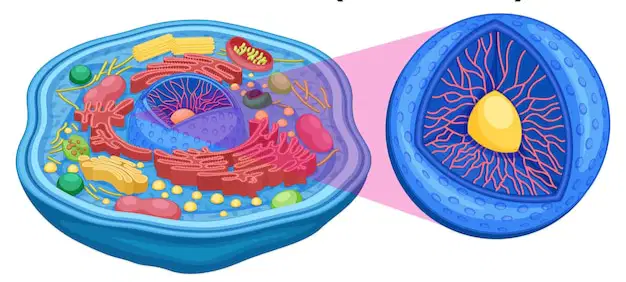
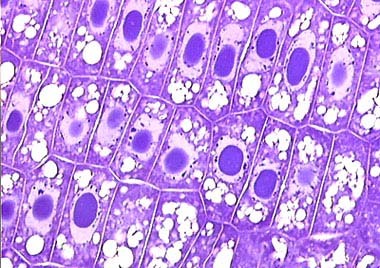
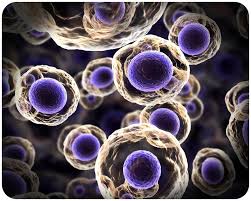
Which organelle is colored purple in this photo?

a)

Vacuole

b)

Mitochondria

c)

Nucleus

d)

Ribosome

138.

Which organelle is colored blue in this photo?

a)

Nucleus

b)

Cell membrane

c)

Cell wall

d)

Vacuole

139.

What is #7?

a)

Microtubules

b)

Rough endoplasmic reticulum

c)

Nucleus

d)

Centrioles

140.

What structure is shown in Diagram A?

a)

Cilia

b)

Flagella

c)

Pseudopod

d)

Nucleus

141.

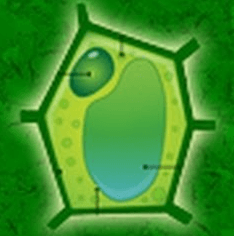
What is letter d pointing to?

a)

nucleus

b)

cell wall

c)

vacuole

d)

cytoplasm

142.

What is the function of the cytoskeleton?

a)

to maintain cell shape and cellular movement

b)

to pack proteins

c)

to regulate things in and out of the cell

143.

Chromatin is

a)

strands of DNA inside the nucleus that contain instructions

b)

found inside the vacuoles

c)

needed to make lipids

144.

Which 2 organelles are found only in plant cells?

a)

1, Cell Wall

b)

8, Nucleus

c)

2, Cell Membrane

d)

10, Chloroplast

145.

Check all that apply (3)

Prokaryotic cells:

a)

are small, simple

b)

have free-floating DNA

c)

have a nucleus

d)

have a cell membrane

146.

The cell membrane main purpose is...

a)

Selective Permeability

b)

Energy Production

c)

Locomotive

d)

Looking good

147.
This organic molecule is the main component of biological membranes.....
a)
carbohydrates
b)
lipids 
c)
proteins 
d)
nucleic acids
148.

information for making proteins

a)

nucleus

b)

mitochondria

c)

DNA/chromosomes

d)

vesicles

149.

Which of the following organelles are ABSENT in prokaryotic cells. Check all that apply.

a)

Ribosomes

b)

Cell membrane

c)

Nucleus

d)

Mitochondria

e)

Cell wall

150.

What does cell differentiation mean?

a)

Process by which a cell absorbs nutrients.

b)

Process by which a cell becomes more specialized.

c)

Process by which a cell makes an identical copy of itself.

d)

Process by which cells enter the cell cycle.