
 Worksheets
GCSE Chemistry 2023 mmd
Total questions: 153
Worksheet time: 3hrs 54mins

Which element has the electron configuration of 2.7?
Krypton
Iodine
Fluorine
Barium
Which alkali metal is most reactive out of the following
rubidium
potassium
sodium
lithium
How many electrons do the alkali metals have in their outer shell?
1
2
8
7
What happens to the reactivity of the alkali metals as you move down the group?
increases
decreases
Which gas is released when the alkali metals react with water?
hydrogen
oxygen
hydroxide
carbon dioxide
What happens to the shielding affect as you go down the group?
increases
decreases
Which of the following is TRUE about an isotope?
same number of protons and neutrons
same number of protons but different number of neutrons
same atomic mass but different atomic number
neutron and electron numbers are the same
Complete the sentence: In covalent bonds, electrons are _______________________
Lost
Gained
Halved
Shared
What is the name given to the structure of diamond, graphite and silicon dioxide?
Mega covalent structure
Mega ionic lattice
Giant covalent
Giant ionic

What holds together the ions in an ionic compound?
Electrostatic attraction
Love
Covalent bonds
Strong inter-molecular forces
Predict the bond between Mg and Cl
covalent
ionic
metallic
none of the above
Explain why metals can conduct electricity
Delocalised ions are free to carry charge
Delocalised electrons are free to carry charge
Delocalised electrons are not free to carry charge
Delocalised ions are not free to carry charge
Explain why pure metals are soft
The metals ions are only small
Weak forces between metal ions
Layers of metal ions are free to slide over each other
Metals have high melting points
Define covalent bonding.
swapping of electrons
a shared pair of electrons
an electron being shared
transfer of electrons between metals and non-metals
Subatomic particle with positive charge identifies the atom
Proton
Neutron
Electron
Alpha Particle
Atomic mass is equal to the number of protons plus _______.
Protons
Neutrons
Electrons
Alpha particles
Inert gases, non-reactive, belong to this family
Alkali family
Carbon family
Noble gas family
Halogen family

What do delocalised electrons in metallic bonding mean?
electrons are free to move around one specific atom
electrons are free to move from one atom to another
electrons are free to orbit around a nucleus
electrons are able to move from one electron shell to another of one atom

What type of structure is shown in the diagram?
Molecular covalent
Giant covalent
Atomic
Metallic
What does the Group number tell you?
Whether it's a metal or non-metal
How many electrons in the outer shell
How many shells of electrons there are
Whether it is doing covalent or ionic bonding
What is meant by an ion?
A metal atom
A non-metal atom
An atom that has lost or gained electrons
An atom that has lost or gained protons
C + O2 --> CO2
What amount (in moles) is present in 2.0 g of sodium hydroxide, NaOH?
0.050
0.10
20
80
Lithium hydroxide reacts with carbon dioxide as follows.
2LiOH + CO2 → Li2CO3 + H2O
What mass (in grams) of lithium hydroxide is needed to react with 11 g of carbon dioxide?
6
12
24
48
What is the law of conservation of mass?
Mass of products is more than mass of reactants
Mass of reactants is less than mass of products
Mass of reactants is equal to mass of products
1 dm3 is equal to how many cm3 ?
100
500
1000
2000
Choose a correct unit for concentration.
g
gdm
g/dm3
mol
A high mass of solute dissolved in a low volume of liquid would result in what type of solution?
Low Concentration
High Concentration
50g of sodium hydroxide is dissolved in water to make up 200cm3 . What is the concentration in dm3.
0.25 g/dm3
2.5 g/dm3
25 g/dm3
250 g/dm3
Give the equation for calculating concentration from the mass of substance and volume of solution.
Concentration = mass x volume
Concentration = mass ÷ volume

What are the reactants for the reaction of magnesium with oxygen
Magnesium + oxygen --> Magnesium oxide
Magnesium
Oxygen
Magnesium oxide
Magnesium and oxygen
Sulphuric acid + sodium carbonate
-->
Hydrochloric acid + magnesium hydroxide -->
How do we test for hydrogen?
Squeaky pop test
Hydrogen extinguishes a lit splint
Bubbling through lime water
Hydrogen makes a glowing splint relight
Calcium carbonate + hydrochloric acid -->
Calcium chloride + hydrogen
Calcium choride + water
Calcium chloride + carbon dioxide + water
Calcium sulfate + carbon dioxide + water
Copper carbonate + hydrochloric acid -->
Copper chloride + hydrogen
Copper chloride + water
Copper chloride + water + hydrogen
Copper chloride + water + carbondioxide


Hydrochloric acid reacts to form ........ salts.
chloride
hydrochloride
nitrate
sulfate
Nitric acid reacts to form ........ salts.
chloride
nitrite
nitrate
sulfate
Sulfuric acid reacts to form ........ salts.
chloride
nitrite
sulfite
sulfate
acid + base -> salt + ............
carbon dioxide
hydrogen
ammonia
water
acid + metal -> salt + ............
carbon dioxide + water
hydrogen
ammonia + water
water
Which acid reacts with potassium hydroxide to form potassium sulfate?
chloric acid
hydrochloric acid
nitric acid
sulfuric acid
Which acid reacts with calcium hydroxide to form calcium nitrate?
chloric acid
hydrochloric acid
nitric acid
sulfuric acid
Oxides and hydroxides are
bases
carbonates
acids
metals
What are the products formed when zinc + ethanoic acid react?
magnesium chloride and water
aluminium chloride and hydrogen gas
aluminium chloride and water
zinc ethanoate and hydrogen gas

Which of the following describes a precipitate?
a liquid forms when a block of metal is heated
a solid forms when one liquid is poured into another
a gas forms when a solid is placed in a liquid
bubbles form when an acid is poured on a rock
What is the difference between base and alkali
Alkalis are water insoluble bases
Alkalis are water soluble bases
Both are same
Alkali react with acids while bases don't.
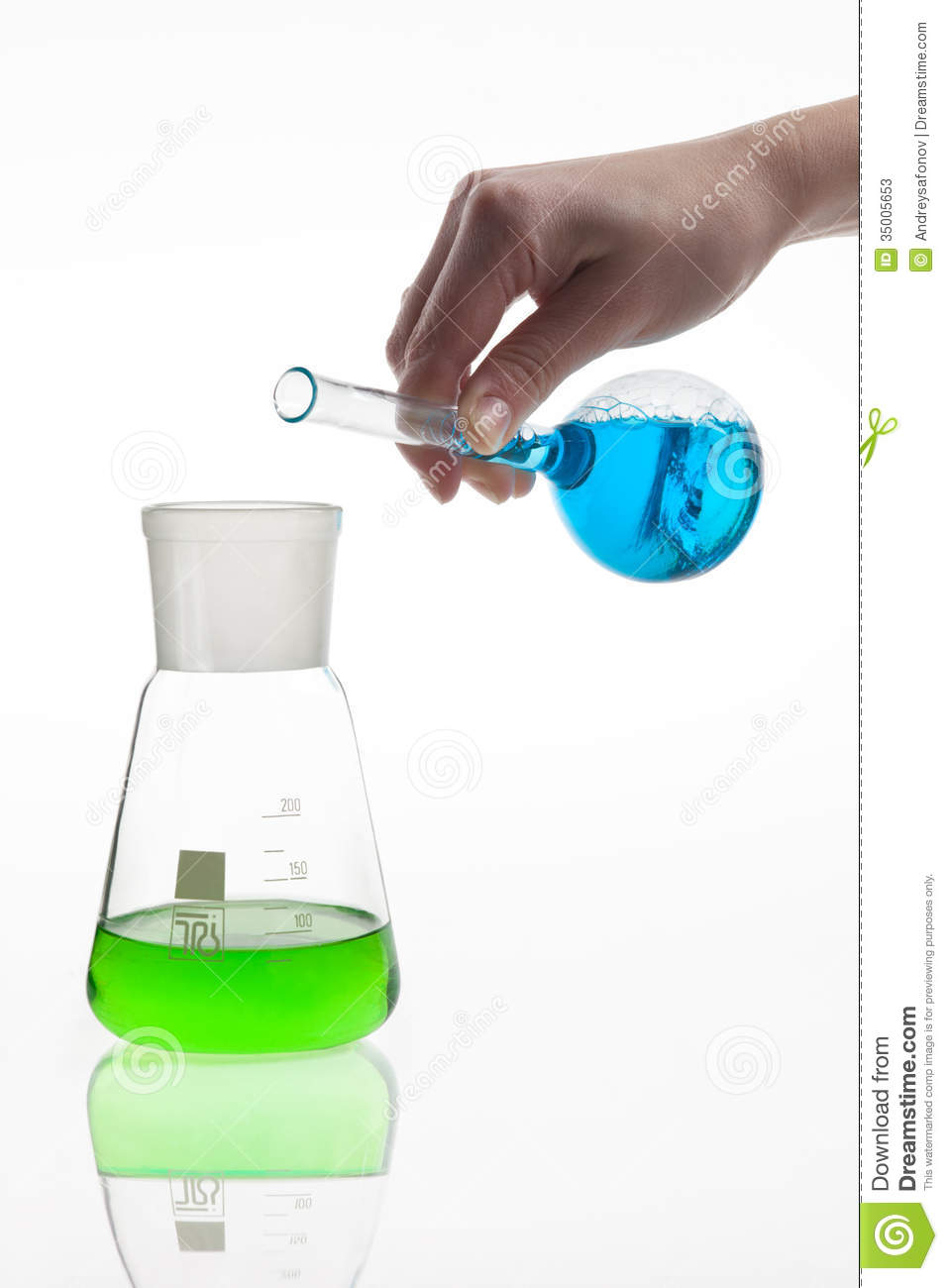
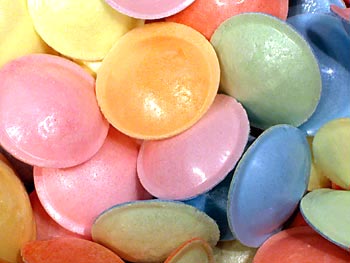
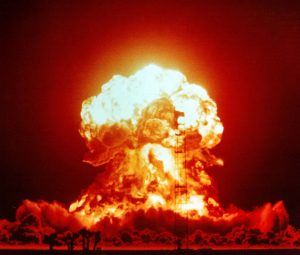
Which of the following process is exothermic?
Candle wax melting
A puddle evaporating
Dry ice (solid carbon dioxide) subliming to form gaseous carbon dioxide
Water freezing to form ice
During an exothermic reaction, heat is _________ and chemical bonds __________.
released, formed
absorbed, broken
released, broken
absorbed, formed


Which letter corresponds to the activation energy?
A
B
C
D
How does the law of conservation of energy apply to chemistry?
In all physical reactions, energy is either transferred to the surroundings or from the surroundings.
In all chemical reactions, energy is either transferred to the surroundings only.
In all chemical reactions, energy is either transferred to the surroundings or from the surroundings.
In all physical reactions, energy is absorbed by the surroundings.
What is an exothermic reaction?
A reaction where energy is transferred from the surroundings.
A reaction where energy is transferred to the surroundings.
A reaction where energy is absorbed into surroundings.
A reaction where energy is absorbed from the surroundings.
Give two examples of exothermic reactions.
Combustion, photosynthesis
Decomposition, respiration
Neutralisation, photosynthesis
Combustion, respiration
What is an endothermic reaction?
A reaction where energy is transferred from the surroundings.
A reaction where energy is transferred to the surroundings.
A reaction where energy is absorbed into surroundings.
A reaction where energy is absorbed from the surroundings.
How do we work out the overall energy change of a reaction?
Add the energy needed to break all the bonds in the reactants to the energy released to form all the bonds in the products.
Work out the difference between the energy needed to break all the bonds in the reactants and the energy released to form all the bonds in the products.
Divide the energy needed to break all the bonds in the reactants from the energy released to form all the bonds in the products.
Multiply the energy needed to break all the bonds in the reactants to the energy released to form all the bonds in the products.
How does the reactivity of the metal electrodes affect the size of the potential difference?
The lower the difference in reactivity, the greater the potential difference.
The greater the difference in reactivity, the lower the potential difference.
The greater the difference in reactivity, the greater the potential difference.
The lower the difference in reactivity, the lower the potential difference.
Which two measurements can be used to calculate the rate of a reaction?
Amount of reactant used
Amount of product formed
Amount of rate given
Which are the correct units for rate of reaction?
cm3
sg
scm3
A student collects 50cm3 of CO2 in 10 seconds. what is the rate of reaction? Include the units
(a)
How does increasing the concentration of reactants increase the rate of a reaction?
Less particles mean the reaction will happen faster
More particles means more collisions meaning the reaction is faster
The particles try harder with more concentration and react faster
How does increasing the pressure of reactants increase the rate of a reaction?
Particles move faster under higher pressure causing more collisions so the rate of reaction will increase
Particles move slower at higher pressure giving them more time to react
The particles are under pressure to react
Increasing the surface area of solid reactants increases the (a) of collisions, and so increases the rate of reaction.
Increasing the (a) increases the frequency of collisions and makes the collisions more energetic, and so increases the rate of reaction.
What is meant by the term collision theory?
(a)
What is a catalyst?
Something that changes the rate of reaction but is not used up
Something that changes the rate of reaction and is used up

What does this symbol mean?
Left and right
Reversible reaction
One way or the other
What is meant by a reversible reaction?
One that will only work backwards
The products of a reaction can react to produce the reactants
The reactants of a reaction can react to produce the products
None of the above

The following reversible reaction occurs. The reaction that makes C + D is exothermic. What happens if we heat up A and B?
(a)
If the concentration of one of the reactants or products is changed, the system is no longer at _____________ and the concentrations of all the substances will change until _____________ is reached again.
(a)
What is Le Chatelier's principle?
If a system is at not equilibrium and a change is made to any of the conditions, then the system responds to counteract the change
If a system is at equilibrium and a change is made to any of the conditions, then the system responds to counteract the change
What three factors can be changed in a system at equilibrium?
Concentration
Temperature
Surface area
Pressure

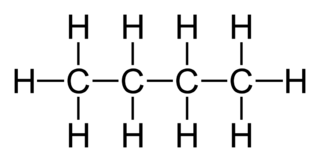
C3H8
What process is used to separate crude oil in hydrocarbons with different chain lengths?
distillation
fractional distillation
cracking
polymerisation
Fractional distillation separates crude oil based on the different __________ of the molecules in the mixture
melting point
boiling point
freezing point
chemical reactivity
Molecules collected at the bottom of the fractionating column tend to be...
more viscous, less flammable and less volatile
less viscous, more flammable and more volatile
more viscous, more flammable and less volatile
less viscous, less flammable and more volatile
What are the 2 products of complete combustion?
carbon dioxide + hydrogen
carbon dioxide + water
carbon monoxide + water
carbon monoxide + hydrogen
What are the products of incomplete combustion?
carbon monoxide
water
carbon
hydrogen
What is the term given to the process by which longer chain hydrocarbons are broken down into shorter length alkanes and alkenes?
fractional distillation
evaporation
cracking
polymerisation
What conditions are needed for cracking?
high temperature
high pressure
catalyst
low temperature
A fraction of crude oil is made up of:
Hydrocarbons of similar chain lengths
Numbers
Large hydrocarbons
Alkenes only
Crude oil is made up of:
Ethane
Butane
A mixture of different hydrocarbons
Extremely large hydrocarbons which are broken up once extracted
What is chemical analysis?
The process of establishing what chemicals are present in a substance
A process that has had nothing added to it and is in its "natural" state
An instrumental analysis tool for identifying metal ions
The process of using small molecules (monomers) to make long chain molecules (polymers)
In everyday language what is a "pure" substance?
A substance that has had nothing added to it and is in its "natural" state
A substance made of a single element or compound
A complex mixture designed as a useful product
fuels, cleaning agents, paints, medicines, alloys, fertilisers and foods.
In chemistry what is a "pure" substance?
A substance that has had nothing added to it and is in its "natural" state
A substance made of a single element or compound
A complex mixture designed as a useful product
fuels, cleaning agents, paints, medicines, alloys, fertilisers and foods.
How can pure substances be distinguished from impure ones?
By their melting/boiling points
By their colour
By their reaction with oxygen
Whether they conduct or not
What is a formulation?
A substance that has had nothing added to it and is in its "natural" state
A substance made of a single element or compound
A complex mixture designed as a useful product
fuels, cleaning agents, paints, medicines, alloys, fertilisers and foods.
Which is NOT an example of a formulations
fuels
cleaning agents
paints
hydrogen gas
What is chromatography?
A process to separate the constituents of a mixture
A way to separate two liquids
A process to separate solid from liquid
A process which separates a soluble solid from a solvent
In paper chromatography, what is the stationary phase?
The paper
The solvent
The mixture
The chromatography jar
How is the Rf value calculated?
distance moved by spot/distance moved by solvent
distance moved by spot - distance moved by solvent
distance moved by spot + distance moved by solvent
distance moved by spot x distance moved by solvent
What does a substance's Rf value depend on?
How soluble it is in the solvent
How many spots are formed
How long the paper is
The volume of solvent used
How can hydrogen be tested for?
Makes a squeaky pop when a splint is placed in it
Relights a glowing splint
Bubble through limewater, turns it milky (cloudy)
Bleaches damp litmus paper white
How can oxygen be tested for?
Makes a squeaky pop when a splint is placed in it
Relights a glowing splint
Bubble through limewater, turns it milky (cloudy)
Bleaches damp litmus paper white
How can carbon dioxide be tested for?
Makes a squeaky pop when a splint is placed in it
Relights a glowing splint
Bubble through limewater, turns it milky (cloudy)
Bleaches damp litmus paper white
How can chlorine be tested for?
Makes a squeaky pop when a splint is placed in it
Relights a glowing splint
Bubble through limewater, turns it milky (cloudy)
Bleaches damp litmus paper white
Algae and plants use carbon dioxide and water to produce oxygen. What is the name of this process?
Carbon capture
Combustion
Photosynthesis
Polymerisation
How can countries reduce carbon dioxide emissions?
Only burn methane
Use renewable energy supplies
Use waste plastic bags as fuels
The hydrocarbon C4H8 was burnt in air. Incomplete combustion occurred. Which equation correctly represents the incomplete combustion reaction?
C4H8 + 4O → 4CO + 4H2
C4H8 + 4O2 → 4CO + 4H2O
C4H8 + 6O2 → 4CO2 + 4H2O
C4H8 + 8O → 4CO2 + 4H2
Which of the following is a greenhouse gas?
Methane
Nitrogen
Ozone
Sulfur dioxide
Which gas makes up most of the atmosphere on earth?
Water vapour
Carbon dioxide
Oxygen
Nitrogen
Radiation from the sun passes through our atmosphere and hits the surface of the earth. This radiation is typically.....
Short wavelength
Long wavelength
Theories suggest that the earth's early atmosphere was mainly made up of.......
Nitrogen
Carbon dioxide
Water vapour
Methane
This gas makes up 21% of the modern day atmosphere
ozone
oxygen
nitrogen
water vapor
This gas makes up 78% of the modern day atmosphere
oxygen
nitrogen
ozone
carbon dioxide
What are the 2 most abundant gases in Earth's atmosphere today?
carbon dioxide and oxygen
carbon dioxide and nitrogen
nitrogen and oxygen
nitrogen and hydrogen

