Worksheets
General Chemistry Final Review
Total questions: 139
Worksheet time: 6hrs 1mins
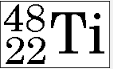
24.1% of all the isotopes of a an element have a mass of 75.23 amu, 48.7% have a mass of 74.61 amu, and 27.2% have a mass of 75.20 amu.
What is the average atomic mass of this element?
74.92 amu
24.97 amu
75.01 amu
74.51 amu

What number of particles can be different in isotopes of any given element?
Protons
Neutrons
Electrons
All remain constant

The frequency of violet light is 7.5x10¹⁴ Hz. What is its wavelength?
4.0x10⁻⁷ m
4.0x10⁷ m
2.25x10²³m
2.25x10²³ Hz
Red light has a wavelength of 675 x 10-9 m. What is its frequency?
2.03x10¹¹ m
4.44x10¹⁴ Hz
4.44x10¹⁴ nm
2.03x10¹¹ Hz
Which subatomic particle(s) is/are responsible for the identity of an element?
proton
neutron
electron
quark
Which atom has the largest atomic radius?
potassium
rubidium
francium
cesium
Which statement correctly and completely identifies a trend?
Atomic radius decreases across a period and increases down a group.
Electronegativity decreases across a period and decreases down a group.
Ionization energy increases across a period and increases down a group.
Ionic radius increases across a period and increases down a group.
Vertical columns of elements on the periodic table with similar properties and valence electrons
groups
periods
quadrants
rows
Name the compound SiCl4
silicon tetrachloride
sulfur tetrachloride
silicon (IV) chloride
silicon chloride
Which type of bond has an unequal sharing of electrons between two atoms?
nonpolar covalent
polar covalent
ionic
mettalic
London dispersion
SO2 + O2 <=> SO3
If the concentration of SO2 is increased, the equilibrium position of the reaction will shift ___________.
2SO2(g)+O2(g)⇌2SO3(g)
Adding SO3(g) will
shift equilibrium right
shift equilibrium left
increase K
have no change
C6H12 + O2 -->
Mg + I2 -->
Na + MgCl2 -->
Al + O2 -->
AgNO3 + Na2CO3 -->
Al + CuCl2 -->
K2CO3 + BaCl2 -->
Ag2O -->
Predict the precipitate when you mix silver nitrate and sodium chloride:
AgNO3
No precipitate
AgCl
NaNO3
When you mix barium nitrate and sodium sulfate
BaSO4
NaNO3
No precipitate
BaNO3
potassium chloride and sodium nitrate
KNO3
No precipitate
NaCl
KCl
List four factors that affects the rate of a reaction
temperature
concentration
surface area
volume
catalysts
How does a catalyst work in speeding up a reaction?
By lowering the activation energy or reaction
by giving them more energy
by making them more available
A temperature increase causes the particles ......
to slow down
move faster
collide higher
in the right order
Why does a higher concentration increase the rate of reaction?
it increases the amount of reactants
it lowers the activation energy
it increases the energy of particle collisions
it increases the frequency of particle collisions
Why does a higher temperature increase the rate of a reaction?
it increases both the frequency and energy of particle collisions
it only increases the frequency of particle collisions
it only increases the energy of particle collisions
it reduces the activation energy of the reaction
2Al + 6HCl --> 2AlCl3 + 3H2
Aluminium reacts with hydrochloric acid. How many grams of aluminum are necessary to produce 11 L of hydrogen gas at STP?
13
8.8
0.99
1.0
1Mg + 2H2O --> Mg(OH)2 + H2
What volume of hydrogen will be produced at STP by the reaction 67.3 g of magnesium?
62.0 L
0.12 L
2.77 L
1.15 L
2CO + O2 −-> 2CO2
How many liters of carbon dioxide at STP are produced from 10.0 L of carbon monoxide at STP?
10.0 L
20.0 L
5010 L
0.0199
24 grams of CH4 was added to the above reaction. Calculate the theoretical yield of CO2.
You add 28 grams of carbon. You find the actual yield to be 181.2 grams of CO2. What is the percent yield of CO2? (Hint: calculate theoretical yield of CO2 first)
Actual yield = 62g
Calculate the percent yield.
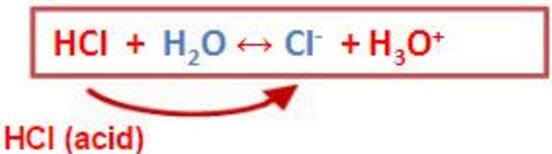
Which of the following is a neutralization reaction?
2Na + Cl2 → 2NaCl
CH4 + 2O2 → CO2 + 2H2O
HCl + KOH → KCl + H2O
CaCO3 → CO2 + CaO
Acid + Base makes what?
Salt
saltwater
an explosion
Water
Neutralisation reactions must make which two products?
carbonate
salt
pepper
water
4NH3+6NO --> 5N2 + 6H2O
3NH4NO3 + Na3PO4 --> (NH4)3PO4 + 3 NaNO3
What is the maximum amount of each product that can be formed?
18.6 g of ammonium phosphate, 31.9 of sodium nitrate
54 g of ammonium phosphate, 31.9 of sodium nitrate
32.4 g of ammonium nitrate, 76 g of sodium phosphate
21 g of ammonium nitrate, 34 g of sodium phosphate
3NH4NO3 + Na3PO4 --> (NH4)3PO4 + 3 NaNO3
How much of the excess reagent is left over after the reaction is complete?
12 g of sodium phosphate
29.5 g of sodium phosphate
17 g of ammonium nitrate
95 g of ammonium phosphate
3CaCO3 + 2FePO4 --> Ca3(PO4)2 + Fe2(CO3)3
What is the maximum amount of each product that can be formed?
85 g of calcium carbonate, 39 g of iron(III) phosphate
12.4 g of calcium phosphate, 27 g of iron(III) carbonate
37.2 g of calcium phosphate, 29.3 g of iron(III) carbonate
46.3 g of calcium phosphate, 43.8 g of iron(III) carbonate
CuCl2 + 2NaNO3 --> Cu(NO3)2 + 2NaCl
If 15.0 grams of CuCl2 react with 20 g of NaNO3, how much NaCl can be formed?
13.0 g of NaCl
98 g of NaCl
26 g of NaCl
17.4 of NaCl
How many molecules are in 2.5 mol of NaCl?
1.5 x 1024 molecules
1.5 molecules
4.15 molecules
1.5 x 10²³ molecules
How many moles are in 19.82 g Mg?
1.23 mol Mg
481.70 mol Mg
1.00 mol Mg
0.82 mol Mg
How many moles are in 3.01 x 10²² atoms of magnesium?
0.05 moles
1.81 x 1046 moles
5.00 x 10²¹ moles
5.00 moles
How many grams are in 1.2 x 1024 atoms of C?
29.34 grams
23.94 grams
6.02 grams
1.21 grams
What is the percent composition by mass of sulfur (S) in the compound MgSO4?
20.22%
19.85%
26.64%
28.64%
The amount of heat energy required to change the temperature of 12 g of gold from 45°C to 15°C is -47 J. What is the specific heat capacity of gold?
0.13 J/(g°C)
17,000 J/(g°C)
1600 J/(g°C)
0.065 J/(g°C)
The specific heat of platinum is 0.133 J/g°C. How much heat(Q) is released when a 10 g piece of platinum cools from 100°C to 50°C?
66.5 J
665 J
0.0266 J
0.665 J
6CO2 + 6H20 + Energy --------------- C6 H12 06 + 6O2
endothermic reaction
exothermic reaction
02 (g)+ 2H2-------------2H20 + Energy
endothermic
exothermic
N2 (g) + 3 H2 (g) <=> 2 NH3 (g)
If the pressure in the system is increased, which substance(s) will increase in concentration?
H2 (g) + Cl2 (g) <=> 2HCl (g) + heat
If the pressure in the system is increased, the equilibrium position will _______.
For the reaction...
N2 (g) + 3 H2(g) ⇌ 2 NH3 (g)
If the pressure in the system is increased, which substance(s) will increase in concentration?
N2
H2
N2 and H2
NH3
What is the effect of increasing the pressure on the following equilibrium: 2NO(g) + O2 (g) ⇌2NO2(g)?
The yield of NO2 increases
The yield of NO2 decreases
The reaction is slower
The concentration of O2 increases.
PV=nRT

Which of the following statements is true concerning acids and bases?
acids and bases don't react with each other
acids mixed with bases neutralize each other
acids mixed with bases make stronger bases
acids mixed with bases make stronger acids
Which is the correct set of acid properties:
sour taste, corrosive, change litmus from red to blue
sour taste, corrosive, change litmus from blue to red
sweet taste, slippery, change litmus from blue to red
sour taste, slippery, change litmus from blue to red
Neutral solutions have a pH of:
0
1
7
14
Which is true?
pH of less than 7 is basic; pH of more than 7 is acidic
pH of less than 7 is acidic; pH of more than 7 is basic
The pH scale is a range from:
1-7
0-14
1-5
1-14
Ammonia has a pH of 11. Ammonia is __________.
an acid
a base
an element
a metal
Tastes sour
acid
base
neutral
both acids & bases
Tastes bitter.
Acids
Bases
None of the following
Acids & Bases
3 LiOH + H3PO4 →