wayground logo

Free Printable Worksheets

Font size

S
M
L
XL
Worksheets

Final exam Revision Grade 9-Chemistry

Total questions: 134

Worksheet time: 5hrs 31mins

Name
Class
Date
1.

electrons are ________________charged

a)

negatively

b)

positively

c)

not

d)

both positively and negatively

2.

The figure shows ________________________

a)

cathode ray tube experiment

b)

gold foil experiment

c)

oil drop experiment

3.

In the experiment ( shown in the figure ) , rays are come from _________________

a)

cathode to anode

b)

anode to cathode

c)

anode to anode

d)

cathode to cathode

4.

The path of cathode ray ( shown in the figure ) proves that _____

a)

electrons have negative charge

b)

electrons have positive charge

c)

electrons have no charge

d)

electrons have both negative and positive charge

5.

The figure shows _____________experiment

a)

oil drop

b)

cathode ray tube

c)

gold foil

6.

The experiment ( shown in the figure ) lead to determine __________

a)

mass and charge of the electron

b)

the size of the electron

c)

the mass of the atom

d)

the charge of the atom

7.

The name of the model of the atom ( shown in the figure) is _______________

a)

plum pudding model

b)

nuclear model

c)

energy levels model

d)

quantum model

8.

the part ( labeled by the question mark in the figure ) is _______________

a)

atom

b)

nucleus

c)

proton

d)

electron

9.

Ag47108Ag_{47}^{108}  contains ________ protons, ________ neutrons and ________ electrons

a)

47, 61, 47

b)

108, 61, 108

c)

47, 108, 47

d)

60, 47, 60

10.

An atom of U92238U_{92}^{238}  has__________ protons and _______ neutrons

a)

92, 146

b)

146, 92

c)

330, 92

d)

238, 146

11.

The number of neutrons in the nucleus of an atom can be calculated by _____________.

a)

adding together the numbers of electrons and protons

b)

subtracting the number of protons from the number of electrons

c)

subtracting the number of protons from the mass number

d)

adding the mass number to the number of protons

12.

The sum of the protons and neutrons in an atom equals the ____________.

a)

atomic number

b)

number of electrons

c)

atomic mass

d)

mass number

13.

All atoms of the same element have the same _____________.

a)

number of protons

b)

number of neutrons

c)

Mass number

d)

Mass

14.

An atom of an element with atomic number 48 and massnumber 120 contains ________.

a)

48 protons, 48 electrons, and 72 neutrons

b)

72 protons, 48 electrons, and 48 neutrons

c)

120 protons, 48 electrons, and 72 neutrons

d)

72 protons, 72 electrons, and 48 neutrons

15.

The number 80 in the name bromine-80 represents _____________.

a)

the atomic number

b)

the mass number

c)

the sum of protons and electrons

d)

none of the above

16.

Generally, in a __________ atom, the number of ____________ is equal to the number of electrons.

a)

positively charged, protons

b)

negatively charged, neutrons

c)

neutral, neutrons

d)

neutral, protons

17.

Isotopes of the same element have ____________

a)

the same number of protons but different numbers of neutrons

b)

the same number of protons but different numbers of electrons

c)

the same number of neutrons but different numbers of protons

d)

the same number of neutrons but different numbers of electrons

18.

Which of the following subatomic particles has/have the largestmass?

a)

Proton

b)

Electron

c)

Neutron

d)

Proton and Neutron

19.

This is a model of what was thought be an atom - what is the model called?

a)

Cathode Ray Tube Experiment

b)

Gold Foil Experiment

c)

Plum Pudding Model

d)

Planetary Model

20.
This is a model of what was thought be an atom after what experiment?
a)
Cathode Ray Tube Experiment
b)
Gold Foil Experiment
c)
Plum Pudding Model
d)
Planetary Model
21.
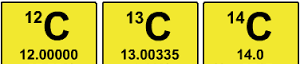
What do these isotopes of carbon all have in common?
a)
neutrons & mass number
b)
atomic number and neutrons
c)
atomic number and electrons
d)
protons, atomic number, and mass number
22.
How many neutrons does the isotope of lithium have?
a)
8
b)
3
c)
4
d)
5
23.
How many neutrons in C-14?
a)
6
b)
7
c)
14
d)
8
24.
How many neutrons does the isotope below have?     89 36Kr
a)
53
b)
36
c)
89
d)
125
25.
How many neutrons does an atom of the isotope Neon-22 have?
a)
12
b)
10
c)
22
d)
20
26.

Bromine-80 has how many neutrons?

a)

41

b)

42

c)

44

d)

45

27.

How many neutrons are in this isotope?

a)

20

b)

41

c)

61

d)

21

28.

Isotopes of an element have a different number of...

a)

Protons

b)

Neutrons

c)

Electrons

29.

Element Z has 2 natural isotopes. One isotope has a mass of 15.0 amu and a relative abundance of 30%. The other isotope has a mass of 16.0 amu and a relative abundance of 70%. Estimate the average atomic mass for this one element.

a)

15.0 amu

b)

16.0 amu

c)

15.7 amu

d)

16.9 amu

30.
Choose the particle that has no charge.
a)
nucleus
b)
neutron
c)
proton
d)
electron
31.
Which particle has a positive charge?
a)
electron
b)
orbital
c)
proton
d)
neutron
32.
This particle determines what element you have - the elements identity.
a)
electron
b)
proton
c)
neutron
d)
valence shell
33.
Which particles make up the nucleus of an atom?
a)
protons and neutrons
b)
electrons and protons
c)
electrons, protons, and neutrons
d)
electrons and neutrons
34.
24.1% of all the isotopes of a an element have a mass of 75.23 amu, 48.7% have a mass of 74.61 amu, and 27.2% have a mass of 75.20 amu.
What is the average mass of this element?
a)
74.92 amu
b)
24.97 amu
c)
75.01 amu
d)
74.51 amu
35.
An element has two naturally occurring isotopes. One is 10.013 amu and is 19.9% abundant. The other is 11.01 amu and is 80.1% abundant. What is the average atomic mass? What element is it?
a)
9.012, Beryllium
b)
12.011, Carbon
c)
6.941, Lithium
d)
10.812, Boron
36.

How is the alpha particle written in a nuclear equation?

a)

42He

b)

24He

c)

0-1e

d)

00γ

37.
A helium nucleus with two protons and two neutrons is called a(n) ____.  
a)
alpha particle
b)
electroscope
c)
beta particle
d)
gamma ray
38.
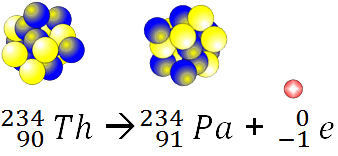
Which type of nuclear radiation is being emitted here?
a)
Alpha
b)
beta
c)
gamma 
d)
none
39.
Solve this equation for alpha decay.
85209At = ___ + 24He
a)
83205Bi
b)
86209Rn
c)
81207Tl
d)
85208At
40.

Gamma rays have

a)

no mass

b)

a huge mass

c)

a small mass

d)

an average mass

41.
Solve this equation for beta decay.
614C = ___ + -10e
a)
410Be
b)
714N
c)
210He
d)
613C
42.
Uranium-238  decays into  Thorium-234  by emitting .........
a)
an alpha particle
b)
a beta particle
c)
gamma rays
d)
visible light
43.
The process of nuclear change in an atom of radioactive material is called... 
a)
nuclear decay
b)
nuclear mass
c)
isotopes
d)
radon
44.
When an unstable radioactive atom decays, it usually turns into:
a)
a more stable atom
b)
a less stable atom
c)
the exact same atom but with less pure energy
d)
empty space
45.

In the equation, 146C --> 147N + 0-1B, the _______ decay of radioactive carbon-14 results in the creation of a new nitrogen-14 atom.

a)

Gamma

b)

Beta

c)

Alpha

46.
What makes something radioactive?
a)
elements with an atomic number above 81
b)
an unstable nucleus
c)
contaminated sewage
d)
It decays over time
47.
Has a mass of 4 and a charge of +2
a)
Alpha
b)
Beta
c)
Gamma
48.

What is the structure of gamma radiation?

a)

a Helium nucleus

b)

a fast-moving positron

c)

an electromagnetic wave

d)

a neutron

49.
_______________ is the process by which unstable atoms emit radiation until they become stable.
a)
Radiation
b)
Chemical Reaction
c)
Radioactive Decay
d)
Isotopes
50.
When does radioactive decay occur?
a)
When the nucleus of an isotope is unstable
b)
When the nucleus of an isotope is stable
c)
When the electrons of an isotope are spinning
d)
When the electrons of an isotope are shared with another isotope
51.

In alpha decay...

a)

The mass number increases by 2

b)

The mass number does not change

c)

The mass number decreases by 2

d)

The mass number increases by 4

e)

The mass number decreases by 4

52.

In alpha decay...

a)

The atomic number increases by 2

b)

The atomic number does not change

c)

The atomic number decreases by 2

d)

The atomic number increases by 4

e)

The atomic number decreases by 4

53.

When a nucleus undergoes gamma decay, the atomic number of the element....

a)

remains the same

b)

decreases by one.

c)

increases by one.

d)

increases by two.

54.
Negatively charged particles emitted from a nucleus at a high speed are ____.  
a)
alpha particle
b)
gamma rays
c)
beta particles
d)
X rays
55.

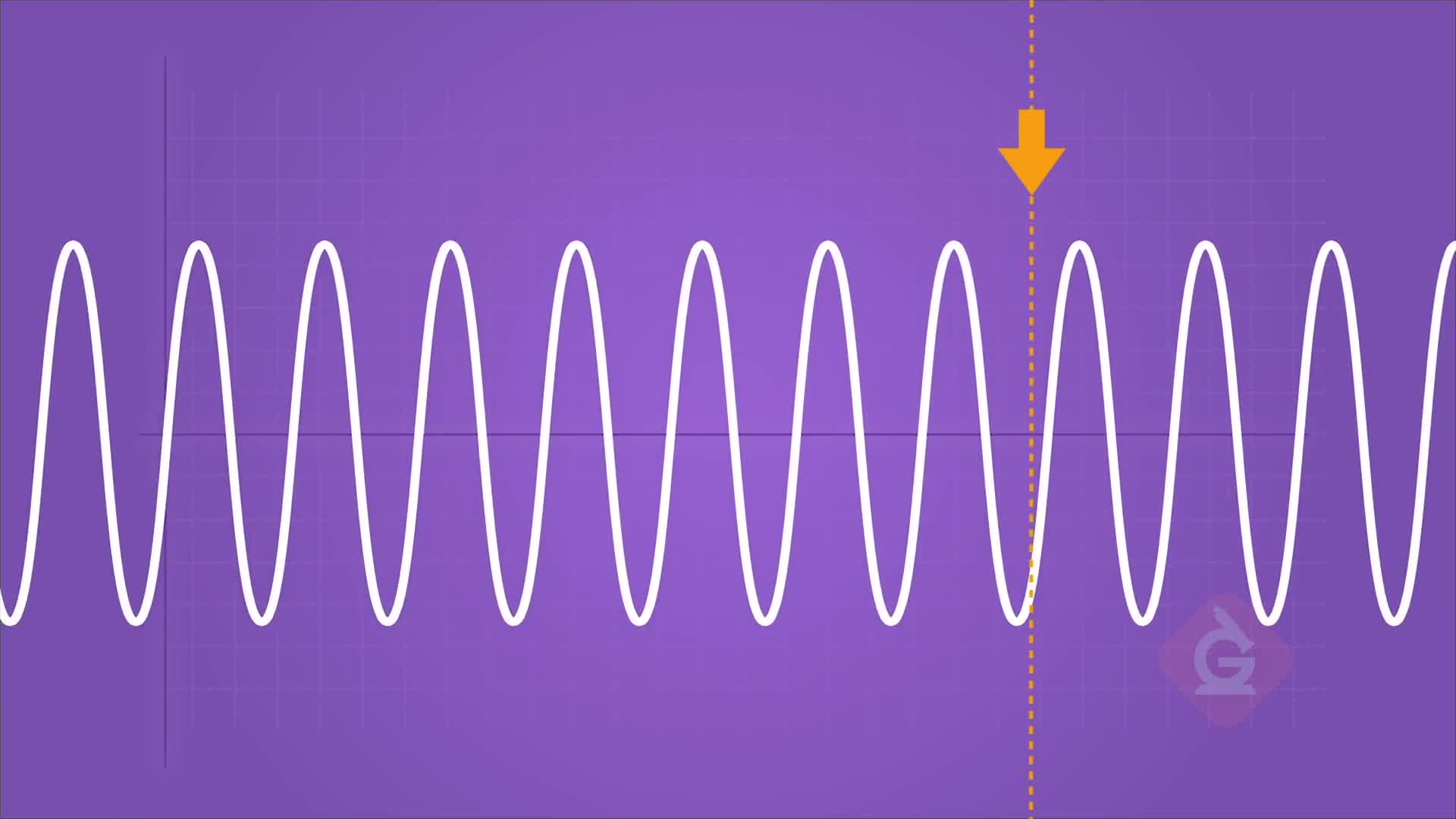
A wave of red light travels at:

a)

6.02 x 10²³ m/s

b)

5.30 x 10⁹ m/s

c)

8.00 x 10³ m/s

d)

3.00 x 10⁸ m/s

56.

Which of the following do not necessarily describe a wave?

a)

c

b)

frequency ν

c)

wavelength λ

d)

amplitude

57.

λ and ν are:

a)

inversely proportional

b)

directly proportional

c)

they are proportional in 10 different ways

d)

they are proportional in 20 differentways

58.

Green light travels:

a)

faster that red light

b)

slower than red light

c)

faster than x-rays

d)

at the speed of light

59.

What is the wavelength (λ) of electromagnetic radiation with a frequency (ν) of 9.01 x 10¹⁵ s-1 ?

a)

3.32 x 10⁻⁸ m

b)

6.66 x 10⁻⁷ m

c)

4.13 x 10⁻⁹ m

d)

1.88 x 10¹⁵ m

60.

A ______________ is the minimum amount of energy that can be gained or lost by an atom.

a)

wavelength

b)

frequency

c)

quantum

d)

electron

61.

what is the speed of light ?

a)

3 x10⁸ m/s

b)

3 x10⁸ km/s

c)

30 x108 m/s

d)

1000

62.
The wave-particle duality of light describes light as...
a)
a wave only
b)
a particle only
c)
both a wave and a particle
d)
neither a wave nor a particle
63.
A particle of light is called a photon.
a)
True
b)
False
64.

A ____ is a discrete, quantized bundle of energy

a)

Photoelectric effect

b)

Photon

c)

Quantized

d)

Proton

65.
A wave with a large wavelength will have a ______ frequency and _____ energy
a)
high, low
b)
high, high
c)
low, high
d)
low, low
66.

The photoelectric effect helped to explain how light was light a

a)

particle

b)

wave

67.
The energy of waves _______ as the wavelength gets shorter.
a)
increases
b)
decreases
c)
stays the same
68.
Which electromagnetic waves have the highest frequencies and the shortest wavelengths?
a)
microwaves
b)
visible light
c)
gamma rays
69.
What is the energy of a quantum of light with a frequency of 7.39x10¹⁴Hz.(E=Hv)
a)
4.88x10¹⁹
b)
4.88x10⁻¹⁹
c)
2.22x10²³
d)
2.22x10⁻²³
70.
Certain blue lights have a frequencey of 6.91x10¹⁴Hz. What is the wavelength? (λ=c/v)
a)
4.34x10²¹
b)
4.34x10⁻²¹
c)
4.34x10⁻⁷
d)
2.07x10²³
71.
What is the wavelength for a quantum of light with energy of 7.56x10⁻¹⁹J? (λ=hc/E) 
a)
2.62x10⁻⁷m
b)
2.62x10⁷m
c)
2.64x10-45m
d)
2.64x1045m
72.

Electromagnetic waves vary in

a)

The speed they travel in a vacuum

b)

Wavelength and frequency

c)

The way they reflect

d)

Their direction

73.

The full range of frequencies of electromagnetic radiation is called

a)

Visible light

b)

Radio waves

c)

The electromagnetic spectrum

d)

Invisible light

74.

The distance between two equivalent points on a wave is called

a)

Wavelength

b)

Crest

c)

Trough

d)

Frequency

75.
The wave-particle duality of light describes light as...
a)
a wave only
b)
a particle only
c)
both a wave and a particle
d)
neither a wave nor a particle
76.
The equation that shows the relationship between the energy of light and frequency is: 
a)
c= λ⋅f
b)
E=h⋅f
77.

Calculate the energy of a gamma ray photon whose frequency is 5.02 x 10²⁰ Hz?

a)

4.73 x 1072 eV

b)

2.07 x 10 6 eV

c)

3.33 x 10⁻¹³ eV

d)

1.21 x 10 35 eV

78.

visible light consists of

a)

rainbow colors

b)

white light

c)

x rays

d)

gamma waves

79.
How many quantum numbers are needed to describe the energy state of an electron in an atom?
a)
1
b)
2
c)
3
d)
4
80.
What atom matches this electron configuration?
1s22s22p63s2
a)
Neon
b)
Magnesium
c)
Aluminum
d)
Potassium
81.
How many electrons can the first energy level hold?
a)
1
b)
2
c)
8
d)
0
82.
An electron fro which n=4 has more ____ than an electron for which n=2.
a)
spin
b)
particle nature
c)
energy
d)
wave natrue
83.
The set of orbitals that are dumbbell shaped and directed along the x, y, and z axes are called 
a)
d orbitals.
b)
p orbitals.
c)
f orbitals.
d)
s orbitals
84.
The total number of orbitals that can exist at the second main energy level is
a)
2
b)
3
c)
4
d)
8
85.
How many orientations can an d orbital have about the nucleus?
a)
1
b)
2
c)
3
d)
5
86.
What is the electron configuration for nitrogen?
a)
1s2 2s2 2p3
b)
1s2 2s3 2p2
c)
1s2 2s3 2p1
d)
1s2 2s2 2p3s1
87.
A line spectrum is produced when an electron moves from one energy level
a)
into the nucleus.
b)
to another position in the same sublevel.
c)
to a higher energy level.
d)
to a lower energy level.
88.
If electrons in an atom have the lowest possible energies, the atom is in the
a)
ground state.
b)
inert state.
c)
excited state.
d)
radiation-emitting state.
89.
An orbital that can never exist according to the quantum description of the atom is
a)
6d.
b)
3f.
c)
3d.
d)
8s.
90.
According to the Bohr model of the atom, the single electron of a hydrogen atom circles the nucleus
a)
in specific, allowed orbits.
b)
in one fixed orbit at all times.
c)
at any of an infinite number of distances, depending on its energy.
d)
counterclockwise.
91.
The statement that no two electrons in the same atom can have the same four quantum numbers is
a)
the Pauli exclusion principle.
b)
Hund's rule.
c)
Bohr's law.
d)
the Aufbau principle.
92.

The number given to orbit

a)

quantum number

b)

orbit number

c)

electron number

93.

If an electron moves from lower energy level to higher energy level it is called

a)

ground state

b)

excited state

c)

neutral state

94.

Since electrons are moving so fast, we can never know their exact position.Who proposed the given statement

a)

Bohr

b)

Heisenberg

c)

Rutherford

95.

The number of orbitals in p sub level

a)

2

b)

3

c)

4

96.

Number of electrons present in each orbital

a)

2

b)

3

c)

4

97.

The shape of the s sub level

a)

spherical

b)

dumb bell

c)

traingular

98.

The number of orbitals in d sub level

a)

2

b)

5

c)

8

99.

The area of 3D space where an electron is likely to be found is called a(n)

a)

orbit

b)

ring

c)

nucleus

d)

orbital

100.
What orbital shapes are found at the 2nd energy level
a)
s only
b)
s and p
c)
s, p, d and f
d)
p only
101.

How many electrons can fit into a d- orbital?

a)

6

b)

2

c)

8

d)

10

102.

The emission of electrons when electromagnetic radiation falls on an object.

a)

Photoelectric effect

b)

Radiation from Incandescent Bodies

c)

Threshold frequency

103.
What electron configuration matches an oxygen atom?
a)
1s22s22p63s2, 3p64s23d104p5
b)
1s22s22p4
c)
1s22s22p6
d)
1s22s22p63s23p64s23d1
104.
What atom matches this electron configuration?
1s22s22p63s23p64s23d10
a)
Zinc
b)
Copper
c)
Nickel
d)
Germanium
105.
The electron configuration of an atom is 1s22s22p6.  The number of electrons in the atom is 
a)
3
b)
6
c)
8
d)
10
106.
Which electron configuration belongs to Chlorine (Cl)?
a)
1s2s2p3s3p5
b)
1s2s2p3s3p6
c)
1s2s2p3s3p7
107.
Identify the Electron Configuration for Aluminum (Al)
a)
1s2s2p3s3p1
b)
1s2s2p3s3p3
c)
1s2s2p3s4p1
108.
Electrons occupy orbitals of lowest energy first is part of what electron configuration rule?
a)
Hund’s Rule
b)
Aufbau Principle
c)
Pauli Exclusion Principle
109.
What atom matches this electron configuration?
1s2s2p3s2
a)
Neon
b)
Magnesium
c)
Aluminum
d)
Potassium
110.

What is the maximum number of electrons that an S orbital can have?

a)

1 electron

b)

2 electrons

c)

3 electrons

d)

4 electrons

111.

How many electrons can the d sublevel(orbital) hold?

a)

8

b)

10

c)

2

d)

4

112.

What is this element?

1s22s22p63s23p64s23d104p6

a)

Argon

b)

Krypton

c)

Selenium

d)

Bromide

113.
Which electron configuration belongs to Copper (Cu)?
a)
1s2 2s2 2p6 3s2 3p6 4s2 3d8
b)
1s2 2s2 2p6 3s2 3p6 4s2 3d9
c)
1s2 2s2 2p6 3s2 3p6 4s2 3d10
114.
How many electron can be found in a p orbital?
a)
2
b)
3
c)
4
d)
6
115.
What is the electronic configuration of iron?
a)
1s22s22p63s23p64s23d6
b)
1s22s22p63s23p63d8
c)
1s22p63s23p64s23d6
d)
1s22s22p63s23p64s13d6
116.
Which element is pictured?
a)
neon
b)
fluorine
c)
magnesium
d)
argon
117.
There are 4 different types of subshells s,p,d,f
a)
true
b)
false
118.
What does Hund's rule states ?
a)
states that single electrons electrons with the same spin must occupy each-energy orbital before additional electrons with opposite spins can occupy the same orbitals
b)
states that each electron occupies the lowest energy orbital available
c)
states that a maximum of two electrons can occupy a single atomic orbital, but if only if the electros have opposite spins
119.
What does Pauli exclusion principle state ?
a)
states that each electron occupies the lowest energy orbital available
b)
states that a maximum of two electrons can occupy a single atomic orbital, but if only if the electros have opposite spins
c)
states that single electrons electrons with the same spin must occupy each-energy orbital before additional electrons with opposite spins can occupy the same orbitals
120.
What atom matches this electron configuration?
1s22s22p63s23p64s23d10
a)
Zinc
b)
Copper
c)
Nickel
d)
Germanium
121.
 The diagram above represents two electrons with 
a)
a. opposite spins.
b)
 b. the same spin.
c)
c. different energies.
d)
d. different energy levels.
122.
What is the correct electron configuration for a ground-state atom with 7 electrons? 
a)
 a. 1s2 2s2 2p3
b)
 b. 1s2 2s2 2p2 3s1
c)
c. 1s2 2s3 2p2
d)
 d. 1s2 2s5
123.
Which element is pictured?
a)
neon
b)
fluorine
c)
magnesium
d)
argon
124.
All orbitals of equal energy are occupied by one electron before any single orbital is occupied by a second electron.
a)
Aufbau principle
b)
Pauli exclusion principle
c)
Hund’s rule
d)
Core Notation
125.
What is incorrect about this orbital diagram?
a)
Both arrows in the 2p box should be pointing up
b)
There is nothing incorrect with this diagram
c)
In the 2p box there should only be 1 electron in the first 2p box and one in the 2nd 2p box
d)
All the arrows should be pointing up.
126.

Identify the rule that is being violated

a)

Aufbau's Principle

b)

Hund's Rule

c)

Pauli's Exclusion Principle

d)

Heisenberg uncertainty principle

127.
What atom matches this electron configuration?
1s22s22p63s23p64s23d10
a)
Zinc
b)
Copper
c)
Nickel
d)
Germanium
128.

Which is the electron configuration of Ar (Argon)

a)

1s2 2s2 2p6 3s2 3p6

b)

1s2 2s2 2p6 3s2 3p0

c)

1s2 2s2 3s2 4s2 4p6

d)

3s2 4f14 4s2

129.

1s22s22p63s23p64s23d6

a)

cobalt

b)

iron

c)

copper

d)

zinc

e)

manganese

130.

What is the shape of a p orbital?

a)

sphere

b)

it's just too complex to think about it

c)

dumbbell

d)

I don't know this stuff.

131.

In 1s2, the 1 means

a)

there is 1 electron

b)

the electrons are in the 1st energy level

c)

the shape is circular

d)

there is a -1 charge

132.

In 1s2, the s means

a)

the shape of the orbital is circular

b)

the shape of the orbital is figure 8

c)

there are six electrons

d)

it is neutral

133.

In 1s2, the 2 means

a)

there are 2 electrons in this level

b)

it is the 2nd energy level

c)

there is a +2 charge

d)

there is a -2 charge

134.
Electrons are paired based on their spin directions, clockwise and counterclockwise, is what electron configuration rule?
a)
Hund’s Rule
b)
Aufbau Principle
c)
Pauli Exclusion Principle