wayground logo

Free Printable Worksheets

Font size

S
M
L
XL
Worksheets

CBA REVIEW (September 23)

Total questions: 148

Worksheet time: 2hrs 24mins
Name
Class
Date
1.
a)
Periods
b)
Groups
2.
a)
Periods
b)
Groups
3.

As you move left to right on a row or period what happens?

a)

Atomic number increases by 1

b)

Electrons decrease

c)

Number of shells decrease

d)

Nothing

4.

What happens to the number of shells as you move down a group?

a)

They decrease by 1

b)

They increase by 1

c)

Nothing

5.

A.P.E. tells us the number of Protons & Neutrons.

a)

True

b)

False

6.

The first energy shell can hold ______ electrons.

a)

2

b)

8

c)

18

7.

All elements in the same row have the same number of shells.

a)

True

b)

False

c)

Sometimes

8.

Valence means......

a)

inside

b)

outside

c)

full

9.

We use M.A.N. to find the number of .....

a)

Protons

b)

Electrons

c)

Neutrons

d)

Shells

10.

Elements in the same group or column have the same ...

a)

# of valence electrons

b)

# of shells

c)

# of protons

d)

Mass Number

11.

Rows on the periodic table are called ___________.

a)

Periods

b)

Sentences

c)

Fences

12.

The columns in the periodic table are called ___________.

a)

Towers

b)

Herds

c)

Groups

13.

Elements in the same group have __________

a)

Similar Properties

b)

Same number of shells

c)

Similar Mass

14.

What do all elements in the same period have?

a)

same number of shells

b)

same number of electrons

c)

belong in the same family

15.
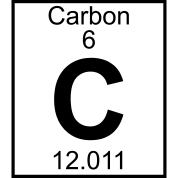
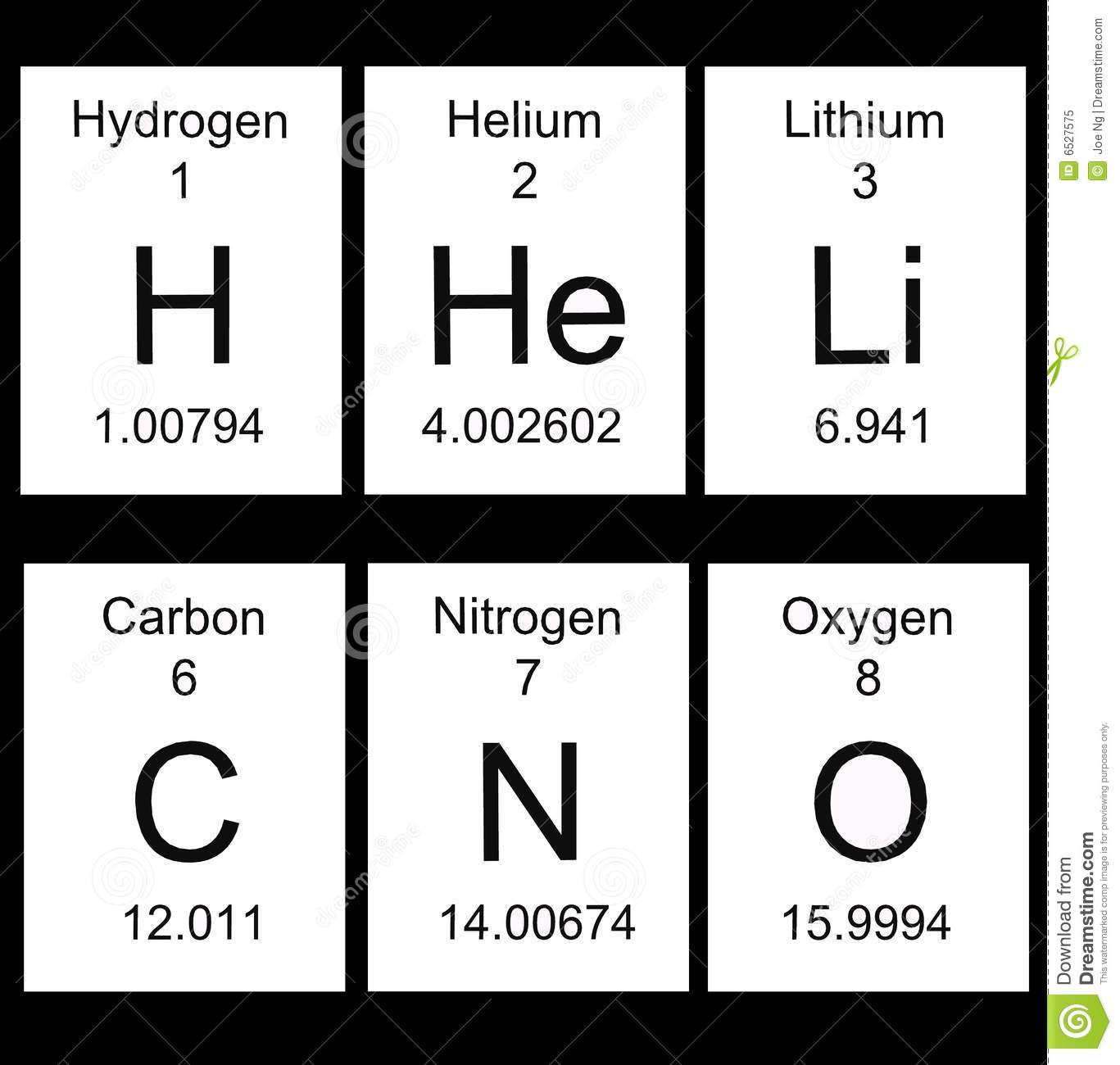
What does the 6 represent?
a)
atomic mass
b)
atomic number
c)
element name
d)
chemical symbol 
16.
What does 12.011 represent?
a)
atomic mass
b)
atomic number
c)
element name
d)
chemical symbol 
17.
What does the C represent?
a)
atomic mass
b)
atomic number
c)
element name
d)
chemical symbol 
18.
These are found on the Periodic Table.
a)
Compounds
b)
Elements
c)
Mixtures
19.

the basic structural unit of matter

a)

atom

b)

matter

c)

element

d)

nucleus

20.

a collection of atoms of one type that cannot be broken down into simpler substances by ordinary chemical or physical means

a)

element

b)

subatomic particle

c)

electron

d)

matter

21.

the positively charged subatomic particle contained in the nucleus of an atom

a)

proton

b)

neutron

c)

electron

d)

matter

22.

a subatomic particle, contained in the nucleus of an atom, having the same mass as a proton but no electrical charge

a)

proton

b)

neutron

c)

electron

d)

matter

23.

a negatively charged subatomic particle that orbits the nucleus of an atom

a)

proton

b)

neutron

c)

electron

d)

matter

24.

a unique number for each element that equals the number of protons in an atom of that element

a)

element name

b)

element symbol

c)

atomic number

d)

atomic mass

25.

the mass of an atom, calculated by adding the number of protons and neutrons in the nucleus of the atom

a)

element name

b)

element symbol

c)

atomic number

d)

atomic mass

26.
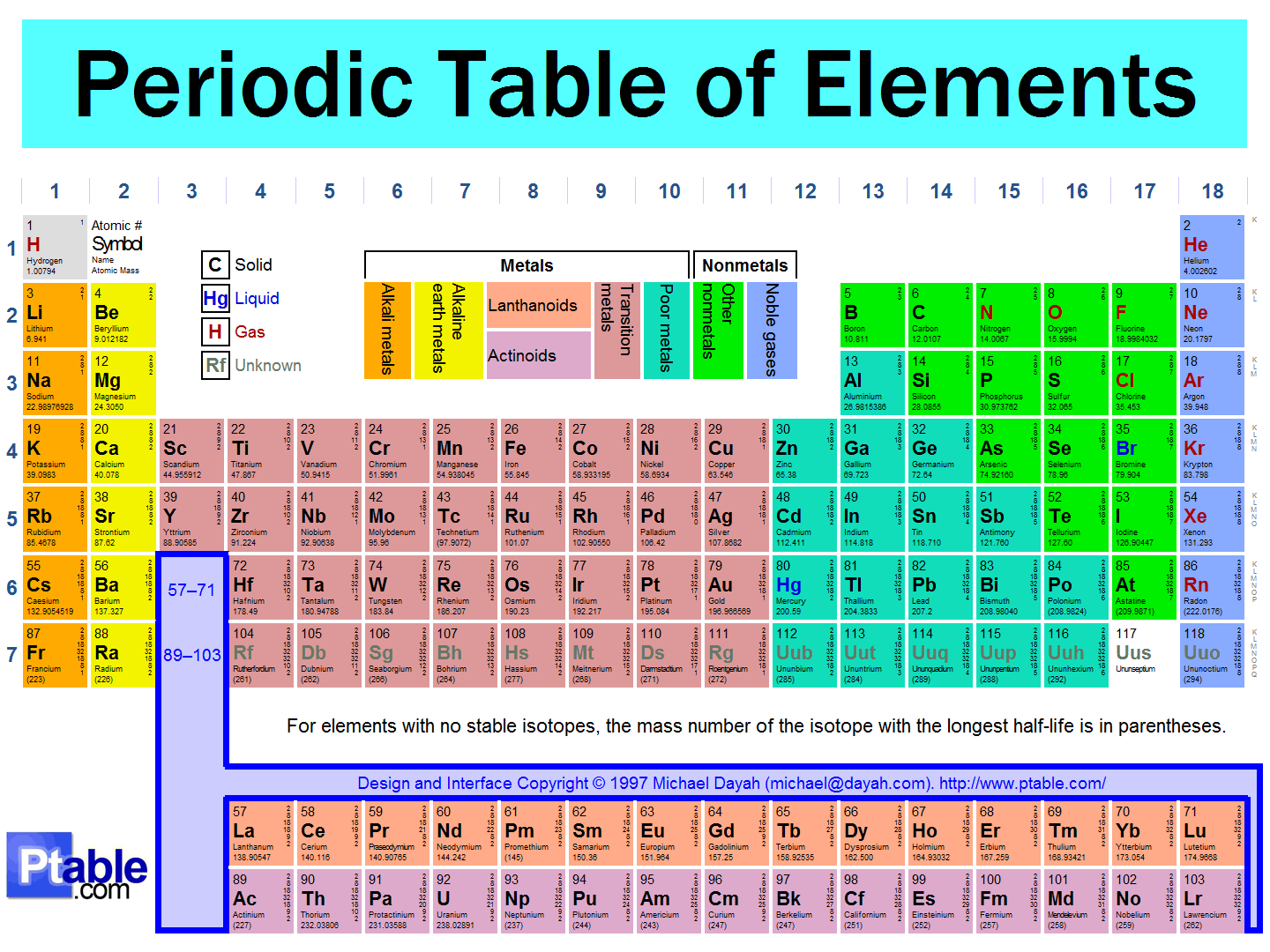
The atomic number of this pictured element is
a)
28
b)
58.6934
c)
Ni
d)
Nickel
27.
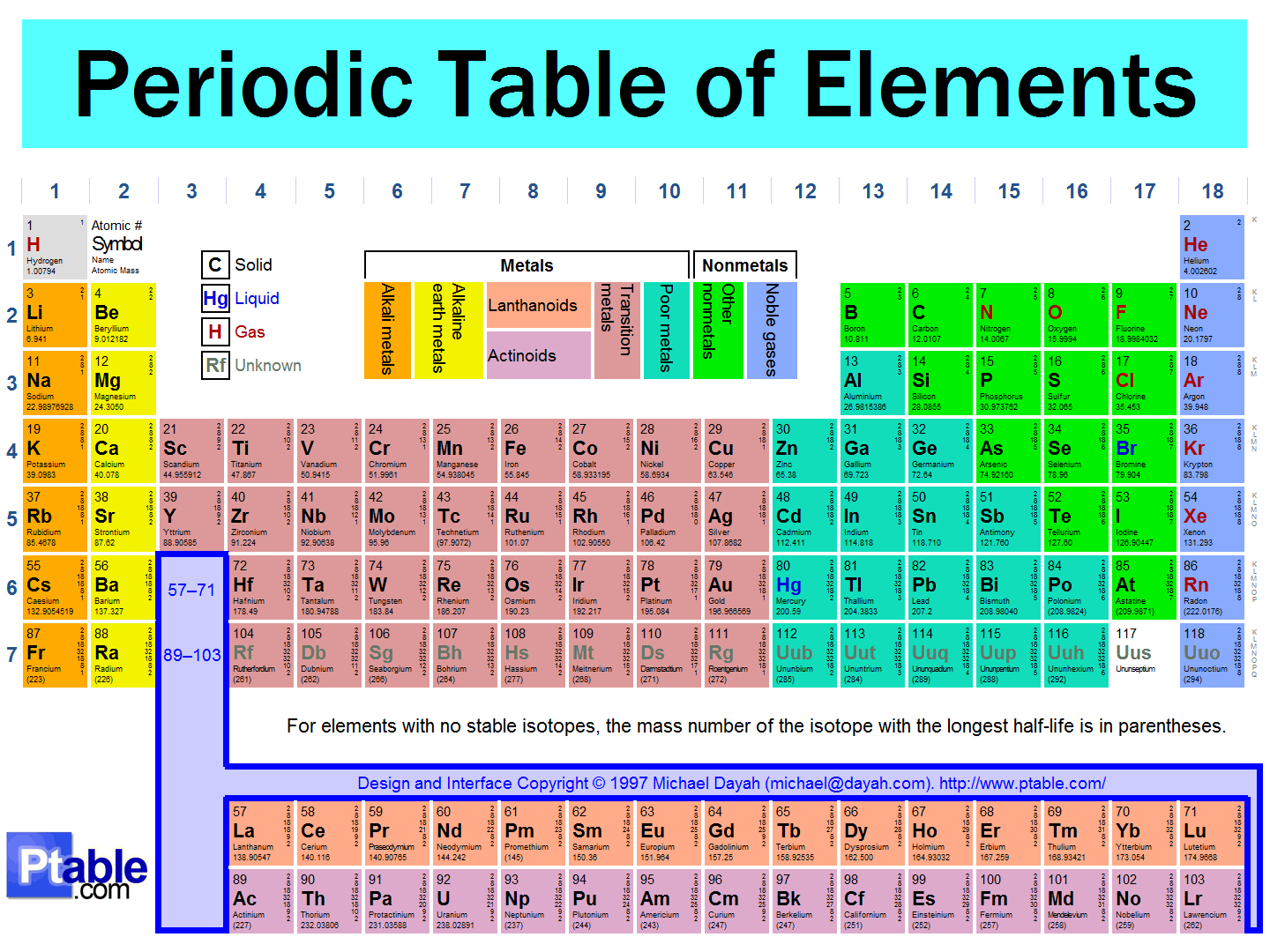
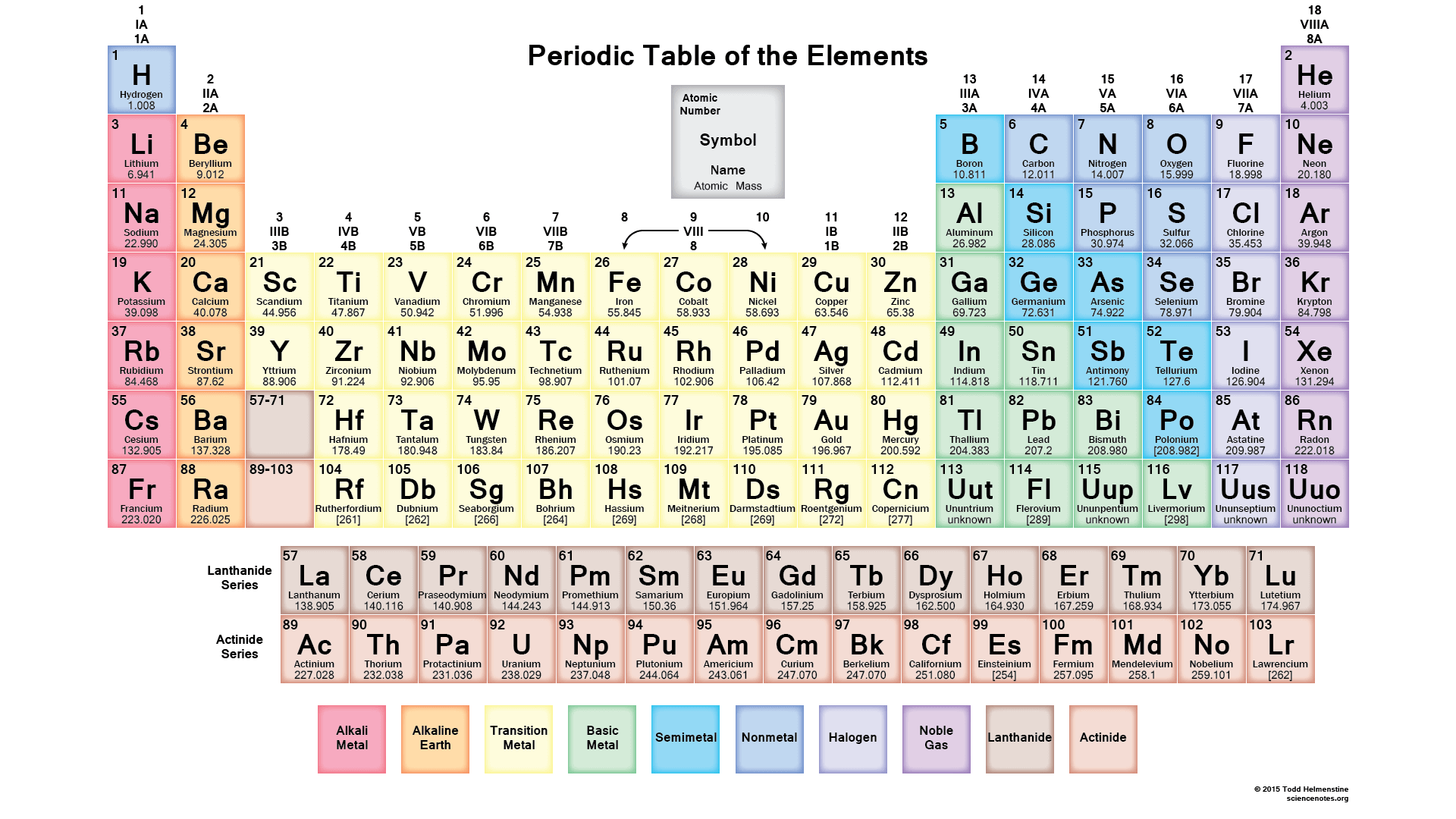
What is the atomic mass of Neon?
a)
10
b)
30
c)
10.18
d)
20.18
28.
How many protons are in this element?
a)
79
b)
196
c)
117
d)
Cannot be determined
29.
How many neutrons are in a Gold atom?
a)
79
b)
196
c)
118
d)
275
30.
The horizontal row on the periodic table is called a
a)
group
b)
family
c)
period
d)
atomic number
31.
A vertical column is called...
a)
group
b)
tower
c)
period
d)
crew
32.
The number at the bottom of each square on the periodic table is the ...
a)
atomic number
b)
atomic mass
c)
chemical symbol
d)
element name
33.
The number at the top of each square on the periodic table is the ...
a)
atomic number
b)
atomic mass
c)
Chemical Symbol
d)
Element Name
34.
What is the chemical symbol for Lithium?
a)
H
b)
He
c)
Li
d)
N
35.
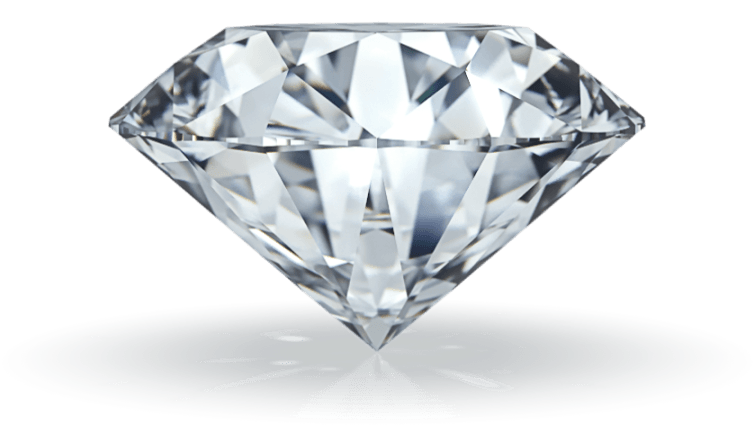
Diamonds are a pure form of what element?
a)
Carbon
b)
Oxygen
c)
Silicon
d)
Silver
36.
Most of the elements on the periodic table are classified as _____.
a)
Metals
b)
Nonmetals
c)
Metalloids
d)
Periods
37.
This class of elements are sometimes called "semiconductors."
a)
Metals
b)
Nonmetals
c)
Metalloids
d)
Groups
38.

The vertical (up and down) columns in the Periodic Table are called

a)

groups

b)

towers

c)

periods

d)

atomic numbers

39.
Sodium (Na) is found in period 
a)
3
b)
2
c)
4
d)
1
40.
Sodium (Na) is found in group 
a)
1
b)
2
c)
3
d)
4
41.
The atomic number tells you what?  READ THE ANSWERS CAREFULLY
a)
only the number of electrons
b)
 only the number of protons
c)
only the number of neutrons
d)
the number of both electrons and protons in an atom.
42.
What does the atomic mass tell you? 
a)
Basically,the number of electrons and protons
b)
The number of neutrons
c)
Basically, the number of protons and neutrons
d)
The number of protons.
43.
What does the 6 represent?
a)
atomic mass
b)
atomic number
c)
element name
d)
chemical symbol 
44.
What does 12.011 represent?
a)
atomic mass
b)
atomic number
c)
element name
d)
chemical symbol 
45.
These are found on the Periodic Table.
a)
Compounds
b)
Elements
c)
Mixtures
46.

The horizontal (side to side) rows in the Periodic Table are called

a)

groups

b)

families

c)

periods

d)

atomic numbers

47.

What are the three main groups of the periodic table?

a)

groups

b)

metal

c)

nonmetals

d)

metalloids

e)

periods

48.

What are the vertical columns on the periodic called?

a)

groups

b)

periods

c)

nonmetals

d)

metals

e)

metalloids

49.

What do the vertical columns on the periodic table tell us?

a)

The number of orbitals

b)

The number of valence electrons (electrons on the outer most shell)

50.
Which group of the periodic table is composed of inert (not reactive)  gases?
a)
alkali metals
b)
alkaline earth metals
c)
halogens
d)
noble gases
51.
The atomic number tells you what?
a)
number of electrons
b)
number of protons
c)
number of neutrons
d)
both electrons and protons in an atom.
52.
Each column in the periodic table is called a 
a)
period
b)
group
c)
cluster
d)
unit
53.
The atoms along the staircase are called 
a)
metals
b)
nonmetals
c)
metalloids
d)
noble gases
54.
How many neutrons are in a Gold atom?
a)
79
b)
196
c)
118
d)
275
55.
How many electrons does a Copper atom have?
a)
63
b)
29
c)
92
d)
34
56.
What's a valence electron?
a)
electrons in the second energy level
b)
electrons in the outermost energy level
c)
the atomic number
d)
electrons in the first level
57.
What does the 1.00794 stand for?
a)
Hydrogen
b)
atomic number
c)
atomic mass
d)
atomic explosion
58.
The positive particles of an atom are 
a)
electrons 
b)
positrons 
c)
neutrons 
d)
protons 
59.
Particles in an atom that are neutral and have no charge are 
a)
negatrons 
b)
electrons 
c)
neutrons 
d)
protons 
60.
The electrons of an atom are found...
a)
in the outer "cloud" surrounding the atom.
b)
in the nucleus of the atom.
c)
in the cloud and in the nucleus.
61.
The subatomic particle with a negative charge is the
a)
electron
b)
proton
c)
neutron
d)
nucleus 
62.
What is the atomic mass equal to?
a)
the number of protons
b)
the number of protons and neutrons
c)
the number of neutrons
d)
the number of protons and electrons
63.
In the modern periodic table elements are arranged by:
a)
atomic mass
b)
atomic number
c)
valence electrons
d)
number of isotopes
64.
What is matter composed of?
a)
Cells
b)
Atoms
65.
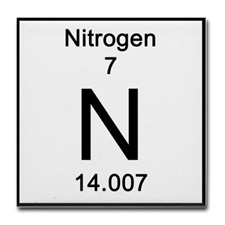
What is the number of protons that the element in this image contain?
a)
14
b)
7
c)
15
d)
18
66.
What is the number of protons that the element in this image contain?
a)
14
b)
7
c)
15
d)
18
67.
The positive particles of an atom are 
a)
Electrons 
b)
Positrons 
c)
Neutrons 
d)
Protons 
68.
The central region of an atom where its neutrons and protons are is its _______.
a)
Nucleus 
b)
Electron cloud
c)
Core 
d)
Center 
69.
An atom with atomic number 6 would have how many protons?
a)
6
b)
12
c)
3
d)
Cannot be determined 
70.
Particles in an atom that are neutral and have no charge are ______. 
a)
Negatrons 
b)
Electrons 
c)
Neutrons 
d)
Protons 
71.
An atoms overall charge is _____.
a)
Positive 
b)
Depends on its mood 
c)
Neutral 
d)
Negative 
72.
Which of the following is a negatively charged subatomic particle?
a)
Electron
b)
Proton
c)
Neutron
d)
Quark
73.
The particles that are found in the nucleus of an atom are _____.
a)
Neutrons and electrons
b)
Electrons only
c)
Protons and neutrons
d)
Protons and electrons
74.
The atomic number of an elements is the total number of which particles in the nucleus?
a)
Neutrons
b)
Protons
c)
Electrons
d)
Protons and electrons
75.
Where are electrons of an atom found?
a)
Nucleus
b)
Electron Cloud
c)
Some are in the nucleus and some in the electron cloud.
d)
They are moving everywhere.
76.
What are the 3 particles that make-up the atom?
a)
Protons, neutrons, and isotopes
b)
Neutrons, isotopes, and electrons
c)
Positives, negatives, and electrons
d)
Protons, neutrons, and electrons
77.
Which statement best describes an electron?
a)
Smaller mass than a proton and a negative charge
b)
Smaller mass than a proton and a positive charge
c)
Greater mass than a proton and a negative charge
d)
Greater mass than a proton and a positive charge
78.

The number of protons in the nucleus of an atom is called the --

a)

atom

b)

proton

c)

atomic mass number

d)

atomic number

79.

A subatomic particle that has a negative charge is called --

a)

a proton

b)

a neutron

c)

an electron

d)

the nucleus

80.

A neutron is ---

a)

a subatomic particle with a negative charge.

b)

a subatomic particle with a neutral charge.

c)

the center of the atom where subatomic particles are found.

d)

a subatomic particle with a positive charge.

81.

An arrangement of elements in order of their atomic numbers such that elements with similar properties fall in the same column or group.

a)

Atomic Number

b)

Electron Cloud

c)

Periodic Table

d)

Nucleus

82.

A subatomic particle with a positive charge is called --

a)

a proton

b)

a neutron

c)

an electron

d)

a nucleus

83.

The smallest unit of an element that maintains the properties of that element is known as--

a)

a proton

b)

a neutron

c)

an element

d)

an atom

84.

A region around the nucleus of an atom where electrons are found.

a)

Electron Nucleus

b)

Electron Cloud

c)

Cloud of Electrons

d)

Electron

85.

An atom's central region, which is made up of protons and neutrons is called--

a)

Electron Cloud

b)

Nucleolus

c)

Nucleus

d)

Atomic Number

86.

Which subatomic particle(s) are found in the nucleus of the atom? Choose all that apply.

a)

proton

b)

neutron

c)

electron

87.

Which subatomic particle(s) are found in the electron cloud of an atom? Choose all that apply.

a)

proton

b)

neutron

c)

electron

88.

What is an atom?

a)

The smallest unit of matter

b)

The smallest unit of measurement

c)

Your next door neighbor

89.

What does the atomic mass tell you?

a)

The number of neutrons + protons

b)

The number of electrons

c)

The number of electrons + protons

90.

How many protons are in Neon?

a)

20

b)

10

c)

30

91.

How many neutrons are in Neon

a)

20

b)

10

c)

30

92.

How many electrons are in Helium?

a)

2

b)

4

93.

What is the atomic number of Helium?

a)

4

b)

2

94.

If Carbon has an atomic mass of 12 and has 6 protons, how many electrons does it have?

a)

18

b)

6

c)

12

95.

True or False: The number of protons and neutrons are always the same

a)

False

b)

True

96.

What is the atomic mass of this element?

a)

1

b)

2

c)

3

97.

What is the atomic mass of Oxygen?

a)

8

b)

16

c)

0

98.

Cobalt has 27 protons, 32 neutrons, and 27 electrons. What is the atomic number?

a)

32

b)

59

c)

27

d)

5

99.
Sodium has an atomic number of 11, how many protons does this atom have?
a)
22
b)
11
c)
12
d)
2
100.
Where is the proton located?
a)
In the very dense nucleus
b)
Floating around in the negative electron cloud
c)
the loose nucleus
d)
the positive electron cloud
101.
What number on the element key tells you how many protons an element has?
a)
Atomic Mass
b)
Element name
c)
Atomic number
d)
Element Symbol
102.
Which description about the proton is accurate?
a)
Positively charged particle with a mass less than 0 amu
b)
A neutrally charged particle with a mass less than 0 amu
c)
Positively charged particle with a mass of 1 amu
d)
A neutrally charge particle with a mass of 1 amu
103.
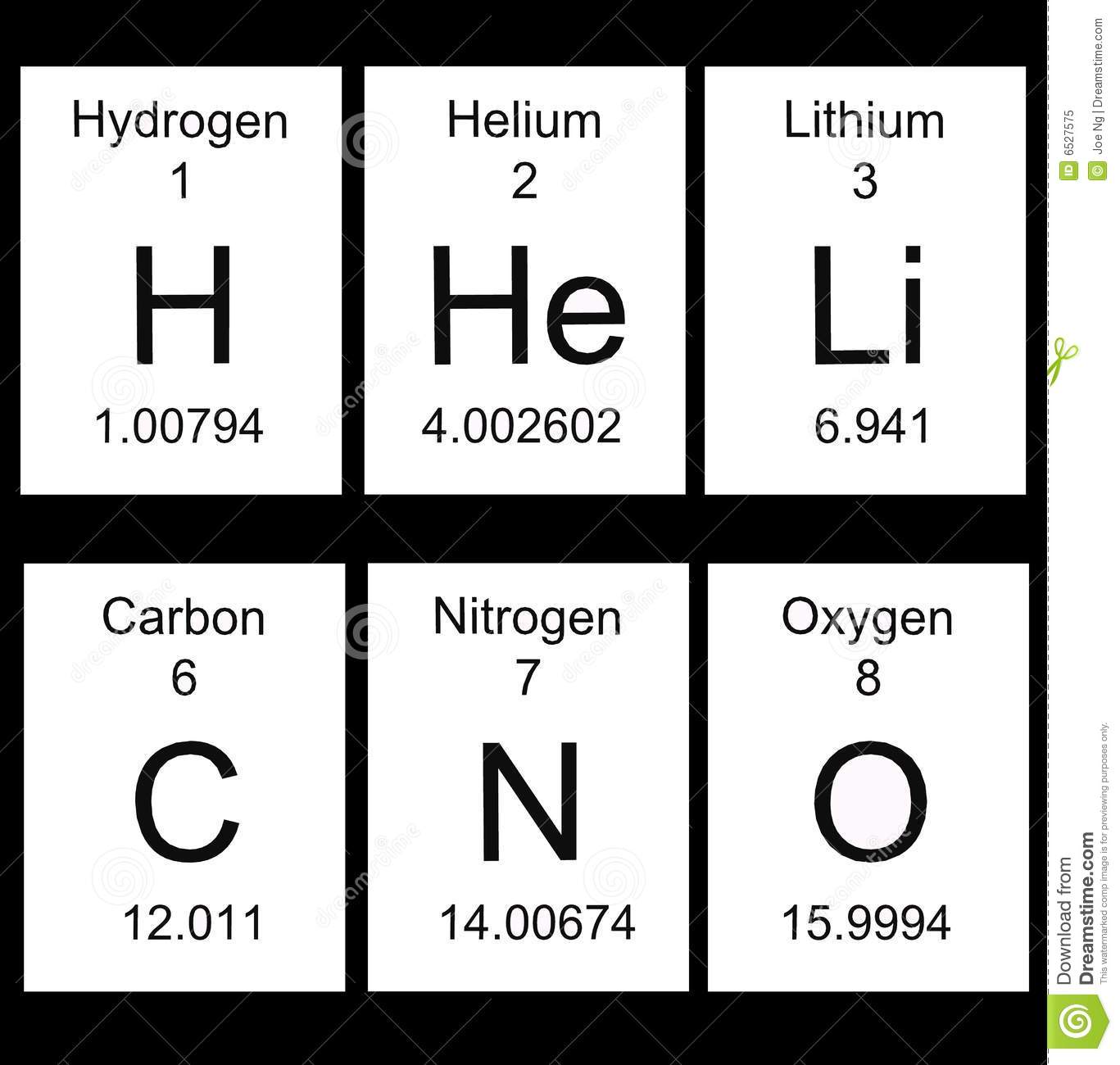
The following element key shows how many protons?
a)
16
b)
15.999
c)
Oxygen
d)
8
104.
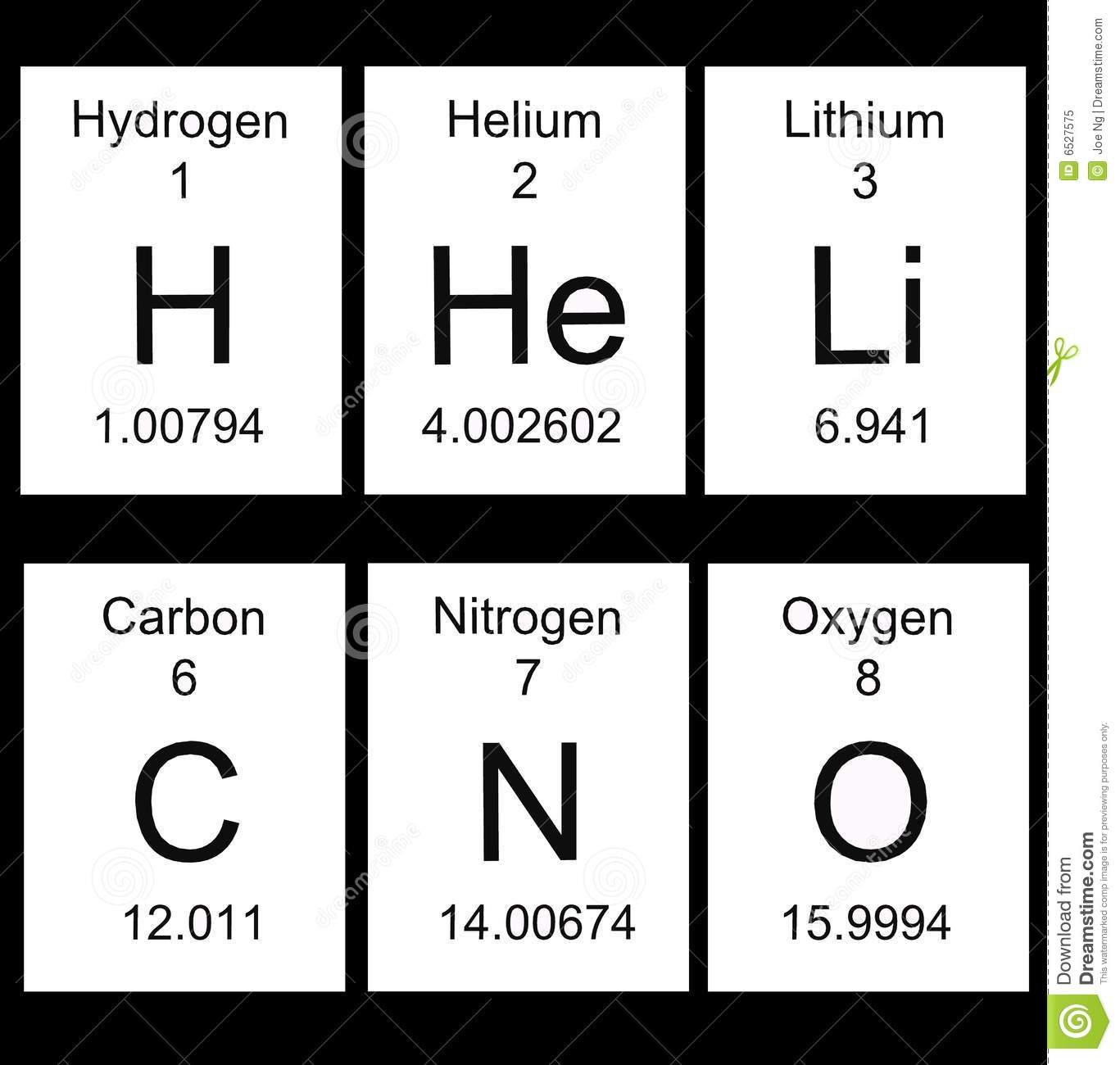
The following element key shows how many protons?
a)
16
b)
15.999
c)
Oxygen
d)
8
105.
Elements can have the same number of protons?
a)
True
b)
False
106.
Protons are equal to:
a)
Atomic Mass
b)
Number of neutrons
c)
Atomic Number
d)
All of the subatomic particles
107.
What is the relative mass of a Proton?
a)
1AMU
b)
7 lbs
c)
Mass of 3g
d)
Less than 1 AMU
108.
What is the relative mass of a Proton?
a)
1AMU
b)
7 lbs
c)
Mass of 3g
d)
Less than 1 AMU
109.
Which subatomic particle causes the nucleus to have a positive charge?
a)
Neutron
b)
Electrons
c)
Protons
d)
Valence electrons
110.
The electron cloud is the home of the proton?
a)
True
b)
False
111.
Which of the following is NOT an accurate description of the nucleus?
a)
positively charged from the protons
b)
extremely dense from neutrons and protons
c)
negatively charged
d)
in the center of the atom
112.
Which subatomic particle along with the protons make up the total mass of an atom.
a)
Neutron
b)
Electrons
c)
Valence electrons
d)
protons make up all the mass
113.
A stable element with 27 electrons will contain how many protons?
a)
27 protons in the electron cloude
b)
59 protons in the extremely dense nucleus
c)
27 protons in the extremely dense nucleus
d)
59 protons in the electron cloud
114.

What is the formula to solve for the neutron?

a)

Mass + Atomic Number= Neutrons

b)

Mass x Atomic Number = Neutrons

c)

Mass - Atomic Number = Neutrons

d)

Mass + Number of Protons = Neutron

115.
What is the charge of the neutron?
a)
Negative
b)
Positive
c)
electrical charge
d)
Neutral (no charge)
116.
How many neutrons does the an element with an atomic number of 3 and a mass of 6.9 contain?
a)
6.9
b)
4
c)
3
d)
7
117.
How many neutrons does oxygen have?
a)
16
b)
15.99
c)
8
d)
Doesn't contain any neutrons
118.
How many neutrons does a Hydrogen atom have?
a)
1
b)
2
c)
3
d)
0
119.
What is the number highlighted?
a)
Atomic number
b)
Atomic mass
c)
Number of protons
d)
Number of electons
120.
Which letter represents a proton?
a)
A
b)
B
c)
C
d)
D
121.
Which letter represents a neutron?
a)
A
b)
B
c)
C
d)
D
122.
Which letter represents an electron?
a)
A
b)
B
c)
C
d)
D
123.
Which letter represents the nucleus?
a)
A
b)
B
c)
D
d)
E
124.

How many neutrons does platinum have?

a)

78

b)

117

c)

195

d)

196

125.
In order for me to find the number of neutrons, I must round the atomic mass and then do what?
a)
atomic number-atomic mass
b)
atomic number x atomic mass
c)
atomic mass + atomic number
d)
atomic mass - atomic number
126.

How many neutrons in Lithium?

a)

3

b)

4

c)

7

127.

How many neutrons does Helium have?

a)

2

b)

4

c)

6

128.

Which element has 6 protons?

a)

Be

b)

B

c)

C

d)

N

129.

Which element has 10 protons?

a)

Na

b)

Ne

c)

Mg

d)

Al

130.

How many NEUTRONS does Xenon have

a)

131

b)

54

c)

77

d)

185

131.

How many Neutrons does Neon have?

a)

10

b)

20.18

c)

10.18

d)

20.18

132.

How many NEUTRONS does an Iodine atom have?

a)

53

b)

126

c)

74

d)

179

133.

Which subatomic particles have the least mass?

a)

Neutrons

b)

Protons

c)

Electrons

d)

Atoms

134.

How many NEUTRONS does Sodium have?

a)

11

b)

22

c)

33

d)

12

135.
What is the mass of a neutron?
a)
1 amu
b)
0 amu
c)
same as electron
d)
doesn't have any mass
136.
What is the mass of a neutron?
a)
1 amu
b)
0 amu
c)
same as electron
d)
doesn't have any mass
137.
How many Hydrogen are in 4H2O?
a)
6
b)
8
c)
2
d)
4
138.
How many Oxygen are in H2O?
a)
1
b)
2
c)
0
d)
4
139.
How many Magnesium are in 10MgCl2?
a)
10
b)
5
c)
20
140.
How many O's are in Al₂(SO₄)₃
a)
4
b)
12
c)
7
d)
24
141.
Number of H in 3(NH₄)₂CrO₄
a)
4
b)
2
c)
8
d)
24
142.
How many atoms are there TOTAL in:
H2SO4
a)
6
b)
5
c)
7
d)
3
143.
How many elements are in C6H12O6?
a)
1
b)
2
c)
3
d)
4
144.
How many Sodium (Na) are in 6NaCl?
a)
1
b)
12
c)
6
145.
Number of N in (NH₄)₂CrO₄
a)
1
b)
2
c)
8
d)
16
146.
How many Sodium (Na) are in 6NaCl?
a)
1
b)
12
c)
6
147.
Number of N in (NH₄)₂CrO₄
a)
1
b)
2
c)
8
d)
16
148.
How many O's are in Al₂(SO₄)₃
a)
4
b)
12
c)
7
d)
24