wayground logo

Free Printable Worksheets

Font size

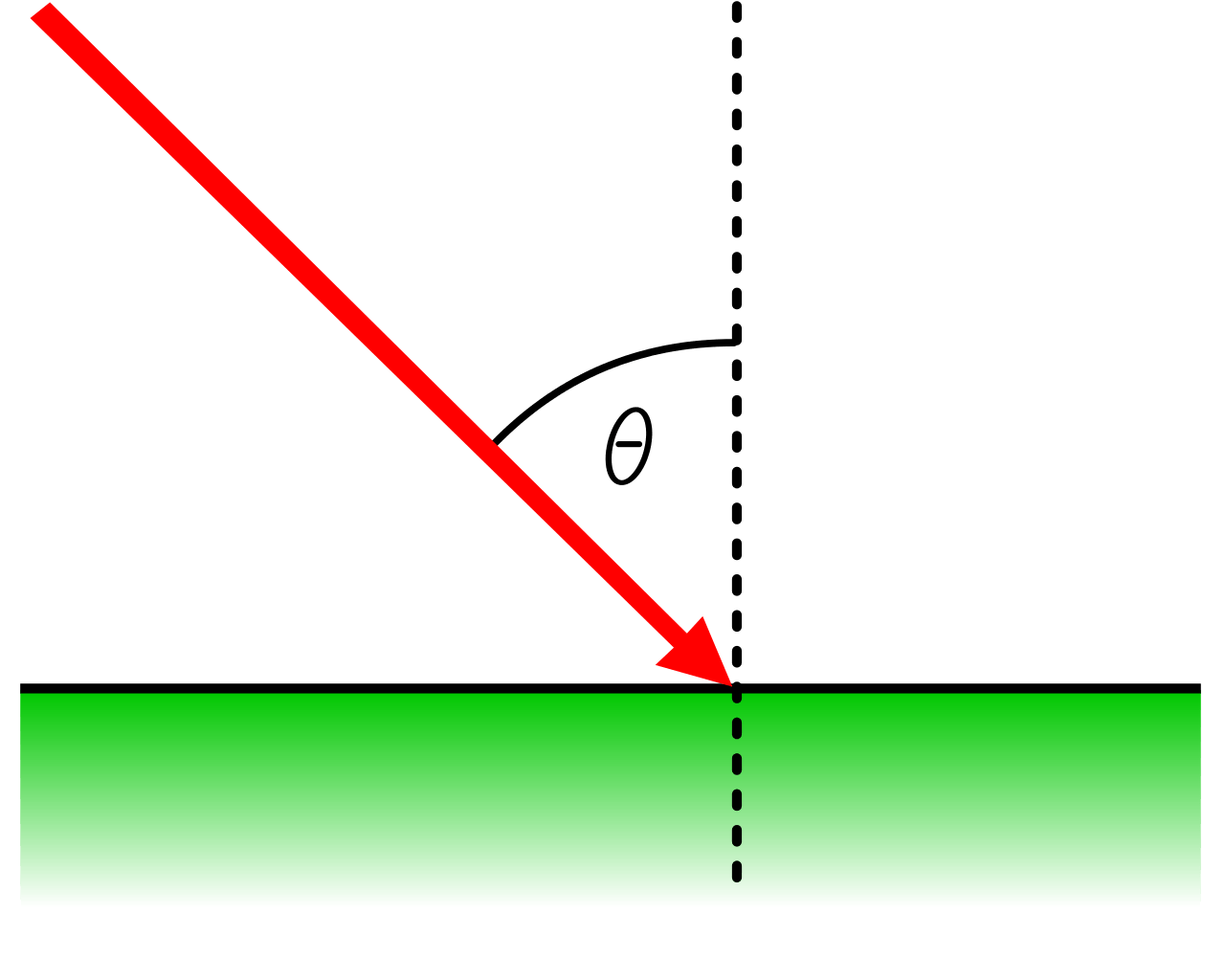
S
M
L
XL
Worksheets

Optics

Total questions: 148

Worksheet time: 2hrs 53mins

Name
Class
Date
1.
a)
Concave
b)
Convex
c)
Concord
d)
Plane
2.
Which type of lens is shown?
a)
Concave
b)
Convex
c)
Concord
d)
Plane
3.
What is happening in this picture?
a)
Reflection
b)
Refraction
c)
Diffraction
d)
Absorption
4.
What is happening in this picture?
a)
Reflection
b)
Refraction
c)
Diffraction
d)
Absorption
5.
What is happening in this picture?
a)
Reflection
b)
Refraction
c)
Diffraction
d)
Absorption
6.
When light bounces off of an object
a)
Absorption
b)
Diffraction
c)
Reflection
d)
Refraction
7.
When light enters a new medium, but does not pass through (like hitting a brick wall)
a)
Absorption
b)
Diffraction
c)
Reflection
d)
Refraction
8.
The bending of a wave as it moves around an obstacle or passes through a narrow opening.
a)

Absorption

b)
Diffraction
c)
Reflection
d)
Refraction
9.
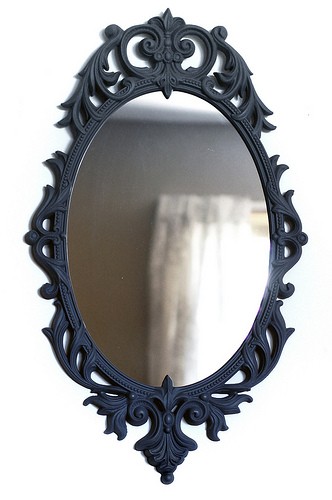
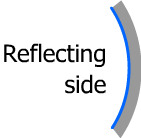
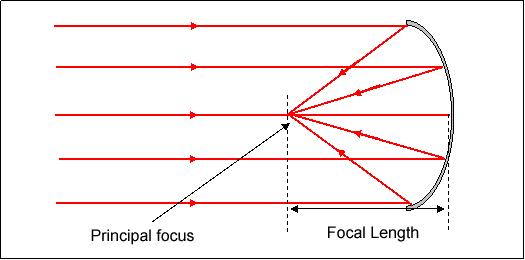
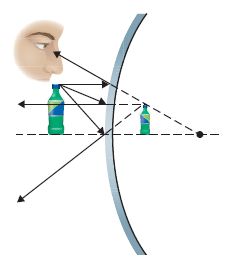
Which type of mirror is shown.
a)
Concave
b)
Convex
c)
Concord
d)
Plane
10.
Which type of mirror magnifies a close up image, like a make-up mirror.
a)
Concave
b)
Convex
c)
Concord
d)
Plane
11.
When light strikes an object with a rough surface, photons bounce off at random angles.
a)
Occer
b)
Scope
c)
Scattering
d)
Scattegories
12.
Allows little to no light through.
a)
Transparent
b)
Translucent
c)
Opal
d)
Opaque
13.
Curve Out
a)
Converse
b)
Concave
c)
Convex
d)
Convection
14.
The bending of waves as they pass from one substance into another.
a)
Reaction
b)
Reflection
c)
Refraction
d)
Repost
15.
The term for any wave that hits a surface and bounces off
a)
Transparent
b)
Translucent
c)
Refraction
d)
Reflection
16.
Blurs light as it passes through
a)
Transparent
b)
Translucent
c)
Opaque
d)
Refraction
17.
Transfer of energy when a wave disappears into a surface
a)
Transparent
b)
Refraction
c)
Reflection
d)
Absorption
18.
Allows most light through
a)
eflection
b)
Refraction
c)
Translucent
d)
Transparent
19.
A substance through which light travels.
a)
Wavelength
b)
Opaque
c)
Frequency
d)
Medium
20.
Light travels on straight lines.
a)
Light Bulb
b)
Sunshine
c)
Light Rays
d)
Frequency
21.
The bending of light when it moves through one kind of matter to another is.....
a)
absorption
b)
reflection
c)
refraction
d)
a rainbow
22.
The bouncing of light off an object is ....
a)
a mirror
b)
absorption
c)
reflection
d)
refraction
23.
The taking in of light by a material....
a)
absorption
b)
reflection
c)
refraction
d)
dark colors
24.
Light is a kind of.....
a)
reflection
b)
energy
c)
heat
d)
matter
25.
Which of these describes how light travels through an empty space?
a)
It travels straight but may change direction to avoid objects.
b)
It changes direction often even if there are no objects. 
c)
It comes to a stop after it travels a certain distance. 
d)
It travels in a straight line without stopping. 
26.

What does the pencil in this picture show about light?

a)

Light is refracted when it hits a curved object.

b)

Light is reflected when it hits a curved object.

c)

Light is refracted when it passes from air into water.

d)

Light is reflected when it passes from air into water.

27.
What surface best reflects light?
a)
dull
b)
shiny
c)
clear
d)
black
28.
What kind of path does light take?
a)
It travels in a straight line until it hits something or goes through it.
b)
It bounces off all objects.
c)
It curves around all objects.
d)
It goes through all objects.
29.
What happens to light passing through a prism?
a)
It goes right through it.
b)
It bends and the light separates.
c)
It bounces off it
d)
It goes around it.
30.
How is refraction different from reflection.
a)
Reflection is the bouncing of light off an object and refraction is the bending of light when it moves through one kind of matter to another.
b)
Reflections is the bending of light when it moves through one kind of matter to another and refraction is the bouncing of light off an object.
31.
If a black and white car were in the parking lot all day. Compare the temperatures of the two cars.
a)
The black car would be cooler.
b)
The white car would be hotter.
c)
The black car would be hotter.
d)
They would be the same
32.
What shape does light travel in?
a)
Waves
b)
Circles
c)
Squares
d)
Diamonds
33.
Light is predictable because it will always travel in a _________ line.
a)
Curvy
b)
Straight
c)
Backwards
d)
Crazy
34.
What types of matter can light travel through?
a)
Some solids, liquids, gases and all empty space (vacuum)
b)
All solids, liquids, gases, and empty space (vacuum)
c)
Some solids, liquids, and gases
d)
Only empty space (vacuum)
35.
If light passes through two different types of matter, it will do what?
a)
Reflect
b)
Refract
c)
Absorb
d)
Diffuse
36.
If light strikes a mirror at a 50⁰ angle, what angle will it come off of the mirror?
a)
50⁰
b)
70⁰
c)
45⁰
d)
30⁰
37.
You have cool glow-in-the-dark stickers of Mickey Mouse. This is an example of 
a)
fluorescence
b)
chemiluminescence
c)
phosphorescence 
d)
incandescence
38.
The picture here is an example of...
a)
artificial light called bioluminescence
b)
artificial light called chemiluminescence
c)
natural light called bioluminescence
d)
natural light called chemiluminescence
39.

A flashlight is an example of a ________________ light source

a)

Natural

b)

Nuclear

c)

Reflection

d)

Electric

40.

Glo-Sticks are an example of a __________ light source.

a)

Chemical

b)

Nuclear

c)

Electric

d)

Combustion

41.

The picture shows an example of a ________________ light source.

a)

Nuclear

b)

Chemical

c)

Natural

d)

Combustion

42.
What is the most prominent use of Fiber Optics today?
a)
Phones
b)
Television Screens
c)
The Internet
d)
MRI imaging
43.
According to the Law of reflection, a light ray striking a mirror
a)
continues moving through the mirror in the same direction
b)
moves into the mirror at a slightly different angle
c)
bounces off the mirror toward the direction it came from
d)
bounces off the mirror at the same angle it hits.
44.
Which is the angle of incident?
a)
Angle 1
b)
Angle 2
45.
An image that you can see when you look into a mirror, but does not really exist is called which of the following?
a)
Real Image
b)
Fake Image
c)
Virtual Image
d)
Digital Image
46.
a real image...
a)
is produced by virtual rays and can be projected on a screen
b)
is produced by real rays and cannot be projected on a screen
c)
is produced by virtual images and cannot be projected on a screen
d)
is produced by real rays and can be projected on a screen
47.
What is an image called that forms when light rays actually meet
a)
virtual image
b)
real image
c)
diffuse reflection
d)
regular reflection
48.
What is an image called that forms where light seems to come from
a)
virtual image
b)
real image
c)
diffuse reflection
d)
regular reflection
49.
Plane mirrors always produce ______
a)
Real images
b)
Virtual Images
50.

The ray of light that strikes a mirror

a)

Reflected Ray

b)

Incidence Ray

c)

Angle of Incidence

d)

Angle of Reflection

51.

The ray that bounces off the mirror.

a)

Angle of Reflection

b)

Incidience Ray

c)

Reflected Ray

d)

Angle of Reflection

52.

The angle between the incident ray and the normal. (X on the diagram)

a)

Angle of X-Ray

b)

Angle of Reflection

c)

Angle of Incidence

d)

Angle of Normal

53.

The angle between the reflected ray and the normal (labelled Y on the diagram).

a)

Angle of Incidence

b)

Angle of Reflection

c)

Angle of Normal

d)

Angle of Light

54.

An imaginary line that is drawn at a right angle (90 degrees) to a mirror (Green line)

a)

Reflection Ray

b)

Normal

c)

Incidence Ray

d)

Light Ray

55.

Given that the angle of incidence = 30 degrees


Which is the correct diagam?

a)

A

b)

B

c)

C

d)

D

56.

A ray of light is incident towards a plane mirror at an angle of 30-degrees with the mirror surface. What will be the angle of reflection?

a)

30°

b)

60°

c)

90°

d)

120°

57.
What has to happen for you to see an object?
a)
Light shines on an object.
Some light bounces off it to your eyes.
b)
The object shines so you can see it.
58.
An object makes a shadow because...
a)
The object blocks the path of the light but lights up the area around the object.
b)
The light source stops working here and there.
59.
A shadow is created in front of an object.
a)
True
b)
False
60.
A shadow has a similar shape as the object.
a)
True
b)
False
61.
Why can you look through a window and see an object? 
a)
The window absorbs all of the light.
b)
The window scatters all of the light.
c)
Light is transmitted through the window to your eyes.
d)
Light is reflected off the window.
62.
What allows the least amount of light to pass through because they absorb the most light?
a)
sunglasses
b)
air
c)
eyeglasses
d)
fake glasses
63.
Why does a darker object feel hotter than a lighter object?
a)
The darker object scatters more light.
b)
The darker object transmits more light.
c)
The darker object reflects more light.
d)
The darker object absorbs more light.
64.
When light shines on paper, the amount of light reflected off of it is small because...
a)
Light is absorbed entirely
b)
Light is scattered in all directions
c)
The paper is smooth
d)
The paper is shiny
65.
When does a mirror reflect the most light from a flashlight?
a)
When the flashlight is shining directly at the mirror
b)
When the flashlight is shining on the mirror at an angle
66.
Can I see my friend who is around the corner from me?
a)
Yes, there is a direct path around corners
b)
No, I need a direct path to see my friend
c)
Yes, I can use my x-ray  vision
d)
No, my friend isn't really there
67.
Law of reflection state that - The angle of incidence is .................. to the angle of reflection.
a)
equal
b)
double
c)
half
68.
........... – the angle between the normal and the reflected ray.
a)
Angle of incidence
b)
Angle of reflection
c)
Angle of coincidence
d)
Angle of direction
69.
....................... - the imaginary line perpendicular to the surface.
a)
Normal
b)
Angle of incidence 
c)
Angle of reflection
70.
What is the ray of light that strikes the surface.
a)
Incident ray
b)
reflected ray
c)
normal ray
d)
normal
71.
What is B?
a)
Angle of incidence
b)
Angle of reflection
c)
Incident ray
d)
Reflected ray
72.
What is C?
a)
Angle of incidence
b)
Angle of reflection
c)
Incident ray
d)
Reflected ray
73.
What is E?
a)
Angle of incidence
b)
Angle of reflection
c)
Normal
d)
Reflect ray
74.
What is X?
a)
22.5°
b)
45°
c)
67.5°
d)
90°
75.
What does the word "converging" mean?
a)
to separate
b)
to come together
c)
parallel 
d)
perpendicular
76.
A converging lens is also known as a ____ lens.
a)
convex
b)
concave
c)
double
d)
refracted
77.
_____ is a lens that is thicker in the middle and makes an object appear bigger.
a)
prism
b)
convex lens
c)
concave lens
d)
mirror
78.
a flat sheet of glass that has a smooth, silver-colored coating on one side
a)
plane mirror
b)
concave mirror
c)
convex mirror
d)
solid mirror
79.
What does it mean to reflect?
a)
bounce off
b)
bend
c)
refract
d)
energy
80.
An image that you can see when you look into a mirror, but does not really exist is called which of the following?
a)
Real Image
b)
Fake Image
c)
Virtual Image
d)
Digital Image
81.
The following is a picture of what type of mirror? 
a)
Convex (diverging) mirror
b)
Concave (converging) mirror
c)
Plane Mirror
d)
Flat Mirror
82.
The following is a picture of what type of mirror? 
a)
Convex (diverging) Mirror
b)
Concave (converging) Mirror
c)
Plane Mirror
d)
Flat Mirror
83.
This is an example of a __________ mirror.
a)
Concave
b)
Convex
c)
Plane
d)
Magnifying
84.
Convex mirrors cause light to spread out.
a)
True
b)
False
85.
A mirror with a flat surface is a plane mirror.
a)
true
b)
false
86.
What kind of mirror is shown here?
a)
plane
b)
concave
c)
convex
d)
diffuse
87.
Which of the mirrors is used as rear view mirror in vehicles?
a)
Concave
b)
Convex
c)
Plane
88.
a mirror with a surface that curves inward like the inside of a bowl
a)
concave mirror
b)
convex mirror
c)
plane mirror
d)
flat mirror
89.

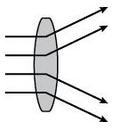
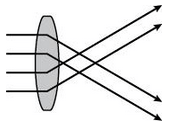
Which lens represents the path light takes through a diverging lens?

a)
b)
c)
d)
90.

The above lens is a type of ___.

a)

diverging lens

b)

converging lens

c)

divergent lens

d)

convergent lens

91.

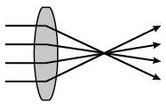
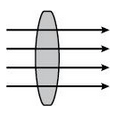
Which figure represents the path light takes through a converging lens?
a)
b)
c)
d)
92.

The image of an object, which is placed one foot in front of a plane mirror, will be ___.

a)

behind the mirror and reversed, left to right.

b)

behind the mirror.

c)

in front of the mirror and reversed, left to right.

d)

in front of the mirror.

93.

Which optical device bends light inward?

a)

convex lens

b)

concave lens

c)

plane mirror

d)

convex mirror

94.

A shopkeeper wants to keep an eye on his store in order to prevent shoplifting. What could the shopkeeper hang on the wall in order to see a wider image of his store and his customers?

a)

a convex mirror

b)

a concave mirror

c)

a convex lens

d)

a concave lens

95.

What type of lens is used in the shown instrument?

a)

concave lens

b)

convex lens

c)

reflection lens

d)

reduction lens

96.

A flat mirror is an example of a ___.

a)

plane mirror

b)

concave mirror

c)

convex mirror

d)

spherical mirror

97.

What type of lens creates the image seen in the eyeglasses?

a)

convex

b)

concave

c)

reflection

d)

plane

98.

A lens that is thicker in the middle than on the outside is called ___.

a)

diverging

b)

concave

c)

convex

d)

achromatic

99.

A lens that is thinner in the middle than on the outside is called ___.

a)

diverging

b)

concave

c)

convex

d)

achromatic

100.

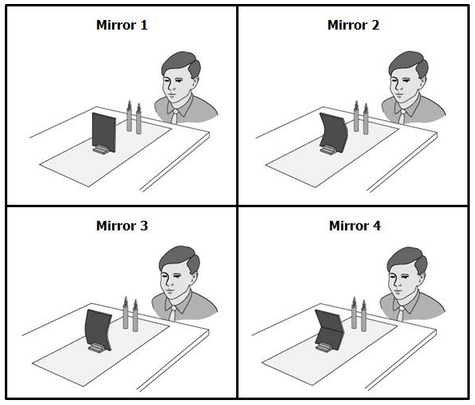
A student is conducting an experiment with four different types of mirrors. Which mirror in the experiment diverges light and produces an right side up, smaller image of the candles? (hint: no two mirrors are the same)

a)

mirror 1

b)

mirror 2

c)

mirror 3

d)

mirror 4

101.

A student is conducting an experiment with four different types of mirrors. Which mirror in the experiment is a concave mirror?

a)

mirror 1

b)

mirror 2

c)

mirror 3

d)

mirror 4

102.

A student is conducting an experiment with four different types of mirrors. Which mirror in the experiment is a plane mirror?

a)

mirror 1

b)

mirror 2

c)

mirror 3

d)

mirror 4

103.

What word means to bend light rays toward each other?

a)

Converging light

b)

Diverging light

c)

Virtual Light

d)

Real Light

104.

What word means to bend light rays away from each other?

a)

Converging light

b)

Diverging light

c)

Virtual Light

d)

Real Light

105.

A dentist uses a small dental mirror to help magnify teeth in your mouth. What type of mirror is this?

a)

a convex mirror

b)

a concave mirror

c)

a convex lens

d)

a concave lens

106.

The side view mirrors on your car help shrink the image on both sides of the car, allowing you to see a larger field of view. What type of mirror is this?

a)

a convex mirror

b)

a concave mirror

c)

a convex lens

d)

a concave lens

107.

Why do some people have blurry vision?

a)

because the back of their eye is too far or close, and the image they see is not focused

b)

because their eye is broken so they can't see

c)

because they put too many eye drops in their eyes and now they have milk in the back of their eyeball

108.

What is the cornea-lens?

a)

the back part of the eye where the image is formed

b)

the front part of the eye that is clear

c)

the black part that light goes through

d)

the colored part

109.

What is the pupil of the eye?

a)

the back part of the eye where the image is formed

b)

the front part of the eye that is clear

c)

the black part that light goes through

d)

the colored part

110.

What is the iris of the eye?

a)

the back part of the eye where the image is formed

b)

the front part of the eye that is clear

c)

the black part that light goes through

d)

the colored part of the eye

111.

The back part where the image is formed

a)

retina

b)

cornea-lens

c)

pupil

d)

iris

112.

the black part that light goes through

a)

pupil

b)

iris

c)

cornea-lens

d)

retina

113.

the colored part of the eye

a)

pupil

b)

iris

c)

cornea-lens

d)

retina

114.

the clear front part of the eye

a)

pupil

b)

iris

c)

cornea-lens

d)

retina

115.

What part of the eye does light go through?

a)

pupil

b)

retina

c)

iris

116.
What part of your eye sends the messages to and from your brain?
a)
retina
b)
optic nerve
c)
iris
d)
vitreous humor
117.
What is the pupil?
a)
Dot
b)
Hole
c)
Muscle
d)
Organ
118.
How does light travel?
a)
fast and straight
b)
slow and smooth
c)
fast and crooked
d)
zig zag and high
119.
What part of your eye is a muscle?
a)
iris
b)
sclera
c)
pupil
d)
retina
120.
What are the two jobs of a lens?
a)
focus and magnify
b)
focus and flip
c)
focus and see
d)
flip and see
121.
When we see white light, such as sunlight, what colors are we seeing.
a)
None
b)
All of the colors
c)
Opaque
d)
White
122.
What is the job of the pupil?
a)
to let light enter the eye
b)
carry signals from the retina to the brain
c)
protect the eye
d)
to see colors
123.
What is the job of the lens?
a)
To protect the eye
b)
to open or shrink the pupil
c)
let light into the eye
d)
focuses the light onto the retina at the back of the eye
124.
What is the function of the retina?
a)
bend light so that our eyes are able to adjust in various settings.
b)
control the movement of our eyes. 
c)
sends impulses to the brain for visual recognition. 
d)
protect the eye from bacteria and debris. 
125.
What is letter B?
a)
Optic nerve
b)
Lens
c)
Cornea
d)
Retina
126.
What is letter F?
a)
Retina
b)
Pupil
c)
Vitreous humor
d)
Iris
127.
What is letter G?
a)
Sclera
b)
Retina
c)
Lens
d)
Vitreous humor
128.
What is letter H?
a)
Cornea
b)
Optic nerve
c)
Iris
d)
Retina
129.
What is letter I?
a)
Cornea
b)
Lens
c)
Vitreous humor
d)
Optic nerve
130.
When someone can see better far away. 
a)
Farsighted 
b)
Shortsighted 
c)
Blind 
d)
Nearsighted 
131.
Which structure is at the back of the human eye where light through the lens is focused?
a)
Cornea
b)
Pupil
c)
Retina
d)
Rod
132.
What gives the biggest part of the eye its shape?
a)
vitreous body
b)
rods
c)
pupil
d)
lens
133.
To correct fuzzy vision, many people may wear: 
a)
hats
b)
goggles
c)
glasses
d)
binoculars
134.
Which part of your eye would you consider to be the "great messanger"?
a)
retina
b)
optic nerve
c)
sclera
d)
blood vessels
135.
What automatically shuts to help to protect the eye?
a)
iris
b)
eyelash
c)
eyelid
d)
lens
136.
When an image hits the retina it is upside down. What flips it over so that it is right side up?
a)
lens
b)
retina
c)
optic nerve
d)
brain
137.
Which part is the colorful part of the eye?
a)
pupil
b)
iris
c)
cornea
d)
eyeball
138.
If a person can see things clearly that are close they are?
a)
Farsighted
b)
Nearsighted
139.

Which technology CAPTURES and MAGNIFIES light?

a)

Telescope

b)

Microscope

c)

Camera

d)

All of them

140.

Which optical technology do we use to observe small things?

a)

Telescope

b)

Microscope

c)

Camera

d)

ALL of them

141.

Which technology do we use to observe FARAWAY objects?

a)

Telescope

b)

Microscope

c)

Camera

d)

All of them

142.

Which technology focuses light onto film/sensor so it can create a picture?

a)

Telescope

b)

Microscope

c)

Camera

d)

All of them

143.

In what two types can we classify telescopes?

a)

Reflectors & Refractors

b)

Reflectors & Optical

c)

Optical & Refractors

d)

ALL of them

144.

ALL telescopes and microscopes use VISIBLE light.

a)

TRUE

b)

FALSE

145.

What do all optical technologies need?

a)

Light

b)

Something to focus

c)

A machine

d)

A magnifying glass

146.
Which telescope collects light with JUST a mirror?
a)
Reflector
b)
Refractor
c)
Comound
147.
Which telescope collects light using a mirror with a glass plate on top?
a)
Relector
b)
Refractor
c)
Compund
148.
what do telescopes do 
a)
look at planets and space 
b)
at the white house 
c)
look at people
d)
all the above