wayground logo

Free Printable Worksheets

NEW

Font size

S
M
L
XL
Worksheets

Genetics Review

Total questions: 48

Worksheet time: 32mins

Name
Class
Date
1.

What is heredity?

a)

A kind of genetic disorder

b)

The way DNA divides

c)

The passing down of traits from parents to children

2.

Why is DNA important?

a)

it is very small and very complicated

b)

because we eat it every day for energy

c)

it serves as the blueprint for traits of all living things

3.
Nucleotides are made up of a sugar, phosphate, and..?
a)
nitrogenous base
b)
nucleic acid
c)
cholesterol
d)
fatty acid
4.

What determines the code, or information, of a DNA molecule?

a)

the frequency (number) of nitrogen bases

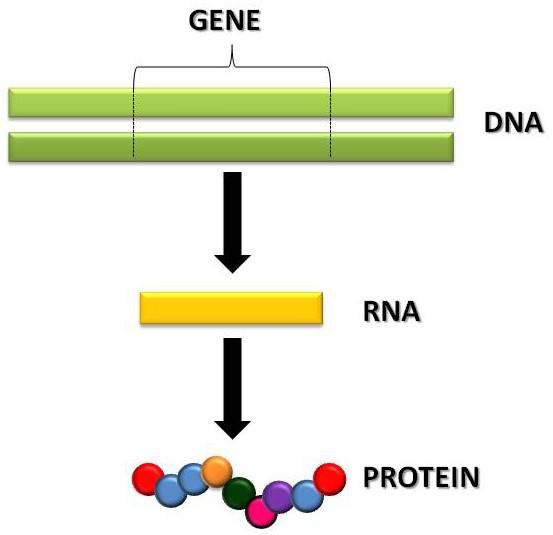
b)

the order (sequence) of the nitrogen bases

c)

the color of the nitrogen bases

5.
DNA codes for...
a)
cholesterol
b)
proteins
c)
fatty acids
d)
a sandwich
6.
What is the name given to part of a DNA molecule that codes for a protein?
a)
Glucose
b)
Chromosome
c)
Gene
d)
Phosphate
7.

_______________________ are the building blocks of the proteins.

a)

Amino Acids

b)

Nucleotides

c)

Codons

d)

Triglycerides

8.
What is the relationship between DNA and chromosomes?
a)
Chromosomes are made of DNA
b)
DNA is made of chromosomes
c)
DNA and chromosomes are the same thing.
d)
All of the above are correct
9.
Genes are found on...
a)
chromosomes
b)
alleles
c)
proteins
d)
anthers
10.
Put in order smallest to largest:
a)
Chromosome - DNA - Gene
b)
Gene - DNA - Chromosome 
c)
DNA - Gene  Chromosome
d)
Chromosome - Gene  - DNA
11.
Which is true about DNA?
a)
Only animals have DNA in their cells
b)
DNA research is simple and quick
c)
DNA contains many genes
d)
None of the above are true.
12.
Which organelle is DNA usually found in?
a)
cell membrane
b)
vacuole
c)
ribosome
d)
nucleus
13.
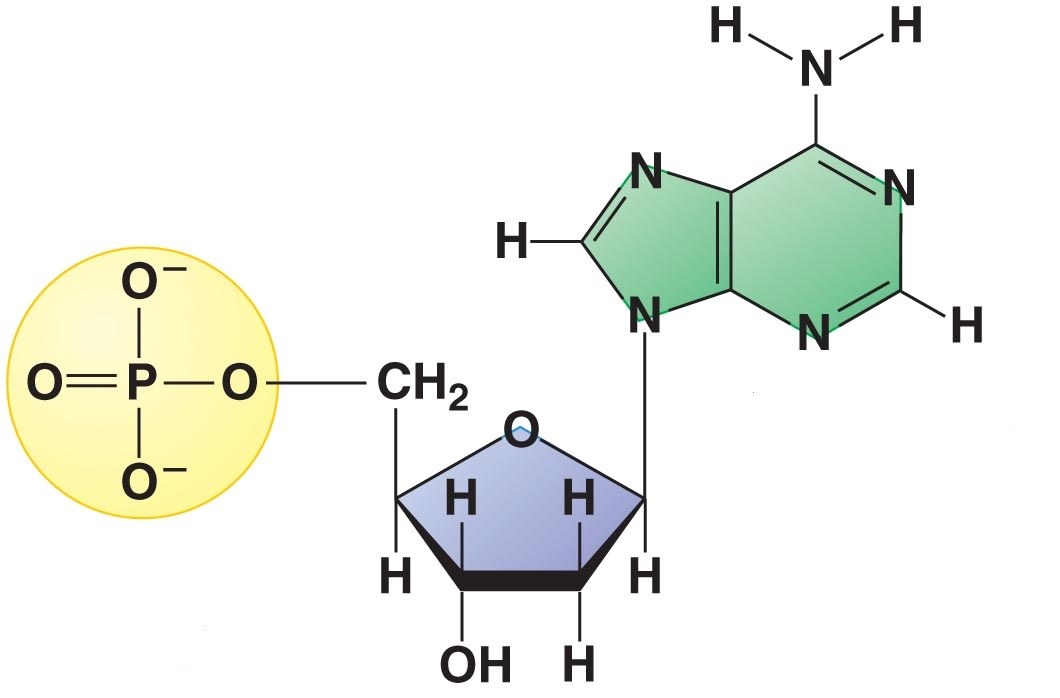
Name this structure
a)
double helix
b)
nucelotide
c)
twisted ladder
d)
hydrogen bond
14.
Which two scientists are accredited with correctly deducing the double helix model of DNA?
a)
Watson and Crick
b)
Wilkins and Franklin
c)
Wilkins and Crick
d)
Watson and Franklin
15.
Which series is arranged in order from largest to smallest in size?
a)
gene, chromosome, nucleus, cell, DNA, nucleotide
b)
cell, nucleus, chromosome, DNA, gene, nucleotide
c)
nucleotide, chromosome, cell, DNA, nucleus
d)
cell, DNA, gene, nucleotide, nucleus, chromosome
16.
A process in which DNA has the unique ability to make an exact copy of itself.
a)
Replication
b)
Translation
c)
Transcription
17.
The following picture must be
a)
DNA because it's double stranded
b)
RNA because it's single stranded
c)
DNA because it's single stranded
d)
RNA because it's double stranded
18.
Which of the following units are repeatedly joined together to form a strand of DNA?
a)
amino acids
b)
nucleotides
c)
fatty acids
d)
polysaccharides
19.
What is a gene?
a)
A bundle (like a hot dog bun) that the DNA is packed into
b)
something inside the nucleus
c)
a piece of DNA
d)
all of your DNA
20.

Bundled up, organized DNA is called a

a)

gene

b)

trait

c)

chromosome

d)

nucleotide

21.
DNA is a polymer made of:
a)
Nucleotides
b)
Ribosomes
c)
Purines
d)
Pyrimidines
22.
What determines the code, or information, of a DNA molecule?
a)
the shape (structure) of the nitrogen bases
b)
the order (sequence) of the nitrogen bases
c)
the color of the nitrogen bases
d)
the frequency (number) of nitrogen bases
23.
DNA codes for...
a)
bases
b)
proteins
c)
amino acids
d)
phosphates
24.
the process of making a copy of DNA
a)
transcription
b)
double helix
c)
DNA replication
d)
replication fork
25.

The chemicals that make up the rungs of the DNA ladder.

a)

deoxyribose

b)

phosphate

c)

nitrogen bases

d)

nucleotides

26.

Which chemicals are used to cut DNA into fragments for a gel electrophoresis procedure?

a)

molecular bases

b)

enzymes

c)

hormones

d)

ATP molecules

27.
What is the purpose of gel electrophoresis?
a)
helps cut DNA
b)
count the genes in DNA
c)
separates DNA based on size
d)
allows for an exact replicated organism
28.
Which two bat species are most closely related?
a)
 Bat 1 and Bat 2
b)
Bat 1 and Bat 3
c)
Bat 2 and Bat 3
d)
There’s no way to tell
29.
Protein sequences in one organism that resemble those of another suggest a 
a)
coincidence
b)
lack of evolutionary relationship
c)
great number of mutations
d)
shared ancestry
30.

Which evidence should receive the most emphasis when determining the relatedness?

a)

genetic sequence

b)

the presence of an enzyme

c)

plant pigments

d)

structural characteristics of the stems

31.
Which DNA fragment bands move faster and farther in a gel electrophoresis? 
a)
there is no way to tell 
b)
the largest ones
c)
the smallest ones
d)
none of these
32.

This laboratory procedure is known as

a)

CLONING

b)

gel electrophoresis

c)

chromatography

d)

use of a dichotomous key

33.

In preparation for an electrophoresis procedure, enzymes are added to DNA in order to

a)

convert the DNA into gel

b)

cut the DNA into fragments

c)

change the color of the DNA

d)

produce longer sections of DNA

34.

A student performed a gel electrophoresis experiment. The results are represented in the diagram

below. Compared to the fragments at the top of the gel, the fragments at the lower end are

a)

larger, and move slower

b)

larger, and move faster

c)

smaller, and move faster

d)

smaller, and move slower

35.
Which suspect is likely guilty?
a)
Suspect #1
b)
Suspect #2
c)
Suspect #3
36.

Selective breeding is...

a)

a process to create an organism with desired traits from parents with those desired traits

b)

natural method of producing offspring with desired traits

c)

creating a new species

d)

making organisms reproduce during times of stress

37.
Evidence shows that the wolf is the ancestor to all of the breeds of dogs shown below. How did this variation arise in a relatively short period of time?
a)
A.  Genetic manipulation
b)
Natural selection
c)
Random chance
d)
Selective breeding
38.
Making changes in the DNA of an organism is
a)
selective breeding
b)
artificial selection
c)
genetic engineering
d)
genetic transformation
39.
What process is shown in the picture?
a)
Gene therapy
b)
Cloning
c)
DNA Fingerprinting
d)
Gene Splicing
40.

Cotton designed to resist pests and pesticides is an example of which of the following?

a)

Genetic engineering

b)

Cloning

41.

Look at the image and choose the correct name...

a)

DNA ligases

b)

Recombinant DNA

c)

Restriction enzymes

d)

Transfer vectors

42.

Complete the sentence: Recombinant DNA consists of____________a __________of an organism and___________it into a different one.

a)

gene, inserting,isolating

b)

gene,isolating,inserting

c)

inserting,isolating,gene

d)

isolating,gene,inserting

43.
Which of the following is used to cut DNA so it can be studied?
a)
Gel Electrophoresis
b)
Restriction Enzymes
c)
Karyotypes
d)
Haplotypes
44.
Any change in the sequence of DNA is...
a)
transgenic shift
b)
Single Genotype
c)
Monohybrid Trait
d)
Mutation
45.
Genetic info flows in one direction. Which best represents this flow?
a)
DNA-protein-RNA
b)
Protein-RNA-DNA
c)
RNA-protein-DNA
d)
DNA-RNA-protein
46.

Where are proteins assembled (put together) in a cell?

a)

Nucleus

b)

Ribosome

c)

Cell Membrane

d)

Muscles

47.
The codon (set of 3 nitrogen bases) codes for 1 of 20
a)
endoplasmic reticulum
b)
RNA
c)
genes
d)
amino acids
48.

The mRNA leaves the ________ to find the ribosome to make proteins.

a)

cell

b)

nucleotide

c)

nucleus

d)

mitochondrion