wayground logo

Free Printable Worksheets

Font size

S
M
L
XL
Worksheets

Ecosystems & Human Impact

Total questions: 33

Worksheet time: 25mins

Name
Class
Date
1.
The non living parts of an ecosystem
a)
abiotic factors
b)
biotic factors
c)
oxygen
d)
soil
2.
All of the different populations that live in a specific area.
a)
ecosystem
b)
habitat
c)
ecology
d)
community
3.

Click on all the biotic factors

a)

rabbit

b)

tree

c)

soil

d)

water

4.

What is the role of decomposers

a)

They break down dead organisms and return their nutrients back to the ecosystem.

b)

Supply energy to the sun

c)

Help organize the community

d)

Create energy from the sun

5.

Which level in the energy pyramid has the most energy?

a)

Producers (buffalo grass)

b)

Vulture (Level 3 consumer)

c)

Coyote (Level 2 consumer)

d)

Prairie Dog (Primary Consumer)

6.
What is biodiversity?
a)
a population of a species 
b)
the growth of cities
c)
destruction of natural habitats
d)
a variety of organisms 
7.
How do oceans regulate climate?
a)
Currents move water that heats the atmosphere, around the world
b)
Currents move the atmosphere from place to place
c)
Oceans prevent clouds from forming
d)
Ocean winds create winds
8.

The threat to biodiversity that occurs when the homes of different species are destroyed

a)

pollution

b)

habitat destruction

c)

overexploitation

d)

climate change

9.
Why are fossil fuels a nonrenewable resource? 
a)
they take millions of years to replace 
b)
they can be used over and over again
c)
they are used to heat and light homes 
d)
they cause air and water pollution 
10.
Most water pollution is the result of
a)
human activities.
b)
drought.
c)
volcanic eruptions.
d)
storms.
11.

How do the oceans contribute to the amount of Oxygen in the Earth's atmosphere?

a)

Fish in the ocean produce oxygen.

b)

Phytoplankton in the ocean produce oxygen through the process of respiration.

c)

Phytoplankton in the ocean produce oxygen through the process of photosynthesis.

12.

What happens when a fertilizer runoff happens?

a)

Fish get bigger.

b)

Algae grow rapidly.

c)

The water becomes very clear.

13.

What is one way humans are trying to positively impact the ocean?

a)

Fishing

b)

Drilling for oil and natural gas

c)

Creating artificial reefs

14.

An artificial reef is a man made structure that may mimic some of the characteristics of a natural reef.

a)

True

b)

False

15.

How can you help impact the environment in a positive way

a)

recycle

b)

drive less, creating less pollution

c)

save water

d)

all of the above

16.

Coral reefs are endangered by

a)

climate change

b)

overfishing

c)

pollution

d)

all of the above

17.

What type of organism makes its own food?

a)

Autotroph

b)

Heterotroph

18.

What is a lion?

a)

autotroph

b)

heterotroph

19.

What is a worm?

a)

autotroph

b)

heterotroph

20.

What is a lily pad?

a)

autotroph

b)

heterotroph

21.

A flea feeds on a mouse’s blood. This is good for the flea but bad for the mouse.

a)

mutualism

b)

commensalism

c)

parasitism

22.

Hermit crabs live in shells that snails don't use anymore. The hermit crab gets a nice free home. This neither harms nor helps the snails.

a)

mutualism

b)

commensalism

c)

parasitism

23.
A coyote captures, kills, and eats a rabbit. What type of symbiotic relationship is this?
a)
mutualism
b)
commensalism
c)
parasitism
d)
predation
24.
Which symbols best describe parasitism?
a)
+,+
b)
+,-
c)
+,0
d)
-,0
25.
Silverfish live and hunt with army ants. They share the prey.  They neither help nor harm the ants. 
a)
Mutualism 
b)
Parasitism 
c)
Commensalism 
26.
Which side of Holland Hill is the steepest?
a)
North
b)
South
c)
East 
d)
West
27.
If contour lines are close together, then the slope is
a)
gentle
b)
steep
c)
flat
d)
going up and down
28.
What does the theory of continental drift state?
a)
The continents were once joined in a super-continent and have moved over time
b)
Continents are stationary and do not move
c)
The Earth is broken into lithospheric plates that move due to convection currents
d)
none of the above
29.
What is represented by the picture? 
a)
Sea-floor spreading
b)
Pangea
c)
How the continents are arranged today
d)
Volcanoes
30.
The circular arrows inside the Earth's Mantle represent what type of motion, that drives ALL plate movement?  
a)
Convergent Boundary
b)
Ocean Currents
c)
Convection Currents
d)
Transform Boundary
31.
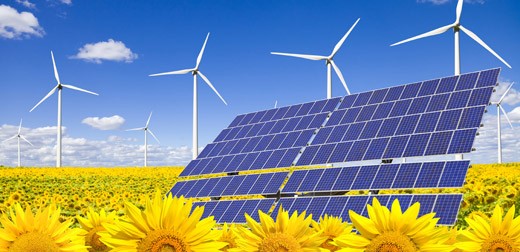
__________ is an energy resource that WILL NOT run out in the next several hundred years.
a)
Renewable Energy Resource
b)
Nonrenewable Energy Resource
32.
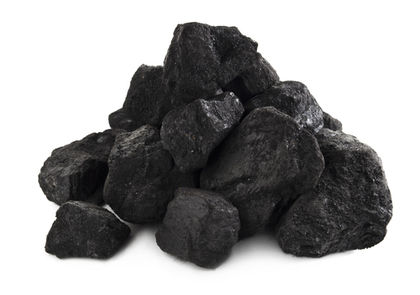
Coal is a __________ energy resource.
a)
Renewable
b)
Nonrenewable
33.

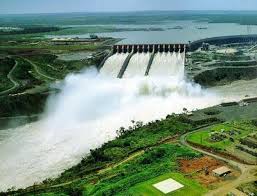
Hydro (water) Power is a __________ energy resource.

a)
Renewable
b)
Nonrenewable