wayground logo

Free Printable Worksheets

NEW

Font size

S
M
L
XL
Worksheets

EOG Science Units 1-3

Total questions: 47

Worksheet time: 41mins

Name
Class
Date
1.

How do you calculate the number of neutrons? *

a)

Mass = Atomic number - Neutrons

b)

Mass - Atomic number = Neutrons

c)

Atomic number = Neutrons

2.

How many protons and electrons does nickel have?

a)

28

b)

58.69

3.

What is the atomic mass?

a)

58.693

b)

28

4.
Elements which are shiny, conduct electricity and heat are called
a)
metal
b)
nonmetal
c)
metalloid
d)
nonexistent
5.
The atoms along the staircase are called 
a)
metals
b)
nonmetals
c)
metalloids
d)
noble gases
6.
How many neutrons are in a Gold atom?
a)
79
b)
196
c)
118
d)
275
7.
What's a valence electron?
a)
electrons in the second energy level
b)
electrons in the outermost energy level
c)
the atomic number
d)
electrons in the first level
8.

Which classification of matter is composed of two or more substances which are physically combined?

a)

atoms

b)

pure substances

c)

mixtures

d)

elements

9.

A __________________ is a substance that has definite physical and chemical properties such as appearance, melting point, and reactivity.

a)

mixture

b)

pure substance

c)

compound

d)

element

10.

Identify the following substance.

a)

Element

b)

Compound

c)

Mixture

d)

Diatomic Molecule

11.

a substance in which the parts are clearly different shapes and colors; different throughout

a)

mixture

b)

homogeneous

c)

heterogeneous

d)

element

12.

What kind of mixture is shown in the picture?

a)

Homogeneous

b)

Heterogeneous

13.

What kind of mixture is shown in the picture?

a)

Homogeneous

b)

Heterogeneous

14.

How does the amount of energy change in the substance in the phase change from a solid to a liquid?

a)

energy is not affected

b)

increases the amount of energy

c)

decreases energy the amount of energy

d)

amount of energy cannot be determined

15.

Identify the following changes as chemical or physical

Burning Paper

a)

Chemical

b)

Physical

c)

Cannot be determined

16.

Identify the following changes as chemical or physical

Boiling Water

a)

Chemical

b)

Physical

c)

Cannot be determined

17.

What is a Solid?

a)

Matter that has a fixed shape and size.

b)

Matter that has a fixed size and no fixed shape

c)

Matter that has no fixed shape or size

d)

Matter that has no fixed shape and size

18.

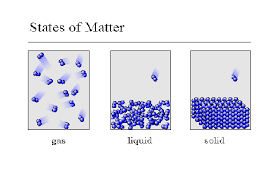
In which state of matter will there be the LARGEST space between molecules?

a)

Solid

b)

Liquid

c)

Gas

19.

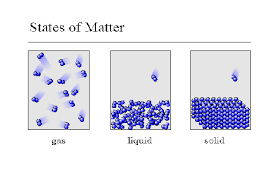
What state is represented in the gif?

a)

Solid

b)

Liquid

c)

Gas

20.
At higher temperatures
a)
particles in an object have less energy
b)
particles in an object move faster
c)
a gas contracts
21.
A gas
a)
has a definite shape but no definite volume
b)
has a definite volume but no definite shape
c)
has fast-moving particles
22.

Which process could cause a material to change state from gas to liquid?

a)

Adding heat

b)

Adding energy

c)

Removing particles

d)

Removing energy

23.

If I add heat to a solid, how will the motion of the particles be affected?

a)

They will move slower

b)

They will stop moving

c)

They will move faster

d)

They will move to a different container

24.
Stored energy.
a)
Potential Energy
b)
Kinetic Energy
25.
Mrs. Bush had a kitchen cabinet with three shelves in it. On the top shelf Mrs. Bush had short glasses, on the middle shelf she had large glasses, and on the bottom shelf she had plates. Which item has the most potential energy? 
a)
short glasses
b)
large glasses
c)
plates
d)
They have the same amount of energy
26.
The higher up you are waiting to fall, the more ____________ energy you have. 
a)
kinetic 
b)
potential 
c)
movement 
d)
air 
27.
At which point is potential energy greatest?
a)
W
b)
X
c)
Y
d)
Z
28.
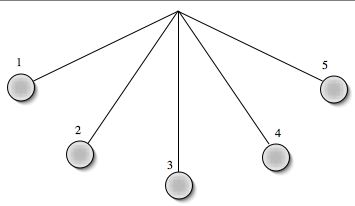
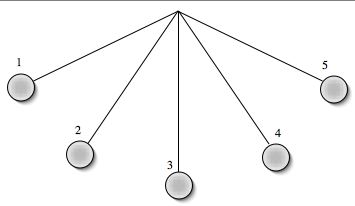
When a pendulum swings, at which point is potential energy at its greatest?
a)
1
b)
2
c)
3
d)
4
29.
When a pendulum swings, at which point is kinetic energy highest?
a)
1
b)
2
c)
3
d)
4
30.
These passengers are just starting their descent. What is happening?
a)
potential energy is changing to kinetic energy
b)
  kinetic energy is changing to potential energy
31.
Some students observing a classroom device being used, noticed the below energy transformations. 
Electrical → Mechanical → Sound
Which device were the students most likely observing?
a)
A triple beam balance measuring an object’s mass.
b)
A pencil sharpener plugged into a wall outlet.
c)
A projector displaying a diagram on the screen.
d)
A working flashlight used to light up a dark corner.
32.
Which type of energy transformation occurs when a flashlight shines?
a)
chemical → thermal → electrical
b)
chemical → electrical → light
c)
thermal → chemical → light
d)
chemical → electrical → chemical
33.
The Theory of the Conservation of Energy states -
a)
Energy can be created, just not destroyed. It changes its form from one type to another.
b)
Energy can never be created nor destroyed. It can only change its form from one type to another.
c)
The total energy in our Universe changes, as different forms of energies can be transformed from each other under certain circumstances.
d)
Energy transformations do not passively occur in our lives, rather we actively make use of energies and transform energies.
34.

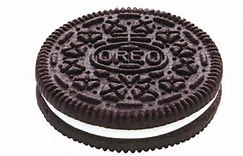
An oreo cookie has a mass of 20 grams. It gets crushed into crumbs for a recipe. What is the mass of the crumbs?

a)

15 grams

b)

25 grams

c)

20 grams

35.

If reaction starts with 20g of reactants, it will produce ---

a)

a total of 40g of product

b)

a total of 10g of product

c)

a total of 80 g of product

d)

a total of 20g of product

36.

The Law of Conservation of Matter states that the total amount of matter _____ after it undergoes change.

a)

disappears

b)

stays the same

c)

weighs less

d)

explodes

37.
Opposite charges ______ each other
a)
Attract
b)
Repel
c)
Do nothing
38.
If a negatively charged rod touches a conductor, the conductor will be charged by what method? 
a)
Friction
b)
Conduction
c)
Induction
d)
Convection
39.
The electrons in a certain material are closely bound to their atoms and cannot move around very much.  This material would be an electric _____.
a)
Conductor
b)
Diode
c)
Insulator
d)
Polarizer
40.
Two storm clouds rub against each other giving one cloud a positive charge and one a negative charge.  This is an example of charging by
a)
Conduction
b)
Convection
c)
Friction
d)
Induction
41.

Walking across a carpet is an example of charge being transferred by

a)

friction.

b)

induction.

c)

contact.

42.

A method used to charge an object without actually touching the object to any other charged object.

a)

Induction

b)

Conduction

c)

Friction

d)

Grounding

43.
What would increase the strength of an electromagnet?
a)
Increasing the amount of current flowing through the wire.
b)
Inserting a wooden core inside the coil
c)
Changing the direction of the current
d)
Decreasing the number of coils of wire
44.

which one is the strongest eletromagnet?

a)

50 turns on the coil, low current,

copper core

b)

100 turns on the coil,

high current,

iron core

c)

50 turns on the coil, low current,

iron core

d)

100 turns on the coil,

low current,

iron core

45.
What will happen when these magnets are brought close together?
a)
They will attract each other.
b)
They will repel each other.
c)
Both magnets will turn to the left
d)
Both magnets will turn to the right
46.
If two charges repel each other, the two charges must be
a)
Positive and neutra
b)
Positive and negative
c)
positive and neutral
d)
negative and negative
47.
If you rub a glass rod with a piece of silk, the rod becomes positively charged. This means that
a)
friction destroyed electrons in the rod.
b)
the silk has become negatively charged.
c)
protons have moved to the rod.
d)
glass attracts more protons.