wayground logo

Free Printable Worksheets

NEW

Font size

S
M
L
XL
Worksheets

States of Matter

Total questions: 35

Worksheet time: 28mins
Name
Class
Date
1.
Matter that always fills the shape in a container, such as air.
a)
solid
b)
liquid
c)
gas
2.
At higher temperatures
a)
particles in an object have less energy
b)
particles in an object move faster
c)
a gas contracts
3.
How is a gas defined?
a)
Indefinite shape, indefinite volume
b)
Definite shape, definite volume
c)
Found in stars
d)
Definite volume, indefinite shape
4.
Particles (molecules) in a ______________________ have more energy than the other states of matter.
a)
gas
b)
solid
c)
liquid
5.

Particles of a liquid

a)

are tightly packed together and stay in a fixed position.

b)

are free to move around one another but still touch.

6.

The slower the particles in a substance move,

a)

the colder it is.

b)

the warmer it is.

c)

the more energy it has.

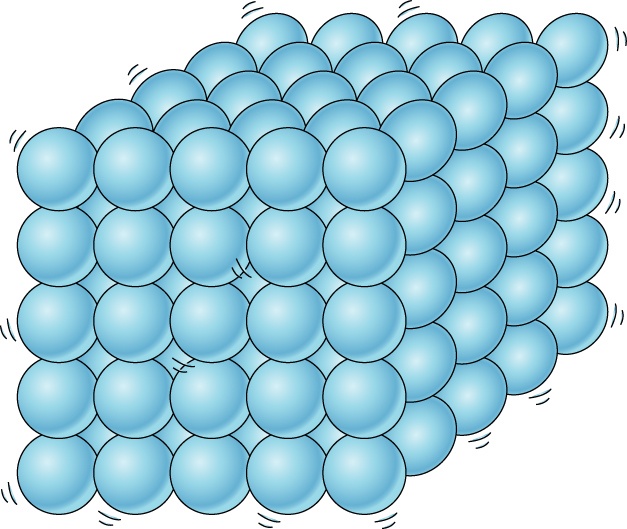
7.

What state of matter?

a)

Solid

b)

Liquid

c)

Gas

d)

Plasma!!!

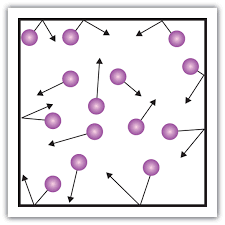
8.

What state of matter?

a)

Solid

b)

Liquid

c)

Gas

9.

Which process could cause a material to change state from gas to liquid?

a)

Adding heat

b)

Adding energy

c)

Removing particles

d)

Removing energy

10.
When the temperature of matter increases the particles...
a)
speed up and move closer
b)
speed up and move farther apart
c)
slow down and move closer together
d)
slow down and move farther apart
11.
a)
It remains the same.
b)
It changes greatly.
c)
It changes minimally.
d)
Unable to tell.
12.
A gas
a)
has a definite shape but no definite volume
b)
has a definite volume but no definite shape
c)
has fast-moving particles
13.

The slower the particles in a substance move,

a)

the colder it is.

b)

the warmer it is.

c)

the more energy it has.

14.

Has a definite volume but not a definite shape

a)

Solid

b)

Liquid

c)

Gas

15.
In the modern periodic table elements are arranged by:
a)
atomic mass
b)
atomic number
c)
valence electrons
d)
number of isotopes
16.
Most of the mass of an atom is found it its _____.
a)
electron cloud
b)
nucleus
c)
atomic number
d)
empty space
17.
The atoms along the staircase are called 
a)
metals
b)
nonmetals
c)
metalloids
d)
noble gases
18.
How many neutrons are in a Gold atom?
a)
79
b)
196
c)
118
d)
275
19.
What's a valence electron?
a)
electrons in the second energy level
b)
electrons in the outermost energy level
c)
the atomic number
d)
electrons in the first level
20.
The positive particles of an atom are 
a)
electrons 
b)
positrons 
c)
neutrons 
d)
protons 
21.
The subatomic particle with a negative charge is the
a)
electron
b)
proton
c)
neutron
d)
nucleus 
22.
The atomic number of this pictured element is
a)
28
b)
58.6934
c)
Ni
d)
Nickel
23.

How many electrons does carbon have?

a)

6

b)

12

c)

18

d)

7

24.

a collection of atoms of one type that cannot be broken down into simpler substances by ordinary chemical or physical means

a)

element

b)

subatomic particle

c)

electron

d)

matter

25.
A copper penny turning greenish after a few years is an example of ...
a)
Chemical Change
b)
Physical Change
26.
A change in which NEW substances are formed.
a)
Chemical change
b)
Physical change
c)
Casual change
d)
Formal change
27.
Which of the following is NOT an example of chemical change?
a)
sour milk
b)
burning wood
c)
breaking a pencil
d)
rust
28.
Which of the following is NOT an example of a physical change?
a)
crumpled paper
b)
pencil sharpening
c)
shrunken clothing
d)
sour milk
29.
Melting point
a)
Physical Property
b)
Chemical Property
30.

A green powder is heated & a gas is given off while it turns to a black solid. This describes

a)

Physical Change

b)

Chemical Change

c)

Change in State

d)

Change in Temperature

31.

What does a chemical change result in?

a)

A change in state of the substance (ex. liquid to solid)

b)

A change in texture of the substance.

c)

A change in the way atoms are bonded to each other.

d)

A change in the appearance of the substance.

32.

How many electrons does Lithium have?

a)

3

b)

6

c)

9

d)

4

33.

How many neutrons does Lithium have?

a)

3

b)

7

c)

4

d)

10

34.

How many electrons does Neon have?

a)

10

b)

20

c)

21

d)

30

35.

How many neutrons does neon have?

a)

10

b)

20

c)

21

d)

11