
 Worksheets
Forces and motion
Total questions: 100
Worksheet time: 2hrs 32mins

Shown is the graph of the motion of a car.
Which of the following best explains the motion of the car represented by section "D" of the graph?
The car is going faster than it was in section "B"
The car is stopped in section "D"
The car is moving on level ground in section "D"
The car is higher than it was in section "B"

A fifth grade class has a model car race. The students were divided into 4 groups. Each group built a model car for the race. Below are the results of the race.
Which car won the race?
Car 1
Car 2
Car 3
Car 4

A student drew the model car shown for a class project.
What was he most likely trying to model?
The speed of a car
The forces acting on a car
The distance a car might move
The things that change the size of the car


A force is defined as a (Check all that apply)
Push
Pull
Spin
Rotation

Motion is the process of changing position.
True
False

How long did it take the sea turtle to travel 12 km?
4 days
7 days
1 day
3 days

Select the correct unit of measurement for Force.
Joules
Isaacs
Newtons
meters per second

Which type of force resists motion?
Friction
Gravity
Pull
Push
What force attracts some metals and it is a noncontact force?
Push
Pull
Magnetism
Friction

To drag a sofa over carpet, movers sometimes use slippery pads. Which force is reduced with the use of the pads?
Friction
Gravity
Push
Magnetism

A baseball pitcher throws a baseball. It does not reach the catcher. What should the pitcher do to make a ball reach the catcher?
Increase the force used when throwing the ball
Decrease the force used when throwing the ball
Reduce the gravity exerted on the ball
Increase the gravity exerted on the ball

Why does a newly oiled machine work faster than a machine that hasn't been oiled?
Oil reduces the friction between the parts
Oil increases the friction between the parts
Gravity acts more on an old machine
Gravity acts more on a new machine

What should you do to make a toy car roll faster down a ramp?
Push it with more force
Push it with less force
Remove the force of gravity
Use magnetism to push it down

In the picture, what force is acting downward on the skydiver?
Gravity
Air resistance
Which term is an example of force?
Energy
Mass
Weight
Work
Weight is _________.
the quantity of matter in an object.
the measure of an object's inertia.
the force exerted by gravity on an object's mass.
equal to the mass of an object.
What is drag?
The force that acts parallel to the interface of two surfaces that are in contact, and opposes their relative motion
The force or forces acting to oppose the motion of an object through a fluid medium
The inverse relationship between airflow velocity and air pressure
The force or forces acting to promote the motion of an object through a fluid medium

Which two of these forces act on parachutes?
Air Resistance
Gravity
Thrust
Kinetic Energy
Another name for air resistance is...
Buoyancy
Streamline
Gravity
Drag

The larger the surface area of the moving object, the ___________ air resistance there is.
Less
More
Longer
Quicker
Air resistance pushes against falling
objects and __________________.
Speeds them up
Keeps them afloat
Slows them down
Spins them
The larger the parachute the ____________
Less air resistance
More surface tension
Less drag
More drag
Which has more air resistance?


Air resistance is a force caused by...
Water pushing against moving objects
Air pushing against moving objects
Gravity pushing against moving objects
Normal force pushing against moving objects

The more streamlined an object is, the...
More air resistance
Less air resistance
Slower air resistance
Faster air resistance
When dropped from the same distance, which will fall to the floor faster?


Complete the sentence.
It is not the difference in gravity that causes objects to fall at different speeds, it’s the difference in the amount of__________________.
Gravity
Mass
Air resistance
The amount of matter in an object is its _____________.
Weight
Mass
Force
If you jump out of an airplane, which two forces are acting on you?
Gravity and friction
Force and gravity
Gravity and Air Resistance
When you drop a hammer and a feather on the moon what will happen? There is no air on the moon.
They will hit at the same time
The hammer will hit first
The feather will hit first
________ acts to slow the rate at which objects fall.
Thrust
Barometer
Air Resistance
Gravity
Look at the pictures of the cars. Which car will have the most air resistance force acting upon it? They will be moving at the same speed.
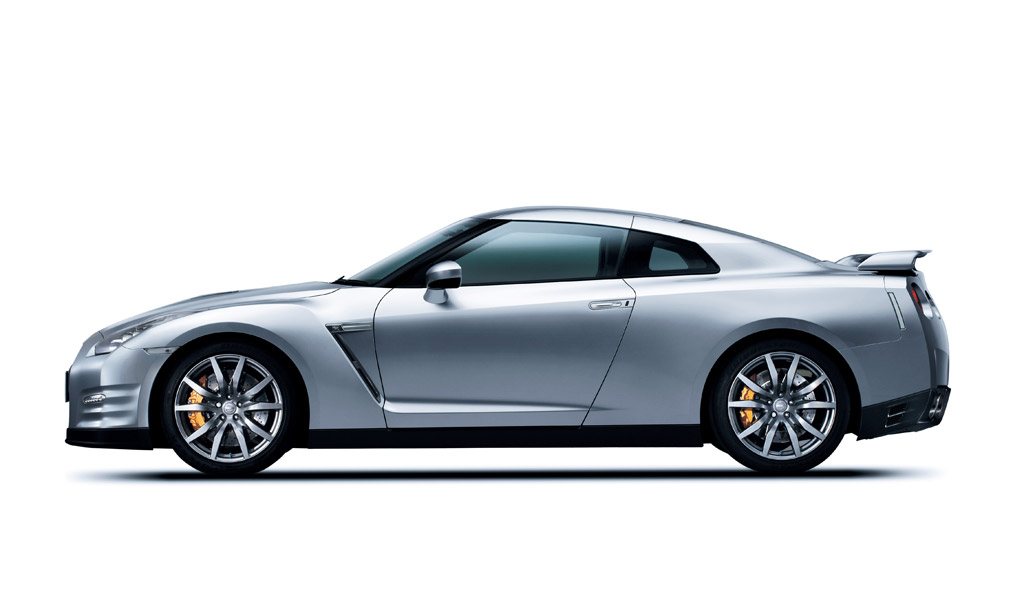
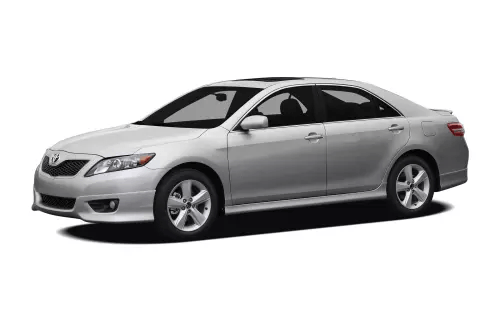
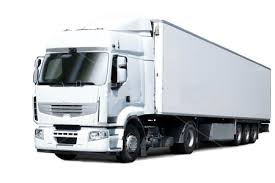
All will have equal air resistance force.
The larger the surface area of the moving object, the ___________ air resistance there is.
Less
More
Longer
Quicker

A tug of war is an example of what type of force?
Shear
Torsion
Tension
Compression
Bending

This is an example of what type of force?
Torsion
Compression
Bending
Tension
Shear

The golden gate bridge is a good example of which force being used?
Tension
Torsion
Compression
Bending
Shear
Which force is the opposite of tension?
Torsion
Compression
Shear
Bending

This force often occurs when when a material is supporting a weight from above.
Compression
Tension
Torsion
Bending
Shear
A contact force is from
objects physically touching
far apart objects
not touching object
always a pull
A non-contact force is between
two objects that aren't touching
two objects that are touching
the ground and wheels
you and me

The three examples pictured are of
Non-contact Forces
Contact Forces

The force between the phone and the mount is a
contact force
non-contact force

The force between the two people through the rope is
Contact Pull
Non-contact Pull
Contact Push
Non-contact Push

Gravity is a
Contact Force
Myth
Non-contact Force
Friction is a
Contact Force
Myth
Non-contact Force
Which is an example of a non-contact force?
elastic force
normal force
applied force
electric force
Air Resistance Force
Contact Force
Non-Contact Force
Magnetic Force is
A force of attraction between any two objects in the universe
A force that acts between objects that are electrically charged
The force of attraction or repulsion between unlike or like poles
A contact force that resist motion between two objects that are touching
A force applied to another object that is NOT in direct contact with it is a
Contact Force
Jedi Force
Non-contact Force
Gravitational Force
Gravitational Force is
A contact force that resists the motion of two objects that are touching
A force that acts between objects that are electrically charged
The force of attraction or repulsion between unlike or like poles
A force of attraction between any two objects in the universe
Weight is _________.
the quantity of matter in an object.
the measure of an object's inertia.
the force exerted by gravity on an object's mass.
equal to the mass of an object.
You have a ball with a weight of 76N. What is the mass of the ball?
76N
76kg
7.6kg
7.6N
What would be the weight of a 10 kg object on earth?
1 N
10 N
0.1 N
100 N
What has more mass?
an F1 car
a ball
an aircraft
a feather
What do you use to measure the mass of an object?


If an object mass =30 kg on the Earth, what would be it's weight on Earth?
30 N
300 kg
3000N
300 N
If the mass of an object is 1000 kg on Earth, what is it's mass on the moon?
less than 1000 kg
more than 1000 kg
1000kg

What is the name of this tool?
spring balance / force meter
scale
measuring cylinder
thermometer
If the weight of a body on the Earth's surface is 600 N, what would be it's weight in the space?
600 N
less than 600 N
more than 600 N
What do you use to measure the weight of an object?
My weight on the Earth's surface is 500 N. What is my mass?
500 kg
500 g
50 kg
50 g

Describe the motion in the graph:
Constant Speed (positive slope)
Stopped (at rest)
Acceleration (increasing speed)
Return Home (negative slope)

Describe the motion in the graph:
Constant Speed (positive slope)
Stopped (at rest)
Acceleration (increasing speed)
Return Home (negative slope)

Describe the motion in the graph:
Constant Speed (positive slope)
Stopped (at rest)
Acceleration (increasing speed)
Return Home (negative slope)

Describe the motion in the graph:
Constant Speed (positive slope)
Stopped (at rest)
Acceleration (increasing speed)
Return Home (negative slope)
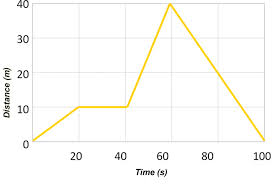

In which of the following graphs below are both runners moving at the same speed?


Match the description to the graph:
"The car is coming back."


Match the description to the graph:
"The car is traveling at a constant speed."

Segment B-C The bus is _________________.
at rest
returning (to original position)
moving forward

Which runner stopped for a rest?
Albert
Bob
Charlie
Calculate Albert's average speed for the 100-meter race.
8.33 m/s
5 m/s
7.14 m/s
5.88 m/s
In which of the following graphs below did one runner overtake (run past) the other?

This is an example of what force?
push
pull
magnetic
gravitational

This is an example of what force?
gravitational
push
pull
magnetic

in the given figure force is
changing the direction of motion
changing the shape
stopping a moving object
none of the above
which of the following is not an effect of force:
to move a body from rest
to stop a moving body
to change the colour of an object
to change the shape of a body

Choose the right option
Force stops the tennis ball
Force changes the shape of the ball
Force changes direction of the tennis ball
Forces changes speed and direction of the tennis ball

