wayground logo

Free Printable Worksheets

Font size

S
M
L
XL
Worksheets

Sound and Sound Waves

Total questions: 100

Worksheet time: 50mins

Name
Class
Date
1.

What type of wave is a sound wave?

a)

Electromagnetic wave

b)

Longitudinal wave

c)

Mechanical wave

d)

Transverse wave

2.

How does the pitch of a sound relate to its frequency?

a)

Higher frequency always results in lower pitch.

b)

The pitch of a sound is unrelated to its frequency.

c)

The pitch of a sound is determined by its frequency.

d)

Pitch and frequency are inversely proportional.

3.

What property of a sound wave is related to its amplitude?

a)

pitch

b)

frequency

c)

loudness or volume

d)

speed

4.

Explain the difference between loudness and amplitude.

a)

Loudness is a physical measurement, while amplitude is subjective perception.

b)

Loudness is subjective perception, while amplitude is a physical measurement.

c)

Loudness is measured in decibels, while amplitude is measured in hertz.

d)

Loudness and amplitude are the same thing.

5.

What causes echoes to occur?

a)

Light waves reflecting off surfaces

b)

Sound waves bouncing off surfaces

c)

Heat waves bouncing off objects

d)

Pressure waves reverberating in the air

6.

Define reverberation in relation to sound.

a)

The complete absence of sound in a space

b)

The persistence of sound after the sound source has stopped, caused by reflections of sound waves from surfaces in an enclosed space.

c)

The amplification of sound waves in an enclosed space

d)

The distortion of sound caused by wind interference

7.

How does the frequency of a sound wave affect its pitch?

a)

The pitch of a sound wave is determined by its amplitude.

b)

The pitch of a sound wave is determined by its speed.

c)

The pitch of a sound wave is determined by its wavelength.

d)

The pitch of a sound wave is determined by its frequency.

8.

What unit is used to measure frequency?

a)

Hertz (Hz)

b)

Newton

c)

Volt

d)

Watt

9.

How can you increase the loudness of a sound?

a)

Cover the speaker with a cloth.

b)

Turn off the sound completely.

c)

Adjust the volume or gain of the audio source or speaker.

d)

Decrease the audio quality.

10.

Why is it important to protect your ears from loud sounds?

a)

To improve your balance

b)

To prevent hearing loss and damage to the delicate structures in the ear.

c)

To enhance your sense of hearing

d)

To make your ears stronger

11.

True or False: Sound waves are produced when something vibrates.

a)

True

b)

False

12.

Sound waves are _______ waves.

a)

Transverse

b)

Seismic

c)

Longitudinal

d)

Slow

13.

Sound waves travel the fastest through _______.

a)

Gases

b)

Solids

c)

Liquids

d)

Plasma

14.

True or False: Sound waves can travel through space.

a)

True

b)

False

15.

True or False: The speed of sound depends on the loudness of the sound.

a)

True

b)

False

16.

As the temperature of a medium increases, the sound waves will travel ____________.

a)

Faster

b)

Slower

c)

As the same speed

17.

Part of the ear that gathers sound waves is the ______.

a)

Ear drum

b)

Cochlea

c)

Outer Ear

18.

The part of the ear that is spiral shaped and will send nerve impulses to the auditory nerve is the ________.

a)

Ear drum

b)

Cochlea

c)

Outer Ear

19.

The amount of energy a wave carries is the _________.

a)

Amplitude

b)

Height

c)

Loudness

d)

Volume

20.

Human perception of sound volume

a)

Amplitude

b)

Loudness

c)

Intensity

d)

Decibel

21.

Pitch is _____.

a)

How often a sound wave occurs

b)

How high or low a sound seems to be

c)

The energy behind a wave

22.

True or False: The higher the pitch, the lower the frequency.

a)

True

b)

False

23.

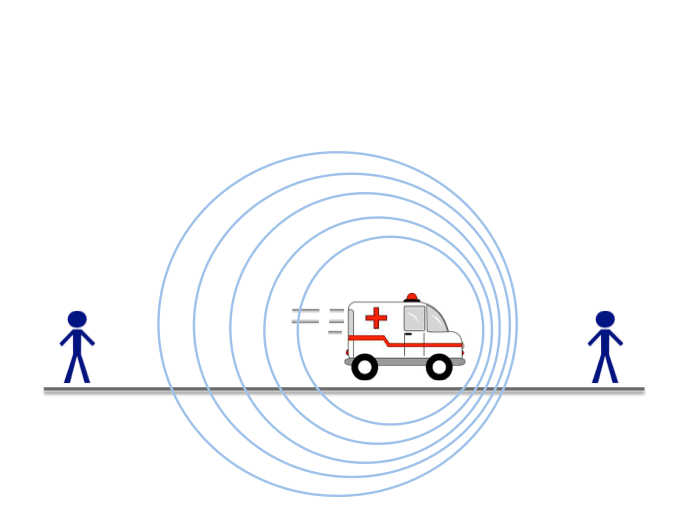
True or False: According to the Doppler Effect, if an sound source is moving TOWARDS you, the pitch should be getting higher.

a)

True

b)

False

24.
Sound travels FASTEST through which of these materials?
a)
Air
b)
Empty space
c)
Metal
d)
Water
25.
Sound is caused by? 
a)
force
b)
vibrations
c)
instruments
26.
What is vibration?
a)
how loud a sound is
b)
the back and forth movement of matter
c)
how high or low a sound is
d)
the loudness or softness of a sound
27.
What is frequency?
a)
the number of vibrations per second
b)
how high or low a sound is
c)
the loudness or softness of a sound
d)
the back and forth movement of matter
28.
Sound is a form of? 
a)
energy
b)
pitch
c)
volume
29.
Measure of how high or low a sound is
a)
amplitude
b)
compression
c)
speed of sound
d)
pitch
30.
A longer string makes a _______ pitch than a short string.
a)
louder
b)
softer
c)
higher
d)
lower
31.
To make a sound from a stringed instrument louder you must
a)
hit it
b)
pluck it harder
c)
hold it higher
d)
pluck it softer
32.
Why is sound able to travel faster through a solid than a gas?
a)
Gas molecules are packed tightly.
b)
Sound does not travel faster through a solid than a gas.
c)
Solid molecules are packed tightly.
d)
Gas molecules move slowly.
33.
An object that does not vibrate cannot produce
a)
sound
b)
light
c)
heat
d)
electricity
34.
What is volume?
a)
how high or low a sound is
b)
the loudness or softness of a sound
c)
the number of vibrations per second
d)
vibrations
35.
You and your father inspect an empty house with the hopes of buying it. You walk through the rooms talking to one another, and you notice that your voices and footsteps are echoing in the big, empty house. What causes the echo?
a)
sound waves reflecting off smooth, flat surfaces throughout the house
b)
sound waves moving around the large rooms
c)
sound waves moving slowly through air
d)
sound waves refracting around corners in the empty rooms
36.
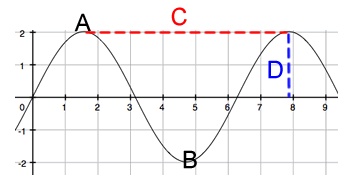
If distance C on the diagram increased, what would happen to the pitch? 
a)
The pitch would be louder. 
b)
The pitch would be softer. 
c)
The pitch would be higher. 
d)
The pitch would be lower. 
37.
If the distance represented by the letter A were increased, how would it change the way the sound was heard?
a)
The sound would be higher. 
b)
The sound would be lower. 
c)
The sound would be softer. 
d)
The sound would be louder. 
38.
______ is how high or low a sound is; depends on the frequency.
a)
pitch
b)
frequency
c)
sound
d)
medium
39.
A wave in which the particles vibrate in the same direction as that in which the wave is traveling; sound waves
a)
longitudinal wave
b)
ocean wave
c)
transverse wave
d)
mechanical wave
40.
A soft, low pitch sound would have which of the following....
a)
low frequency 
high amplitude 
b)
high frequency 
high amplitude 
c)
low frequency 
low wavelength  
d)
low frequency
low amplitude 
41.
When comparing the two waves that are shown, how would Wave A (green wave) differ than Wave B (black wave)?
a)
Wave A and B have the same amplitude, but wave B (black) has a lower pitch.
b)
Wave A and B have the same amplitude, but Wave A has a lower pitch. 
c)
Wave A and B have the same pitch, but Wave A is a softer sound. 
d)
Wave A and B have the same pitch, but Wave B is a softer sound. 
42.
A reflected sound wave is know as a/an ___________.
a)
frequency
b)
pitch
c)
echo
d)
rarefaction
43.
After the train passed, the pitch of the train whistle became lower. This change in sound would be represented by what change in the diagram above? 
a)
The distance represented by C would increase. 
b)
The distance represented by C would decrease. 
c)
The distance represented by D would increase. 
d)
The distance represented by D would decrease. 
44.
A wave that requires a medium through which to travel
a)
mechanical wave
b)
chemical wave
c)
electromagnetic wave
d)
pitch
45.
A soft, high pitch sound would have which of the following....
a)
low frequency 
high amplitude
b)
low frequency 
low wavelength 
c)
high frequency 
low amplitude
d)
high frequency 
high amplitude 
46.
______ is how loud or soft a sound is; depends on the amplitude.
a)
pitch
b)
frequency
c)
loudness
d)
medium
47.
What best describes the doppler effect?
a)
An apparent change in frequency of a wave due to the relative motion between a wave source and an observer
b)
When sound changes pitch
c)
When light changes color
d)
An apparent change in the amplitude of a wave due to the relative motion between a wave source and an observer.
48.
When the car moves AWAY from you, its horn seems...
a)
Low pitched
b)
High pitched
c)
Normal
49.
When an ambulance move TOWARD you it sounds ________ pitched. 
a)
high
b)
low
c)
medium
50.
When does sound refract?
a)
When it travels in a vacuum.
b)
When it moves through cold air.
c)
When it travels in only one medium.
d)
When it moves from one medium to another.
51.
How are light waves and sound waves similar?
a)
The both carry matter & energy
b)
They both carry energy.
c)
They both travel in vacuums.
d)
They both carry matter.
52.
What can you tell about this object's motion?
a)
Moving to the North (up).
b)
Moving to the South (down). 
c)
Moving to the West (left). 
d)
Moving to the East (right). 
53.

Sound waves travel the FASTEST through _____________.

a)

Gases

b)

Liquids

c)

Solids

54.

What is Pitch?

a)

How loud or soft a sound is.

b)

Muscle that holds vocal cords.

c)

Movement back and forth.

d)

How high or low a sound is.

55.
Why is sound able to travel faster through a solid than a gas?
a)
Gas molecules are packed tightly.
b)
Sound does not travel faster through a solid than a gas.
c)
Solid molecules are packed tightly.
d)
Gas molecules move slowly.
56.

__________ is the loudness or softness of a sound. 

a)
Echo
b)
Volume
c)
Pitch
d)
Vibration
57.

The volume of a sound is measured in units called ________

a)

decibels

b)

hertz

c)

frequency

d)

amplitude

58.
A longer string makes a _______ pitch than a short string.
a)
louder
b)
softer
c)
higher
d)
lower
59.
If a sound has a high amplitude then it also has a ____________!!!
a)
fast echo
b)
slow pitch
c)
high volume
d)
low volume
60.

Which of the following sound wave produces the highest pitch of sound?

a)
b)
c)
d)
61.

Choose the correct statements. (2 answers)

a)

P - The loudness increases

b)

Q - The pitch decreases

c)

R - The loudness decreases

d)

S - The pitch increases

62.

Diagram shows 3 types of sound waves generated from speaker. Which of the following statements is true?

a)

P has a higher pitch than Q

b)

Q has a higher pitch than R

c)

R has the highest pitch

d)

P, Q and R have the same pitch

63.

Which waveform has the lowest frequency?

a)

(a)

b)

(b)

c)

(c)

d)

(d)

e)

(e)

64.

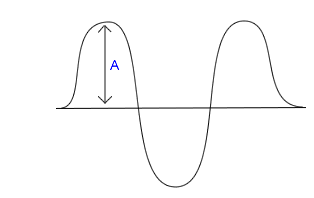
If the distance represented by the letter A (the amplitude) were increased, how would it change the sound?

a)

The sound would be higher.

b)

The sound would be softer.

c)

The sound would be lower.

d)

The sound would be louder.

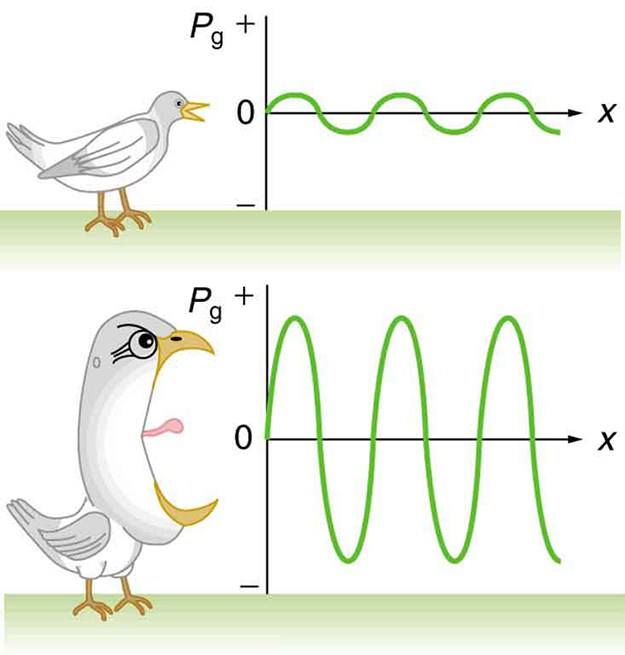
65.

What is changed in the second picture?

a)

Someone is talking louder in picture 2

b)

Someone is talking softer in picture 2

c)

Someone is talking lower pitch in picture 2

d)

Someone is talking higher pitch in picture 2

66.

What is changed in the second picture?

a)

Someone is talking louder in picture 2

b)

Someone is talking softer in picture 2

c)

Someone is talking lower pitch in picture 2

d)

Someone is talking higher pitch in picture 2

67.

Which of the following statement is true?

a)

The higher the amplitude, the higher the pitch of sound

b)

The lower the amplitude, the louder the sound

c)

The higher the frequency, the higher the pitch

d)

The lower the frequency, the louder the sound
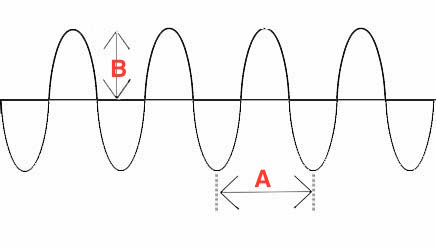
68.

What property of this wave is represented by the letter "A"?

a)

amplitude

b)

crest

c)

trough

d)

wavelength

69.

People with the nerve deafness is due to permanent damage to a nerve ending in the ______________

a)

ear canal

b)

eardrum

c)

cochlea

d)

anvil, stirrup, hammer (three bones)

70.

________ is a reflected sound.

a)

Vibration

b)

Echo

c)

Pitch

d)

Volume

71.
__________ is the loudness or softness of a sound. 
(Hint: Think about our sound song.)
a)
Echo
b)
Volume
c)
Pitch
d)
Vibration
72.
__________ means to move back and forth quickly.
a)
Pitch
b)
Amplitude
c)
Vibration
d)
Echo
73.
Sound waves travel the FASTEST through _____________.
a)
gases
b)
liquids
c)
solids
74.
If a sound has a high amplitude then it also has a ____________!!!
a)
fast echo
b)
slow pitch
c)
high volume
d)
low volume
75.
Sound waves travel the SLOWEST through _____________.
a)
gases
b)
solids
c)
liquids
76.

Sound does not travel in space because

a)

Distance is too far away.

b)

There is no matter in space.

c)

It is too dark.

d)

Space has planets.

77.
What is frequency?
a)
the number of vibrations per second
b)
how high or low a sound is
c)
the loudness or softness of a sound
d)
the back and forth movement of matter
78.

Why do we see lightning before we hear the thunder?

a)

Lightning is an illusion.

b)

Light travels faster than sound

c)

Sound travels faster than light.

79.

What happens to our hearing if we listen to loud noises all the time?

a)

we appreciate music better

b)

we get a ringing in our ears

c)

we start to experience hearing loss

80.
Sound travels through the air as waves.
a)
True
b)
False
81.

Matter that carries sound waves is called a _________

a)

particle

b)

object

c)

medium

d)

matter

82.

The ______ of a sound depends on the medium through which it's moving.

a)

pitch

b)

vibration

c)

speed

d)

loudness

83.
Two identical strings are the same length. One of the strings is pulled tightly and the other string is more loose.
Identify which string will produce a higher-pitched sound when the strings are plucked
a)
the tight string
b)
the loose string
84.

Which device measures sound waves?

a)

Oscilloscope

b)

Stethoscope

c)

Antenna

d)

Microscope

85.

Area of a longitudinal wave where particles are APART.

a)

Compression

b)

Rarefaction

c)

Refraction

d)

Compassion

86.

Sound travels FASTEST through which of these materials?

a)

Plastic

b)

Empty space

c)

Metal

d)

Water

87.
This is what you get when sound waves are reflected, or bounce back, off of a hard surface.
a)
Amplitude
b)
Pitch
c)
Volume
d)
Echo
88.
The speed of a sound wave depends on
a)
the frequency
b)
the medium
c)
both air temperature and medium
d)
the air temperature
89.

Bats use ________ to locate mosquitoes in the air.

a)

solar

b)

ecology

c)

echolocation

d)

refraction

90.
The number of wavelengths that pass a point each second
a)
frequency
b)
wavelength
c)
pitch
d)
amplitude
91.
A part in a longitudinal wave where the particles are spread apart
a)
compression
b)
rarefaction
c)
crest
d)
trough
92.
The part of a longitudinal wave where the particles of the medium are close together.
a)
rarefaction
b)
compression
c)
crest
d)
trough
93.
A disturbance that travels through a medium as a longitudinal wave
a)
sound
b)
wavelength
c)
pitch
d)
frequency
94.
When a sound is louder what measurement gets bigger?
a)
Frequency 
b)
Amplitude 
c)
Wavelength 
d)
Crest
95.
What is B?
a)
crest
b)
trough
c)
compression
d)
rarefaction
96.
Why is the school library covered with carpet?
a)
So everyone can make a lot of noise
b)
to help absorb sounds to keep it quiet
c)
because it looks good
d)
to help absorb sounds so it can stay noisy
97.

Areas of increased pressure on a sound wave are known as a ----

a)

Rarefaction

b)

Compression

c)

Frequency

d)

Amplitude

98.

The distance from the beginning of one compression to the beginning of the next compression is called a -----

a)

Rarefaction

b)

Frequency

c)

Wavelength

d)

Compression

99.

Spread out areas or areas of decreased pressure on a sound wave are known as a ---

a)

Rarefaction

b)

Amplitude

c)

Compression

d)

Hertz

100.
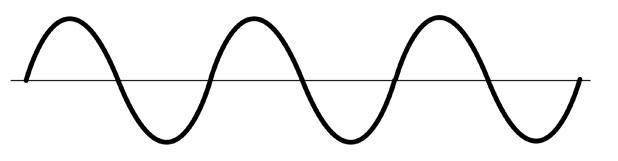
What kind of wave is pictured?
a)
Transverse
b)
Longitudinal
c)
surface
d)
none of the above