wayground logo

Free Printable Worksheets

Font size

S
M
L
XL
Worksheets

CHEM 1114 Final Exam Practice Quiz Spring 2022

Total questions: 95

Worksheet time: 2hrs 56mins

Name
Class
Date
1.
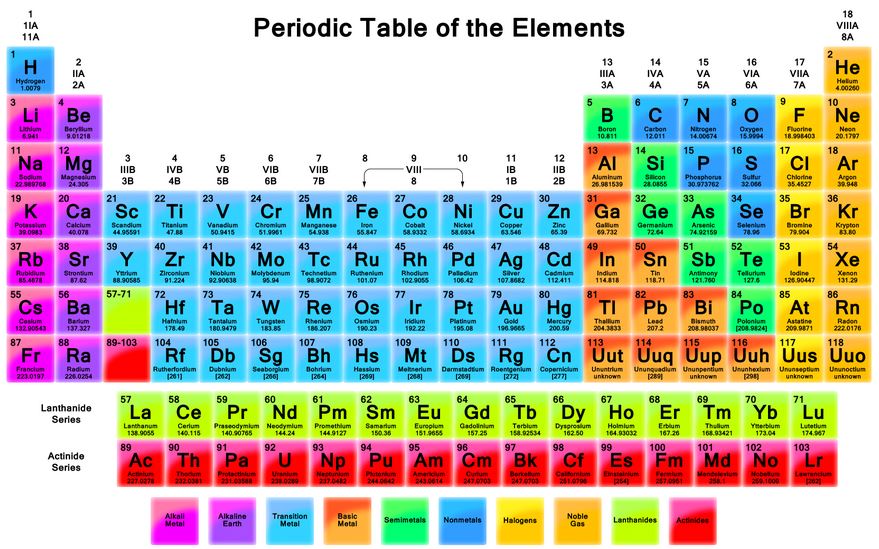
The atomic number tells you what?
a)
number of electrons
b)
number of protons
c)
number of neutrons
d)
both electrons and protons in an atom.
2.
What does the 1.00794 stand for?
a)
Hydrogen
b)
atomic number
c)
atomic mass
d)
atomic explosion
3.
How many protons are in Beryllium?
a)
4
b)
9
c)
5
d)
2
4.

How many neutrons does Chlorine (Cl) with an atomic number of 17 and an atomic mass of 35.

a)

17

b)

18

c)

19

5.
How many protons does this element have?
a)
40
b)
21
c)
20
d)
41
6.
The sum of the protons and neutrons in the nucleus of an atom
a)
Atomic Number
b)
Compound
c)
Electrons
d)
Mass Number (also called Atomic Mass)
7.

Which statement correctly describes the location and charge of the electrons in an atom?

a)

The electrons are inside the nucleus and have a negative charge

b)

The electrons are inside the nucleus and have no charge

c)

The electrons are outside the nucleus and have a negative charge

d)

The electrons are outside the nucleus and have no charge

8.

A neutral atom is best described as having....

a)

more protons than neutrons

b)

more electrons than protons

c)

an equal number of protons and electrons

d)

an equal number of protons and neutrons

9.

The vertical (up and down) columns in the Periodic Table are called

a)

groups

b)

towers

c)

periods

d)

atomic numbers

10.
Which group of the periodic table is composed of inert (not reactive)  gases?
a)
alkali metals
b)
alkaline earth metals
c)
halogens
d)
noble gases
11.
Which is an alkali metal?
a)
Magnesium
b)
Iron
c)
Sodium
d)
Europium
12.
Which is a halogen?
a)
Helium
b)
Chlorine
c)
Oxygen
d)
Neptune
13.

Name this group: These metals are the most reactive.

a)
b)
c)
d)
14.

Name this group: These metals are the second most reactive.

a)
b)
c)
d)
15.

Name this group: These metals contain familiar metals such as gold, iron, and copper.

a)
b)
c)
d)
16.

Find these groups: Locate Lanthanides and Actinides.

a)
b)
c)
d)
17.
Which of the following has a full valence shell?
a)
Oxygen
b)
Neon
c)
Barium
d)
Carbon
18.
Elements on the LEFT side of the periodic table will most likely form:
a)
Positive ions
b)
Negative ions
c)
Neutral Ions
d)
None of these
19.
An ionic bond forms when atoms ___________ electrons.
a)
gain
b)
share
c)
increase
d)
transfer
20.
Which type of bond has an equal sharing of electrons?
a)
Polar Covalent 
b)
Non Polar Covalent
c)
Ionic
d)
Metallic
21.
Which type of bond has an unequal sharing of electrons?
a)
Polar Covalent 
b)
Non Polar Covalent
c)
Ionic
d)
Metallic
22.
Chemical bonds form when atoms
a)
combined nuclei
b)
give up neutrons
c)
gain protons
d)
share or transfer electrons
23.
How many valence electrons in this structure?
a)
6
b)
5
c)
4
d)
7
24.
When electrons are shared unequally a/an ___________ bond is formed 
a)
ionic 
b)
hydrogen
c)
polar covalent 
25.
Atoms joined together by SHARING electrons are?
a)
Ionic bonds
b)
Covalent bonds
c)
Metallic Bonds
d)
James Bonds
26.
Which of the following is NOT a part of Kinetic Molecular Theory?
a)
Gas particles have mass and occupy space (the individual particles have volume)
b)
Gas particles do not have mass and occupy space (the individual particles have volume
c)
Gas particles move in straight lines
d)
The more heat energy the gas particles have, the faster they move
27.
Diffusion is
a)
the ability of one gas to mix with another gas.
b)
the rate at which a gas flows through the air.
c)
an explosion of gases.
d)
the ability of a gas to move from a high pressure to a low pressure.
28.
At a constant pressure, the volume decreases.  What happens to the temperature?
a)
increases
b)
decreases
c)
stays the same
29.
Under which of the following conditions do REAL gases behave most like IDEAL gases?
a)
High pressure and high temperature
b)
High pressure and low temperature
c)
Low pressure and low temperature
d)
Low pressure and high temperature
30.
At STP (Standard Temperature and Pressure), a gas has a volume of 3.0 L. What is the new volume if the pressure increases to 303.9 kPa? The equation that you need use is the Combined Gas Law.
a)
9 L
b)
1 L
c)
9 kPa
d)
1 kPa
31.
A gas has a volume of 22.4 L at STP.  What is the new volume if the pressure is increased to 202.6 kPa and the temperature is decreased to 250 K? You will need to use the combined gas law for this question.
a)
10.3 L
b)
24.5 L
c)
48.9 L
d)
20.6 L
32.
How many molecules are there in a 110 L sample of gas at STP?
a)
8 x 10²³ molecules
b)
8 x 1024  molecules
c)
3 x 1024 molecules
d)
3 x 10²³ molecules
33.
A sample of pure oxygen gas at STP measures out to be 2.00 L.  How many moles of oxygen is this?
a)
24.4 mol
b)
0.007 mol
c)
1.44 mol
d)
0.09 mol
34.
Gases of the same volume contain the same number of molecules.  This is the description of:
a)
Boyle's law
b)
Dalton's law
c)
Charles' law
d)
Avogadro's law
35.
What explains the very high melting and boiling point of water
a)
Strong dipole-dipole bonds between water molecules
b)
Strong hydrogen bonds between water molecules
c)
Dispersion forces which are present in all molecules
d)
Asymmetrical shape of the polar bonds.
36.
Does HCl have hydrogen bonding?
a)
yes
b)
no
37.

Intermolecular forces for: NH3

a)

Dispersion Force

b)

Dipole dipole

c)

Hydrogen bonding

38.

The weaker the intermolecular forces of a substance the _____________ the boiling point

a)

higher

b)

lower

39.

Intermolecular forces for: CO2

a)

Dispersion Force

b)

Dipole dipole

c)

Hydrogen bonding

40.
What state of matter consists of tightly packed atoms?
a)
Solid
b)
liquid
c)
gas
d)
plasma
41.
When pressure increases, which of the following also increases?
a)
mass
b)
volume
c)
temperature
d)
length
42.
Liquid has a definite ___________, but a variable _____________.
a)
shape, volume
b)
mass, area
c)
smell, taste
d)
volume, shape
43.
Which of the following states of matter has the most kinetic energy?
a)
solid
b)
liquid
c)
gas
44.
Which of the following states of matter has the lowest kinetic energy? 
a)
solid
b)
liquid 
c)
gas
45.
To make a solid become a liquid, you must increase its________________.
a)
mass
b)
density
c)
kinetic energy
d)
potential energy
46.
Gas particles move around at __________ speeds. 
a)
low
b)
slow
c)
high
d)
unknown
47.
Adding thermal energy to matter casues its particles to _________________.
a)
move slower
b)
move faster
c)
melt
d)
feeze
48.

The substance being dissolved is called the ________

a)

solvent

b)

solid

c)

solute

d)

solvate

49.

The process of dissolving a substance in solution

a)

solvotion

b)

salvation

c)

solvation

d)

salvution

50.

A non-electrolyte is composed of __________in solution

a)

molecules

b)

molecules and ions

c)

ions

d)

none of the above

51.

What does "like dissolves like" mean?

a)

polar solvents dissolve in polar solutes

b)

polar solutes dissolve in polar solvents

c)

non-polar solvents dissolve in polar solutes

d)

non-polar solutes dissolve in polar solvents

52.

When no more solute dissolves the solution is _________

a)

supersaturated

b)

unsaturated

c)

saturated

d)

supercalifragilisticexpialidocious

53.

Gases are more soluble at ______temps and _____pressures

a)

high, low

b)

low , high

c)

high, high

d)

low, low

54.

Molality is defined as ________ divided by _____________

a)

liters solution, mols solute

b)

mols solute, liters solvent

c)

kg solvent, mols solute

d)

mols solute, kg solvent

55.

Molarity concentration is abbreviated as _________

a)

MM.

b)

m.

c)

Mol.

d)

M.

56.

Molarity is defined as _________ divided by ___________

a)

mol, liters

b)

mol, kg

c)

kg, liters

d)

liters, kg

57.

How many mols of HCl are in 3 liters of 2.0M HCl solution?

a)

2.0

b)

1.5

c)

6.0

d)

0.66

58.
How many moles of NaCl are present in 6000. ml a 1.5 M NaCl solution?
a)
9 moles NaCl
b)
9000
c)
9
d)
4000  moles NaCl
59.
What is the molarity of a 2 liter solution containing 5 moles of NaCl?
a)
2.5
b)
0.4
c)
2.5 moles/liter
d)
10 moles/liter
60.

Which of the following statements is true concerning acids and bases?

a)

acids and bases don't react with each other

b)

acids mixed with bases neutralize each other

c)

acids mixed with bases make stronger bases

d)

acids mixed with bases make stronger acids

61.

True or false: bases are sometimes called alkaline.

a)

True

b)

False

62.

Neutral solutions have a pH of:

a)

0

b)

1

c)

7

d)

14

63.

NaOH may be found in drain cleaners and as a component of soaps. Is NaOH an acid or a base?

a)

Acid

b)

Base

c)

Neither (Neutral)

64.

HCl is found in household products, including some toilet bowl cleaners. Is HCl an acid or a base?

a)

Acid

b)

Base

c)

Neither (Neutral)

65.

Is pure water acidic, basic, or neutral?

a)

Acidic

b)

Basic

c)

Neutral

66.

The word equation for an acid reacting with a base is

a)

acid + metal  \rightarrow  salt + carbon dioxide + water

b)

acid + base  \rightarrow  salt + water

c)

acid + metal  \rightarrow  salt + hydrogen

d)

acid + metal  \rightarrow  salt + water

67.

Properties of bases are

a)

feel soapy and neutralise acids

b)

irritate your skin and react with metals to produce bubbles

c)

taste sour and turn litmus red

d)

have pH less than 7

68.

Which of the following values would represent the pH of a strong base?

a)

1

b)

8

c)

7

d)

13

69.

When the pH of your pool is too low, it can irritate your skin, what do you need to add to raise it

a)

salt (e.g. sodium chloride)

b)

chlorine

c)

hydrochloric acid

d)

sodium carbonate

70.
2A + 3B  <---->  2AB
The forward reaction forms the substance __________.
a)
A
b)
B
c)
AB
d)
A + B
71.
For the reaction...
SO2 + O2  <−>  SO3
If the concentration of SOis increased, the equilibrium of the reaction will shift ___________.
a)
left
b)
right
c)
left and right 
d)
neither left nor right
72.
For the reaction...
H2 (g)  + Cl2 (g) <−>  2HCl (g)  +  heat
If the temperature is cooled, the _________ reaction will be favored.
a)
forward
b)
reverse
c)
forward and reverse
73.
For the reaction...
N2 (g) +  3 H2 (g) <−> 2 NH3 (g)

If the pressure in the system is increased,  which substance will increase in concentration?
a)
N2
b)
H2
c)
N2 and H2
d)
NH3
74.

What is the effect of increasing the pressure on the following equilibrium: 2NO(g) + O2 (g) ⇌2NO2(g)?

a)

The yield of NO2 increases

b)

The yield of NO2 decreases

c)

The reaction is slower

d)

The concentration of O2 increases.

75.
At what time the reaction reached equilibrium?
a)
t1
b)
t2
c)
t3
d)
t4
76.
How do catalysts increase the rate of reaction?
a)
The frequency of collisions is the increased
b)
the activation energy is lowered
c)
the energy of collisions is increased
d)
Both the frequency and energy of collisions is increased
77.

At elevated temperatures ammonium carbonate, NH2COONH4, is in equilibrium with NH3 and CO2 according to the equation;

NH2COONH4(s) ↔ 2 NH3(g) + CO2(g)

What is the equilibrium expression for this reaction?

a)

K = 2 [NH3][CO2]

[NH2COONH4]

b)

K = [NH3]2[CO2]

[NH2COONH4]

c)

K = 2 [NH3][CO2]

d)

K = [NH3]2[CO2]

78.

For the following reaction: H2(g) + Cl2 (g) ↔ 2HCl(g), calculate the concentration of HCl when Keq= 2.3x10⁻⁵, [H2]= 0.0056mol, [Cl2]= 0.0048mol.

a)

6.2 x 10⁻¹⁰ M

b)

2.5 x 10⁻⁵ M

c)

1.1 M

d)

1.2 M

79.
Which of the two graphs reaches equilibrium?
a)
The left one.
b)
The right one.
c)
Both of them.
d)
Neither.
80.

Oxidation is the _________ of electrons.

a)

loss

b)

gain

c)

sharing

d)

transfer

81.

Reduction is the ___________ of electrons.

a)

loss

b)

gain

c)

sharing

d)

transfer

82.

In a redox reaction, the species reduced

a)

gains electrons and is the oxidizing agent

b)

loses electrons and is the oxidizing agent

c)

loses electrons and is the reducing agent

d)

gains electrons and is the reducing agent

83.
Which statement is true:
Mg → Mg2+ + 2e
a)
Mg gains 2 electrons
b)
Mg2+ loses 2 electrons
c)
Mg loses 1 electron
d)
Mg loses 2 electrons
84.
In the reaction
2Ca(s) + O2(g) --> 2CaO(s), calcium is __________
a)
Reduced
b)
Synthesized
c)
Oxidized
d)
None of the above
85.
What substance is oxidized in the following reaction?
4Fe + 3O2 --> 2Fe2O3
a)
Iron
b)
Fluorine
c)
Oxygen
86.

Which of the following is NOT an example of an oxidation reduction reaction?

a)

metal rusting

b)

acid neutralizing base

c)

burning methane

d)

photosynthesis

87.

What is the oxidation number on the nitrogen in Mg3N2?

a)

0

b)

-2

c)

-3

d)

+3

88.

Which element was oxidized in the reaction below?

Na + PbCl2 → Pb + NaCl

a)

Na

b)

Pb

c)

Cl

d)

No element was reduced

89.
     In the reaction Zn + H2O --> ZnO2 + H2
 which element, if any, is oxidized? 
a)
Zinc
b)
Hydrogen
c)
Oxygen
d)
None
90.

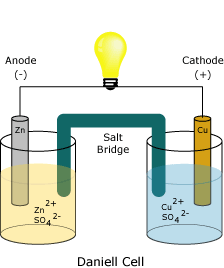
WHICH IS ANODE?

a)

COPPER ELECTRODE

b)

ZINC ELECTRODE

c)

ZINC SULFATE SOLUTION

d)

SALT BRIDGE

91.

Ecell =

a)

Ered - Eox

b)

Ered + Eox

c)

Eox - Ered

d)

Eox + Ered

92.

In the above Galvanic Cell, which half cell is undergoing reduction?

a)

Cu | Cu2+

b)

Zn | Zn2+

93.

Consider the galvanic cell reaction Zn (s) + Cu2+ (aq) → Cu (s) + Zn2+ (aq) When the cell is running spontaneously, which is the only true statement?

a)

The copper electrode loses mass and the zinc electrode is the cathode.

b)

The copper electrode gains mass and the copper electrode is the cathode.

c)

The zinc electrode gains mass and the zinc electrode is the anode.

d)

The zinc electrode loses mass and the zinc electrode is the cathode.

94.
Consider the galvanic cell given.
Which of the following deductions about this cell is correct?

a)
Oxidation is occurring in half-cell 2
b)
The positive electrode is in half-cell 2
c)
Oxidation is occurring in half-cell 1
d)
The negative electrode is in half-cell 1
95.
Consider the galvanic cell given.
Which of the following deductions about this cell is correct?
a)
Oxidation is occurring in half-cell 2
b)
The positive electrode is in half-cell 2
c)
Oxidation is occurring in half-cell 1
d)
The negative electrode is in half-cell 1