
 Worksheets
SCIENCE 4 REVIEWER
Total questions: 90
Worksheet time: 2hrs 30mins


Sound travels through solids, liquids AND gasses.
True
False

Why does cupping your hands around your mouth when you shout make the sound travel further?
The sound spreads out.
Your voice gets louder.
Your voice becomes muffled.
The sound doesn't spread as much.
What is volume?
how high or low a sound is
the loudness or softness of a sound
vibrations moving through a medium
What causes an echo?
sound waves bouncing off large, hard surfaces
sound waves bouncing off soft surfaces like carpet
sound waves bouncing off small objects like tables and chairs
you repeating yourself
Why does the school music room have foam panels on the walls?
So everyone can make a lot of noise
to help prevent sounds from going to other parts of the school
because it looks good
to keep the thermal energy from transferring to sounds
When a sound wave hits the eardrum, what happens to the eardrum to allow the transmission of the sound to the inner ear?
it vibrates
it ruptures (breaks)
it fills with liquid
it remains motionless
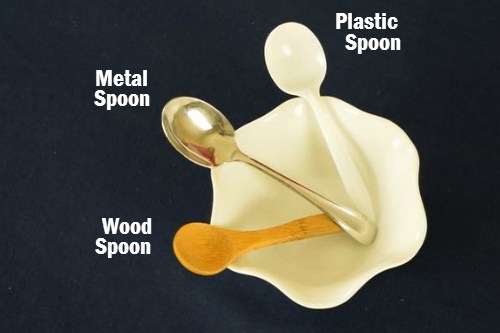
Which material will heat travel through the fastest?
Plastic
Wood
Metal
What is Conduction?
When heat is passed from particle to particle through an object.
When particles get heated, expand, and become less dense.
When heat transfers by waves through empty space.
What is Convection?
When heat is passed from particle to particle through an object.
When particles get heated, expand, and become less dense.
When heat transfers by waves through empty space.
What is Radiation?
When heat is passed from particle to particle through an object.
When particles get heated, expand, and become less dense.
When heat transfers by waves through empty space.
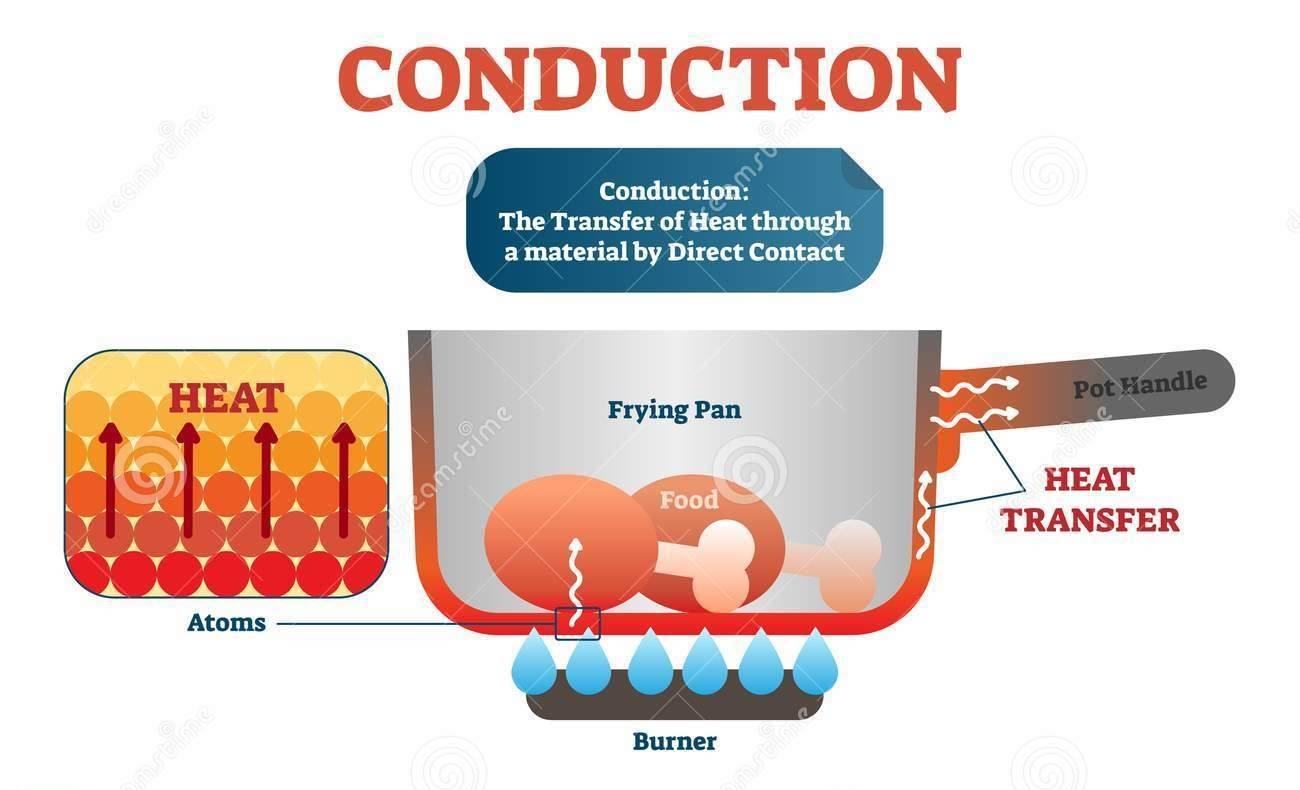
Which of the following is an example of heat transfer by Conduction?
Burning your fingers on a hot iron.
Heat from a heater warming up your whole house
Standing by a campfire and feeling the heat.
All of the above.
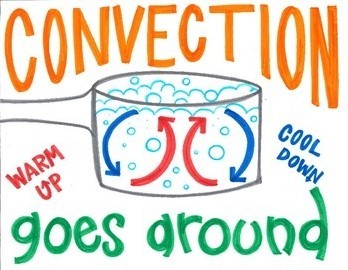
Which of the following is an example of heat transfer by Convection?
Burning your fingers on a hot iron.
Heat from a heater warming up your whole house
Standing by a campfire and feeling the heat.
All of the above.
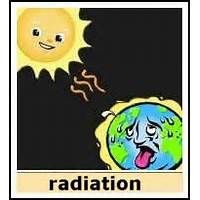
Which of the following is an example of heat transfer by Radiation?
Burning your fingers on a hot iron.
Heat from a heater warming up your whole house
Standing by a campfire and feeling the heat.
All of the above.
Heat energy makes particles move
slower
faster
same

This is heat …….
Convection
Conduction
Radiation

This is heat …….
Conduction
Convection
Radiation
When an object vibrates, it produces...
Sound waves.
Light energy.
Heat.
How do we perceive large vibrations?
As loud sounds.
As quiet sounds.
Which types of light sources do yo know?
Artificial and man made.
Natural and bioluminescense.
Artificial and natural.
Your sister loves listening to music at a very loud sound using the stereo to the extent that you can no longer understand what each other is talking about. What advise will you give her?
A. I will unplug the stereo without telling her.
B. I will lessen the volume and tell her that to much sound is not good to our health.
C. I will leave the house and go where I can no longer hear the sound.
D. I will just let her do what she wants.
Your father works at a construction site. What tool can you give him to protect his sense of hearing?
A. hat
B. face mask
C. earphones
D. none of the above
In order to have a good sleep at night you must do the following except one.
A. Listen to music using your earphones.
B. Switch off the television.
C. Stay away from noisy surroundings.
D. Put on your phones in a silent mode.
Here are the ways to avoid too much noise, EXCEPT one?
A. Tone down TV or radio sounds.
B. Avoid going near big sound speakers.
C. set your phones on a full volume
D. Install double-paned windows.
This is the most common health problem caused by noise pollution
toothache
hearing loss
hair fall
dandruffs
Which statement is NOT TRUE about noise pollution?
A. sound pollution is thought to be a sound so intense that it could shatter glass,
B. Intense vibrations can rupture the eardrum
C. The unwanted sound is called Noise
D. Ear can only take 500 decibels of sound or noise.
Below has the bad effect on our health EXCEPT ONE.
A. humming of the Birds
B. snoring of your father when sleeping
C. screaming of audience in a concert
D. sleeping with high volume of music


These are huge bodies of water that are not suitable for drinking because of their high salt content.
lakes and waterfalls
rivers and streams
seas and oceans
We can drink any kind of water we find in nature.
True
False
Plants needs water to __________
get clean
grow
_______ living things need water .
All
Some
People and Animals need water to _____
drink
play
In the morning, you observe that water droplets have formed on grass. Which process occurred when the water droplets formed on the grass?
condensation
deposition
evaporation
sublimation
When water is heated in the ocean by the sun and turns into water vapor
Condensation
Evaporation
Transpiration
What is the correct order of the water cycle?
cloud, water vapor, rain,
water vapor, cloud, rain
rain, cloud, water vapor
water vapor, rain, cloud
During what part of the water cycle does water vapor turn into liquid droplets?
evaporation
condensation
precipitation
run off
What must happen to water vapor in order for it to turn into liquid droplets?
It must be heated.
It must be cooled.
It must remain the same temperature.
It must be pushed by wind.
What is the correct order of the water cycle?
precipitation, evaporation. run off, condensation
evaporation, run off, precipitation, condensation
evaporation, condensation, precipitation, run off
run off, condensation, evaporation, precipitation
How do clouds form from water vapor?
evaporation then precipitation
condensation then precipitation
precipitation then condensation
evaporation then run off
The class created models of the water cycle in plastic bags. Which would represent the precipitation stage of the water cycle?
The amount of water in the cup.
The water vapor at the top of the bag.
The amount of sunlight heating the water.
The water droplets running down the side of the bag.
What would happen if less water evaporated from the oceans?
Ocean levels would increase and there would be more precipitation.
Ocean levels would decrease and there would be more precipitation.
Ocean levels would increase and there would be less precipitation.
Ocean levels would decrease and there would be less precipitation.
How are the oceans connected to other bodies of water?
Water evaporates from the oceans and enters the other bodies as precipitation.
Water evaporates from the oceans and enters the other bodies as evaporation.
Water evaporates from the oceans and enters the other bodies as condensation.
Water evaporates from the oceans and enters the other bodies as groundwater.
How does water from the ocean become different forms of precipitation?
Water evaporates; precipitation falls; the sun warms the ocean water; clouds form
Clouds are formed through condensation, the sun warms the ocean water; precipitation falls; water evaportates
Precipitation falls to the ground; clouds form;the sun evaporates water from the ocean
The sun warms the ocean; water evaporates and then condenses into clouds; precipitation falls to the ground.
Choose the letter of the correct answer. Write your answers on a separate sheet of paper.
1. Which of the following is NOT an example of a weather condition?
A. Flash flood
B. rainy day
C. sunny day
D. windy day
2. Which of the following is NOT a safety precaution during rainy days?
A. Avoid sun exposure: wear a wide-brimmed, breathable hat.
B. Be ready with your umbrellas, raincoats, and rain boots during rainy days.
C. Do not use cellphone or other electronic devices except for emergencies when thunderstorm occurs.
D. Stay inside the house to avoid flying objects like roof materials, broken branches of trees, or falling posts.
3. Which of the following is a correct way of protecting your skin if you have to go outside on a sunny day?
A. wear hat
B. apply sunscreen lotion
C. wear long-sleeved shirt and pants
D. all of the above
4. Your family is planning to have a summer outing at the beach. What preparations will you do?
A. Bring different type of clothes and outfits.
B. Don’t worry about the clothes you are going to bring.
C. Choose the most appropriate clothes for the said occasion.
D. Visit the nearby department store and buy new clothes.
5. Which of the following is NOT a preparation for a typhoon?
A. Make a household emergency bag
B. Visit the nearby department store and buy clothes that are in fashion.
C. Look out for objects that could be easily swept up and picked up by gushes of wind.
D. Ensure any leaks in the roof are repaired to prevent water from dripping into the house.
6. You walk to and from the school on a sunny day, what should you bring to shield yourself from the sun’s heat and light?
A. boots
B. sunglasses
C. umbrella
D. raincoat
7. Which of the following is inappropriate to do during windy days?
A. fly a kite
B. make windsocks
C. burn dried leaves
D. wear thick clothes
8. Why do we need to follow safety precautions?
A. to put everyone at risk
B. to put everyone in danger
C. to protect lives and property
D. to put damages in properties
9. You will go swimming with your friends this weekend. What should you do to avoid sunburn?
A. wear jacket
B. wear sunglasses
C. drink plenty of water
D. apply sunscreen lotion
10. Which of the following is NOT needed in preparing an emergency bag?
A. flashlights and batteries
B. television and computer
C. food and water
D. toiletries and first aid kit
The sun helps us see moonlight at night.
True
False
The sun warms the atmosphere to trigger changes in the weather.
True
False
The sun doesn't affect the lives of organisms in the Earth.
True
False
The sun enables us to see different colors in the surroundings.
True
False
The sun is important for production of plant's food.
True
False
The sun provides heat to warm the habitats of animals.
True
False
The sun disables people to cook food at home.
True
False
The sun provides plants with light energy to enable them to make food.
True
False
The sun evaporates water from oceans and lakes to make water cycle occur.
True
False
The sun makes people on Earth experience day and night.
True
False

