wayground logo

Free Printable Worksheets

Font size

S
M
L
XL
Worksheets

APUSH Gallery Walk #1

Total questions: 131

Worksheet time: 2hrs 49mins

Name
Class
Date
1.
This period during the 1870s to 1900 is known for it's rise of railroads, big business, industrialization and social problems in the United States.
a)
World War I
b)
Progressive Era
c)

Gilded Age

d)
Roaring Twenties
2.
in 1882, the Government passed this legislation that restricted immigration for 10 years from a certain group into the United States.
a)
Nativist Act
b)
Mexican Reparition Act
c)
Dawes Act
d)
Chinese Exclusion Act
3.
Men such as Andrew Carnegie believed in giving money to libraries, musuems and schools to help benefit people who wanted to move up in the social ladder. 
a)
geopolitical
b)
political bosses
c)
Social Darwinism
d)
Gospel of Wealth
4.

Many Immigrants faced issues once they arrived such as language barriers, but these group of people want restrict new immigrants from entering the country.

a)
Democrats
b)
Republicans
c)

Progressives

d)
Nativists
5.
What was a city government marked by corruption, bribery, and Kickbacks (common during the Gilded Age) called?
a)
credit mobilier
b)
political machine
c)
corrected democracy
d)
electoral politics
6.

In 1890, during the Gilded Age, who wrote about and photographed the horrible living conditions of America's working poor in the book, How the Other Half Lives?

a)

Upton Sinclair

b)

Ida Tarbell

c)

Ida Wells

d)

Jacob Riis

7.
William Graham Sumner was a popular researcher and writer during the Gilded Age.  He believed that government programs to help the poor were useless because, "...a drunkard in the gutter is just where he ought to be..."  That is, Sumner believed that we all had a certain station or place that was ordained and could not be changed.  This Gilded Age philosophy was called which of the following?
a)
Evolution
b)
Monetary Policy
c)
Social Darwinism
d)
Welfare Capitalism
8.
One reason nativists worried about influx of immigrants in 1880s...
a)
Feared immigrants gain control of city and state governments
b)
Believed immigrants receive preferential treatment from federal government and receive land
c)
Thought country's ports could not handle increasing numbers of immigrants and exports
d)
Considered immigrants from southern and eastern Europe a threat to traditional American cultural values
9.
Populists supported "free silver" because they believed:
a)

It would increase the value of their debt.

b)

It would decrease the value of their debt.
c)
It would result in inflation
d)
None of the following - they supported continuation of the Gold Standard
10.
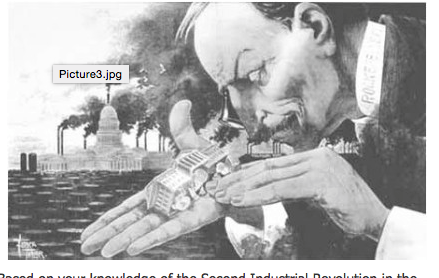
Based on your knowledge of the Industrial Revolution in the United States, what statement is this cartoon making?
a)
The federal government is ruining the oil industry by placing too many restrictions and regulations on business owners.
b)
The oil industry is thriving due to a healthy working relationship with the federal government.
c)
The owner of Standard Oil has too much power and influence over the federal government.
d)
Emissions from oil refineries are polluting the air and harming the environment.
11.
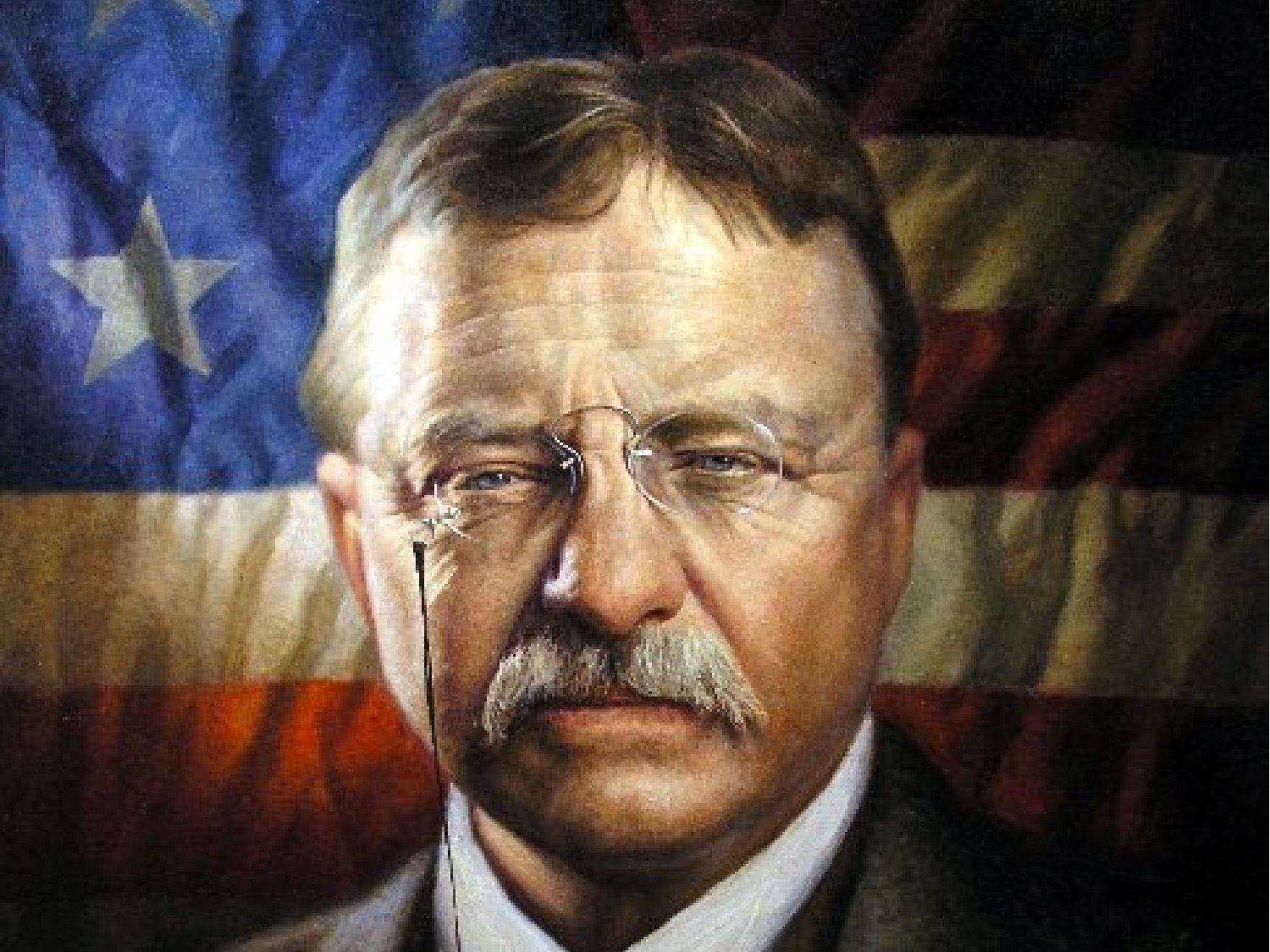
John Muir and Theodore Roosevelt worked together on which movement?
a)
safe food and drug laws
b)
conservation
c)
racial equality
d)
child labor laws
12.
Which of following was most closely associated with the Populist Party?
a)
Jane Addams
b)
William Jennings Bryan
c)
Eugene Debs
d)
Samuel Gompers
13.

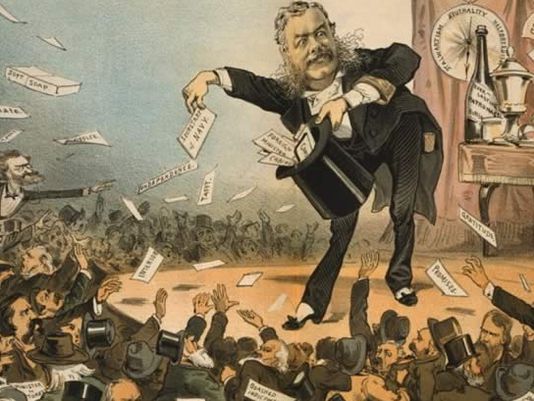
Which was NOT true of Roosevelt?
a)
Pushed government to break up bad trusts
b)
Re-ran as a candidate for the Bull Moose party in 1912
c)
Pushed for conservation
d)
Was not a very "progressive" president
14.
What was the major difference between the first two major unions, the Knights of Labor and the American Federation of Labor?
a)
The Knights of Labor only allowed skilled workers to join
b)
The Knights of Labor did not allow immigrants to join
c)
The AFL only allowed skilled workers to join
d)
The AFL did not allow immigrants to join
15.
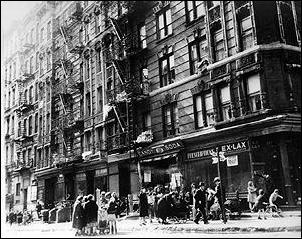
Which of these best describes life in a tenement?
a)
Very crowded
b)
Lots of sickness & disease
c)
No windows, heat, or plumbing
d)
All of these describe tenement life
16.
What was the name given to the group of people who thought immigrants could not assimilate, took away jobs, and promoted violence?
a)
Patriots
b)
Loyalists
c)
Nativists
d)
Radicals
17.
What was the time period called that suggested that the U.S. appeared to be fine, but beneath the surface there was corruption and serious problems?
a)
False America
b)
Gilded Age
c)
Teasing Times
d)
Erroneous Era
18.
Congressional action taken in 1890, during the Gilded Age, that made "contracts, conspiracies, and combinations" that restrained free trade illegal.  This was done to stop the abusive practices of organized trusts in oil, sugar, tobacco...
a)
Sherman Antitrust Act
b)
Celler-Kefauver Act
c)
Clayton Antitrust Act
d)
Interstate Commerce Act
19.

What was Roosevelt's foreign policy called?

a)

Dollar Diplomacy

b)

Big Stick Diplomacy

c)

Sphere of Influence

d)

Pan-Americanism

20.

Identify reasons for American Imperialism

a)

Economic Interests

b)

Military Interests

c)

Cultural Superiority

d)

Self Interests

21.
Who was president of the United States during World War I?
a)
Abraham Lincoln
b)
Theodore Roosevelt
c)
Bill Clinton
d)
Woodrow Wilson
22.
This was a major innovation found in most homes by the end of the 20s.
a)
Radio
b)
Television
c)
Telephone
d)
Microwave.
23.
Which decade saw the rise of the automobile, the red scare, and Scopes Trial?
a)
1910s
b)
1920s
c)
1930s
d)
1940s
24.
What is one way the New Deal was supposed to help the economy out of the Great Depression?
a)
by eliminating trading on the stock market
b)
by encouraging war with Germany and Japan
c)
by creating jobs through various new programs
d)
by giving people money through new bank laws
25.
Which amendment guarantees women the right to vote?
a)
1st Amendment
b)
4th Amendment
c)
19th Amendment
d)
12th Amendment
26.

Which WWII leader became President after FDR passed, wanted to save American lives in the Pacific, and decided to drop the atomic bombs?

a)

Franklin D. Roosevelt

b)

Winston Churchill

c)

Harry S. Truman

d)

Joseph Stalin

27.
The need for workers in the Southwest led to the ____________ Program that allowed the recruitment of Mexicans to work in the U.S. during World War II.
a)
Bracero
b)
Navajo
c)
Barrio
d)
None of these are correct
28.

Who were the Tuskegee Airmen?

a)

African-American military pilots

b)

Navy seals

c)

Brave foot soldiers

d)

Silent and Sneaky snipers

29.

The Great Migration refers to

a)

The movement of African Americans from the south to the north

b)

The movement of African Americans from the north to the south

c)

The spread of African culture after slavery ended

d)

The advocacy of political union of all the indigenous inhabitants of Africa

30.

How did the Harlem Renaissance influence the world? Click all that apply

a)

it only had an impact on the immediate area of New York

b)

it spread from the area of Harlem to other parts of the nation

c)

it not only influenced African Americans, but other cultures as well

31.
Practice of sensationalizing stories in order to increase subscriptions
a)
Direct Election
b)
Scientific Management
c)
Yellow Journalism
d)
Muck Rakers
32.
Supreme Court decision that affirmed government powers during a military emergency
a)
Korematsu v. US
b)
Schenck v. US
c)
Plessy v. Ferguson
d)
Schecter v. US
33.
In 1940, the “cash and carry” plan:
a)
allowed Great Britain to purchase U.S. arms on a restricted basis.
b)
allowed Germany to purchase U.S. arms on a restricted basis.
c)
allowed Japan to purchase U.S. arms on a restricted basis.
d)
none of the above.
34.
During WWII, Americans:
a)
experienced the rationing of scarce consumer goods such as gasoline.
b)
experienced extreme deprivation
c)
still suffered from high unemployment.
d)
were told that the end of war might bring a return of the Great Depression.
35.
The Emergency Quota Act and National Origins Act were designed to ________.
a)
limit the flow of communist ideas into America
b)
exclude Asians from immigrating
c)
limit immigration to white, almost English speaking immigrats
d)
all of these
36.
_______ fell into economic crisis early in the 1920's due to less demand and lower prices for food after World War I.  Banks were ultimately hurt after this group failed to re-pay loans taken during the Great War to expand production.
a)
Farmers
b)
Steel Workers
c)
Oil Producers
d)
Airplane manufacturers
37.
The ________Trial symbolizes the desire by some to return to religious fundamentalism in the 1920's as the speakeasies, flappers, jazz music, and easy money seemed to defy morality and religion.
a)
Scopes Monkey
b)
O.J. Simpson
c)
Evolution
d)
all of these
38.
______ was the dominant civil rights leader of the 1920's.  He was militaristic and radically rejected lack of equality by proposing a migration to Africa, but was imprisoned and deported.
a)
Marcus Garvey
b)
W.E.B. DuBois
c)
Martin Luther King
d)
Malcolm X
39.
The _______ Scandal, in which oil companies illegal drilled oil from public lands, illustrates the return of laissez-faire during the Harding administration and the 1920's.
a)
Teapot Dome
b)
Watergate
c)
Credit Mobilier
d)
Whiskey Ring
40.
During the 1930s, the conditions shown in this photograph occurred mainly
a)
on the Atlantic Coast
b)
 on the Great Plains
c)
in the Rocky Mountains
d)
in the Pacific Northwest
41.
What were the villages full of shacks located in cities filled with unemployed Americans called?
a)
Hoovervilles
b)
Okies
c)
Bonus Army Bases
d)
Rooseveltowns
42.
What were the major goals of the New Deal?
a)
no gold standard and free coinage of silver
b)
abolition and suffrage
c)
relief, recovery, and reform
d)
expanding the size and economic influence of the United States
43.
Based on the cartoon, how did President Roosevelt want to ease the Great Depression?
a)
by expanding the role of government in citizens’ lives
b)
by expanding the authority of legislative representatives
c)
by regulating the stock purchases by individual investors
d)
by restricting the spending by government on domestic projects
44.
What was the name given to President Roosevelt's plan to alter the Supreme Court to increase his power in having his New Deal legislation passed instead of having it struck down on constitutional grounds? 
a)
The New Deal
b)
The Great Depression
c)
Court Packing 
d)
Second New Deal 
45.
What was the purpose of the Open Door Policy in China?
a)
End the Boxer Rebellion
b)
Ensure trading rights with China
c)
Win leaseholds in China
d)
Establish a sphere of influence
46.
What was the effect of the Spanish-American War on the US? 
a)
Increased Spanish territories
b)
Decreased US power in the world
c)
Ended the debate over imperialism
d)
US became an imperial power
47.
The Roosevelt Corollary to the Monroe Doctrine was used by the United States to
a)

settle a dispute between Russia and Japan

b)

act as a police power in the Western Hemisphere

c)

expand its colonial empire in Africa

d)

isolate itself from European conflicts

48.
FDR felt that giving aid to the Allied powers was necessary to keep the U.S. out of World War 2. What did he do to help?
a)
Passed the Lend-Sell Acts to sell goods to the Allies
b)
Passed the Lend-Lease Act to "lend" goods to the Allies
c)
He authorized the use of American troops in Europe
d)
He gave Great Britain use of the Philippines 
49.
Congress passed the _____________ to keep America out of the war.
a)
Lend-Sell Acts
b)
Isolationist Pact
c)
Neutrality Acts
d)
New Deal Programs
50.
What did Roosevelt fear would happen if the Axis powers won the war?
a)
The Axis powers would respect all other nations
b)
Freedom and democracy might be threatened everywhere
c)
Germany would surrender to Great Britan
d)
The Allied would be mad at the U.S.
51.

What happened to Japanese Americans who lived on the American West Coast after the attack on Pearl Harbor?

a)
They worked for the U.S. government
b)
They were relocated to internment camps
c)
They were allowed to stay in their homes
d)
They were spies and committed crimes against the government
52.
Which treaty made Germany take full responsibility for WWI? 
a)
Fault Clause
b)
Treaty of Versailles 
c)
Blame Clause
d)
World War 1 Cause Clause
53.
"Unrestricted submarine warfare" and "Zimmermann note" may be categorized as which of the following?
a)
Wilson's Domestic Strategies
b)
1914 Causes of World War I
c)
Causes of America's entry in the Great War
d)
Part of Wilson's 14 Points
54.

Two constitutional amendments, adopted in part because of World War I, were the Eighteenth, which dealt with ____, and the Nineteenth, whose subject was ____.

a)

prohibition; an income tax

b)

direct election of senators; woman suffrage

c)

prohibition; woman suffrage

d)

women suffrage; prohibition

55.

The red scare of 1919-1920 was provoked by

a)

the wartime migration of rural blacks to northern cities.

b)

urban immigrants' resistance to prohibition.

c)

public anger at evolutionary science's challenge to the biblical story of the Creation.

d)

the public's fear that labor troubles were sparked by communist and anarchist revolutionaries.

56.

Both ratified in the 1930s, the Twentieth Amendment ____ and the Twenty-first Amendment ____.

a)

shortened the time between presidential election and inauguration; ended prohibition

b)

limited a president to two complete terms in office; repealed the Eighteenth Amendment

c)

rendered most New Deal programs unconstitutional; limited a president to two complete terms in office

d)

ended prohibition; shortened the time between presidential election and inauguration

e)

expanded the size of the Supreme Court; ended prohibition

57.

Throughout most of the 1930s, the American people responded to the aggressive actions of Germany, Italy, and Japan by

a)

assisting their victims with military aid.

b)

giving only economic help to the targets of aggression.

c)

beginning to build up their military forces.

d)

demanding an oil embargo on all warring nations.

e)

retreating further into isolationism.

58.

The impact of World War II on many of the New Deal programs launched during the Great Depression was that they

a)

were expanded to gear up for wartime production

b)

were retired due to wartime production.

c)

provided much-needed jobs for the poor.

d)

became an established fixture of U.S. government programs

59.

The court case that ended segregation in public schools

a)

Brown v. Board

b)

Plessy v. Ferguson

c)

Miranda v. Arizona

d)

Engel v. Vitale

e)

Tinker v. DesMoines

60.

LBJ's plan for increased domestic spending on anti-poverty & anti-racism programs

a)

New Deal

b)

New Frontier

c)

Great Society

d)

Welfare for All

e)

Southern Strategy

61.

The overall strategy of the US during the Cold War

a)

Truman Doctrine

b)

Containment

c)

Marshall Plan

d)

Domino Theory

62.

Which of the following is NOT true of McCarthyism?

a)

It was a search for Communist infiltrators in the State Department

b)

It mirrored the First Red Scare of the 1920s.

c)

It resulted in the downfall of its namesake Senator.

d)

It prolonged the simultaneous war in Korea.

63.

Which of the following lead to Carter's downfall as a president?

a)

Stagflation

b)

Watergate

c)

Iran-Contra

d)

Bay of Pigs

64.

Nixon's policy of relaxing tensions with the USSR

a)

Detente

b)

Containment

c)

Domino Theory

d)

Brinksmanship

65.

Which of the following is NOT associated with the extension of the civil rights movement?

a)

Silent Majority

b)

Stonewall Riots

c)

AIM

d)

Cesar Chavez

66.

The controversial event that led to the US directly intervening in Vietnam.

a)

Gulf of Tonkin

b)

Tet Offensive

c)

Operation Rolling Thunder

d)

My Lai Massacre

67.
Which of the following BEST characterizes the youth culture of the 1950s?
a)
More young people were choosing to work rather than attend college
b)
Radio programs became more popular amongst teenagers as a source of entertainment
c)
They had more leisure (free) time to dedicate to entertainment and fun
d)
Automobiles had little influence on the life of teens
68.
Under the Truman Doctrine, the US pledged to
a)
refrain from polarizing the world into pro-Soviet and pro-American camps
b)
maintain prosperity in America after World War II
c)
give very limited assistance to nations fighting communism
d)
support those who were resisting subjugation by Communists
69.
What did Winston Churchill mean when he said an "iron curtain" descended across Europe? 
a)

the separation of Communist and Democratic nations

b)
a railroad system
c)
a divider made of iron that separated Europe into sections
d)
the Berlin Wall
70.
Which policy did President Richard Nixon introduce to remove American troops from South Vietnam without abandoning that country to Communist rule?
a)
Vietnamization
b)
Arms for bases
c)
Flexible response
d)
Operation Rolling Thunder
71.
What was the significance of the Tet Offensive?
a)
It pushed LBJ to send in more troops
b)
Showed the US was not winning the War
c)
Congress passed the War Powers Act
d)
Communist forced the US out of Vietnam
72.

Which President negotiated a peace between Egypt and Israel at Camp David?

a)

George W. Bush

b)

George H. W. Bush

c)

Jimmy Carter

d)

Barack Obama

73.

Who was the first woman to be nominated to the Supreme Court?

a)

Nancy Pelosi

b)

Hillary Clinton

c)

Sandra Day O'Connor

d)

Ruth Bader Ginsberg

74.

Reagan's SDI program was nicknamed for which popular film of the era?

a)

Back to the Future

b)

Star Wars

c)

E.T.

d)

Jaws

75.

The top goal of the Reagan presidency included

a)

eliminating all social programs and balancing the federal budget

b)

reducing the size of the federal government and increasing defense spending

c)

using the federal government to enforce civil rights and reducing U.S. influence in Central America

d)

increasing income tax rates and strengthening environmental regulations

76.

President Reagan asked who to "Tear Down this Wall!"

a)

Mikhail Gorbachav

b)

Josef Stalin

c)

Nikita Kruschchev

d)

Vladimir Putin

77.

Despite Reagan's opposition to large government, which area did he choose not to cut?

a)

Medicare

b)

Air traffic controllers

c)

Regulatory agencies

d)

The Environmental Protection Agency

78.

During the Cold War, the world was divided between the rival communist and capitalist blocs but, by 1990, it was clear that the post-Cold War world would be

a)

dominated by the United States

b)

unified and peaceful

c)

focused around multiple centers of power

d)

divided between Christians and Muslims

79.

The Cold War between the United States and the Soviet Union officially ends during the administration of whom?

a)

Bill Clinton

b)

George H. W. Bush

c)

Ronald Reagan

d)

Barack Obama

80.

The terror attack on September 11, 2001 were perpetrated by which terrorist organization?

a)

ISIS

b)

KKK

c)

Al Qaeda

d)

Black Panther Party

81.
What was significant about Barack winning the Presidency in 2008?
a)
He was the first African-American to win a presidential election.
b)
It wasn't significant at all.
c)
Barack didn't win the Presidency in 2008.
d)
He was the eight African-American to win a presidential election.
82.
Which of the following best describes the impact European colonization had on the Western Hemisphere's native population?
a)
the native population was highly respected in terms of territorial possessions and religious beliefs
b)
the Europeans for the most part did not interact with the native population
c)
Spain was the only European country to successfully create and alliance with the native population
d)
Native populations were often killed off or driven away by the Europeans
83.
Which of the following regions was home to bands of nomadic Native Americans who relied on their game for the vast majority of their needs?
a)
the Southwest
b)
the Northwest
c)
the Great Plains
d)
the Eastern Seaboard
84.
Which of the following shows how Native Americans adapted to an transformed the environment in which they lived?
a)
the creation of large-scale irrigation works to promote the growing of maize
b)
the development of highly structured systems of social stratification
c)
the construction of monuments to nature-based deities
d)
the organization of self-governing confederacies among disparate tribes
85.

Which of the following tribes was encountered by English settlers and best known for their highly evolved system of government?

a)

the Pueblo

b)

the Chinook

c)

the Sioux

d)

the Iroquois

86.
As a result of the Columbian Exchange, the New World gained...
a)
a significant new source of staple food crops
b)
an influx of gold and silver capital for the construction of new urban centers
c)
advanced medical techniques that extended the life-span of Native Americans
d)
new animals as sources of food and to serve as beasts of burden
87.
European diseases that arrived in the New World were particularly deadly because...
a)
little medical aid was available so far from European urban centers
b)
the European conquerors deliberately accelerated the spread of the most deadly strains
c)
the Native Americans had no natural resistance to these diseases
d)
the vast devastation of warfare with the Europeans left few to care for the sick
88.
One significant impact of the Columbian Exchange on the Old World was...
a)
the growth of the food supply and subsequent population increase
b)
the introduction of slavery as a significant source of labor for European landowners
c)
the widespread devastation of new diseases among the poor
d)
a drainin gof capital from the royal families and a shift of wealth to the hands of the merchant class
89.
Which of the following served as the initial motivation for Spanish exploration?
a)
desires to convert the Native Americans to Catholicism
b)
hopes of establishing permanent colonies for settlement
c)
the desire to beat out European rivals in the land grab for North America
d)
the need of new sources of wealth to support the growth of the nation
90.
Which European nation was first to lay claim to the New World?
a)

Portugal

b)
Spain
c)
France
d)
England
91.
In the view of the encomienda system, Native Americans were seen primarily as...
a)
a source of labor
b)
a group to be protected
c)
a focus of evangelization
d)
outcasts to be excluded from Spanish settlement
92.
What aspect of Spanish colonization did missionary Bartolome de Las Casas famously protest?
a)
the refusal of explorers to tithe on the wealth they discovered
b)
the lack of missionary zeal among the conquistadors
c)
the treatment of Native Americans as subhuman and expendable
d)
the focus of the Spanish Crown on Latin America while neglecting the Reconquista at home
93.
All of the following encouraged the growth of African slavery EXCEPT..
a)
the cooperation of Portuguese, Arab, and African merchants
b)
the cultural unwillingness of the Spanish to work alongside the Native Americans who they perceived to be pagan
c)
the success of the slave-based labor system in the English colonies
d)
the dramatic reduction in the population of able-bodied Native Americans due to disease
94.
All of the following characteristics of the Atlantic Slave Trade distinguished it from the forms of slavery that had existed previously EXCEPT...
a)
the scale of the slave trade
b)
slavery's basis in race
c)
the use of African slaves
d)
the permanent nature of this form of slavery
95.
American Indian cultures...
a)
established a common written language
b)
established trade networks and communication over relatively large areas
c)
had peaceful relationship with each other that included voluntary emigration
d)
formed major alliances to combat attempts by Europeans to encroach on their lands
96.
"The gold and silver mined with forced labor in Mexico and what is now Bolivia constituted a windfall that could have been used to develop Spanish agriculture, industry, and commerce. It could have helped the country catch up with northwestern Europe's more developed economies. But Spain [in the 1500s] was in the grip of a tiny ruling class of royalty, Catholic church hierarchy, and landed aristocracy. Two to three per cent of the population owned 97 per cent of the land in Castile, Spain's heartland. The great landowners had no incentive to modernize Spain. They just wanted to raise more sheep and sell more wool. The environmental degradation that overgrazing vast numbers of sheep entailed seems to have bothered the ruling class no more than the cutting of forests for timber to build ships and provide charcoal to smelt domestic Spanish silver ore. And so, what if the wool went to Holland to be manufactured into cloth rather than being processed in Spain itself. Meanwhile, successes in the new World swelled the Spanish monarchy's ambitions in the Old. The bonanza of bullion from the Americas encouraged Spain's rulers to build up the army into Europe's largest military force, setting off an arms race that forced rivals to multiply their armed forces as well...Hegemonic wars against the French, Dutch, and English followed...The most lasting and far-reaching effect of the increase of money in circulation was to set off a long wave of inflation that spread throughout Western Europe. To be sure, deficit spending on unproductive armies, navies, and wars as well as debasement of coinage by monarchs in search of additional royal revenue contributed to the in-up in prices." (A. Kent MacDougall, University of California, Berkeley, March 1992.)Which of the following best describes a central point of A. Kent MacDougall's argument above?
a)
During the age of exploration and conquest, a growing divide developed in Spain between the Catholic church and the monarchy over the treatment of American Indians
b)
The large-scale migration of Spanish peasants to the new World left Spain with a scarcity of workers and a depressed economy
c)
Spanish conquest of the New World led Spain to focus its military and diplomatic efforts toward subduing resistance in the New World and removing itself from the conflicts of Europe
d)
the successes of Spanish conquest in the New World did not result in a general economic improvement in Spain itself
97.
Prior to European contact, North American Indians were...
a)
dominated by the Plains Indians, who possessed horses
b)
dominated by the eastern woodland tribes, who possessed firearms
c)
dependent on imports of foodstuffs from Mexican tribes for survival
d)
distinct societies with different economies and lifestyles
98.
The Spanish first moved into the North American southwest in an effort to
a)
obtain precious metals (like gold and silver)
b)
establish missions
c)
impose Spanish culture
d)
strengthen the security of New Spain
99.

In northeastern North America before European contact, the Iroquois developed the tradition of

a)

potlatch

b)

mound building

c)

sun worship

d)

the longhouse

100.
Which of the following groups were the authors of the Maryland Act of Toleration trying to protect?
a)
Jews
b)
Puritans
c)
Quakers
d)
Roman Catholics
101.
Bacon's Rebellion was initiated by a group of farmers who felt most directly threatened by
a)
an increase in royal taxes
b)
the power of large planters
c)
conflicts with American Indians
d)
the growth of the slave trade
102.
Which of the following groups in the colonies in the late 17th century would be most critical of John Locke's ideas as well as others of the Enlightenment?
a)
slave owners
b)
church leaders
c)
merchants
d)
women
103.
Which of the following was a long-term effect of the jury's decision in the John Peter Zenger case?
a)
Zenger became a colonial leader
b)
The colonial press became more willing to criticize the British
c)
Restrictions on free press increased
d)
New York became the center of anti-British sentiments
104.
Which of the following is NOT a characteristic of indentured servitude?
a)
poor workers, convicted criminals, and debtors received immigration passage and fees in return for work in the New World
b)
servants entered into their contracts voluntarily and kept some of their legal rights
c)
servitude was so valuable that there was no need for slaves until the 19th century
d)
servants had little control over their work and were sometimes a part of harsh and brutal treatment
105.
Which system, used by the Virginia Company to attract colonists, promised parcels of land to immigrate to America?
a)
mercantilism
b)
headright
c)
capitalism
d)
joint stock
106.
What was the first representative house in America and what colony was its home?
a)
Liberty Hall; Virginia
b)
House of Burgesses; Pennsylvania
c)
Plymouth House; Massachusetts
d)
House of Burgesses; Virginia
107.
This word was used to describe slaves since they were seen as lifelong property.
a)
Chattel
b)
Peculiar
c)
Indentured
d)
None of the above
108.
Why did Benjamin Franklin's proposed Albany Plan, an intercolonial government to unite in the face of a common enemy during the French and Indian War, fail?
a)
The British quickly thwarted their plans
b)
Each colony did not want to surrender their power to a central organization
c)
The French attacked the delegates as they met in New York
d)
George Washington's plan was accepted in its place
109.
Which of the following was NOT a result of the First Great Awakening?
a)
a number of colleges were founded
b)
more Christian denominations were formed
c)
the Old Lights split from churches 
d)
a greater allegiance to the king of England
110.
The statement "taxation without representation is tyranny" was first proclaimed by
a)
Samuel Adams
b)
Benjamin Franklin
c)
John Hancock
d)
Patrick Henry
111.
After the Seven Years' War, resentment between the British and the colonists existed for all of the following reasons EXCEPT
a)
the British resented the fact that few colonists had actually helped them in the war against the French
b)
British soldiers had been quartered in colonial homes
c)
colonial minutemen felt the British exhibited a patronizing attitude towards them
d)
many colonial militiamen were appalled at the incredibly harsh discipline that British officers imposed on their soldiers
112.
Women were important in the Revolutionary War effort because they
a)
maintained economic stability in the colonies by managing households across the colonies while men were off fighting the British
b)
provided several delegates to the Second Continental Congress
c)
wrote influential articles in colonial newspapers urging the colonies to resist the British
d)
provided much of the financial backing for the colonial cause
113.
The Kentucky and Virginia Resolutions
a)
stated that individual states do not have to enforce laws that states consider unconstitutional
b)
expressed support for the US Constitution
c)
expressed opposition to the government actions in putting down the Whiskey Rebellion
d)
were written in opposition to the economic policies of Alexander Hamilton
114.
Thomas Jefferson and Alexander Hamilton had different views on all of the following EXCEPT
a)
their belief in the power of the US Constitution
b)
whether America should be a commercial or agrarian society
c)
the amount of power the federal government should have
d)
the importance of a national bank
115.
The Marbury v. Madison decision
a)
gave powers to the president that the Republicans of Thomas Jefferson claimed he didn't have
b)
gave broad judicial power to the state courts
c)
declared that the Alien and Sedition Acts were constitutional
d)
established the principle of judicial review
116.
All of the following are reasons why America entered the War of 1812 EXCEPT
a)
the relationship between the British and Native American tribes in the western territories of North America
b)
the impressment of American naval crews
c)
the desire of American leaders to acquire additional western territories
d)
the violation of America's rights as a neutral power
117.
The American System of Henry Clay
a)
favored strong economic growth and a Second National Bank
b)
wanted to make the United States the military equivalent of Great Britain or France
c)
favored lowering tariffs so more goods could be purchased from abroad
d)
wanted to place a ceiling on the national debt
118.
President Monroe claimed that western relocation of Native Americans would be to the advantage of the Native Americans because
a)
they would not be bothered west of the Mississippi
b)
the American military would protect them during the journey
c)
they would be well compensated for the tribal lands they were leaving
d)
settlers west of the Mississippi were receptive to Native Americans
119.
According to the concept of manifest destiny,
a)
westward expansion was the fulfillment of America's destiny
b)
it was primarily economic factors that caused Americans to expand westward
c)
overpopulation on the eastern seaboard forced westward expansion
d)
it was primarily political factors that caused Americans to expand westward
120.
The political party of the era that supported nativist policies was the
a)
Know-Nothing Party
b)
Democratic Party
c)
Free-Soil Party
d)
Whig Party
121.
The GREATEST strength of the North was
a)
its military leadership
b)
its navy
c)
its moral high ground
d)
its economy
122.
What officially abolished slavery in the US?
a)
Emancipation Proclamation
b)
Surrender of Robert E. Lee
c)
13th Amendment
d)
14th Amendment
123.
During Reconstruction, the Freedmen’s Bureau was able to
a)
distribute 40-acre plots to all ex slaves who wanted land.
b)
greatly increase the number of former slaves who could read (literate).
c)
convince many Southern whites to join the Republican Party.
d)
repress much of the violence committed against ex-slaves.
124.
Under the Missouri Compromise of 1820:
a)
the remaining Louisiana Purchase territory was divided into slave and free zones.
b)
Congress banned slavery in any new territory that might ever be added to the United States.
c)
Missouri agreed to gradual emancipation of slavery in exchange for admission to the Union.
d)
Ohio became a free state to balance the admission of Missouri as a slave state.
125.
All of the following statements about the Fourteenth Amendment are true EXCEPT:
a)
It was vehemently opposed by President Johnson.
b)
It guaranteed all citizens the equal protection of the law.
c)
It permitted former high-ranking Confederates to hold office.
d)
It declared that all persons born in the United States were citizens.
126.
The slogan “Manifest Destiny” referred to the conviction of Americans in the 1840s that the United States had a(n)
a)
God-Given right to exist as a nation.
b)
opportunity to replace greed with benevolence
c)
obligation to spread across the continent.
d)
mission to free slaves.
127.
Which of the following was NOT a provision of the Compromise of 1850?
a)
California would enter the Union as a free state.
b)
The slave trade would be abolished in Washington, D.C.
c)
The territories of New Mexico, Arizona, Utah, and Nevada would be created.
d)
A tougher fugitive slave law would be enacted.
128.
Northerners were most upset by the Supreme Court’s Dred Scott decision because
a)
the Court included no Republican Justices
b)
the decision allowed slavery in the territories
c)
several justices were slave owners
d)
blacks and whites were not treated equally
129.
Lincoln was hesitant to support abolition early in the war because he:
a)
did not believe slaves could be productive American citizens.
b)
promised during his 1860 campaign that he was against abolition.
c)
feared losing the support of the slaveholding border states within the Union.
d)
did not want to support the policies of the Radical Republicans.
130.
One impact of the Mexican-American War was...
a)
The United States got a large area of land in the Southwest
b)
Native Americans were given more land for reservations
c)
France no longer had colonies in North America
d)
Great Britain gave Alaska to the US
131.
Why did the South secede after the election of 1860?
a)
They feared Abraham Lincoln would outlaw slavery in all states
b)
After winning the election, Abraham Lincoln forced all Southern states to leave the United States
c)
There was a tie in the election and the North and South fought over the winner
d)
Abraham Lincoln wanted to force Southern states to pay higher taxes than Northern states