wayground logo

Free Printable Worksheets

Font size

S
M
L
XL
Worksheets

ICP Waves Unit Review

Total questions: 45

Worksheet time: 39mins

Name
Class
Date
1.

What do all waves transfer?

a)

Matter

b)

Heat

c)

Electricity

d)

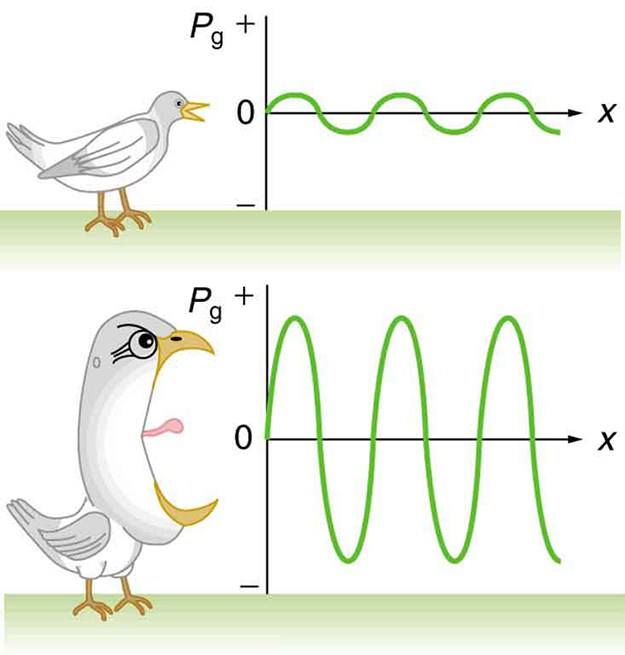
Energy

2.

A mechanical wave moves through a medium, which can be

a)

solid

b)

liquid

c)

gas

d)

all of the above

3.

What is the number of complete waves passing a fixed point in a given amount of time?

a)

Amplitude

b)

Intensity

c)

Wavelength

d)

Frequency

4.

Period of a wave refers to...

a)

how long it takes for the event to repeat.

b)

how strong a wave is.

c)

how long a wave is.

d)

how much energy a wave has.

5.

What does #1 represent?

a)

Period

b)

Frequency

c)

Wavelength

d)

Amplitude

6.

What does #2 represent?

a)

Period

b)

Frequency

c)

Wavelength

d)

Amplitude

7.
The frequency of a wave is measured in __________________. 
a)
inches
b)
hertz
c)
periods
d)
eras
8.
Mechanical waves are created when a source of energy causes a medium to  _________________.
a)
vibrate
b)
expand
c)
move
d)
compress
9.
Any material that a wave travels through is called a ____________________.
a)
vibration
b)
compression
c)
medium
d)
crest
10.
In what type of wave does the medium vibrate parallel to the direction of the wave?
a)
surface wave
b)
longitudinal wave
c)
transverse wave
d)
electromagnetic wave
11.
What are the highest parts of a transverse wave called?
a)
amplitude
b)
trough
c)
resting point
d)
crest
12.
In longitudinal waves, the parts where the coils are spread apart are called what?
a)
rarefactions
b)
compressions
c)
mechanicals
d)
longitudes
13.
In what type of wave does the medium move perpendicular to the movement of the wave?
a)
Transverse
b)
Longitudinal
c)
Electromagnetic
d)
Radio
14.
In a longitudinal wave, the parts where the coils are close together are called what?
a)
longitudes
b)
rarefactions
c)
compressions
d)
contractions
15.
Which wave in the diagram has the greatest frequency?
a)
1
b)
2
c)
3
d)
4
16.
What type of wave behavior is pictured above?
a)
Refraction
b)
Reflection
c)
Absorption
d)
Diffraction
17.
When a wave strikes an object and bounces off
a)
medium
b)
refraction
c)
reflection
d)
interference
18.
When a wave bends as it passes through at an angle from one medium to another.
a)
medium
b)
refraction
c)
reflection
d)
interference
19.
a)
Constructive Interference
b)
Destructive Interference
c)
Refraction
d)
Diffraction
20.
What type of wave behavior is pictured above?
a)
Refraction
b)
Reflection
c)
Absorption
d)
Diffraction
21.

What type of interference is represented in the diagram?

a)

Constructive

b)

Destructive

22.
If you want to change the pitch of a sound, you have to change the ___
a)
frequency
b)
amplitude
c)
speed
d)
volume
23.
When a sound is louder what measurement gets bigger?
a)
Frequency 
b)
Amplitude 
c)
Wavelength 
d)
Crest
24.

As the fire truck approached Mary, the pitch of the siren got higher. Once the fire truck passed and moved away, the siren's pitch got lower. This change in pitch is an example of

a)

diffraction. 

b)

dispersion. 

c)
reflection.
d)

the doppler effect.

25.

The full range of frequencies of electromagnetic radiation is called

a)

visible light

b)

the electromagnetic spectrum

c)

radio waves

d)

invisible radiation

26.
The three primary colors of light are
a)
Red, Blue, Yellow
b)
Pink, Green, Blue
c)
Violet, Green, Red
d)
Blue, Green, Red
27.
Why does an apple appear red?
a)
All colors are absorbed & none are reflected
b)
All colors are absorbed except for blue, which is reflected
c)
All colors are reflected and none are absorbed
d)
All colors are absorbed except for red, which is reflected
28.
Objects that reflect ALL colors will appear _____?
a)
Black
b)
White
c)
Gray
d)
Multi-colored
29.
Objects that ABSORB all colors of light will appear _______.
a)
white
b)
black
c)
multi-colored
d)
gray
30.
What is a property of a transparent object?
a)
Almost all of the light rays that reach it are scattered.
b)
Almost all of the light rays that reach it are absorbed.
c)
Almost all of the light rays that reach it are reflected.
d)
Almost all of the light rays that reach it pass through it.
31.
Which is translucent?
a)
tissue paper
b)
air
c)
wood
d)
clear plastic
32.
What is most likely to happen to light that hits an opaque object?
a)
All of the light passes through the object.
b)
None of the light passes through the object.
c)
Most of the light disappears.
d)
Some of the light passes through the object.
33.
What are the primary colors of the pigment?
a)
cyan, yellow and magenta
b)
Red, green and blue
c)
black and white
34.
An actorś red shirt and blue pants both appear black. What color is the stage light shining on the actor?
a)
Blue 
b)
Red
c)
Magenta
d)
Green
35.

The sky is blue because...

a)

blue is the color most scattered or reflected by our atmosphere.

b)

red is the color most scattered or reflected by our atmosphere.

c)

blue is the color most absorbed by our atmosphere.

d)

blue is complimentary to orange.

36.
Which type of light has the highest energy of this group?
a)
red
b)
yellow
c)
green
d)
blue
37.

Any two primary colors of light, combined in equal amounts, produce what?

a)

a complimentary color

b)

a florescent color

c)

a secondary color

d)

a third primary color

38.

Complementary COLORS of the Subtractive Color Process create the color __________ because all light is ___________. (*2 parts)

a)

RGB; Reflected

b)

CYM; Absorbed

c)

Black; Absorbed

d)

White; Reflected

39.

The additive color process involves ___________ while the subtractive color process involves ___________. (*2 parts)

a)

Removing colors due to being absorbed; Mixing colors of light

b)

Mixing colors of light; Removing colors due to being absorbed

c)

Refraction of light; Reflection of Light

40.

The waves with the longest wavelengths in the electromagnetic spectrum

a)

Infrared rays

b)

gamma rays

c)

radio waves

d)

X-rays

41.

a form of electromagnetic radiation that doesn't require a medium to pass through

a)

sound wave

b)

transverse wave

c)

light wave

d)

compressional wave

42.

High frequency in EM waves equals

a)

high energy and short wavelength

b)

low energy and short wavelength

c)

high energy and long wavelength

d)

low energy and long wavelength

43.
A disturbance that travels through a medium as a longitudinal wave
a)
sound
b)
wavelength
c)
pitch
d)
frequency
44.

Light acts like

a)

a wave.

b)

a particle.

c)

Both a wave and a particle

d)

neither a wave nor a particle.

45.

As one gets further (far) from a light source, the intensity of light ______________.

a)

increases

b)

decreases