wayground logo

Free Printable Worksheets

NEW

Font size

S
M
L
XL
Worksheets

genetics and plants

Total questions: 50

Worksheet time: 47mins

Name
Class
Date
1.
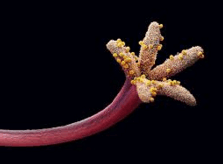
Small grains that contain a plant's male reproductive cells.
a)
stamen
b)
pollen
c)
anther
d)
stigma
2.
Small leaf-like structures forming an outer circle at the base of a flower.
a)
petals
b)
sepal
c)
anthers
d)
dicots
3.
The part of the flower on which the pollen grains land.
a)
pistil
b)
stamen
c)
style
d)
stigma
4.
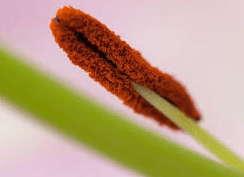
The part of a flower that produces the male reproductive cells.
a)
anther
b)
style
c)
stigma
d)
filament
5.
Which of the following statements best describes xylem's function in the plant?
a)
transpports water and minerals up from the roots to the rest of the plant
b)
transports food down from the leaves to the rest of the plant
c)
transports water and minerals down from the roots to the rest of the plant
d)
transports food up from the leaves to the rest of the plant
6.
Which of the following statements best describes phloem's function in the plant?
a)
transpports water and minerals up from the roots to the rest of the plant
b)
transports food down from the leaves to the rest of the plant
c)
transports water and minerals down from the roots to the rest of the plant
d)
transports food up from the leaves to the rest of the plant
7.
WHERE does photosynthesis take place? 
a)
cell wall 
b)
chlorophyll 
c)
nucleus 
d)
chloroplast 
8.
What part of the plant transports food and water between the roots and the leaves?
a)
stem 
b)
pistil 
c)
sepal 
d)
roots
9.
Which is NOT a part of the female reproductive structures in a plant? 
a)
Filament 
b)
Pistil 
c)
Ovary 
d)
Style 
10.
The female reproductive structure is called .... 
a)
stamen 
b)
style 
c)
pistil 
d)
filament 
11.
The male reproductive structure is called... 
a)
anther 
b)
filament 
c)
pistil 
d)
stamen 
12.
Which of the following are parts of the staMEN? 
a)
anther and filament 
b)
style 
c)
ovary and ovule
d)
stem 
13.
Characteristics can also be called
a)
heredity
b)
traits
c)
gene 
d)
alleles
14.
The different forms of a gene
a)
heredity
b)
genetics
c)
gene
d)
alleles
15.
This trait always shows up in an organism when the allele is present
a)
dominant allele
b)
codominance
c)
probability
d)
recessive allele
16.
This trait is hidden whenever the dominant allele is present
a)
dominant allele
b)
codominance
c)
recessive allele
d)
Punnett Square
17.
The mathematical chance that an event will occur
a)
dominant allele
b)
probability
c)
recessive allele
d)
Punnett Square
18.
An organism's physical appearance or visible traits
a)
fertilization
b)
genotype
c)
phenotype
d)
homozygous
19.
An organism's genetic makeup, or allele combination
a)
fertilization
b)
genotype
c)
phenotype
d)
heterozygous
20.
An organism that has two different alleles for a trait (hybrid)
a)
fertilization
b)
genotype
c)
homozygous
d)
heterozygous
21.
An organism that has two identical alleles for a trait (purebred)
a)
genotype
b)
phenotype
c)
homozygous
d)
heterozygous
22.
A new organism begins to form when egg and sperm join in a process called
a)
fertilization
b)
phenotype
c)
homozygous
d)
heterozygous
23.
G = green, g = yellow
The genotype for a yellow plant is...
a)
GG
b)
Gg
c)
gg
d)
all of the choices result in yellow
24.
Which of the following is homozygous dominant?
a)
Yy
b)
Y
c)
yy
d)
YY
25.
One of the threadlike structures in the nucleus of a cell that contain directions for the cell's activities
a)
variation
b)
pedigree
c)
DNA
d)
chromosome
26.
T - tall and t = short
In the punnett square below, what belongs in the missing square
a)
tt
b)
Tt
c)
Bb
d)
TT
27.
B = brown fur  b = white fur
In the punnett square, what is the probability for white fur? 
a)
0%
b)
25%
c)
50%
d)
75%
28.
In plants, tall (T) is dominant to short (t). Perform the following cross: Tt x Tt. What is the probability of producing a short plant?
a)
0%
b)
25%
c)
50%
d)
75%
29.
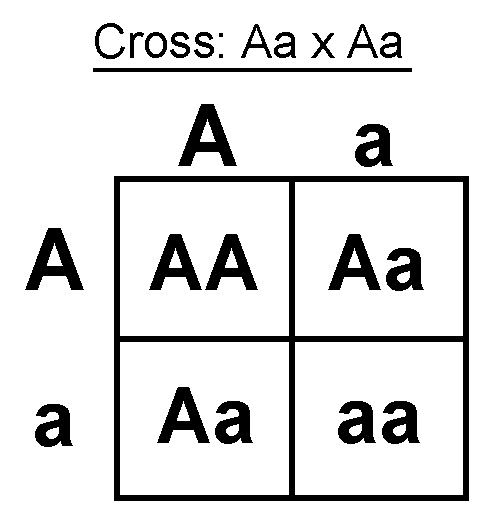
What is the probability of heterozygous offspring?
a)
25%
b)
50%
c)
0%
d)
100%
30.
What allele combination should go in the missing box?
a)
AA
b)
Aa
c)
aa
d)
none of these
31.
In a flowering plant species, red flower color (R) is dominant over white flower color (r). What is the genotype of any red-flowering plant resulting from this species?
a)
rr
b)
R
c)
RR
d)
RR or Rr
32.
What is the phenotype of the offspring? (A-Brown hair; a-blond hair) 
a)
50 % Brown Hair and 50% Blond Hair 
b)
25 % Brown Hair and 75% Blond Hair 
c)
75 % Brown Hair and 25% Blond Hair 
d)
0% Brown Hair and 100% Blond Hair 
33.
Two brown eyed parents (Bb) have a baby. What is the chance the baby is blue eyed?
a)
0 %
b)
25%
c)
50%
d)
75%
34.

Involves two parents and produces offspring different from parents

a)

external fertilization

b)

sexual reproduction

c)

internal fertilization

d)

asexual reproduction

35.

The movement of pollen from one flower to another flower

a)

zygote

b)

pollination

c)

internal fertilization

d)

fertilization

36.

When an organism splits into an exact copy

a)

fertilization

b)

binary fission

c)

regeneration

d)

budding

37.

A small growth on an organism that splits and grows into a new organism

a)

regeneration

b)

mitosis

c)

binary fission

d)

budding

38.

One cell that has both female and male reproductive cell

a)

mitosis

b)

clone

c)

pollination

d)

zygote

39.

If a human is composed of 46 chromosomes, how many chromosomes would be in a human SPERM (sex) cell ?

a)

23

b)

25

c)

46

d)

52

40.

Asexual reproduction has how many parents?

a)

One

b)

Two

c)

One and a Half

d)

Two or More

41.

This is an example of.......

a)

Binary Fission

b)

Fragmentation

c)

Regeneration

d)

Budding

42.

Genetic Diversity; organisms are better able to adapt to their environment is an example of

a)

disadvantages of sexual reproduction

b)

advantages of sexual reproduction

c)

advantages of asexual reproduction

43.

Genetic information compared to the parents during asexual reproduction is

a)

Same

b)

Different

c)

Just Depends

44.
What are the products of photosynthesis?
a)
water and carbon dioxide
b)
oxygen and glucose
c)
oxygen and carbon dioxide
d)
oxygen and water
45.
The main source of energy for all life comes from ____.
a)
the Earth
b)
the moon
c)
the sun
d)
the food we eat/make
46.
Which sentence correctly describes photosynthesis. (assume there is enough sunlight)
a)
CO2 and water combine and make O2 and glucose
b)
O2 and water combine to make glucose and CO2
c)
O2 and CO2 combine to make water and glucose
d)
CO2 and glucose combine to make O2 and water
47.
What is the organelle that contains the chlorophyll used in photosynthesis ?
a)
mitochondria
b)
ribosome
c)
chloroplast
d)
nucleus
48.
What is the "waste" gas (product) produced during photosynthesis?
a)
oxygen
b)
nitrogen
c)
helium
d)
hydrogen
49.
The raw ingredients (reactants) of photosynthesis are sunlight along with ?
a)
CO2 and H20
b)
CO2 AND C6H12O6
c)
oxygen and water
d)
oxygen and CO2
50.
Which of the following is the correct equation for PHOTOSYNTHESIS?
a)
CO+ light + H2O --> O+ glucose
b)
CO+ glucose + H2O --> O+ light
c)
O2 + light + H2O --> CO+ glucose
d)
CO+ O2 + H2O --> Light+ glucose