wayground logo

Free Printable Worksheets

NEW

Font size

S
M
L
XL
Worksheets

Earth Science Review

Total questions: 38

Worksheet time: 30mins

Name
Class
Date
1.
Liquid water changing slowly into a gas and rising into the atmosphere is called
a)
evaporation
b)
condensation
c)
rain
d)
typhoon
2.
Shifting pieces of the Earth's crust are called
a)
tectonic plates
b)
volcano
c)
magma
d)
island
3.
What is the source of energy for the water cycle?
a)
gravity
b)
transpiration
c)
the oceans
d)
the sun
4.
The type of plate boundary where two plates come together is a .....
a)
Convergent Boundary
b)
Divergent Boundary
c)
Transform Boundary
d)
Plate Boundary
5.
Which of the following causes Earth's tectonic plates to move?
a)
Energy from the Sun
b)
Magnetic Pole Reversal
c)
Convection currents in the mantle
d)
Faults in Mountain Ranges
6.
What type of event will occur at this boundary?
a)
Earthquake
b)
Volcano Eruption
c)
Tornado
d)
Mountain Building
7.
What type of plate boundary is this?
a)
Plate
b)
Divergent
c)
Convergent
d)
Transform
8.
A divergent boundary occurs when plates ....
a)
Pull apart
b)
Come together
c)
Slide past each other
d)
subducting
9.
Which of the following is the name of the ancient supercontinent formed 28 Million Years ago.
a)
Pangea
b)

Oceania

c)

Jurassic

d)
Neverland
10.
Which type of rock results from melting and cooling of magma?
a)
Igneous
b)
Metamorphic
c)
Sedimentary
d)
Extrusive
11.
Which type of rock forms from extreme heat and pressure?
a)
Igneous
b)
Sedimentary
c)
Organic
d)
Metamorphic
12.
Wind, water, and ice breaking down rock is called
a)
Erosion
b)
Deposition
c)
Compaction
d)
Weathering
13.
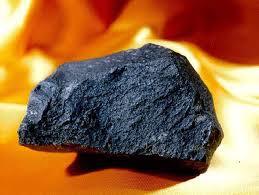
This rock was found near the mouth of a volcano. What type of rock is this?
a)
Sedimentary
b)
Igneous
c)
Metamorphic
14.
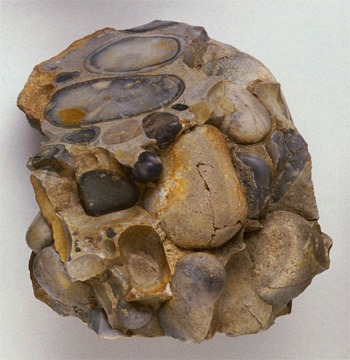
This rock was formed by smaller pieces of rock that settled at the bottom of a lake millions of years ago. What type of rock is this?
a)
Sedimentary
b)
Igneous
c)
Metamorphic
15.
What are the 3 major types of rocks?
a)
Igneous, Metamorphic, Sedimentary
b)
Metamorphic, Igneous, Cementation
c)
Brown, Red, Gray
d)
Streak, Hardness, Breakage
16.
This rock started as lava that cooled and then was heated and put under pressure over time. What type of rock is this?
a)
Sedimentar
b)
Igneous
c)
Metamorphic
17.
Which of the following is not a type of rock?
a)
Igneous
b)
Divergent
c)
Sedimentary
d)
Metamorphic
18.

Which statement is best supported by the information shown in the diagram?

a)

Acid rain is necessary for forest growth.

b)

Most rain is caused by factories.

c)

The Adirondack Mountains determine the direction of prevailing winds.

d)

Human activities can cause pollution.

19.

Which statement is best supported by the diagram?

a)

Chemicals applied by farmers lower the level of pollution in drinking water.

b)

Human activities do not affect groundwater.

c)

Toxic waste is safe if buried below the level of the basements of nearby homes.

d)

Drinking water can become polluted from unsuspected sources.

20.

The sun appears to move across the sky during the day. The best explanation for this apparent motion is that Earth is

a)

rotating on its axis

b)

much smaller than the Sun

c)

revolving around the Sun

d)

tilted on its axis

21.

Choose the phase of the Moon that an observer at X would see when the Sun, Earth, and the Moon are in the positions shown in the diagram. Assume there is no eclipse at that time.

a)
b)
c)
d)
22.

The map shows the four major time zones in the continental United States. If it is 9 a.m. in the Eastern Time Zone, what time is it in the Pacific Time Zone?

a)

3 a.m.

b)

6 p.m.

c)

6 a.m.

d)

9 p.m.

23.

Which season is occurring in the Northern Hemisphere?

a)

winter

b)

summer

c)

fall

d)

spring

24.
What is Pangaea?
a)
a supercontinent that existed
 millions of years ago
b)
a new planet
25.

What part of the water cycle is A?

a)

evaporation

b)

condensation

c)

precipitation

d)

run off

26.

What part of the water cycle is B?

a)

evaporation

b)

condensation

c)

precipitation

d)

run off

27.

What part of the water cycle is C?

a)

evaporation

b)

condensation

c)

precipitation

d)

run off

28.
The boundary  between two air masses is known as:
a)
front
b)
storm
c)
climate
d)
flood
29.
This type of front can bring strong storms
a)
cold
b)
warm
c)
stationary
d)
occluded
30.
This type of front results in the same weather for several days
a)
warm
b)
cold
c)
stationary
d)
occluded
31.
 A fast moving cold air mass overtakes a warm air mass is called a _________________
a)
warm front
b)
cold front
c)
stationary front
d)
occluded front
32.
A warm air mass overtakes a slow-moving cold air mass is called a _____________________.
a)
warm front
b)
cold front
c)
stationary front
d)
occluded front
33.
Cold and warm masses meet, but neither can move the other is called a ______________________
a)
warm front
b)
cold front
c)
stationary front
d)
occluded front
34.
A warm air mass is caught between two cooler air masses is called a ________________________.
a)
warm front
b)
cold front
c)
stationary front
d)
occluded front
35.
The average, year-after-year conditions of temperature, precipitation, winds, and clouds in an area is known as ______________________.
a)
latitude
b)
weather
c)
climate
d)
altitude
36.

What is weather?

a)

The amount of moisture in the air

b)

The number of clouds in the sky

c)

The speed of the wind

d)

The state of the atmosphere at any particular time.

37.
Rain, snow, sleet, and hail are all forms of _____.
a)
precipitation
b)
condensation
c)
evaporation
d)
climate
38.
Warm air rises because it is __________ dense then cold air.
a)
More
b)
Less