
 Worksheets
Dichotomous keys, traits and cell basics
Total questions: 50
Worksheet time: 38mins
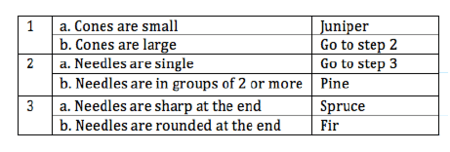

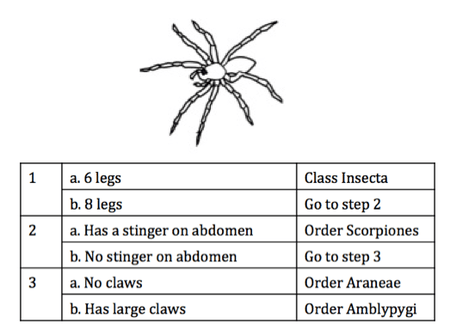
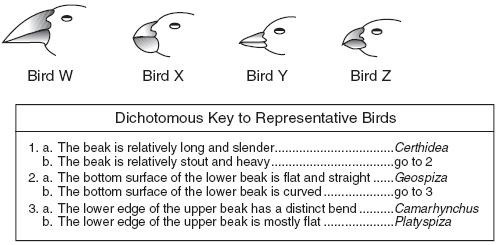

How many options should every branch in a dichotomous key have?
1
2
3
4
In a dichotomous key, organisms should be classified based on their
diet
habitat
observable features
sounds they make

Identify leaf F
Cydonia
Magnolia
Aesculus
Fraxinus
Ilex

If you were to make a dichotomous key to identify this organism, which option would NOT be used?
Presence of webbed feet
Presence of tail
Fur on the body
Ability to swim
Absence of wings
The basic building blacks from which all living organisms are made are
cells
DNA
chromosomes
Amoeba
It is true, not all cells have a true nucleus, but all cells must have some sort of
DNA
Cytoplasm
Osmosis
Call Wall
This part of the cells controls what moves in and out
cell wall
cell membrane
Cytoplasm
organelles
_______ are the smallest units of life because they grow, reproduce, respond, and use energy.
atoms
elements
cells
all of the above
Cells come from______.
other preexisting cells
cytoplasm
organelles
prokaryotes
The cell theory states that_________
cells come from cells
all organisms are made of cells
cells are the basic unit of structure and function for life
all of the above
________ is the scientist who saw small chambers when looking at cork, and named them “cells”.
Newton
Hooke
Carson
Manning
The size of an organism is determined -
by the size of the cells that make up the organism.
by the number of cells that the organism has.
A multicellular organism is made of
one cell
multiple cells
unicellular cells
there is no such thing as a "multicellular" organism
One common feature of all cells is their ability to -
work with other cells in a "unicellular" organism.
reproduce themselves.
be formed by spontaneous generation.
exist without needing a cell membrane
Regardless of type, all cells
have a cell membrane
have cytoplasm
can duplicate themselves by undergoing cell division
all of the above
A cell in which the genetic material is enclosed within a nucleus is a
eukaryotic cell
prokaryotic cell
human cell
animal cell
What type of cell lacks a nucleus?
eukaryotic
prokaryotic
human
animal
Many celled organisms are called
unicellular
multicellular
bicellular
tricellular
Single celled organisms are called
unicellular
multicellular
bicellular
tricellular
Which of the following is true about cells?
Cells have specialized components that perform different, specific functions.
A cell’s components are all identical and perform the same function.
Cells have specialized components that all perform the same functions.
Which of the following statements is true?
All multicellular organisms have skeletal systems.
All multicellular organisms have specialized cells.
All multicellular organisms have circulatory systems.
All of these
"Small organs" of the cell that carry out specific functions
Organelles
Organs
Cell Wall
Cell
protective layer around all cells, allows nutrients in and waste out
Cell Wall
Cell Membrane
Endoplasmic Reticulum
Ribosomes
Control center of cell, contains instructions for everything the cell does.
Ribosomes
Nucleus
Endoplasmic Reticulum
Mitochondria
A fluid made of mostly water and organic compounds where organelles are located
Cytoplasm
Nucleus
Vacuole
Mitochondria
All living things are made up of cells, cells are the smallest unit of life, all cells come from preexisting cells.
Cell Theory
Golgi Body
Vacuole
Life
smallest unit of life
Human
Cell Wall
Cell
Plants
Why are cells like factories?
they only take in materials and break them down
they are automated
they take in materials and send out products
they produce items for sale
These are determined by genes or the environment, or more commonly by interactions between them.
cells
traits
genes
DNA
What is a couplet?
two identical cells
a poem in English
two orgainisms that look similar
a yes/no question on a dichotomous key
What are dichotomous keys used for?
in taxonomy to help name and classify organisms
to help scientists make decisions
to create couplets
to decide what traits are important
Why might a hiker use a dichotomous key?
to identify plants and animals
to keep from getting lost
to read while eating lunch
to determine which animals are friendly
How might a dichotomous key help a person?
help them identify which animals are friendly
help them determine if their dog can learn tricks
help them determine if a plant is poisonous
help them locate a place
Living things that have similar characteristics and can produce offspring when they mate are
unique and not like others
organisms that live in the same area
found in a dichotomous key
in same species
Why do scientists use dichotomous keys?
a tool to help identify organisms
because there is nothing else to use
because it is fun
because there are new species

Which trait below could be used in a dichotomous key to identify these dinosaurs from these pictures?
All the dinosaurs have different weights
some dinosaurs have claws
some dinosaurs can make noises
some dinosaurs are carnivores
Who can use a dichtomous key?
only scientists
scientists and hikers only
anyone who is trying to figure out the identity of an organism

