
 Worksheets
Classification of Living Things
Total questions: 214
Worksheet time: 3hrs 33mins
In science, grouping objects or organisms to similar characteristics is called
characterizing
classifying
ordering
clustering
Grouping living thing in an orderly way is the job of a
microscopist
chemist
taxonomist
computer specialist
The science of classification is called
taxonomy
botany
astronomy
chemistry
In binomial nomenclature, the name of any organism is made up of its
kingdom and phylum
family and genus
class and order
genus and species
The method of scientific classification used today is based on the classification system developed by
Carolus Linnaeus
M. Courtney Latimer
John Ray
Charles Darwin
A group of similar organisms that can mate with each other and produce offspring is called a
kingdom
phylum
species
genus
A classification system
groups animals according to the way they move
consists of only one species of organism
groups living things according to similar characteristics
The study of how animals have change over time is called
biology
evolution
taxonomy
astrology
The scientist who first understood that animals change over time to adapt to their environment was
Socrates
Galileo
Carolus Linnacus
Charles Darwin
The process by which unrelated organism evolve similar characteristics is called
biology
convergent evolution
ordering
classification
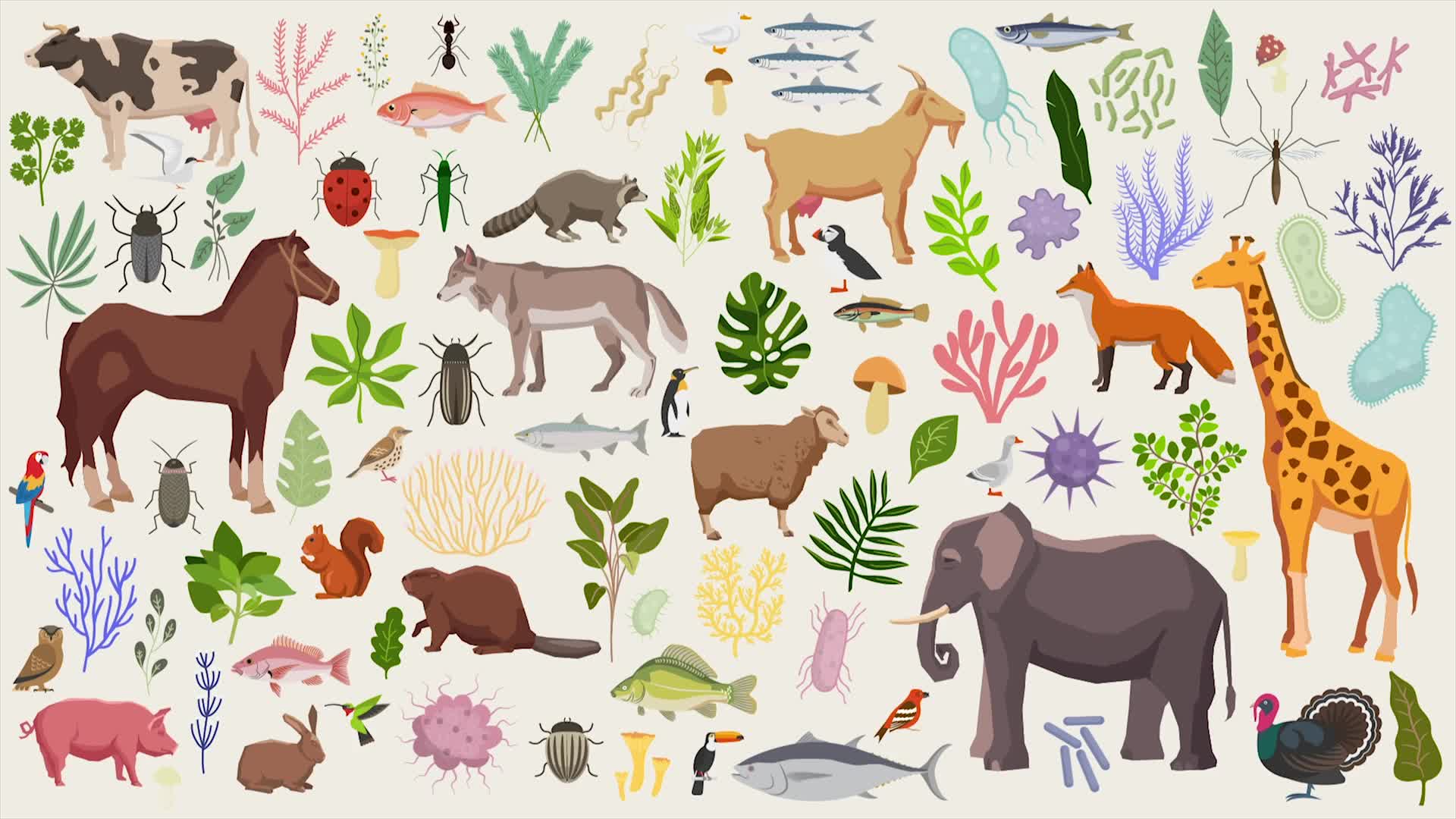


Why do scientists group organisms using the Linnean system (genus and species) rather than by their common names?
Latin words are easier to read
The common name can change depending on the region (example: mountain lion, cougar, and puma are the same species)
The scientific name sounds more official
Taxonomy is the study of plants
True
False
The modern Biological classification system is based on the pioneering work of:
Carl Linnaeus
Isaac Newton
Charles Darwin
John Meritus

To which group does the pine true
Gymnosperms
Angiosperms
Dicotyledons
Monocotyledons
Scientists place organisms into one of six groups. These groups are also called what?
kingdoms
classes
orders
traits
Which of the following is NOT one of the smaller groups in a kingdom?
phylum
class
order
traits
What is a trait?
smallest one-celled organism
characteristic used to classify and identify a living thing
a harmful effect of some microorganism
Classification is the system used for identifying organisms.
TRUE
FALSE
Organisms in the same kingdom have ______________ Charecteristics.
similar
different
many
What do we call the group that makes up of one type of organism?
protists
kingdoms
species
classifications
A kingdom is divided into smaller groups. These groups are phylum, class, order, _______________, genus, and species.
trait
group
family
classify
What are one-celled organisms called?
tiny
microorganisms
nucleus
tissues
Kingdoms that include organisms made up of one cell are bacteria, ______________, and _____________ .
protists, fungi
nucleus, microorganism
class, order
genus, species
What do scientists use to identify individual types of organisms?
similar traits and class
species and genus names
traits and kingdom

Viruses can only reproduce inside a host cell.
True
False

A host can be...
bacteria
human
bat
all of the above

What are the 8 characteristics of life?
Made of at least 1 cell, ability to reproduce, have a metabolism, homeostasis, contain DNA, response to stimuli, grow and develop, shed skin.
Made of at least 1 cell, ability to reproduce, have a metabolism, homeostasis, contain DNA, response to stimuli, grow and develop, evolve/change over time.
Made of at least 1 cell, ability to reproduce, have a metabolism, homeostasis, ability to move, response to stimuli, grow and develop, evolve/change over time.
Made of at least 1 cell, ability to reproduce, have a metabolism, homeostasis, ability to move, response to stimuli, grow and develop, ability to breathe.

You have a virus that causes a fever and your body temperature goes up to 101 degrees F. Your body’s attempt to return to a normal temperature of 98.6 degrees F after the virus is gone is an example of which characteristic of life?
Metabolism
Autotrophy
Homeostasis
Evolution

A heterotrophic eukaryotic organism with a cell wall that decomposes food for energy is in which kingdom?
Plantae
Animalia
Protista
Fungus

A single celled prokaryote that lives in extremely hot thermal springs in Yellowstone National Park would be in which kingdom?
Virus
Protista
Archaebacteria
Eubacteria

Plants make their own energy molecules (food) using photosynthesis. What do we call this type of organism?
Prokaryote
Eukaryote
Autotroph
Heterotroph

Unicellular organisms that lack a nucleus and other cellular organelles are known as...
Prokaryote
Eukaryote
Heterotroph
Autotroph

The two-name naming system used in modern classification of living organisms is called...
cladogram
binomial nomenclature
genetics
phylogeny

The most specific level of biological classification is...
kingdom
genus
phylum
species

The order of the levels of classification is:
Domain, kingdom, phylum, class, order, genus, family, species
Domain, class, kingdom, phylum, order, genus, family, species
Domain, class, kingdom, phylum, order, genus, species, family
Domain, kingdom, phylum, class, order, family, genus, species

Which kingdoms make up the domain Eukarya?
Protista, Fungi, Plantae, Animalia
Archaebacteria, Eubacteria, Protista, Fungi
Plantae, Animalia, Archaebacteria
Eubacteria, Archaebacteria
Viruses can only reproduce inside a host cell.
True
False
A single celled prokaryote that lives in extremely hot thermal springs in Yellowstone National Park would be in which kingdom?
Virus
Protista
Archaebacteria
Eubacteria
Plants make their own energy molecules (food) using photosynthesis. What do we call this type of organism?
Prokaryote
Eukaryote
Autotroph
Heterotroph
Unicellular organisms that lack a nucleus and other cellular organelles are known as...
Prokaryote
Eukaryote
Heterotroph
Autotroph
The most specific level of biological classification is...
kingdom
genus
phylum
species
The order of the levels of classification is:
Domain, kingdom, phylum, class, order, genus, family, species
Domain, class, kingdom, phylum, order, genus, family, species
Domain, class, kingdom, phylum, order, genus, species, family
Domain, kingdom, phylum, class, order, family, genus, species
Which kingdoms make up the domain Eukarya?
Protista, Fungi, Plantae, Animalia
Archaebacteria, Eubacteria, Protista, Fungi
Plantae, Animalia, Archaebacteria
Eubacteria, Archaebacteria
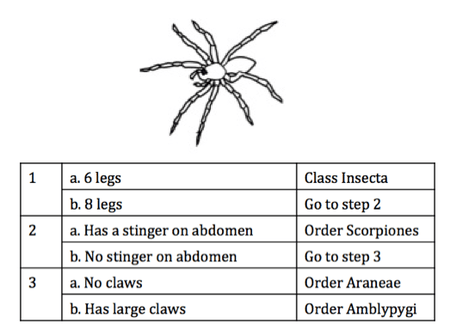

arachnids and insects?
What kingdoms are prokaryotic?
animalia
fungi
eubacteria
archeabacteria


Protista
Why do scientists classify and organize organisms?
To keep a list of all living things on earth
Because it is fun
So that they can note similarities and differences in different organisms and to avoid confusion when studying them
So that each organism know their name
What is taxonomy?
The study of living thing
the branch of science concerned with the classification of living organisms
the study of how living things interact with their environment
the branch of science concerned with studying the animal kingdom
Which of these is NOT apart of the 3 domains?
Archaea
Protista
Bacteria
Eukarya
True or false. Organisms that are in the domain Bacteria and Archaea are Prokaryotes.
True
False
What is the classification system used to classify organisms?
The Einstein system of classification
The Mendel system of classification
The Linnean system of classification
The Darwin system of classification
What are the 7 levels in order used to classify organisms?
Domain, Kingdom, Species, Class, Order, Family, Genus, Phylum
Kingdom, Domain, Order, Class, Genus, Species, Family, Phylum
Phylum, Order, Kingdom, Species, Domain, Class, Family, Genus
Domain, Kingdom, Phylum, Class, Order, Family, Genus, Species
Over time scientists have used this to classify organisms more accurately.
The Force
DNA
Golgi Apparatus
ATP
True or false. Organisms in the domain Archaea can live in extreme enviornments.
True
False
How can Scientists classify animals? Select all that apply.
How they get energy
How they reproduce
Who they are friends with
Whether or not they have a backbone
What color they are
What is an Omnivore?
An animal that gets its energy by eating both plants and meat
An animal that gets its energy by eating only meat
An animal that gets its energy by eating only plants
An animal that gets its energy by the sun
True or False. The first part of an organism’s scientific name is its genus and the second part is its species.
True
False
True or False. Organisms in the domain Eukarya can live in extreme environments.
True
False
Which of the 3 domains has membrane-bound organelles?
Archaea
Eukarya
Bacteria
Katara
Extra Credit!! What's my name?
Sarah Pico
Samantha Guacamole
Samantha Pico
Sabrina Pico
What is a Platypus classified as?
Amphibian
Mammal
Reptile
Bird
What are some characteristics of mammals? Check all that apply.
They produce milk for their offspring
They have hair on their body
They lay eggs
They have scales
They are warm-blooded
Which of the 3 domains can live world wide? Check all that apply.
Bacteria
Archaea
Eukarya
Which of these are part of your classroom netiquette rules?
Speak over the teacher whenever you feel like it
Always raise your hand and wait to be called on and respect others at all times
Disrespect your classmates
Talk to your friend during class
In 1990, Carl Woese introduced the three domain system for classifying living things, after the advancement of DNA analysis allowed for a comparison of species genetic code. Which of the following is the best explanation for why domains were added to the previous system of classification?
The old system of classification was wrong and needed to be corrected.
New species are evolving too quickly to keep up with the old system of classification.
Domains have always been included, they were just made official recently.
Some organisms, which were previously characterized together, were determined to be genetically very different.

Scientists don´t classify living things in different groups according to their features
False
Sometimes
Depends on the living things
True

Living things in the same group can have same characteristics but can also have different ones
False
Only in plants
True
Depends on the kind

Living things are divided into ... groups
(a)

Humans are part of this group
Amphibians
Animals
Reptiles
Fungi

Look like plants and can be found underwater
Bacteria
Fungi
Reptiles
Algae

Very small living things that can be seen only with a microscope
Fungi
Animals
Amphibians
Bacteria

Animals that don´t have a backbone
Mammals
Vertebrates
Invertebrates
Reptiles

Vertebrate animals that give birth to their babies
Reptiles
Fish
Bird
Mammals

Invertebrates with soft body and no legs
Arthropods
Worms
Cnidarians
Sponges

Soft living things with a lot of holes that filter water
Sponges
Cnidarians
Arthropods
Worms
What is the lowest level of Classification?
Species
Genus
Why
Stop
What are three domains?
Bacteria, New Gen, Memes
Bateria, Protist, Archaea
Bacteria, Archaea, Eukarya
Why, No, Stop
What is the largest Classification
Domain
Kingdom
Order
Family
If you have a German Shepard what level of Classification would it be at.
Domain
Species
Kingdom
Genus
You, as a part of the human race, are a
Bacteria
Archaea
Eukarya
Person
Dog/Cat
Which are all part of kingdom Animalia
Trees, Leaves, People.
People, Air, Water.
Cheese, Ice, Kaela
Kaela, Bonnie, Olivia
Which is in order from smallest class to largest?
Max, Killian, Mette.
Species, Genus, Family.
Help, NO, Stop.
Family, Genus, Species.

What level does this kitten belong to.
Species
Cute
Genus
Adorable
The genus for house cats is____
Felis Domesticus
Genus Felis
Order Carnivora
No
Did you like?
Yes
NO
Always
Maybe
A Genus is
Similar Species
The second level of classification
A thing
Always
Hi
Good Morning
Today
Is
A wonderful Day
Most scientists currently classify life into how many kingdoms?
2
6
5
3

The table describes many of characteristics used to classify most organisms in the plant, animal, bacteria and protist kingdoms.
Which statement describes a characteristic used to separate the bacteria kingdom from the other kingdoms shown?
the number of cells in the organism
the mechanism the organism uses to obtain energy
the presence of a nucleus surrounded by a membrane
the way the organism transfers genetic information to its offspring
Classification in the 1700’s was mostly based on what organisms looked like. With the invention of the microscope, scientists began to observe characteristics that ultimately led to changes in the way organisms were classified. Which characteristic changed based on this discovery?
the route an organism uses to obtain energy
the number of cells found in the organism
the way an organism reproduces
the method an organism uses to move

The table illustrates organisms in various kingdoms and some of their characteristics.
Which characteristic could be used to separate the species in the plant kingdom from the other kingdoms in the model?
parts that allow for movement
presence of a nucleus
presence of cells
color
Under the Linnean system, a mushroom was classified as a plant. Select the question that would illustrate a problem with this classification.
Does a mushroom reproduce?
Does a mushroom make its own food?
Does a mushroom have cells?
Does a mushroom have parts that allow for movement?
At one point in history, all organisms were classified as either animals or plants. Which question could be asked in order to show the problems associated with this type of model?
How is an animal classified?
How many types animals exist in the world?
Can subsystems further classify the plants and animals?
Are bacteria considered plants or animals?
A student wants to develop a model that places bacteria and archaea within the same classification. Which statement provides the BEST evidence that these organisms have common characteristics?
Both are multicellular organisms that reproduce asexually.
Both are unicellular organisms that lack a membrane-bound nucleus.
Both are unicellular organisms that contain a cell nucleus.
Both are multicellular organisms that lack membrane-bound organelles.

A scientist observes a microscopic organism under a microscope. The scientist’s notes are shown below.
Based on these observations, the scientist should place the organism into which kingdom?
animal kingdom
protist kingdom
plant kingdom
fungi kingdom
Which of the following do a frog, worm, and pine tree have in common?
They are all prokaryotic organisms that have free DNA in their cells.
They are all eukaryotic organisms that have nuclei in their cells.
They are all autotrophic organisms and make their own food.
They are all heterotrophic organisms that use organic carbon for growth.
Which of the following contains a nucleus?
prokaryotes
bacteria
eukaryotes
organelles
What type of standardized system assigns each species a unique name?
numeric
taxonomic
geographic
chronological
Over 1.5 million different species have been discovered on Earth, and scientists discover about 15,000 new species each year. These species are very different, ranging from bacteria and algae to whales and redwood trees. Select three characteristics that all of these species have in common.
All species have metabolic functions
All species have cell walls.
All species are composed of cells.
All species reproduce.
All species use sunlight to make food.
A plant cell and a bacterial cell are similar in that both have
a nucleoid.
membrane-bound organelles.
a cell wall.
energy-producing mitochondria.
Which of the following describes a way that protists differ from animals and plants?
Protists are single-celled organisms.
Animals and plants do not resemble protists.
Protists are typically much larger than most plants and animals.
Different species of protists do not differ greatly from one another.
Green algae, ferns, and pine trees are classified in the kingdom Plantae. These organisms share certain characteristics. Which of the following is a characteristic used to classify these organisms as plants?
They produce flowers for pollination.
They contain seeds for reproduction.
They have an immune system.
They engage in photosynthesis.
As opposed to protists, all plants are
mobile.
anaerobic.
nonmobile.
chemosynthetic.
Organisms under the taxonomic group Animalia are
all single-celled autotrophs.
sometimes multi-celled autotrophs.
sometimes single-celled heterotrophs
all multi-celled heterotrophs.
Which pair of microscope views represents a eukaryotic cell and a prokaryotic cell?


What are organisms, such as plants, that make their own food called?
autotrophs
heterotrophs
consumers
pigments
Some kingdoms contain organisms that can cause infection. Diseases that cause strep throat and malaria are from organisms in the
kingdoms Protista and Fungi.
kingdoms Bacteria and Fungi.
kingdoms Archaea and Animalia.
kingdoms Bacteria and Protista.
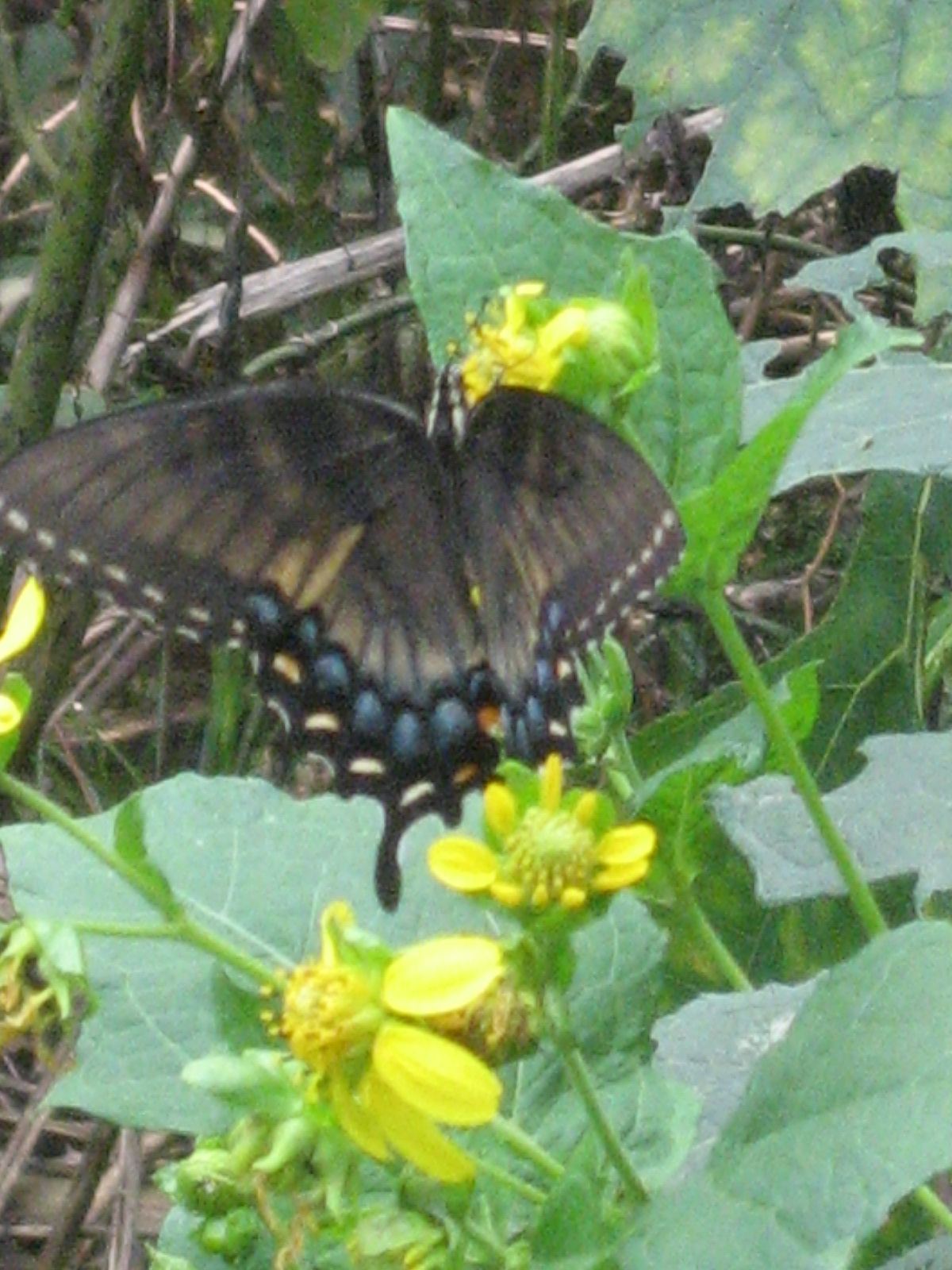
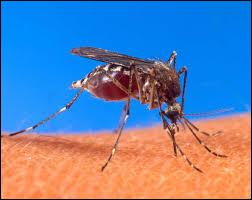
Ctenodiscus crispatus (Mud Starfish)


Which 2 organisms would be able to reproduce and produce fertile offspring?
2 organisms in the same class
2 organisms in the same family
2 organisms in the same genus
2 organisms in the same species
Who created the most commonly used system of taxonomy?
Niels Bohr
Watson and Crick
Charles Darwin
Carl Linnaeus
Which is the correct order?
Kingdom Phylum Order Class
Class Order Family Genus
Domain Phylum Kingdom Species
Order Family Species Genus
Identify the one that is NOT an archaea.
Methanogen
Thermophile
Halophile
Virus
You find a species that seems to be unicellular and is eating smaller cells around it. It has organelles and a nucleus. Which kingdom is it MOST likely a part of?
Fungi
Bacteria
Protists
Plants
Which of the following is NOT a unicellular kingdom?
Prokaryotes
Protists
Archaea
Fungi
Which one is NOT a difference between plants and fungi?
Plants use cellulose but fungi use chitin
Plants are autotrophs but fungi are heterotrophs
Plants have cell walls but fungi don't
Plants make their own food and fungi decompose their food
You identify a small living organism that is eating something at your feet. It's visible but pretty tiny, you take it to a lab and find that it has cell walls made of chitin. Which is its domain and kingdom?
Prokaryote, Fungi
Eukaryote, Fungi
Prokaryote, Plant
Eukaryote, Plant
Which is NOT a eukaryote?
Plants
Animals
Archaea
Protists
How are mammals different from all the other classes of vertebrates?
They don't have keratin
They don't have a backbone
They don't lay eggs (except two)
They aren't animals
Which best explains why a sponge is an animal?

All animals breath and sponges breath
Animals live underwater and so do sponges
Animals are multicellular heterotrophs and so are sponges

Organisms in this smallest taxonomic group share many characteristics.
domain
kingdom
species
class

The science of describing, classifying, and naming living things is called:
Geology
Biology
Taxonomy
Chemistry

The scientific name for an organism is made from the:
class and family name
genus and species name
domain and kingdom name
kingdom and phylum name

An example of an unicellular organism would be:
monkey
bacteria
spider
human
Which 2 organisms would be able to reproduce and produce fertile offspring?
2 organisms in the same class
2 organisms in the same family
2 organisms in the same genus
2 organisms in the same species

What kingdom do unicellular, prokaryotic organisms that live in extreme environments?
Animal
Archaebacteria
Eubacteria
Plant

I am prokaryotic and am found everywhere. What kingdom do I belong to?
Eubacteria
Archaebacteria
Fungi
Protista

This organism is multicellular, heterotroph, that has a cell wall made of chitin. What kingdom does it belong in?
fungi
plantae
animalia
eubacteria

This organism is found in pond water. It has a nucleus, is microscopic, unicellular and can perform photosynthesis. What kingdom does it belong in?
protista
eubacteria
archaebacteria
plantae

Who first proposed binomial nomenclature as a way of classifying organisms?
Carolus Linnaeus
Aristotle
Charles Darwin
Louis Pasteur

Which of the following scientific names is written correctly? Assume all are in italics!
Homo Sapien
Homo sapien
homo sapien
Homosapien

What is the correct order of taxonomy?
Kingdom, pylum, class, species, genus, family, class
Species, genus, family, order, class, phylum, kingdom
Kingdom, phylum, class, order, family, genus, species
species, phylum, order, class, kingdom, family, genus

What does "KPCOFGS" mean?
The 4 common characteristics of living things
The 7 levels of taxonomy
The 5 kingdoms

