
 Worksheets
EOX MAX REVIEW
Total questions: 200
Worksheet time: 10hrs 3mins

Is the relation a function? Why?
Yes, because the x-value 11 has two y-values pair with it.
Yes, because each x-value has only one y-value paired with it.
No, because the x-value 11 has two y-values pair with it.
No, because each x-value has only one y-value paired with it.

HINT: NO REPEATING x-values
Function
Not a Function

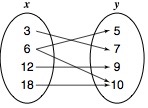
Is this mapping diagram a function or not a function?
HINT: NO REPEATING x-values
Function
Not a Function
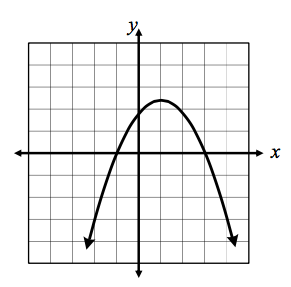
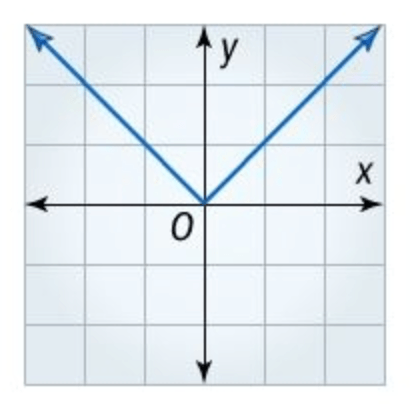
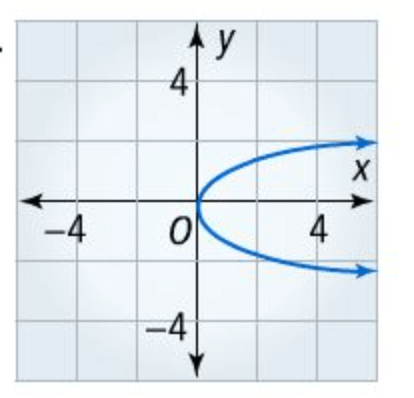
Is this graph a function or not a function?
HINT: If it does not pass the vertical line test...it is NOT a function.
Function
Not a Function
Given f(x) = 2x2 + 5x - 17, find f(-1).
HINT: Plug in (-1) and use PEMDAS to simplify
f(-1) = -20
f(-1) = -24

What is the domain of the graph?
HINT: DOMAIN is your X - values.
1≤ x ≤ 4
1 < x < 4
1≤ y ≤ 4
1 < y < 4

What is the value of x if f(x) = 6?
HINT: What is the x - value is the y value is "6"
4
0
3
-8

What is the domain of the following graph?
HINT: DOMAIN is your X - values.
0 ≤ x ≤ 60
0 ≤ y ≤ 60
0 ≤ x ≤ 12000

What is the domain of the parabola created by the ball?
HINT: DOMAIN is your X - values.
0 ≤ d ≤ 280
0 ≤ h ≤ 150
0 ≤ d ≤ 570
0 ≤ h ≤ 280
Which of the following operations are polynomials always closed under? Select ALL the APPLY
Addition
Division
Multiplication
Subtraction
Which expression is equivalent to:
5(3x - 4)
5x2 + 3x - 4
15x - 20
10x2
15x - 4
What is the difference of the polynomials below?
(3x² - 3x + 2) - (x² - 2x + 1)
2x² + x + 1
2x² - 5x + 3
2x² - x + 1
4x² - 5x + 3
What is the sum of the polynomials below?
(3x2 + 6x - 1) + (4x2 + 5x + 9)
-x2 + x - 10
x2 - x + 10
7x2 + 11x + 8
7x2 + 11x + 10
Which expression is equivalent to
(5x - 2)(-2x + 3)?
-10x2 + 19x - 6
-10x2 + 11x - 6
3x2 + 5x + 5
7x2 + 6x + 6
Solve the following compound inequality:
HINT: w.e you do to the inside, do to the outsides.
−2 ≤ x < −4
2 ≤ x <4
−4 < x ≤ −2
4 < x ≤ 2
Solve for "P"
P = A(r + 1)
P = r + 1A
P= A + (r + 1)
P = A − (r + 1)
Solve by elimination: Remember you are looking for Matching Opposites/You are always adding! PAY ATTENTION TO YOUR SIGNS
-9x - 4y = -20
5x + 4y = 4
(-4,4)
(4,4)
(4,-4)
(-4,-4)
Use the quadratic formula to determine the solutions.
2x2 + 2x - 12?
-2, 3
2, 3
2, -3
-2, -3
a, b, and c for
the quadratic equation:
4x2 – 8x = 3

(x+10)(x-2) = 0
Use the discriminant to determine the number of solutions the following quadratic equation has.
6x2 − 2x − 3 = 0
76 Two Solutions
29 Two Solutions
68 Two Solutions
none of these
Use the quadratic formula to solve for the Zeros.
2x2 + 2x - 12 = 0
x = -2, x = 3
x = 2, x = 3
x = 2, x = -3
x = -2, x = -3
If the Quadratic Equation x2 + 8x + 5 = 0 is rewritten as (x − p)2 = q . What is the value of "p" and "q"
p = 11 and q = -4
p = 4 and q = 11
p = -4 and q = 11
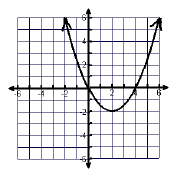
What are the zeros of the function f(x)= x(x - 3)(x+5)?
-5 and 3
0, -5 and 3
0, -3 and 5

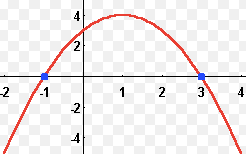
The graph of a Quadratic function is shown. Select ALL the statements that are true about the graph.
It has a maximum height of 4
It has a minimum height of 4
The Vertex is (-1, 4)
The x - intercepts are (0, 1) & (0, -3)
The y - intercept is (0, 3)

Which of the following equations best represents the graph? HINT: Take the opposite of what's inside the () for the Zeros/Solutions to match the graph.
y = (x - 1)(x + 5)
y = (x + 1)(x - 5)
y = -2
Which of the following operations are polynomials always closed under? Select ALL the APPLY
Addition
Division
Multiplication
Subtraction
Which of the following operations are polynomials always closed under? Select ALL the APPLY
Addition
Division
Multiplication
Subtraction
Which of the following Operations are Polynomials NOT CLOSED under?
Addition
Subtraction
Multiplication
Division
Which of the following Operations are Polynomials NOT CLOSED under?
Addition
Subtraction
Multiplication
Division
Which of the following best completes the following statement below?
Polynomials are closed under some operations (Addition, Subtraction & multiplication) because the result (the answer) of those operations...
Will NEVER be a polynomial
Will ALWAYS be a polynomial
Which of the following best completes the following statement below?
Polynomials are closed under some operations (Addition, Subtraction & multiplication) because the result (the answer) of those operations...
Will NEVER be a polynomial
Will ALWAYS be a polynomial


What is f(4) for this graph?
Hint: This is another way of saying, "what is the y -value...when x = 4"
0
1
-4
4
What is f(4) for this graph?
0
1
-4
4
Derek works at Subway making $9.25 an hour. The function d(x)=9.25x tells us how much money Derek makes after x hours of working. What is the meaning of d(4)=37?
After 4 hours of work, Derek makes $37.
After working for 4 days, Derek makes $37 total.
Derek works at Subway making $9.25 an hour. The function d(x)=9.25x tells us how much money Derek makes after x hours of working. What is the meaning of d(4)=37?
After 4 hours of work, Derek makes $37.
After working for 4 days, Derek makes $37 total.
Which graph represents a function?


Select the systems that have the same solution/is equivalent as the following system below.
x + y = 11
2x + y = 5
2x + 2y = 22
6x + 3y = 15
5x + 5y = 11
2x + y = 19


Which point below is NOT part of the solution set?
Hint: Which one is NOT in the shaded area?
(0, 0)
(-3, 6)
(3, 5)
(4, -2)

Which of the following equations match the given graph?
Hint: Use the y-intercept and if it is shaded above/below the line to help you find your answer.
y ≤ -3/4 x + 3
y ≥ -3/4 x + 3

SELECT ALL the ordered pairs that ARE solutions to the following inequality represented on the graph.
Hint: Which ones are in the shaded area?
(0, 0)
(3, 6)
(3, -6)


When you graph the exact same equation twice,
you will have infinite solutions.
you will have one solution.


The graph of f(x) and g(x) are shown below. How many solutions does the system of equations have?
One
Two
Three

What are the solutions to the system of equations graphed below?
(2, 0)
(0, 4)
(-2,0)

Determine the number of solutions to the given linear-quadratic system.
0 solutions
1 solution
2 solutions

How many solutions does this system of equations have?
one solution
no solution
Could you eliminate RIGHT AWAY to Solve this system:?
x + 6y = 17
x - 3y = 8
YES, b/c you have MOCS (Matching opposite coefficients)
No, you should multiply the bottom on by 2 to create MOCS then you could ADD/Eliminate
What could you multiple one of the equations by to create MOCS so you could eliminate?
x + 4y = –3
x + 7y = –12
Top one by -1 so the x's cancel out
Bottom one by 2 so the x's cancel out
Which of the following functions shows an initial amount of $15 and an GROWTH of 35% each year?
y = 15(0.65)x
y = 15(1.35)x

Is y = 5(1.04)x growth or decay?
Growth
Decay
Which of the following functions shows an initial amount of $15 and an DECAY of 25% each year?
y = 15(0.75)x
y = 15(0.25)x
Rewrite the following
∛x5
Hint: Remember ROOTPOWER= 6x5= x65
x3/5
x5/3

Rewrite the expression using a radical exponent:
Hint: Remember ROOTPOWER= 6x5= x65
x23
x32

Rewrite the radical exponent:
Hint: Remember ROOTPOWER= 6x5= x65
x
1x2
y = 5x - 4

Write the equation of the line.
Hint: THink of Mr. SLOPE

The quadratic equation x2 + 16x + 15 was factored to (x + 1)(x + 15)
What are the ZEROS?
x = 1 & x = 15
x = -1 & x = -15
The quadratic equation x2 - 10x + 24 was factored to
(x - 4)(x - 6)
What are the ZEROS?
x = 4 & x = 6
x = -4 & x = -6

Factor:
x2 - 10x - 24
HINT: What two #s multiply to give your "c" and ADD to give you "b"
(x - 12)(x + 2)
(x + 6)(x - 4)
Which does y= 2(.5)x represent?
HINT: Remember if the "b value " less then 1 its a _______
Exponential Growth
Exponential Decay
Which does y=.5(2)x represent?
HINT: Remember if the b value is greater than 1 its a _______
Exponential Growth
Exponential Decay
Cells dying off would be represented by which of the following?
Exponential Growth
Exponential Decay
Write an equation that models the following situation: Samantha's hair was known to grow very rapidly. It began at a length of 6 in and grew at a rate of 14% a week.
HINT: (1 + r) where r is the % as a decimal.
Which of the following functions shows an initial amount of $15 and an increase of 35% each year?
HINT: (r + 1) where r is the % as a decimal.

f(x) = 800(.87)x
By what percentage is the equation decaying?
HINT: (1 - r) where r is the b value of the equation.
Suppose a culture of bacteria begins with 5000 cells and dies by 30% each year. Write an equation that represents this situation.
HINT: (1- r) where r is the % as a decimal.
Simplify (34x5y6z-7)0
HINT: Try to remember ANYTHING to the POWER of ZERO is ALWAYS___?___

HINT: RootPower = 6x5 = x65

RootPower = 6x5 = x65
√36
± 6
±9
Simplify: √200
Hint: 200= 100 × 2= ?
√96

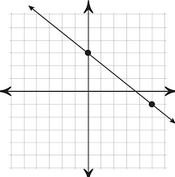
Which equation best represents the line on the graph?
HINT: m =RunRiseand think if the line is positive or negative. Mr.Slope


Give the equation for the graph HINT: m =RunRiseand think if the line is positive or negative. Mr.Slope
y=0.5x+10
What does the slope of the graph of this equation represent?

Which property justifies the work between step 1 and step 2?
Distributive Property
Combine Like Terms
Multiplication Property of Equality
Division Property of Equality
Which property justifies the work shown?
8n+42=8(n+5)
8n+42=8n+40
Distributive Property
Addition Property of Equality
Subtraction Property of Equality
Multiplication Property of Equality
Division Property of Equality
Which property justifies the work shown?
8n+42=8n+40
8n+2=8n
Distributive Property
Addition Property of Equality
Subtraction Property of Equality
Multiplication Property of Equality
Division Property of Equality
Which property justifies the work shown?
−2(w+2)=−2(w+5)+6
−2x−4=−2w−10+6
Distributive Property
Addition Property of Equality
Subtraction Property of Equality
Multiplication Property of Equality
Division Property of Equality
Chris solve the following problem below.
Step 1: -4(x - 2) + 3 = 8x - 17
Step 2: -4x - 8 + 3 = 8x - 17
Step 3: -4x - 5 = 8x - 17
Step 4: -5 = 12x -17
Step 5: 12 = 12x
Step 6: x = 1
Which Property best describes what happen from step 1 to step 2?
Division Property
Multiplication Property
Distributive Property
CLT
Step 1: -8(2x - 1) = 24 - 8x
Step 2: 2x -1 = -3 + x
Step 3: x - 1 = -3
Step 4: x = -2
Which property best describes what happened between Steps 1 and 2?
Distributive Property
Division Property
CLT
Multiplication Property

Which point is a solution?
HINT: Solutions are in the overlapping region (Both Colors)
(0, -6)
(-3, 5)
(1, 5)
(-4, 3)
Carlos works at a movie theater selling tickets. The theater has 300 seats and charges $7.50 for adults and $5.50 for children. The theater expects to make at least $2000 for each showing
7.5x+5.5y≥2000
7.5x+5.5y≥2000
7.5x+5.5y≤2000
7.5x+5.5y≤300
Coach Fekany needs to purchase new basketball equipment for the school. A new basketball costs $17 and a new practice jersey costs $10. He has a budget of at most $200. Write an inequality to represent the number of basketballs and practice jerseys that Coach Fekany can buy.
10b + 17j < 200
17b + 10j > 200
10b + 17j > 200
17b + 10j < 200
17b + 10j < 200

Select the ordered pair(s) that are SOLUTIONS to the system of inequalities [SELECT ALL THAT APPLY]
(3,2)
(0,0)
(2,2)
(0,-4)
(-6,3)
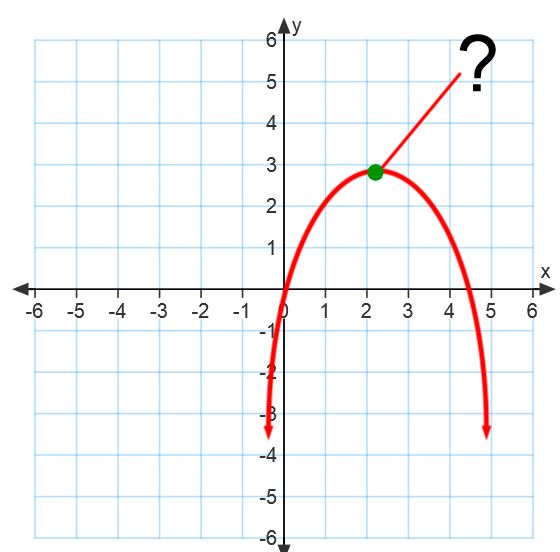

Factor:
x2 - 10x + 24
HINT: What two numbers multiply to give you 24 and ADD to giver you -10?
(x - 6)(x - 4)
(x + 6)(x + 4)
(x - 12)(x + 2)
(x - 8)(x - 3)
Factor:
x2 + 2x - 24
HINT: What two numbers multiply to give you -24 and ADD to giver you 2?
(x - 6)(x + 4)
(x + 6)(x + 4)
(x - 6)(x - 4)
(x + 6)(x - 4)
p2 − 5p − 14
HINT: What two numbers multiply to give you -14 and ADD to giver you -5?
( p + 2)( p + 7)
( p + 2)( p − 7)
( p - 2)( p − 7)
( p - 2)( p + 7)
What are the Zeros? (Need to factor it first)...
t2 - 6t + 8
HINT: What two numbers multiply to give you 8 and ADD to give you -6. Then take the opposites or your Binomials.
(t - 4)(t - 6)
t = 2 & t = 4
t = - 2 & t = - 4
(t - 2)(t - 4)

Which of the following equations best represents the graph? HINT: Take the opposite of what's inside the () for the Zeros/Solutions to match the graph.
y = (x -1)(x - 3)
y = (x + 1)(x + 3)
y = -3

Use the graph to determine the solutions.
x = -1 and x = -3
x = 1 and x = -3
x = 1 and x = 3
x = -1 and x = 3

What is the domain of the function?
Hint: DOMIAIN is your x's VAULES
0 < h < 80
0 ≤ h ≤ 80
0 ≤ t ≤ 4.5
0 < t < 4.5
Factor
x2 + 12x + 35
HINT W2#G: Multiply to give you 35 ADD to give you 12
(x+5)(x+7)
(x+4)(x+3)
(x+7)(x-5)
Prime
Factor
x2 + 5x + 4
HINT W2#G: Multiply to give you 4 ADD to give you 5
(x + 4)(x + 1)
(x + 2)(x + 2)
(x + 4)(x - 1)
(x + 5)(x + 1)
What are the Zeros?
x2 + 11x + 24
HINT W2#G: Multiply to give you 24 ADD to give you 11
x = -8 & x = -3
x = 8 & x = 3
(x + 8)(x + 3)
(x - 8)(x + 3)
What are the Zeros?
x2 + 3x + 2
HINT W2#G: Multiply to give you 2 ADD to give you 3
(x + 2)(x + 1)
x = -2 & x = -1
x = 2 & x = 1
Factor:
x2 - 2x - 15
HINT W2#G: Multiply to give you -15 ADD to give you -2
(x - 5)(x + 3)
(x + 3)(x - 5)
(x - 3)(x - 5)
(x - 15)(x - 2)
What are the Solutions?
x2 + 7x + 6
HINT W2#G: Multiply to give you 6 ADD to give you 7
(x + 6) (x + 1)
x = -6 & x = -1
x = 6 & x = 1
(x - 6) ( x -1)
Solve for the Zeros/Solutions:
(2x + 3)(x + 6) = 0
Hint: Use the Zero Product Property
x = −23 & x = −6
x = −32 & x = −6
x = 23 & x = 6
Factor
x2 - 11x + 30
HINT W2#G: Multiply to give you 30 ADD to give you -11
(x + 5)(x + 6)
(x - 5)(x - 6)
(x - 10)(x + 3)
(x - 10)(x - 1)
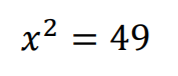
Solve for "x" using Inverse Operations.
Hint: the opposite of squaring something is TAKE THE SQUARE ROOT
x = 49 & x = 49
x = 8 & x = -8
x = 7 & x = -7
Factor:
x2 - 16
Hint W2#G: Multiply to give you -16 ADD to give you 0
Prime
( x - 4) ( x + 4)
( x - 8) ( x + 8)
( x - 4) ( x - 4)
Find the product:
(y - 3)(y + 7)
REMEMBER to ADD your exponents when multiplying.
y2 - 21
y2 + 10x - 21
y2 + 4y - 21
Find the product:
(3x + 2)(2x + 4)
REMEBER to ADD your exponents when Multiplying
6x2 + 16x + 8
5x2 +11x + 6
6x2 + 11x + 8
Solve for "x" using square roots. (Hint: Use inverse operations, what ever you do to ones side you do to the....OTHER)
x2 = 225
± 10
± 11
± 15
x = 15
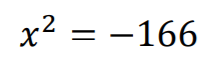
{12.88,-12.88}
{13.22,-13.22}
{16}
No Solution
Which of the following equations best represents the graph? HINT: Take the opposite of what's inside the () for the Zeros/Solutions to match the graph.
y = (x - 1)(x + 5)
y = (x + 1)(x - 5)
y = -2
What are the zeros of the function p(x)? SELECT ALL THAT APPLY.
f(x) = x(x - 4)(x + 5)
HINT: How many x's are there???
x = 0
x = - 5
x = 4
x = - 4
x = 5



What is the domain of the following graph?
0 ≤ x ≤ 60
0 ≤ y ≤ 60
0 ≤ x ≤ 12000
0 ≤ d ≤ 280
0 ≤ h ≤ 150
0 ≤ d ≤ 570
0 ≤ h ≤ 280

What is the DOMAIN of the graph?

What is the solution?
y=-3(x-2)2 - 4?
What are the transformations?
y = (x-2)2 + 4 (Choose ALL that apply.)
Horizontal shift right 2
Horizontal shift left 2
Vertical shift up 4
Vertical shift down 4
In the equation f(x)= 1/2(x+9)2 - 1, what happens to the parabola? (Choose ALL that apply.)
right 9
Vertical compress by 1/2
Horizontal Compress by 1/2
left 9
down 1

How many solutions does this system of equations have? What are the solutions ("x" values)? Select ALL
one solution
two solutions
x = - 3
x = 4
x = 1

Identify all solutions for the graph
(2, 3)
(4, -2)
(2, -4)
(-2, 0)

f(x) = x2 to the graph of g(x) = (x + 4)2?


If the blue is f(x)=x2, then the red must be
g(x)=x2- 5
g(x)=x2 + 5
g(x)=(x - 5)2
g(x)=(x + 5)2

What kind of shift is represented? f(x) = 2(x - 1)
up 1 unit
left 1 unit
right 1 unit
down 1 unit

What transformations occur to f(x)=5x to f(x) = 5(x - 3) + 2?
translate right 3, up 2
translate left 3, up 2
translate left 3, down 2
translate right 3, down 2

What is the transformation?
Vertical Translation up 2
Vertical Translation down 2
Horizontal Translation left 2
Horizontal Translation right 2
What transformations have happened to f(x) = 2x if the new equation is
g(x) = -2(x+3) -6
reflect x-axis
reflect y-axis
left 3
right 3
down 6
Select the systems that have the same solution as the following.
-2x + 6y = 16
-4x - 3y = 2
HINT: Remember you can ADD the systems together AND multiply on or both by a number to create equivalent systems.
-4x + 12y = 32
4x + 3y = -2
2x - 6y = -16
-4x - 3y = 2
-6x + 3y = 18
-8x - 6y = 4
-6x + 18y = 48
-24x - 18y = 12
What are the ZEROs for the function f(x)?
f(x) = (x + 2)(x - 3)
x = 2 & x = -3
x = -2 & x = -3
x = -2 & x = 3
What are the ZEROs for the function f(a)?
f(a) = (x-5)(x+6)
x = -5 & x = 6
x = 5 and x = -6
x = -5 & x = -6
What are the ZEROs for the function f(x)?
f(x) = (2x - 1)(x + 4)
x = 1/2 & x = -4
x = -1/2 & x = 4
What are the ZEROs for the function p(x)?
p(x) = x(x-3)(x-4)
x = 0, x = 3 & x = 4 }
x = 3 and x = 4
x = 0, x = -3 and x = -4

Which of the following equations best represents the graph? HINT: Take the opposite of what's inside the () for the Zeros/Solutions to match the graph.
y = x(x + 4)
y = x(x - 4)
What is the growth factor of the situation represented by f(x)=10(0.3)x? Hint: Think of f(x) = a × bx
10
0.3
1
3
What is the initial value of the situation represented by f(x)=0.05(2)x?
HINT: Think of f(x) = a × bx
0.05
2
0.1
1
The Tiger population in a certain reserve drops by 5% every year. Currently, the population's size is 200.
Write a function that gives the Tiger population size P(t), t years from today.
P(t) = 200(0.95)t
P(t) = 200(1.05)t
P(t) = 200(5)t
P(t) = 200(.05)t

The graph of a Quadratic function is shown. Select ALL the statements that are true about the graph.
it has a minimum
it has a maximum
the x - intercepts are (1, 0) and (3, 0)
The y - intercept is (0, 0)
The axis of symmetry is x = 2

The graph of a Quadratic function is shown. Select ALL the statements that are true about the graph.
it has minimum
it has a maximum
The y - intercept is (0, 0)
There is only one x-intercept
In the equation ax2 + bx + c, the value of "a" would be negative x because the Parabola opens down.
The graph of a Quadratic function is shown. Select ALL the statements that are true about the graph.
It has a maximum height of 4
It has a minimum height of 4
The Vertex is (-1, 4)
The x - intercepts are (0, 1) & (0, -3)
The y - intercept is (0, 3)
Select all the Statements that are TRUE.
y = −3(x + 2)2 + 5
The Vertext is (-2, 5)
There is a Minimum Value of 5
There is a Maximum Value of 5
The A.O.S is x = -2
Select all the statements that are TRUE.
y = (x − 6)2 − 10
The Vertext is (-6, -10)
There is a Minimum Value of -10
The A.O.S is x = 6
The Vertex is (6, -10)
There is a Maximum Value of -10
y = 3(x + 5)2 - 4,
what is the vertex of the parabola?
Determine the vertex of the parabola
y= 5(x - 2)2 – 7
(5, -7)
(-2, -7)
(2, -7)
(-7, -2)
The formula to determine how many solutions a quadratic equation is called the discriminant which is...
aX2 + bX + c
b - 4ac
b2 - 4ac
b2 + 4ac
Use the discriminant b2 − 4(a)(c) to determine the number of solutions the following quadratic equation has.
6x2 − 2x − 3 = 0
76 Two Solutions
29 Two Solutions
68 Two Solutions
none of these
Use the discriminant b2 − 4(a)(c) to determine the number of solutions the following quadratic equation has.
-2x2 − x − 1 = 0
76 Two Solutions
-7 No Solutions
9 Two Solutions
0 One Solution
How many solutions will this quadratic equation x2 + 8x + 16 have?
2 real solutions
2 imaginary solution
1 solution
3 solutions


Are the points on the line part of the solution set or not?
Yes, they are part of the solution set because the line is SOLID.
No, they are NOT part of the solution set because the line is SOLID.
Select ALL that apply. Which of the following below are
equivalent (the same as)
3−3
-27
331
−271
271
Which of the following below are equivalent (the same as)
x−7
-7
-7x
x71
x−71
Which is greater, 26540 or 50?
Select ALL that apply
26540
50
They are the same value
Zero is greater
They both equal 1
Using the Product of Powers Property. Simplify the expression.
(x4 )(x12)
x3
x48
x16
x8
Using the Product of Powers Property, Simplify the following expression.
(2m4)(5m2)
10m6
10m8
7m6
7m8

Simplify the following expression and select which properties were used . Select ALL that apply
3x(5 − y)
Power of a Power Proerty and Quotient of Powers Property
3(x + 5 − y)
3yx + 5
Product of Powers Property and Quotient of Powers Property
Write the expression in radical form
y32
2y³
y3
(∛y)²
3y²
Which of the following expressions is equivalent to 7
72
721
7-2
7−21
∜m3 is the same as which answer?
m43
m12
m34
m7

Rewrite the expression using a rational exponent.
4xy11
xy44
(xy)411
(xy)114

A
C
B
D

