
 Worksheets
Chemistry Unit 1
Total questions: 194
Worksheet time: 2hrs 14mins

What sub-atomic particle is labelled A?
Neutron
Electron
Ion
Atom
What sub-atomic particle is labelled B?
Neutron
Electron
Ion
Atom

Which atom has 4 electrons?
Atom A
Atom B
Atom C
Atom D
Which atom would be found in group 2?
Atom A
Atom B
Atom C
Atom D
Carbon has 6 electrons. Which atom is carbon?
Atom A
Atom B
Atom C
Atom D

What is the relative atomic mass of lithium?
7
3
4
10
What is the atomic number of lithium?
7
3
4
10
How many neutrons does a lithium atom have?
7
3
4
10
What is the mass and charge of an electron?
Mass = 1, Charge = Neutral
Mass = 1, Charge = Positive
Mass = 1, Charge = Negative
Mass = almost 0, Charge = negative
What is the mass and charge of an Proton?
Mass = 1, Charge = Neutral
Mass = 1, Charge = Positive
Mass = 1, Charge = Negative
Mass = almost 0, Charge = negative
What is the mass and charge of an Neutron?
Mass = 1, Charge = Neutral
Mass = 1, Charge = Positive
Mass = 1, Charge = Negative
Mass = almost 0, Charge = negative
What is an element?
2 or more substance not chemically combined
substance made of 1 type of atom
substance made of more than one type of atom chemically joined together
atoms of the same element with different number of neutrons
What is an compound?
2 or more substance not chemically combined
substance made of 1 type of atom
substance made of more than one type of atom chemically joined together
atoms of the same element with different number of neutrons
What is an mixture?
2 or more substance not chemically combined
substance made of 1 type of atom
substance made of more than one type of atom chemically joined together
atoms of the same element with different number of neutrons
What is an isotope?
2 or more substance not chemically combined
substance made of 1 type of atom
substance made of more than one type of atom chemically joined together
atoms of the same element with different number of neutrons
How many electrons can you put in the 1st, second and third electron shells?
4,4,8
2,8,8
4,8,8
1,2,8
What is John Dalton's model of the atom?
Electrons orbit in fixed energy levels (shells)
Nucleus at the centre of the atom
Protons and neutrons found in the nucleus
A solid sphere that could not be divided into smaller parts
What did Niels Bohr discover about the Atom?
Electrons orbit in fixed energy levels (shells)
Nucleus at the centre of the atom
Protons and neutrons found in the nucleus
A solid sphere that could not be divided into smaller parts
How do you calculate the number of neutrons in an atom?
atomic number + mass number
Mass number - atomic number
Atomic number - mass number
Mass number x atomic number
one carbon (C)
two oxygen (O)
(rust) made up of?
3 oxygen
Na2CO3
Is the sugar glucose (C6H12O6) an element or a compound?
Element
Compound
CaF2- name?
calcium fluorate
calcium fluoride
fluoride calcite
fluorine calciumate
HCl- name?
hydrogen chloride
chlorine hydrogen
hydrogen chlorine
hydrogen chlorate
MgO- name?
oxygen magnesium
magnesium oxide
magnesium oxate
magnesium oxygenate
KH- name?
potassium hydrate
potassium hydrogen
potassium hydride
hydrogen potassiate
HI - name?
iodine hydrogenide
hydrogen iodine
hydrogen iodide
hydrogen iodate
Which formula shows potassium iodide?
KI
Ki
KIO3
KIO2

The positive particles of an atom are
electrons
positrons
neutrons
protons
The central region of an atom where its neutrons and protons are is its
nucleus
electron cloud
core
center
Particles in an atom that are neutral and have no charge are
negatrons
electrons
neutrons
protons

What does the 1.00794 stand for?
Hydrogen
atomic number
atomic mass
atomic explosion
In the modern periodic table, elements are arranged by:
atomic mass
atomic number
valence electrons
number of isotopes
The central region of an atom where its neutrons and protons are is its
nucleus
electron cloud
core
center
An atom with atomic number 6 would have how many protons
6
12
3
cannot be determined
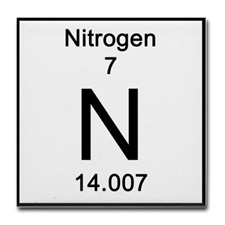
What is the number of protons that the element in this image contain?
14
7
15
18

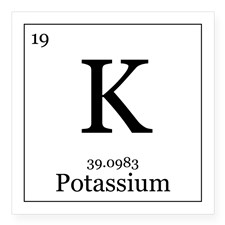
How many neutrons are in the atom "K"?
7
2
39
20
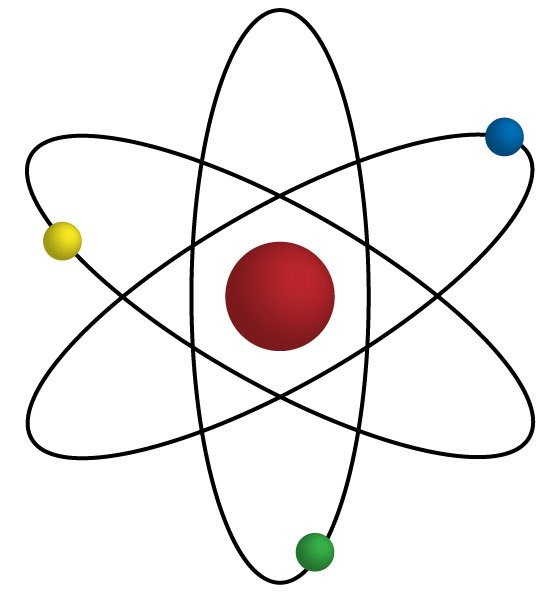

What type of charge does an electron have?
positive
no charge/neutral
negative
How do you find the atomic number?
by the number of electrons
by the number of protons
by the number of neutrons
The number of neutrons in an atom =
protons - neutrons
mass number - protons
protons + neutrons
mass number + electrons

What is the element symbol?
Argon
Ar
18
39.948

What is the element name?
Argon
Neon
18
Ar

The number 18 represents the
Atomic number
Neutrons
Element Name
Element symbol
The mass number of an atom =
protons + neutrons
protons - neutrons
electrons - neutrons
neutrons + electrons


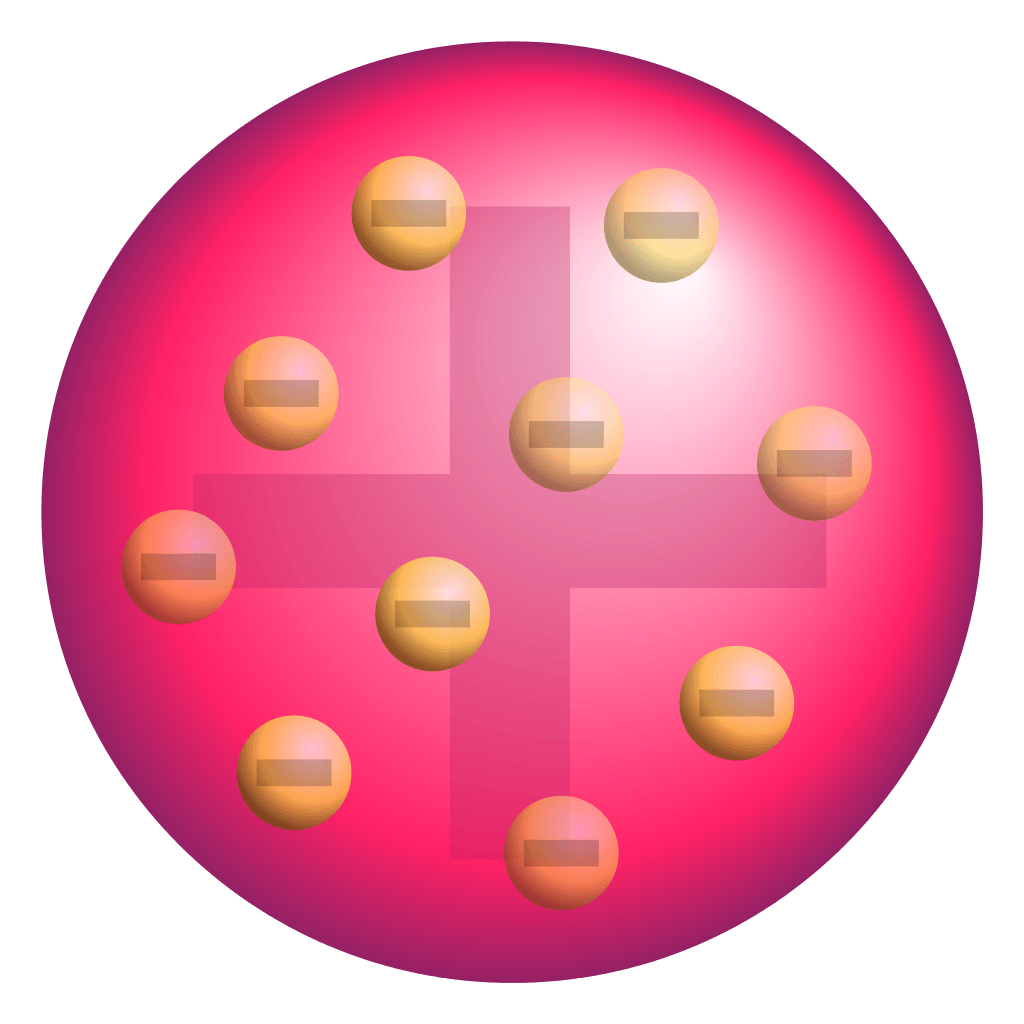
This model was developed after J.J. Thompson discovered electrons, a particle smaller than an atom. It shows electrons floating freely in a positive region.
The "Plum Pudding Model" of the atom
The "Rutherford Model" of the atom
Democritus's model of the atom
The "Quantum Mechanical Model" of the atom

In the atomic model nicknamed the "plum pudding" model, what do the plums represent?
the nucleus
the atom
the electrons
the positive material
What sub-atomic particle is labelled A?
Neutron
Electron
Ion
Atom
What sub-atomic particle is labelled B?
Neutron
Electron
Ion
Atom
What is the atomic number of lithium?
7
3
4
10
What is the relative atomic mass of lithium?
7
3
4
10
How many neutrons does a lithium atom have?
7
3
4
10
What is the mass and charge of an electron?
Mass = 1, Charge = Neutral
Mass = 1, Charge = Positive
Mass = 1, Charge = Negative
Mass = almost 0, Charge = negative
What is the mass and charge of an Proton?
Mass = 1, Charge = Neutral
Mass = 1, Charge = Positive
Mass = 1, Charge = Negative
Mass = almost 0, Charge = negative
What is the mass and charge of an Neutron?
Mass = 1, Charge = Neutral
Mass = 1, Charge = Positive
Mass = 1, Charge = Negative
Mass = almost 0, Charge = negative
What is an element?
2 or more substance not chemically combined
substance made of 1 type of atom
substance made of more than one type of atom chemically joined together
atoms of the same element with different number of neutrons
What is an compound?
2 or more substance not chemically combined
substance made of 1 type of atom
substance made of more than one type of atom chemically joined together
atoms of the same element with different number of neutrons
What is an mixture?
2 or more substance not chemically combined
substance made of 1 type of atom
substance made of more than one type of atom chemically joined together
atoms of the same element with different number of neutrons
What is an isotope?
2 or more substance not chemically combined
substance made of 1 type of atom
substance made of more than one type of atom chemically joined together
atoms of the same element with different number of neutrons
How many electrons can you put in the 1st, second and third electron shells?
4,4,8
2,8,8
4,8,8
1,2,8

Why do all bonds form?
so the number of protons equals the number of electrons
so an atom can become unstable
to fill the outermost energy level
How many Aluminum atoms are in Al2O3?
3
5
2
1
Write the correct formula for Sodium Chloride.
SC
SCl
NaCl
NaCl2
What is the charge of ion "X" in the formula XF3?
+3
-3
+1
-1
What is the charge of ion "X" in CaX?
+1
-1
+2
-2
Which of the following pairs of elements will NOT form an ionic compound?
sodium and fluorine
phosphorous and aluminum
potassium and magnesium
strontium and oxygen
What will be the charge of a bromine ion?
+7
-7
-1
+1
Which element below would have a 3+ charge as an ion?
nitrogen (N)
boron (B)
silicon (Si)
argon (Ar)
Na+ and Cl- create...
Na2Cl
NaCl2
Na2Cl2
NaCl
Potassium and Sulfur create...
KS
KS2
K2S
K2S2

Metals tend to
gain electrons
lose electrons

Nonmetals tend to
gain electrons
lose electrons
Na1+ F1-
Cr3+ O2-
K1+ S2-
How does magnesium become an magnesium ion?
it loses 2 electrons
it gains 2 electrons
How does calcium become an calcium ion?
it loses 2 electrons
it gains 2 electrons
How does oxygen become an oxide ion?
it loses 2 electrons
it gains 2 electrons
Which of the below is an ionic compounds?
Ni
MgCl2
H2O
CH4
If an atom had the same properties as fluorine (F), it would probably be located in
period 1.
period 2.
group 2.
group 7.
Group 1 elements only form ….. Ion
1+
1-
2+
2-
What gas is given off when group 1 elements reacts with water?
Hydrogen
Oxygen
Carbon dioxide
Helium
When a group 1 element reacts with water, a hydroxide is formed. What colour would Universal Indicator turn in this solution?
Green
Blue
Yellow
Red
How many electrons are in the outer shell of group 1 elements?
0
1
2
3
Why does the reactivity of group 1 elements increases down the group?
It becomes more reactive
It becomes easier to accept an electron
It becomes easier to lose an electron
It becomes less reactive
what is your vallue leval
10000
3000
9000
5000
20000
As you move down the group, halogens' reactivity...
increases
decreases
doesn't change
shows no trend.
How many electrons do the halogens all have in their outer shells?
1
2
7
8
The Halogens are found in which group number?
5
6
7
0
As you go down the group, how does the boiling point of the halogen elements change?
Increases
Decreases
They're all about the same
As you move down the group, halogens' reactivity...
increases
decreases
doesn't change
shows no trend.
Which Halogen is the most reactive?
Bromine
Fluorine
Iodine
Chlorine
In order to become stable do the halogens need to.....
Gain an electron
Lose an electron
Which statement is true about halogens?
Form covalent compounds with other non-metallic elements
A less reactive halogen will displace a more reactive element form its ionic salt
Form ionic compound with hydrogen
form negative ion of charge -2
The process by which solid iodine particles change directly to gas without first becoming a liquid is called ____.
evaporation
ionization
condensation
sublimation
Which of the following is explosive
fluorine and hydrogen
chlorine and hydrogen
iodine and hydrogen
bromine and hydrogen

