
 Worksheets
H.W 1-T3-2022-G10 CAI-Polynomial Functions
Total questions: 21
Worksheet time: 1hrs 22mins
f(x) = -3x4 + x3 - 2x2 + x - 1
What is the y-intercept of f(x)?
(-1, 0)
(0, -1)
(-3, 0)
(0, -3)

A
B
C
D

A
B
C
D
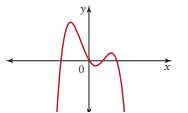
The function shown has:
Degree two with negative leading coefficient.
Degree three with negative leading coefficient.
Degree four with negative leading coefficient.
Degree four with positive leading coefficient.
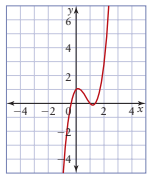
Which of the following could be a possible equation for the function shown?
f(x) =-2x3 + x2 - 5x + 1
f(x) = 2x3 - 4x2 + x + 1
f(x) = 3x2 + 5x + 1
f(x) = -2x3 +3x - 1
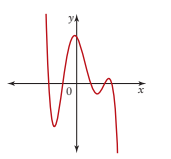
State the minimum degree of the function shown:
3
4
5
6
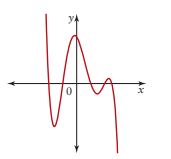
Which of the following functions could represent the graph shown?
f(x) = -2x5
f(x) = -2x4 + 7x3 + 3x2 -5x + 8
f(x) = 2x5 + 3x4 - 3x3 + 5x2 - 3x + 4
None of these functions could represent the graph shown.

The function shown contains:
Only one local maximum.
Two local maximums.
Two local minimums.
Three local maximums
Simplify:
(4x3 + 2x2 - 5x - 9) + (-3x3 - 5x2 - x + 11)
7x3 + 7x2 - 6x + 2
x3 - 3x2 - 6x + 2
7x3 - 3x2 - 6x + 2
x3 + 7x2 - 4x + 2
Simplify: (x - 5)2
x2 - 25
x2 + 25
x2 - 10x + 25
x2 - 5x - 25


f(x) = -5x4 - 2x2 + 8
Right side: Rises
Right side: Falls
Right side: Rises
Right side: Falls
Describe the end behavior of a 15th degree polynomial with a positive leading coefficient. Choose all that apply.
As x→∞, f(x)→−∞
As x→−∞, f(x)→∞
As x→−∞, f(x)→−∞

Decreasing Interval(s): (Choose all that apply)
(−∞, 0)
(−∞, 3)
(3, 5)
(5, ∞)
(−4, ∞)
(3x - 4x3 + 6x4 + 1) / (x + 3)


2x−36x3−x2−22x+15=ax2+bx+c. What is the value of a+b+c?
12
2
3
4

A
B
C
D

