
 Worksheets
What is matter?
Total questions: 60
Worksheet time: 34mins
Matter is everything around us that has mass and takes up space.
Matter has two general properties mass and volume
Some examples of matter are...
rocks.
living things.
water.
air we breath.
Mass measures the amount of space that an object occupies.
Volume is the amount of space that matter takes up.
Mass is the amount of matter in an object.
True
False
Volume is the amount of matter in an object.
True
False

There is more matter in a table than in a pencil, so the table has more mass.
True
False
Mass is measured in...
grams (g).
litres (l).
milliliters (ml).
kilograms (kg).
Volume is measured in...
grams (g).
litres (l).
milliliters (ml).
kilograms (kg).

... are used to measure mass.
Scales
Balances
Graduated cylinders
Measuring cups

... are used to measure volume.
Scales
Balances
Graduated cylinders
Measuring cups
Helium and air are examples of liquids.
Homogeneous mixtures...
Have a uniform composition. Once the diferent components are mixed, they cannot be identified or separated from each other.
Heterogeneous mixtures...
Have a uniform composition. Once the diferent components are mixed, they cannot be identified or separated from each other.
The three states of matter are...
solid, liquid and gas.
solid, liquid and shape.
shape, size and state.

Gases
don’t have a definite shape and don’t have a definite volume.
don’t have a definite volume and have a definite shape

Solids...
have a definitive shape and have a definitive volume.
have a definitive shape and don't have a definitive volume.

Liquids...
don’t have a definite shape and don’t have a definite volume.
have a definite volume and don't have a definite shape.

An umbrella is ... because it repels water.
rigid
waterproof
elastic

A can is ... because it does not change shape easily.
fragile
resistant
rigid

A stone wall is ... because it does not break easily.
rigid
resistant
waterproof
The properties of matter can change. These changes are called...
states of matter.
physical changes.
mixtures.
In this mixture, we can see the materials:
oil and vinegar.
chocolate powder and milk.
sugar and butter.
In this mixture, we can't see the materials:
chocolate chips.
detergent and water.
soil and sand.
We use this process to change water from a liquid to a solid.
Freezing
Melting
Evaporating

We use this process to change water from a solid to a liquid.
Freezing
Melting
Evaporating

We use this process to change water from a liquid to a gas.
Freezing
Melting
Evaporating
The amount of matter something contains is:
(a)
Ice floats on water because the density of ice is ... than that of water.
higher
lower
Density is the relationship between mass and ...
(a)

This picture shows a ...
natural material
manufactured material

Wool is a natural material that comes from ...
plants.
minerals.
animals.

Manufactured materials are natural materials that go through a ... transformation.
chemical
physical

Paper is manufactured material made from ...
iron.
wood.
oil.
A property of the materials that refers to how difficult it is to scratch and change shape is ...
hardness.
elasticity.
colour.
A property of the materials in which the material goes to its original shape after stretching it is ...
solubility.
thermal conductivity.
elasticity.

A pure substance is:
only one type of mixture.
only one type of matter.
two or more pure substances.
What is matter?
Matter is everything that doesn't have mass or volume
Matter is everything that has mass and takes up a space
Matter is everything that hasn't got space and volume
Matter is everything that I can see

What is this object made of?
Plastic
Steel
Gold
Metal

What is this object made of?
Choose metal's properties.
Flexible
Conductor
Transparent
Hard

Tick the materials used in architecture:
clay
concrete
wood
glass
A material is suitable for their use depending on.....
their cuality.
their properties.
their shape.
When a material does not transmit heat, we call it....
Impermeable
Transparent
Conductor
Insulator
When a material transmit heat, we call it....
Conductor
Transparent
Opaque
Impermeable
When a material lets light pass through, we say it is...
Impermeable
Opaque
Transparent
Conductor
When a material does not let liquid pass through, we say it is...
Insulator
Impermeable
Transparent
Permeable
One of the properties of materials that measures the transmission of heat.
Mass
Hardness
Thermal Conductivity
Elasticity
Which of these things are matter:
Oxygen
Oil
Love
Happyness
There are two types of mixture:
Magnetic and separation
Decantation and filtration
Heterogeneous and homogeneous
Heteregeous and evaporation
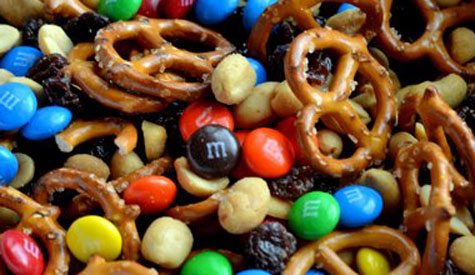
What type of mixture is this?
A mixture that contains two or more substances uniformly combined is called...
heterogeneous mixture
homogeneous mixture
suspension
colloid

Oxygen
pure substance
homogeneous mixture
compound
heterogeneous mixture

Matter is classify in...
Elements & Compounds
Homogeneous & Heterogeneous
Colloids & Suspensions
Pure substances & Mixtures

Milk is an example of...
Homogeneous mixture
Heterogeneous mixture
Solution
Pure Substance
Density refers to the concentration of matter in a ... ...
wide space
particular volume
warm liquid
When the density of an object is higher than the density of water, the object ...
sinks.
floats.
vibrates.
moves.
We calculate the density of an object by .................... its mass by its volume
dividing
substracting
adding
multiplying
Which material is obtained from tree trunks?
glass
pottery
metal
wood

