
NEW
Font size
 Worksheets
Chemical Reactions - 7th Grade
Total questions: 39
Worksheet time: 1hrs 18mins
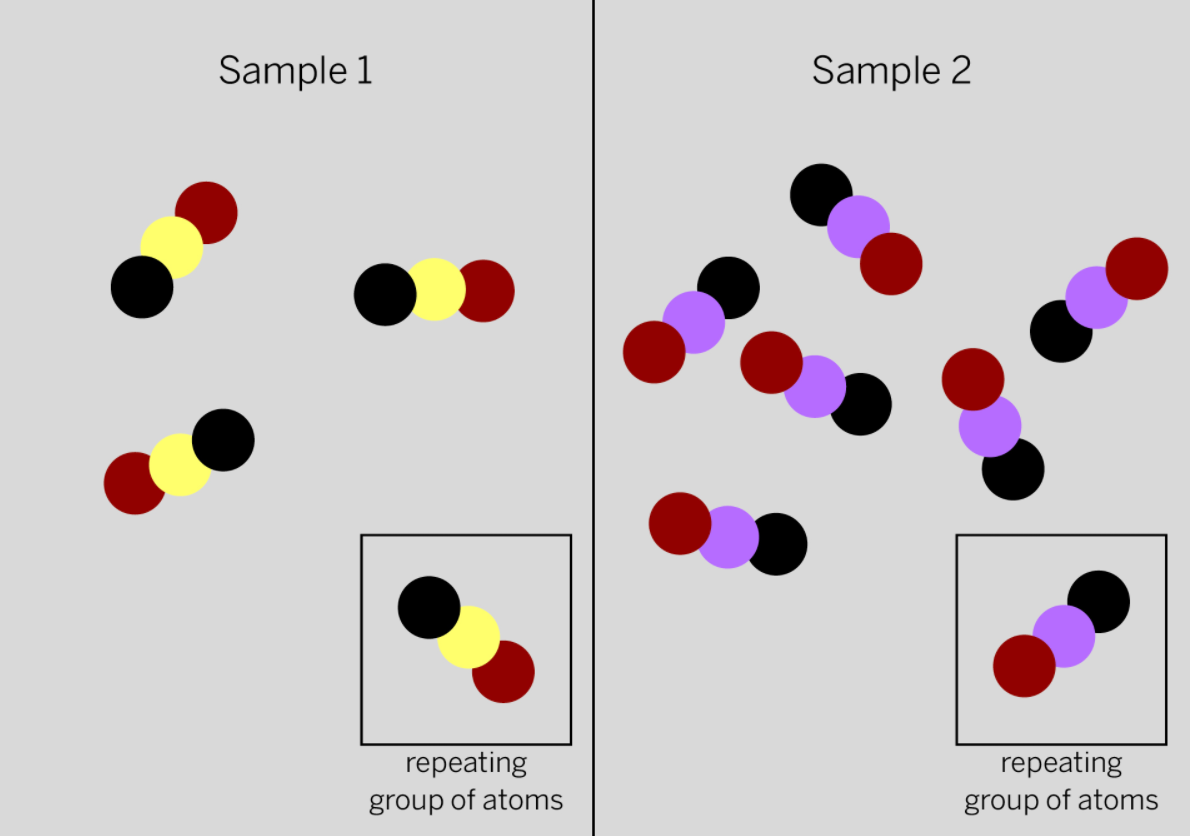
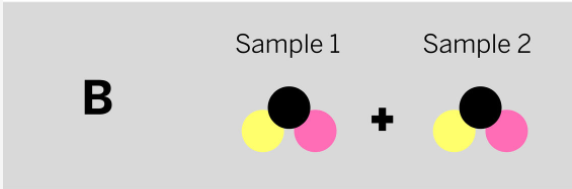
The diagram above shows the repeating groups of atoms that make up two samples. Will the properties of the two samples likely be the same or different? (Examples of properties are smell, color, and the temperature at which a substance melts.)
The properties will likely be different because the repeating groups of atoms that make up each sample are different.
The properties will likely be different because there are more repeating groups of atoms in Sample 2.
The properties will likely be the same because the repeating groups of atoms that make up the two samples have the same number of atoms.
The properties will likely be the same because the repeating groups of atoms that make up the two samples have two of the same types of atoms.
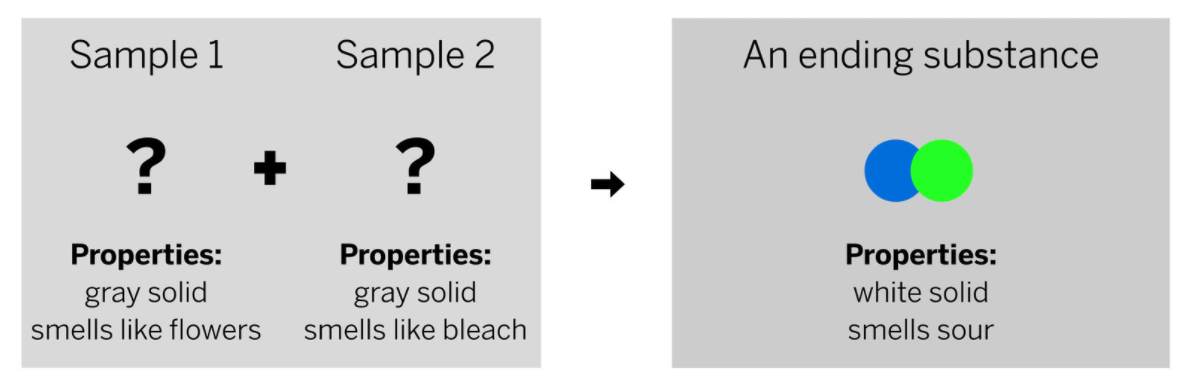
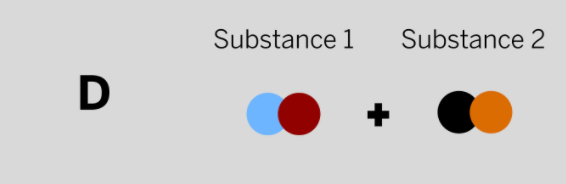
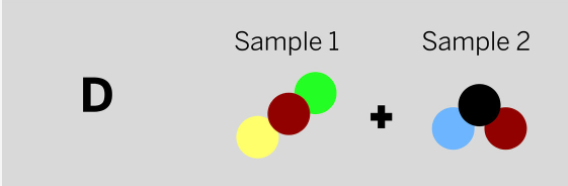
Serena mixed two samples together: a gray solid that smells like flowers and a gray solid that smells like bleach. She analyzed the results and found two ending substances. One of the ending substances was a white solid. This ending substance is made up of the repeating group of atoms shown above. Which of the diagrams to the left shows the repeating groups of atoms that make up the samples Serena mixed together?

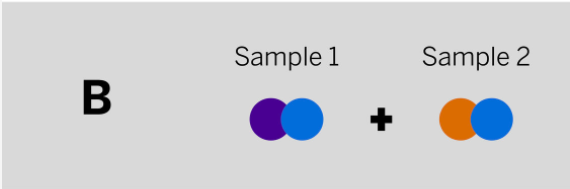
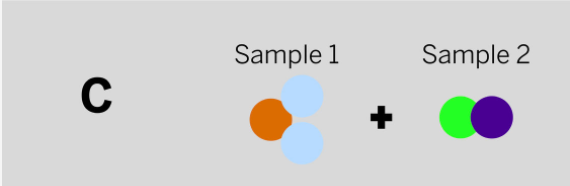

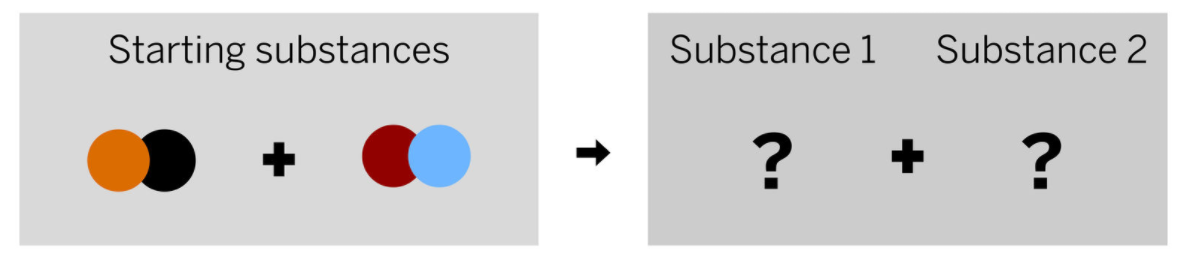
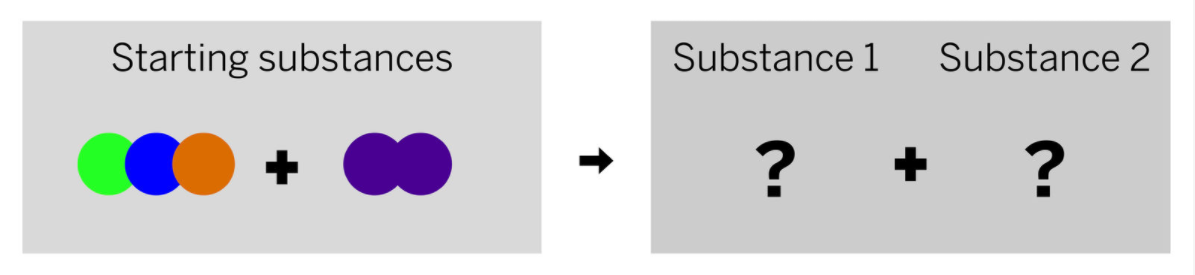
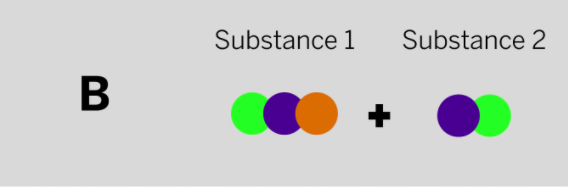
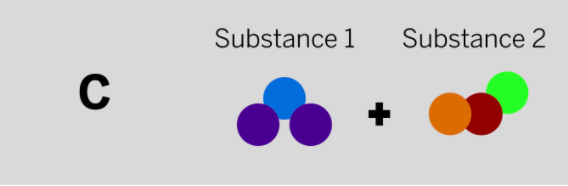
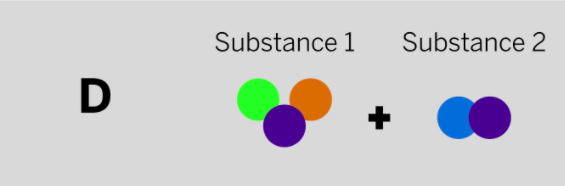
Tiana is a chemist who is making a chemical to add to swimming pools in order to make the water safer. She mixed two solid substances together in a sealed container. The diagram above shows the repeating groups of atoms that make up the two starting substances.
After mixing, Tiana found two liquid substances in the sealed container. (Nothing had escaped.) Which of the diagrams to the left shows the repeating groups of atoms that make up the ending substances?
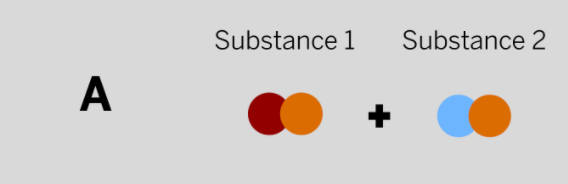
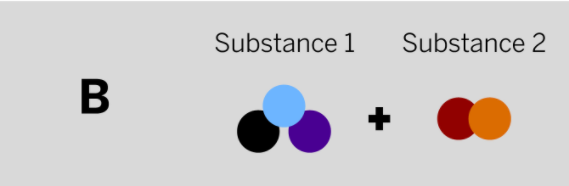
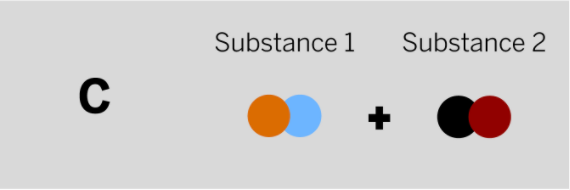
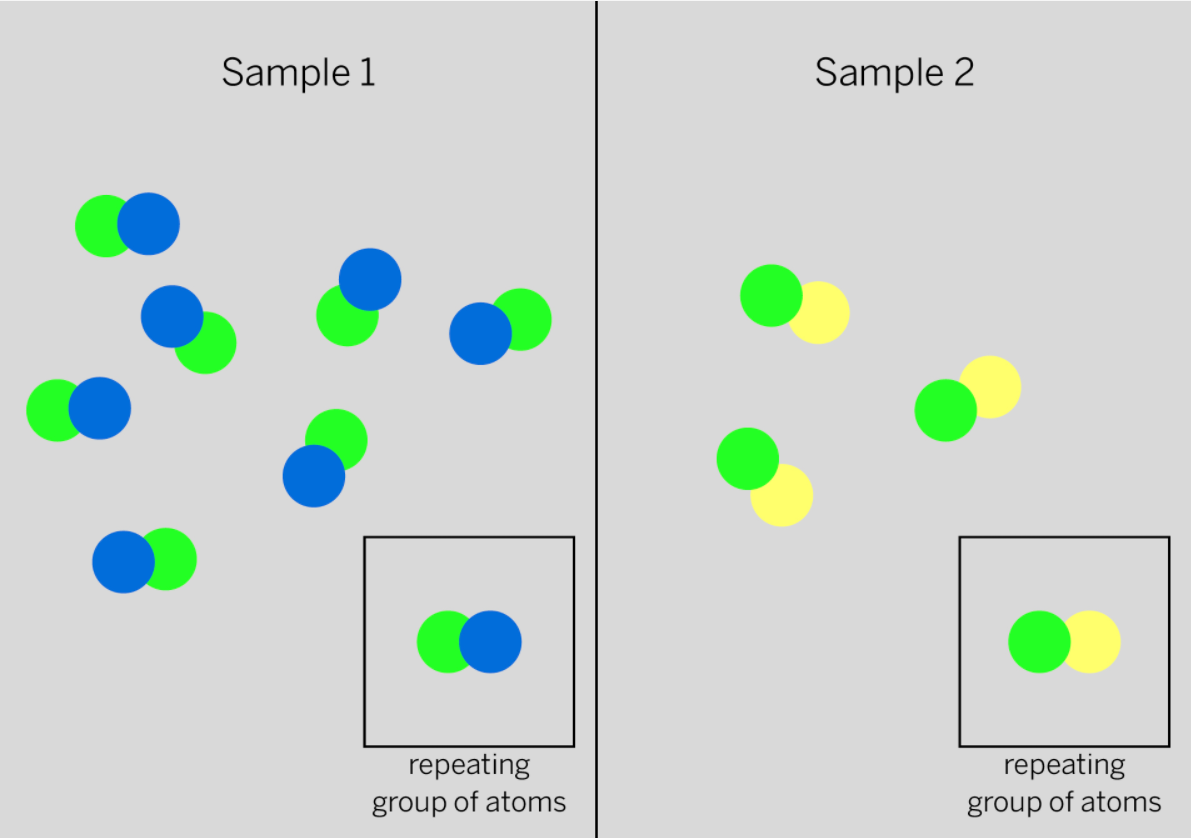
The diagram above shows the repeating groups of atoms that make up two samples. Will the properties of the two samples likely be the same or different? (Examples of properties are smell, color, and the temperature at which a substance melts.)
The properties will likely be different because the repeating groups of atoms that make up each sample are different.
The properties will likely be different because there are more repeating groups of atoms in Sample 1.
The properties will likely be the same because the repeating groups of atoms that make up the two samples have one of the same types of atoms.
The properties will likely be the same because the repeating groups of atoms that make up the two samples have the same number of atoms.



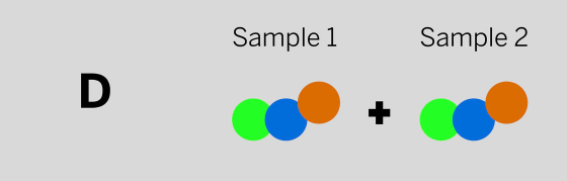
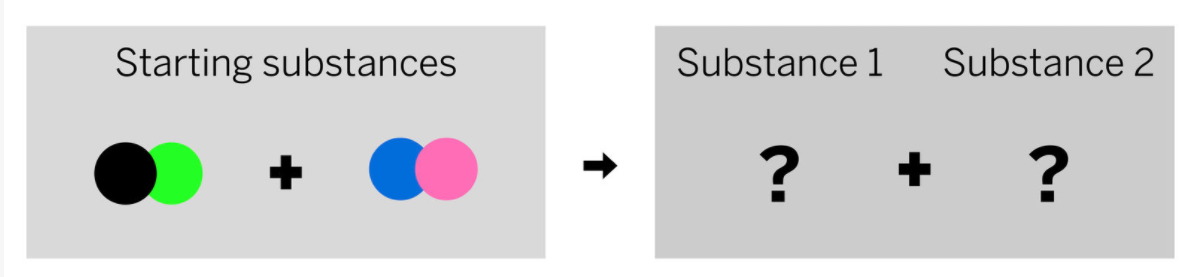
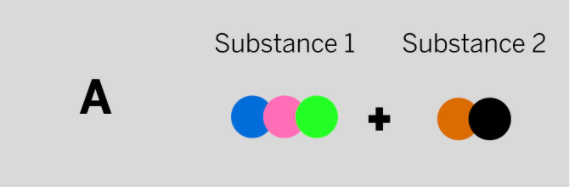
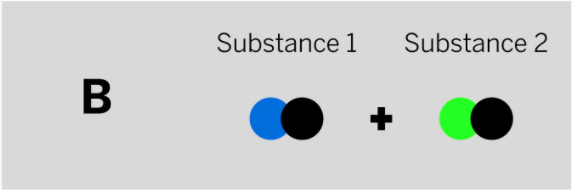
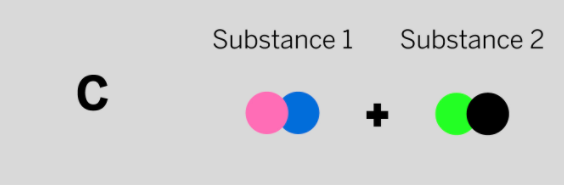
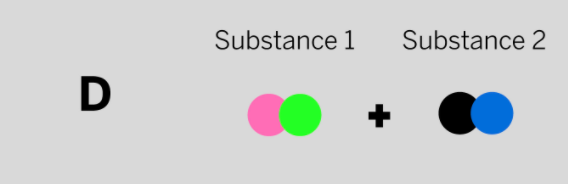
Santiago is a chemist working to make a new kind of antacid, which is a medicine that helps with stomach pain. He mixed two powdery solid substances together in a sealed container. The diagram above shows the repeating groups of atoms that make up the two starting substances.
After mixing, Santiago found two liquid substances in the sealed container. (Nothing had escaped.) Which of the diagrams to the left shows the repeating groups of atoms that make up the ending substances?
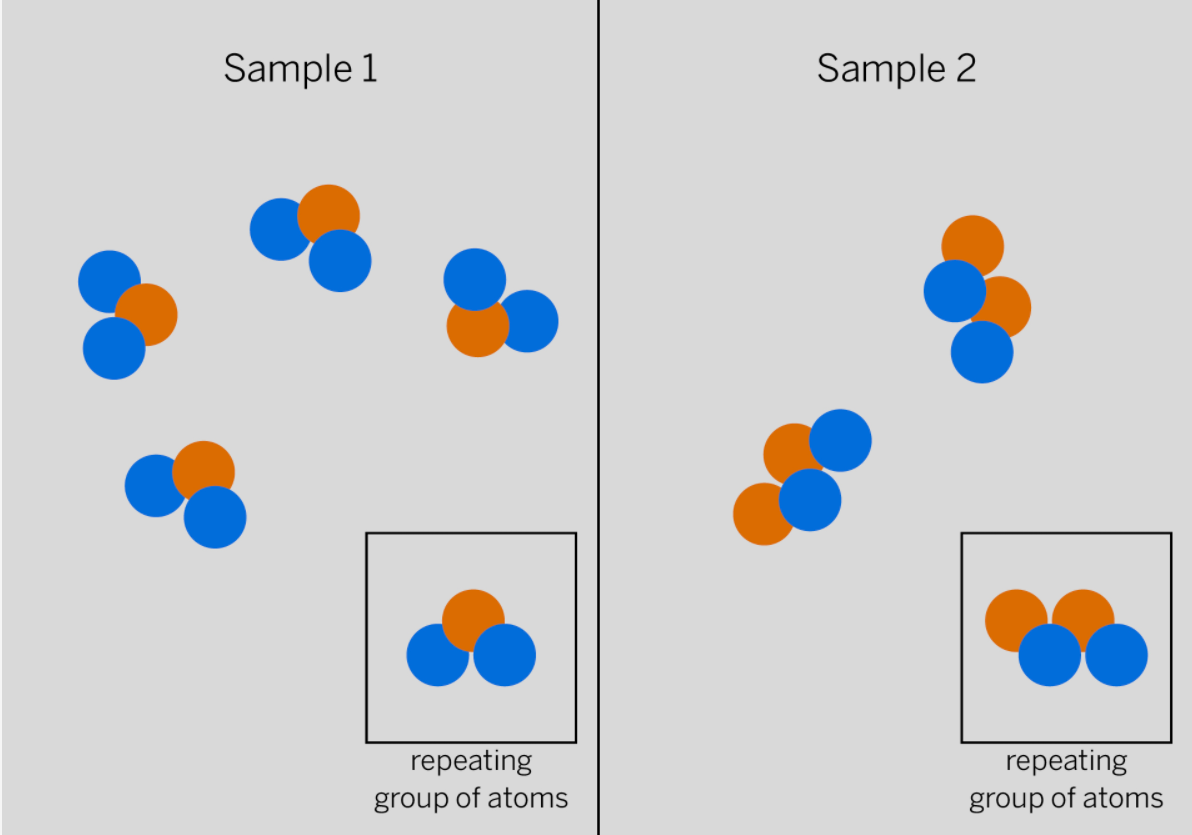
The diagram above shows the repeating groups of atoms that make up two samples. Both samples are liquid at room temperature. Will the properties of the two samples likely be the same or different? (Examples of properties are smell, color, and the temperature at which a substance melts.)
The properties will likely be the same because the repeating groups of atoms that make up the two samples have the same types of atoms.
The properties will likely be the same because both samples are liquids at room temperature.
The properties will likely be different because the repeating groups of atoms that make up the two samples have different numbers of atoms.
The properties will likely be different because there are more repeating groups of atoms in Sample 1.
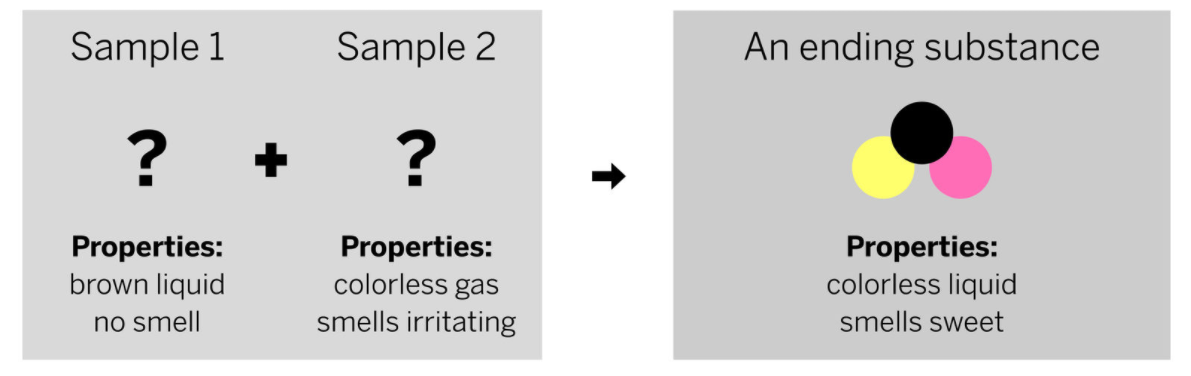
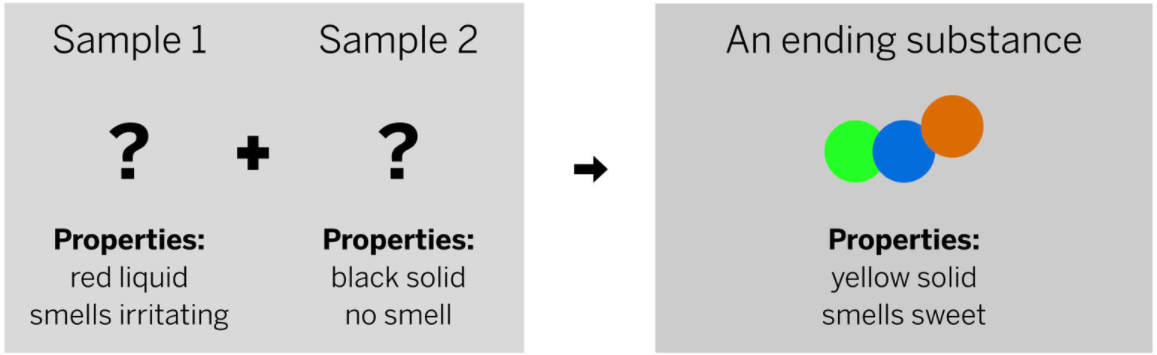
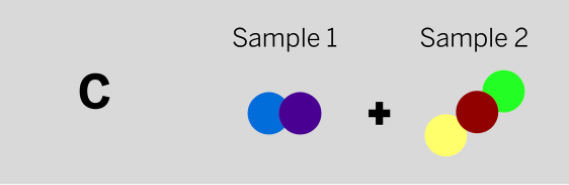
Marisol mixed two samples together: a brown liquid with no smell and a colorless gas that smells irritating. She analyzed the results and found two ending substances. One of the ending substances smelled sweet. This ending substance is made up of the repeating group of atoms shown above. Which of the diagrams to the left shows the repeating groups of atoms that make up the samples Marisol mixed together?
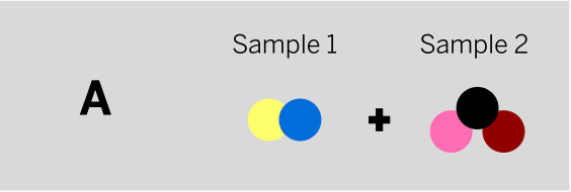
Jamie works at a company that makes cleaning chemicals. She is trying to make a chemical that smells like flowers. She took two samples that were gases at room temperature and mixed them in a sealed container. The diagram above shows the repeating groups of atoms that make up the two starting substances.
After mixing, Jamie found two substances that smelled like flowers in the sealed container. (Nothing had escaped.) Which of the diagrams to the left shows the repeating groups of atoms that make up the ending substances?

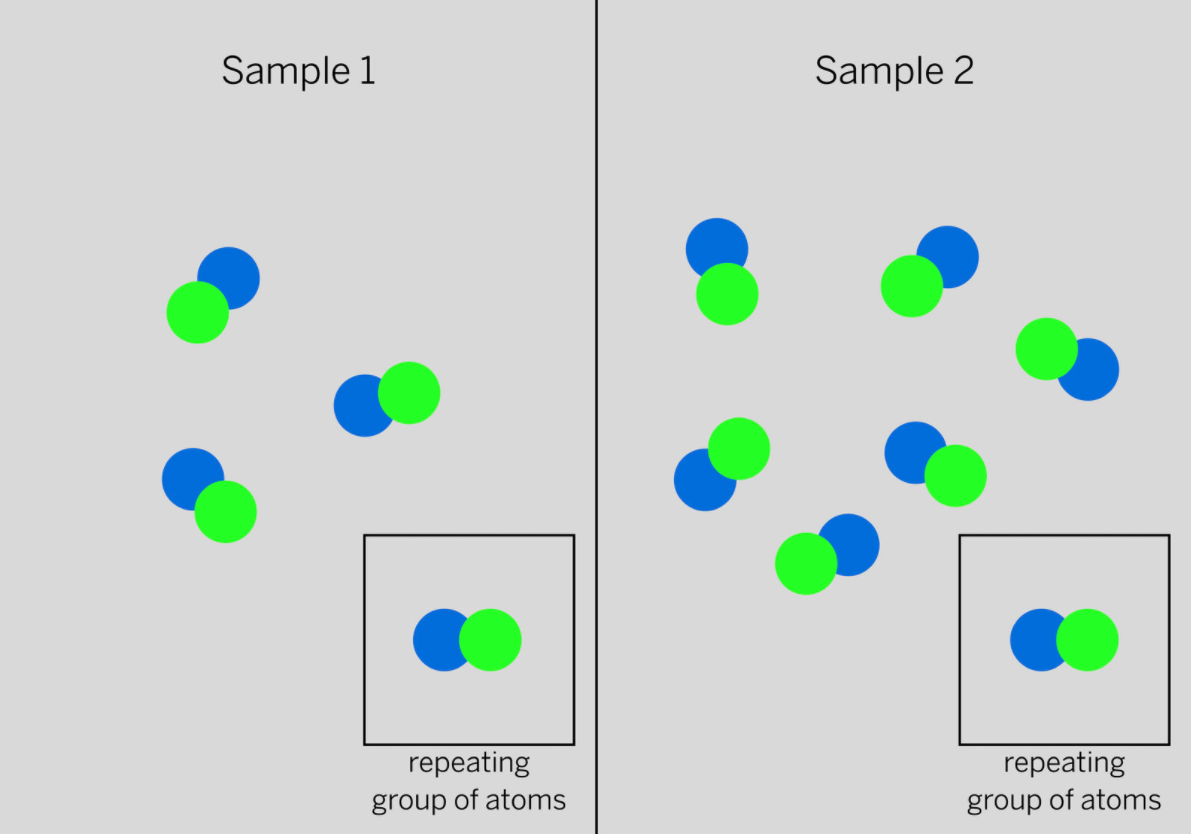
The diagram above shows the repeating groups of atoms that make up two samples. Both samples are green gases at room temperature. Will the other properties of the two samples be the same or different? (Examples of properties are smell, color, and the temperature at which a substance melts.)
The other properties will be the same because the repeating groups of atoms that make up the two samples are the same.
The other properties will be different because there are more repeating groups of atoms in Sample 2.
The other properties will be the same because both samples are green at room temperature.
The other properties will be the same because both samples are gases at room temperature.
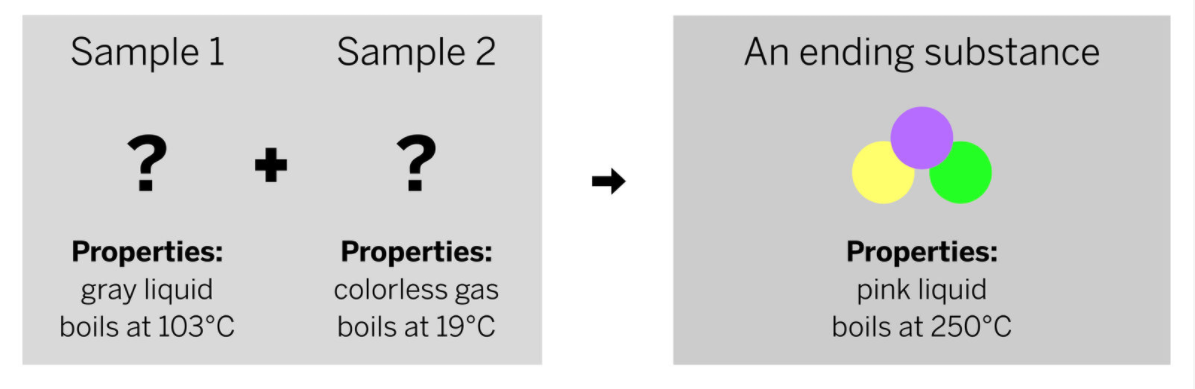
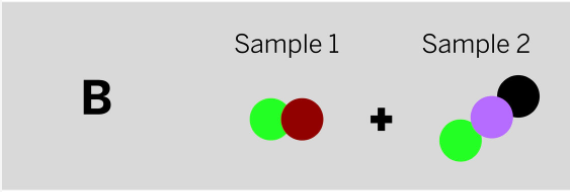
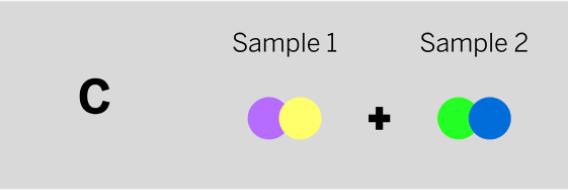
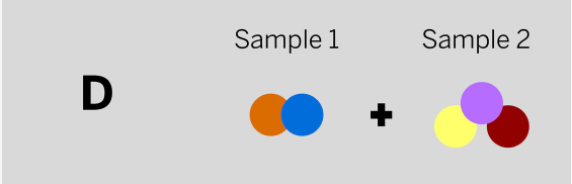
A chemist mixed two samples together: a gray liquid that boils at 103°C and a colorless gas that boils at 19°C. She analyzed the results and found two ending substances. One of the ending substances was a pink liquid. This ending substance is made up of the repeating group of atoms shown above. Which of the diagrams to the left shows the repeating groups of atoms that make up the samples the chemist mixed together?


Practice question: Choose the question that says "pick me"
Don't pick me
Definitely not this one
Pick me!
Whoa! Way to read ALL of the questions! You are a quiz super star! Self-high-five!
What does "rearrange" mean?
To make sure to read all of the answers on the quiz
To not add or take away but to move things around. To remix
To not just choose the longest answer because sometimes teachers put in long answers to make sure you are paying attention.
To not pick the shortest answer

The diagram above shows the repeating groups of atoms that make up two samples. Both samples are red powdery solids at room temperature. Will the other properties of the two samples be the same or different? (Examples of properties are smell, color, and the temperature at which a substance melts.)
The other properties will be different because there are more repeating groups of atoms in Sample 1.
The other properties will be the same because both samples are red at room temperature.
The other properties will be the same because both samples are powdery solids at room temperature.
The other properties will be same because the repeating groups of atoms that make up the two samples are the same.

Can one substance change into another substance? (read carefully)
No, because things can mix, but they can't change into new things
Yes, because new atoms can be created
No, because atoms can not be destroyed
Yes, because atoms can be rearranged.
What is an example of a substance?
table salt (NaCl)
Teddy Bear
Mechanical pencil
A person

The diagram above shows the repeating groups of atoms that make up two samples. Both samples are solids at room temperature. Will the other properties of the two samples likely be the same or different? (Examples of properties are smell, color, and the temperature at which a substance melts.)
The other properties will likely be different because there are more repeating groups of atoms in Sample 2.
The other properties will likely be different because the repeating groups of atoms that make up the two samples have different numbers of atoms.
The other properties will likely be the same because the repeating groups of atoms that make up the two samples have the same types of atoms.
The other properties will likely be the same because both samples are solids at room temperature.

Which is NOT a substance?
Water (H2O)
Diamond (C)
Hydrogen peroxide (H2O2)
Chicken nuggets (Nug1T)

Andres is a chemist working at a company that makes ink. To make a new kind of ink, Andres mixed two liquid substances together in a sealed container. The diagram above shows the repeating groups of atoms that make up the two starting substances.
After mixing, Andres found two solid substances in the sealed container. (Nothing had escaped.) Which of the diagrams to the left shows the repeating groups of atoms that make up the ending substances?


What is a reactant?
Something that actanats again
A starting substance before a chemical reaction
A potato
What happens when you have the reflexes of a ninja and can react quickly.
What is a reactant?
Something that actanats again
A starting substance before a chemical reaction
A potato
What happens when you have the reflexes of a ninja and can react quickly.

Samira watched a demonstration in which a scientist combined two substances in a sealed container and analyzed the results. The ending substances did not look the same as the starting substances.
Samira was given a diagram with the repeating groups of atoms that make up the starting substances, plus information about the properties of the starting and ending substances. She created a model of the repeating groups of atoms that might make up the two ending substances.
Samira's model correctly demonstrates how the properties changed with the rearrangement of the atoms. However not all atoms are accounted for. There is a missing reactant.
Samira's model is correct because the properties are different and the atoms are rearranged.
Samira's model is incorrect because not all atoms are accounted for
Samira's model correctly demonstrates how the properties changed with the rearrangement of the atoms. However not all atoms are accounted for. There is a missing product.

What is a product (in chemical reactions)?
Something a company will try to sell to you
Also a potato
When the mitosis space-time folds into a tetrahedron flux-capacitor
The substance(s) that are created after a chemical reaction

The diagram above shows the repeating groups of atoms that make up two samples. Both samples are gases at room temperature. Will the other properties of the samples likely be the same or different? (Examples of properties are smell, color, and the temperature at which a substance melts.)
The other properties will likely be the same because the repeating groups of atoms that make up the two samples have the same types of atoms.
The other properties will likely be the same because both samples are gases at room temperature.
The other properties will likely be different because there are more repeating groups of atoms in Sample 1.
The other properties will likely be different because the repeating groups of atoms that make up the two samples have different numbers of atoms.

What is an atom?
Water is an atom
The Hydrogen (H)s and the Oxygen (O)s are atoms
The H2O is an atom
None of these are atoms

A chemist mixed two samples together: a brown solid that melts at about 1,300°C and a colorless liquid that melts at about 20°C. She analyzed the results and found two ending substances. One of the ending substances melts at about 250°C. This ending substance is made up of the repeating group of atoms shown above. Which of the diagrams to the left shows the repeating groups of atoms that make up the samples the chemist mixed together?


What is a molecule?
The H2O is a molecule
The Hydrogen (H)s and the Oxygen (O)s are molecules
The H2O is an atom
None of these are molecules
Which of the following is defined as, "able to cause damage"?
chemical reaction
corrosive
reactant
product
Which of the following is defined as, "a group of atoms joined together in a particular way"?
molecule
atom
product
reactant
Which of the following is defined as, "an object, diagram, or computer program that helps us understand something by making it simpler or easier to see"?
model
scale
product
reactant
Which term is defined as, "the temperature at which a substance changes from the liquid phase to the gas phase"?
melting point
boiling point
model
scale
Which term is defined as, "the temperature at which a substance changes from the solid phase to the liquid phase"?
melting point
boiling point
model
scale
Which term is defined as, "something that can be observed about a substance, such as color, smell, or boiling point"?
product
reactant
chemical formula
property
Which of the following is defined as, "a starting substance that is part of a chemical reaction"?
product
reactant
molecule
atoms
Which of the following is defined as, "an ending substance that is made during a chemical reaction"?
product
reactant
molecules
atoms
True or False: During a chemical reaction, atoms do change from one type to another.
True
False
Different substances have _________ properties.
different
the same
Which is usually larger? Atoms or molecules?
atoms
molecules
True or False: Substances have different properties because they are made of different groups of atoms.
True
False

