
 Worksheets
5th Grade Science Review
Total questions: 160
Worksheet time: 13hrs 20mins
I am covered in dry scales and I lay eggs. What am I?
Mammal
Fish
Amphibian
Reptile
Which statement is true for ALL of these animals?
eagle
frog
fish
turtle
They all hatch from eggs
They all have the same body covering.
They are all mammals.
They all live only in water.
How would a scientist classify a fern?
vascular, seed-producing
nonvascular, cone-bearing
vascular, spore-producing
nonvascular, seed-producing
Is wood burning a physical or chemical change?
Physical
Chemical
Is Gatorade powder dissolving in water physical or chemical change?
Physical
Chemical
Is mold growing on cheese a physical or chemical change?
Physical
Chemical
Is making orange juice a physical or chemical change?
Physical
Chemical
a change of state when a solid becomes a liquid
freezing
condensation
boiling
melting
What happens to particles of a substances when heat energy is taken away?
particles speed up and move closer
particles slow down and move apart
particles slow down and move closer

What is the BEST explanation of the data?
Which of these BEST explains the student’s observations?

In which location is the greatest amount of soil erosion most likely to have occurred that day?
A pathway for electricity to travel is called___________
current
static electrcity
circuit
circle
A continuous flow of electricity is called_____________
series
circuit
static
current
A parking lot near a school would likely use which flood control method?
dam
levee
storm drain
terracing
Why would a seismologist use GIS?
look at mountains
look at volcanoes
look at beach erosion
look at forests
What are contour plowing and terracing used for?
to control erosion
to control floods
to stop earthquakes
to stop deposition
What characteristic do birds, reptiles, and fish have in common?
They are all cold-blooded.
They all live in water.
They all lay eggs.
They all have scales.
What questions can be used to sort fish, such as a bass, from amphibians, such as an adult frog?
Does the organism use gills to breathe?
Does the organism eat insects?
Is the organism able to move around?
Does the organism lay eggs?

Students in a 5th grade classroom walked around the school to gather data on different plants. One of the students in the class made a graphic organizer to collect data that the student observed.
Based upon the data above, how should the student develop a model that shows how plants are classified.
Plant 1, 2, and 3 should all be classified into three different categories of seeded, flowers, and roots.
Plants 2 and 3 should be classified together since they do not have flowers and plant 1 should be separate since it does have flowers.
Plants 1 and 2 should be classified together since they both have seeds and roots. Plant 3 will be separate since it doesn’t have roots.

A student went outside to classify common plants found in her backyard. The student came across a tree and looked down. Near the bottom of the tree, there was a low growing plant. She picked up the damp plant and it peeled off from the tree and noticed there was just fuzz underneath the plant.
Using the following chart, which plant or plants could this low growing plant be classified with?
The low growing plant can be classified with the pine tree because this low growing plant can be found near the bottom of this tree.
The low growing plant can be classified with algae because they both do not produce seeds nor do they have roots, leaves, and stems.
The low growing plant can be classified with an apple tree because they both produce seeds from flowers.

Three cats have differences in patterns and fur length. All three cats had different parents.
What is the BEST explanation for the differences in this trait?
The fur was damaged by disease when they were kittens. This is an acquired physical trait.
The cats come from different environments and the fur changes in response. This is an inherited physical trait.
. The parents of the cats passed down their traits of patterns and fur length. This is an inherited physical trait.
A student is observing a large tree at the school playground. The student notices a large hole in the tree and wonders how the hole got there. Which question would BEST generate that the hole was an acquired physical trait?
Did the tree grow watching another tree and develop a hole to mimic the trees around it?
Is there an animal that lives on the tree that might have carved out this hole?
Did the mother and father tree of the plant also have this hole?
The gray fox lives in Georgia. The list shows some characteristics of the gray fox.
Characteristics of a Gray Fox:
*Weigh 8-14 pounds, *Climb trees to escape predators, *Gray in color with patches of red fur,*Male and female foxes raise pups together until they become independent
Which question can be asked to find out which characteristic is an instinct?
Do all gray foxes climb trees to escape from danger?
Do all gray foxes in other states weigh about 8-14 pounds?
Do all gray foxes in other states have the same red patches of fur?
Emily gives seeds from a flower in her garden to Stephen. Stephen can expect his flowers to have all of the following characteristics in common with Emily's flowers EXCEPT ___________.
color of the petals
number of petals
shape of the petals
number of insects around

A fifth grade student made a list of some of her traits and organized them into two different groups. Why did the student divide the traits into these two groups?
Group 1 is things that will change as she grows older.
Group 2 is things that will stay the same when she grows older.
Group 1 is things that all 5th grade students have in common.
Group 2 is things that make this student different from others.
Group 1 is things the student is born with.
Group 2 is things she learned.
Two students, Matt and Eric, are arguing over whether skin color is an inherited trait or an acquired trait. Matt says skin color is inherited, but Eric says that when he goes in the sun, his skin becomes darker, so it has to be an acquired trait. Who is correct?
Matt, because skin color is determined by your parents.
Eric, because if skin color changes, it cannot be inherited.
Both Matt and Eric, because skin color is determined by parents, but can then change due to environmental factos.
I have a dog with pointed ears. I met Sally who also has a dog with pointed ears. If our dogs have puppies together, what do we know about those puppies?
The puppies will have pointed ears.
The puppies will hear better than other dogs.
The puppies will be larger than other dogs.

Which question can be asked to learn about the inherited traits of the racing horse?
What does the horse eat?
Why is the horse's coat brown?
How many races has the horse been in?
Johnny watches his dad's behaviors for one day. He observed his dad read, sleep, cook, drink a coke, and blink. Which of dad's behaviors are learned behaviors?
blinking
reading
sleeping
swallowing
Which of the following statements supports that lions have an instinct to hunt?
A lion can hunt only if it sees other lions hunting.
A lion who has never seen others hunt can still hunt.
A lion who has never seen others hunt can NOT hunt.
A student placed a piece of ice into a bucket and left it out in the sun. The student then returned to record the observations. What evidence might the student use to defend whether a chemical or a physical change has occurred?
The student should report that a physical change has occurred because the ice began at a different temperature than the resulting water. A temperature change is the indicator that proves a physical change has occurred.
The student should report that a physical change has occurred because even though the temperature has changed, the change did not result in a new substance being created.
The student should report that a chemical change has occurred because the state of the substance changed from a solid to a liquid. If a substance changes state, it has created a new substance, and it indicated a chemical change.
In four different investigations, 25 mL of a mystery colorless liquid was mixed with 25 mL of four liquid substances labeled A-D in test tubes. Observations are recorded below. Which student draws appropriate conclusions from the results?
Student 1: “A chemical change did not occur in investigations 2 and 3 because temperature changes did not occur.” Chemical changes occurred in investigation 1 because the temperature increased and in investigation 4 because the temperature decreased.
Student 2: “Investigations 1, 2, and 3 showed evidence of chemical changes. A color change in investigation 1 showed that a chemical change occurred. Something new was produced in investigations 2 and 3 to show that a chemical change occurred. Investigation 4 did not show evidence of a chemical change because the mixed liquids stayed colorless.”
Student 3: “Investigations 2 and 3 had new substances that were created, so they showed evidence of chemical changes. Investigation 1 showed evidence of a chemical change due to a color change and an increase in temperature. Investigation 4 also showed evidence of a chemical change because a reaction caused the temperature to decrease.”

A student is investigating evidence of chemical changes when making pancakes. The student claims that a chemical change occurred during the investigation.
Which argument BEST supports the student’s claim?
The ingredients that combined to make batter provided evidence of a chemical change because you cannot separate the original ingredients.
The butter that was placed on the griddle provided evidence of a chemical change because there was gas emitted when the butter changed states.
The batter beginning to bubble and turn a golden color provided evidence of a chemical change since there was gas and odor production from the heat.

Analyze the graph. Which of the following is the BEST argument for how temperature affects the particles in water?
As heat is added to water, the particles slow down and become more compact. This can cause water vapor to condense into liquid water, or liquid water to freeze into ice.
As the temperature of water changes, the speed of the water particles will stay the same.
As heat is added to water, the particles become “excited” and move faster. This can cause a solid to melt into a liquid, or a liquid to evaporate into water vapor.
A student notices a pile of ice on the sidewalk before school. At lunch time, the student returned and the pile of ice had completely melted into a puddle. What is the best argument for what happened to the ice?
The ice gained heat throughout the day as the sun became more direct, causing it to melt into a liquid.
The ice lost heat throughout the day as the sun became more direct, causing it to melt into a liquid.
The ice lost heat throughout the day as the sun became more direct, causing it to evaporate into water vapor.

A student is investigating changes with common classroom materials. Which of the following BEST describes the conclusion the student can make about the investigations?
All three investigations show evidence of a physical change due to a change in state of matter.
The paperclip shows evidence of a physical change by changing the shape of the object, whereas the pencil eraser and hole puncher show evidence of a physical change by changing the size of the object.
All three investigations show evidence of a physical change due to a change in the color of the original substance.
A student takes cereal and pours it in a bowl. Then, the student pours milk in the bowl. The student then wonders if it is possible to separate the cereal from the milk.
Which of the following methods of separation would BEST be used by the student?
The student can use evaporation to boil the cereal out of the milk.
The student can take a magnet to remove all of the pieces of cereal from the bowl of cereal since magnets can pick up any small object.
The student can use a funnel to pour the mixture in filter paper so the milk will go through the filter leaving the cereal in the filter.
The students at your school want to decrease the amount of erosion from the school grounds. What would be the BEST way to do this?
Which of the following is the BEST way to protect a hillside from erosion?
Engineers are trying to plan for a bridge to be constructed in City A:
● A large river runs through the southern half of the city.
● The city is highly populated along the river banks.
What question should engineers ask to help them plan and develop the construction of the bridge?
What are the most recent satellite and infrared images around the city?
What can GIS maps tell us about the locations of flooding during heavy rainstorms?
Have the seismographs in the area picked up any recent activity?
When stress along plates is released, _______________ can be formed.
mountain ranges
volcanoes
earthquakes
all of the above are correct

The Appalachian Mountains stretch from Mississippi up to Newfoundland, Canada. What is the best explanation for how this mountain range formed?
Wind has pushed rocks and soil into valleys that have built up over time.
Volcanoes erupted for long periods of time and slowly built up the mountains.
Part of the Earth’s crust slowly collided until one part was on top of the other and pushed upward.

The image shows a gorge. A gorge is narrower and smaller than a canyon, but they are formed in similar ways. Tallulah Gorge is an example in Georgia.
Which of the following best explains how the gorge was created?
Tallulah Gorge was created by constructive forces. Over time, soil was deposited on the edges of the river to build up the surrounding land.
Tallulah Gorge was created by destructive forces. The river slowly weathered the surrounding area and eroded its sediment down the river.
Tallulah Gorge was created by constructive forces. Tectonic plates push together creating the gorge and the river.
Earthquakes are classified as constructive when they ____.
cause violent seismic shaking
cause buildings to fall over
create new coastlines or enlarge bays

Students were drawing models to show how changes in surface features indicate constructive processes.
Which student models correctly illustrate constructive processes?
Student models A and B
Student models A and C
Student models B and C.

The photograph below shows the destruction caused by fast flowing currents in a river near a small town.
Based on what you can observe in the photograph, which of the following questions would be most helpful in order to decide what they should do to protect the town?
How would controlling the flow of a dam help provide water to the citizens in the town?
How does the construction of a levee prevent the current of the river from causing erosion on the bank?
How would installing storm drains help prevent flooding in the town whenever it rains often?
A student wants to learn more about seismic activity. Which question should the student investigate to help them understand how seismic activity is measured?
How do GIS maps measure the intensity of an earthquake?
How do seismographs measure the intensity of an earthquake?
How do satellite images show where an earthquake has happened?
A farmer notices that water is regularly washing away the topsoil on the steep side of his property after big rainstorms. The farmer wants to learn more about contour plowing to see if this would be a possible solution to the problem. What would be the BEST question that the farmer could ask about contour plowing as a solution to limit the water erosion?
Does contour plowing help to limit water run-off down steep hillsides?
Does contour plowing prevent plant growth?
Is contour plowing safe for the animals that live nearby?
A well-populated beachfront community in the Outer Banks of North Carolina is trying to decide whether or not to fund the construction of a seawall to protect their homes. To make their decision, they held a community meeting last week. Which of the following questions from the community meeting is most relevant to investigate in order to determine whether or not a seawall is needed?
What are the measures of the size of the shoreline over the past 10 years?
How many tourists have visited the beach over the last 5 years?
What is the rainfall total that took place last month with Hurricane Matthew?

A student would like to determine which of the materials in the boxes above would make a good switch to use in his circuit below. How would he test each of the materials to determine if they were a good conductor or insulator? Describe the way a student should test the materials and tell what would make a good switch.
The student would need to take out the battery and replace it from the material. If the lightbulb turns on, then electricity flows meaning it is a conductor. If the lightbulb does not turn on, then electricity does not flow meaning it is an insulator.
The student would place each material in the gap between the two wires. If the lightbulb turns on, then electricity flows meaning it is a conductor. If the lightbulb does not turn on, then electricity does not flow meaning it is an insulator.

A piece of toast is stuck in an electric toaster. Four groups of students are constructing devices to remove the toast safely without getting shocked. Which group of materials will solve the problem safely and why?
Group 1 because the materials can easily be used to create a circuit and the forks could stab the bread
Group 2 because the materials would not complete a circuit, they would stop the flow of energy and the chopsticks could reach into small places.
Group 3 because the foil will stop the heat from traveling and the electricity and the string could wrap around the bread.
A student makes a chart of materials they will use to create a simple circuit. The student also writes the purpose of those materials in the circuit. Students in the class look at the list and provide revisions to the chart. Which student makes the correct revision?
Student A: The purpose for the lightbulb is to conduct electricity, not power the circuit.
Student B: The purpose for the wire is to turn the circuit on and off, not to conduct electricity.
Student C: The purpose for the battery is to power the circuit, not to be powered by the circuit.

A student documented different examples of electricity found outside. The student claims that all three examples are naturally occurring electricity. Which of the following arguments BEST explains why the student’s claim is correct or incorrect?
The student’s claim is incorrect; example 2 and 3 show human harnessed electricity since humans have created tools to control electricity using the sun and clouds.
The student’s claim is incorrect; example 1 and 2 show human harnessed electricity since humans have created tools to control electricity using the sun and wind.
The student’s claim is correct; all three examples show naturally occurring examples because the flow of electrons are uncontrolled.

Use the images below to answer the following question:
Which of the following explanations best describes the electricity found in the images?
Images 1 and 2 are examples of human-harnessed electricity, and image 3 is an example of naturally-occurring electricity. This is because images 1 and 2 humans control the flow of negative charges. Image 3 naturally occurs when there is an imbalance of charges in the clouds.
Image 1 is the only example of human-harnessed energy because a human had to create the circuit that runs the stop light.
All of the images are examples of human-harnessed electricity because images 1 and 2 were created by humans to improve life, and scientists regularly use energy taken from lightning to provide power for power plants.
A student turns on a computer to do homework. He then walks across the carpet and touches the metal chair to see a flash of light and feel a shock. Which statement is the best explanation of what was observed?
Both actions are examples of electricity. The computer is powered by current electricity and the shock is caused by static electricity.
The computer is the only example of electricity. It is plugged into the wall and is powered by current electricity.
The shock is caused by static forces and it is not plugged into the wall so it could not be electricity.

A student is asked to group the statements from the box on the following chart about electricity.
Which statement would be correctly classified and why?
Lightning strikes a building does not belong on either chart.
Charging a cell phone and clothes sticking together in a dryer belongs on the static side because both are temporary.
Negative charges moving through a wire and charging a cell phone belong under current because they do not naturally occur and are created by humans.
Alyssa wore a wool hat to school. When she took the hat off, her hair crackled and stood on end.
The hat removed positive charges from Alyssa’s hair.
Alyssa’s hair removed negative charges from the hat.
Alyssa’s hair removed negative charges from the hat.
The hat removed negative charges from Alyssa’s hair.
A group of students hang a balloon with an electrical charge from the ceiling with a string. They bring another balloon near the first one. Predict what will happen when the balloons are brought closer together. The balloon on the string will?
move upward if the charges are opposite.
remain still if the charges are opposite.
move downward if it loses its charge.
move away if the charges are the same.
Which of the following correctly describes one way in which static electricity is different from the electricity used by humans to run things in their homes?
Static electricity is a quick release of energy.
Static electricity is not a form of energy.
Static electricity flows at a constant rate.
Static electricity always goes in the same direction.


This instrument can be used to see if materials conduct electricity. Which of these groups contains items that could all conduct electricity to complete the circuit?
rubber ball, plastic comb, nail
paper clip,tweezers, screw
cork, dollar bill, tweezers
pencil, eraser, spoon
Students in a fifth grade classroom observed samples from a sunflower and a frog under a microscope. Which of the following is most likely the same?
The presence of a cell membrane because both a sunflower and frog have a cell membrane on the most outer part of the cell.
The presence of a cell membrane because both a sunflower and frog have a cell membrane.
The shape of the cell because both a sunflower and frog have a rigid structure due to a cell membrane.
A student is studying a diagram of a cell. He can see a cell wall, cell membrane and a nucleus. Using these observations, what can the student conclude about the cell?
It is likely from a dog.
It is likely from a tree.
It is likely from a fish.
It is likely from a spider.
A student wants to make a model of the cells they have been studying. The student designs a procedure for other students in the class to follow in order to create a model of their cell. Which action should be taken in step 4 and 5 to BEST model a plant cell?
Step 4: Spread green lifesaver candies on the play dough to represent the chloroplasts.
Step 5: Take a large rubber ball and place it in the play dough near the center to represent the nucleus.
Step 4: Spread a few small blue skittles candies on the play dough to represent the nucleus.
Step 5: Use green construction paper measured the perimeter of the container and glue it inside the container to represent the cell wall.

. A student is creating a 3D plant cell model using a cookie cake. There is an error in the student’s model. Which of the following revisions would BEST fix the representation of the model?
The student should remove the box for the cookie cake because a plant cell does not have a cell wall.
The student should use 2 peppermints since there are more than one nucleus in a plant cell.
The student should only use green gummy bears to represent the chloroplast.

During a science lab Jose viewed onion cells at two different magnifications then recorded his findings on his lab recording sheet. An example of his lab sheet is shown. Which explanation best explains the differences between the images at different magnifications?
Cells can only be viewed through magnification and the details within each cell does not change at different magnifications. The stronger the magnification the same details are seen.
Cells can only be viewed through magnification and the details within each cell changes at different magnifications. The stronger the magnification the fewer details are seen.
Cells can only be viewed through magnification and the details within each cell changes at different magnifications. The stronger the magnification the more details are seen.

Tracy is comparing a small piece of a leaf and part of a butterfly wing. She places the leaf under one microscope and the butterfly wing under another microscope. The images she sees in the microscope are shown. Based on her observations, which statement is correct?
The leaf and the butterfly are made up of cells.
The leaf is made up of cells, but the butterfly wing is not.
The butterfly wing is made up of cells but the leaf is not.
The leaf and butterfly wing are not made up of cells.

Mr. Novales makes a mixture of four solid materials. Which of these 4 materials will a bar magnet be able to pull out?
Cotton
Sand
Styrofoam
Iron Fillings


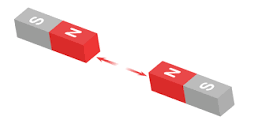


Which of the above objects will most likely be attracted to the magnet?

What will most likely happen to the magnet on the string?

Magnetic force is caused by electrons that make up an object.
true
false
When electrons are all arranged in the same way, the object becomes a magnet.
true
false
Magnets are considered permanent because they are intended to last for a very long time.
true
false
An electromagnet is a permanent magnet
true
false
Permanent magnets can be turned on and off.
true
false
Many things that we use everyday, including doorbells and music speakers, use ___________________________ magnets.
permanent
electromagnets
The robotics team at an elementary school is working on a recycling center challenge. They must come up with a way for their robotic arm to sort through a small bin of assorted materials, pick up the magnetic metals (paper clips), and place them in a shipping container. The team members all have different ideas about how to successfully accomplish the task. Which team member
has an idea that will work
Student A: Use a bar magnet as part of the robotic arm. Move the robotic arm over the small bin of assorted
materials to attract the paper clips. Then, move the robotic arm over the shipping container. Turn the robotic
arm off. This will cause the bar magnet to lose its magnetic field and let go of the paper clips.
Student B: Use an electromagnet as part of the robotic arm. Move the arm over the bin of assorted
materials. Turn on the electromagnet to pick up the paper clips. Then, move the robotic arm over the
shipping container. Turn the electromagnet off. The paper clips will drop in the container.
Student C: Use an electromagnet as part of the robotic arm. Move the arm over the bin of assorted
materials. Turn off the electromagnet so that the electric current does not affect the magnetic field. Collect
the paper clips, and move them to the shipping container. Turn the electromagnet on again to drop them.

The manager at a construction site is in need of a way to move heavy steel beams from one location to another. His employees offered the following suggestions about what might help him. Which arguments from the employees will be helpful for the manager to use to make his decision?
Arguments from employees 1, 2, and 4
Arguments from employees 2, 3, and 4
Arguments from employees 2 and 3
Arguments from employees 2 and 4
student notices that when the fire alarms at the school go off, the doors close with the alarm and when the student tries to reconnect the door to the magnet behind the door, it will not attract. Which of the following arguments BEST describes the type of magnet the student is observing.
The magnet is a temporary magnet because the fire alarm is connected to the circuit of the door. The magnet is currently turned off.
The magnet is a temporary magnet because the fire alarm is connected to the circuit of the door. The magnet is currently turned on.
The magnet is a permanent magnet because the fire alarm is connected to the circuit of the door. The magnet is always turned on.
A fifth grade student put a strong magnet in a plastic cup. He then put the cup with the magnet into a wood box on his desk. To his surprise, stray staples and paper clips were attracted to the magnet in the box. What statement best describes what the student observed?
Magnetism can be strengthened by conductors.
Magnetism does not go through other non-metals.
Magnetic fields pass through many materials. There is no material that will block magnetism.

Students are investigating to see if magnets will attract objects through different materials. They observe that the setup shown below works and that the magnet attracts the nail through the piece of wood. The object will most likely still be attracted to the magnet if which change is made?
The magnet is moved much farther away from the piece of wood.
The wood is replaced with a sheet of glass.
The nail is replaced with a plastic spoon.
The closed path in which electricity flows is called a _______.
path
current
circuit
___________________ electricity is a flow of electricity .
current
flow
circuit

What can we do to make this circuit pictured complete?
connect wire to the terminal, connections on the bulb
disconnect the wire from the lightbulb
screw in the lightbulb
replace the battery
This instrument can be used to see if materials conduct electricity. Which of these groups contains items that could all conduct electricity to complete the circuit?
rubber ball, plastic comb, nail
paper clip,tweezers, screw
cork, dollar bill, tweezers
pencil, eraser, spoon
Why are electrical cords often covered with rubber?
To slow the flow of electrons to keep them on the electric circuit to prevent a fire.
To keep the wires from breaking apart.
To keep wire from getting wet.
So that you can determine what color goes where.
Which of the following correctly describes one way in which static electricity is different from the electricity used by humans to run things in their homes?
Static electricity is a quick release of energy.
Static electricity is not a form of energy.
Static electricity flows at a constant rate.
Static electricity always goes in the same direction.
A group of students hang a balloon with an electrical charge from the ceiling with a string. They bring another balloon near the first one. Predict what will happen when the balloons are brought closer together. The balloon on the string will?
move upward if the charges are opposite.
remain still if the charges are opposite.
move downward if it loses its charge.
move away if the charges are the same.
Alyssa wore a wool hat to school. When she took the hat off, her hair crackled and stood on end.
The hat removed positive charges from Alyssa’s hair.
Alyssa’s hair removed negative charges from the hat.
Alyssa’s hair removed negative charges from the hat.
The hat removed negative charges from Alyssa’s hair.
Which pair of items will repel each other?
a negatively-charged plastic strip and a negatively-charged piece of cloth
a negatively-charged balloon and a positively-charged piece of paper
a positively-charged wool sock and a neutral plastic bag
a neutral cotton sweater and a negatively-charged plastic pellet
A student is asked to group the statements from the box on the following chart about electricity.
Which statement would be correctly classified and why?
Lightning strikes a building does not belong on either chart.
Charging a cell phone and clothes sticking together in a dryer belongs on the static side because both are temporary.
Negative charges moving through a wire and charging a cell phone belong under current because they do not naturally occur and are created by humans.
A student turns on a computer to do homework. He then walks across the carpet and touches the metal chair to see a flash of light and feel a shock. Which statement is the best explanation of what was observed?
Both actions are examples of electricity. The computer is powered by current electricity and the shock is caused by static electricity.
The computer is the only example of electricity. It is plugged into the wall and is powered by current electricity.
The shock is caused by static forces and it is not plugged into the wall so it could not be electricity.
Use the images below to answer the following question:
Which of the following explanations best describes the electricity found in the images?
Images 1 and 2 are examples of human-harnessed electricity, and image 3 is an example of naturally-occurring electricity. This is because images 1 and 2 humans control the flow of negative charges. Image 3 naturally occurs when there is an imbalance of charges in the clouds.
Image 1 is the only example of human-harnessed energy because a human had to create the circuit that runs the stop light.
All of the images are examples of human-harnessed electricity because images 1 and 2 were created by humans to improve life, and scientists regularly use energy taken from lightning to provide power for power plants.
A student documented different examples of electricity found outside. The student claims that all three examples are naturally occurring electricity. Which of the following arguments BEST explains why the student’s claim is correct or incorrect?
The student’s claim is incorrect; example 2 and 3 show human harnessed electricity since humans have created tools to control electricity using the sun and clouds.
The student’s claim is incorrect; example 1 and 2 show human harnessed electricity since humans have created tools to control electricity using the sun and wind.
The student’s claim is correct; all three examples show naturally occurring examples because the flow of electrons are uncontrolled.
A student makes a chart of materials they will use to create a simple circuit. The student also writes the purpose of those materials in the circuit. Students in the class look at the list and provide revisions to the chart. Which student makes the correct revision?
Student A: The purpose for the lightbulb is to conduct electricity, not power the circuit.
Student B: The purpose for the wire is to turn the circuit on and off, not to conduct electricity.
Student C: The purpose for the switch is to power the circuit, not to turn the circuit on and off.
Student D: The purpose for the battery is to power the circuit, not to be powered by the circuit.
A piece of toast is stuck in an electric toaster. Four groups of students are constructing devices to remove the toast safely without getting shocked. Which group of materials will solve the problem safely and why?
Group 1 because the materials can easily be used to create a circuit and the forks could stab the bread
Group 2 because the materials would not complete a circuit, they would stop the flow of energy and the chopsticks could reach into small places.
Group 3 because the foil will stop the heat from traveling and the electricity and the string could wrap around the bread.
Group 4 the wire could complete a circuit and the tweezers could pinch the bread
A student would like to determine which of the materials in the boxes above would make a good switch to use in his circuit below. How would he test each of the materials to determine if they were a good conductor or insulator? Describe the way a student should test the materials and tell what would make a good switch.
The student would need to take out the battery and replace it from the material. If the lightbulb turns on, then electricity flows meaning it is a conductor. If the lightbulb does not turn on, then electricity does not flow meaning it is an insulator.
The student would place each material in the gap between the two wires. If the lightbulb turns on, then electricity flows meaning it is a conductor. If the lightbulb does not turn on, then electricity does not flow meaning it is an insulator.

