NEW
Font size
 Worksheets
Unit Review: Evolution
Total questions: 50
Worksheet time: 57mins
Which statement describes evolution?
change in biodiversity across Earth's surface
relationship between organisms' structure and function
change in the genetic makeup of a population over time
beneficial inherited trait that is passed to future generations
What is suggested by the similarity of early embryos of different species of vertebrates?
RECENT common ancestry
similar environments in the past
evolution from a DISTANT common ancestor
no evolutionary relationship between the groups
Scientists believe that all eukaryotes share a common ancestry because the nucleotides that make up all eukaryotic DNA are _____.
free
ancient
complex
the same
If an organism has a vestigial structure, that structure likely once had a function in a(n) _____.
early ancestor
close relative
unrelated organism
embryological stage
Which statement is true about natural selection?
It forms new traits.
It acts on variable traits.
It forms new genetic material.
It acts on genetic material directly.
Genetic variation can be increased by _____.
overproduction
heritable mutations
asexual reproduction
individual adaptations
What did Darwin learn from the giant armadillo fossil he found in Argentina?
Fossils do not resemble modern animals.
All organisms used to be marine organisms.
An earthquake led to the extinction of dinosaurs.
Modern animals may be related to fossilized organisms.
Fossils of marine organisms high in the Andes Mountains led Darwin to conclude that _____.
Earth is 6,000 years old
an earthquake had taken place
great change can happen over time
interspecific variation had taken place
Natural selection is the process by which _____.
random mutations arise as new organisms develop
baseball players pass on the trait for strong arm muscles to children
change occurs in the genetic characteristics of individuals that live together in an environment from one generation to another
organisms with traits well suited to their environment reproduce at a greater rate than less well adapted organisms in the same environment
What increases genetic variation when animals move from one population to another population?
gene flow
genetic drift
sexual selection
bottleneck effect
The five factors that can lead to evolution are gene flow, genetic drift, mutation, natural selection, and _____.
emigration
immigration
sexual selection
controlled mating
What term describes a group of similar organisms that can breed and produce fertile offspring?
hybrids
species
founders
community
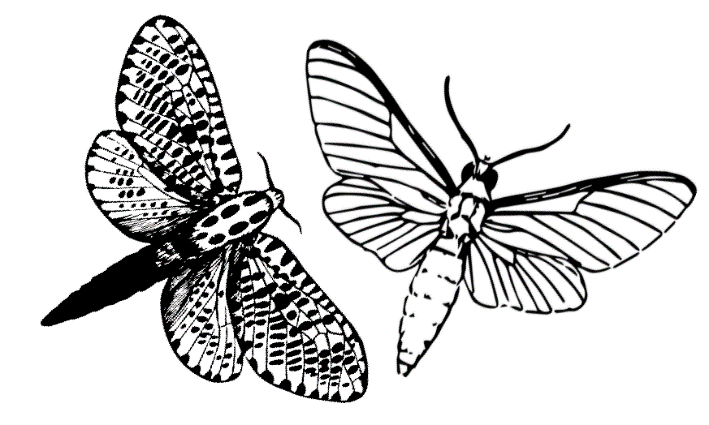
A physical trait favored by an environmental change can be called an
adaptation
extinction
possibility
mutation
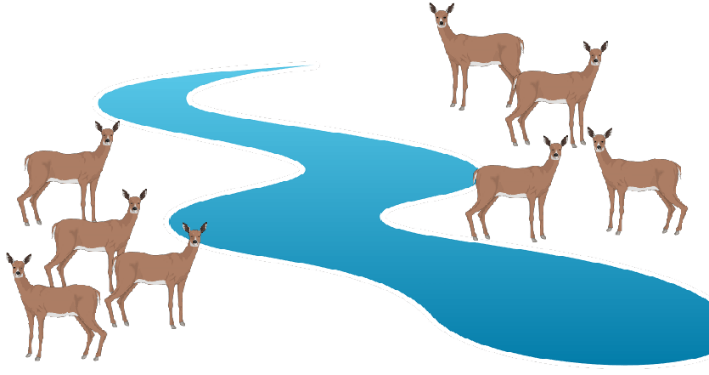
Two populations of the same species are separated by land barriers like rivers or mountains.
geographical isolation
temporal isolation
adaptive ratiation
behavioral isolaton

After a long time in isolation, Island fruit flies and mainland fruit flies meet. They do not produce viable eggs due to genetic differences. The flies have resulted in two seperate lineages due to:
Gene Pool
Genetic Drift
Gene Frequency
Speciation

All of these finches have different shaped beaks, they are an adaptation to gain access of
Water
Food
Shelter
Mates

According to the theory of natural selection, why are some individuals more likely than others to survive and reproduce?
Some individuals pass on to their offspring new characteristics they have acquired during their lifetimes.
Some individuals are better adapted to exist in their environment than others are.
Some individuals do not pass on to their offspring new characteristics they have acquired during their lifetimes.
Some individuals tend to produce fewer offspring than others in the same environment.


Mutations are important because they bring about
death of the organism in which they develop
genetic variation needed for a population to evolve
benefits for the individual, not for the population
Hardey-Weinberg equilibrium within a population


Why has antibiotic resistance evolved in bacteria?
Bacteria reproduce quickly
Bacteria with a resistance to the antibiotic, passed that trait to offspring
Bacteria that are resistant reproduce faster than non resistant strains
Bacteria exposed to antibiotics develop a resistance to them

Genetic drift is change in the allele frequency of a population due to...
random chance
natural selection
non-random mating (sexual selection)
artificial selection
A(n)________ is a measure of how common a certain allele is in a population.
Allele Frequency
Gene Pool
Genotypical Number
Genetic Drift

Which word means the formation of new species?
speciation
specialization
founder effect
sexual selection

When members of two populations reproduce during different times.
behavioral isolation
temporal isolation
geographic isolation
calendar isolation


Type of reproductive barrier evidenced by this diagram.
Temporal isolation
Habitat (geographic) isolation
Behavioral isolation
Mechanical isolation
Gametic isolation

Some organisms have features that have different functions, but similar structures. One example is the forelimb of humans, dogs, birds, and whales. What term best describes the relationship between these forelimbs?
They are homologous.
They are vestigial.
They are analogous.
They are embryological.
How do fossils support evolution?
Individual species disappear and reappear in the fossil record over time.
Organisms in the fossil record are identical to living organisms.
The fossil record provides evidence that all organisms developed at the same time.
The fossil record provides evidence that organisms have changed over time.

What best describes the hind leg bones seen in the whale?
The bones are analogous structures to the fins of living fish.
The bones are vestigial structures that had a function in an ancestor.
The bones are homologous structures to the wings of butterflies.
The bones are fossil structures from an extinct ancestor.
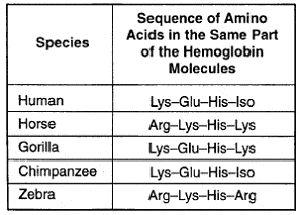
Which of the following would best determine whether two plant species share a recent common ancestor?
Flowering times
DNA sequences
Stem lengths
Habitat distribution

Which scientist visited the Galapagos Islands, observed traits in finches, and came up with the theory of natural selection?
Alfred Russell Wallace
Jean-Baptiste Lamarck
Carolus Linnaeus
Charles Darwin
Mutations are important because they bring about --
death in the organisms in which they develop.
benefits for the individual, not the population.
genetic variation needed for a population to evolve.
equilibrium within a population.


What type of evidence is shown in the image above?
Fossils
Vestigial structures
Homologous Structures
DNA

A type of structure that is physically present, but does not seem to serve a significant function for an organism.
Homologous structure
Analogous structure
Vestigial structure
Standard structure
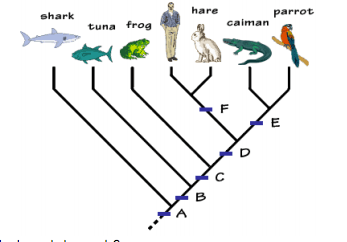



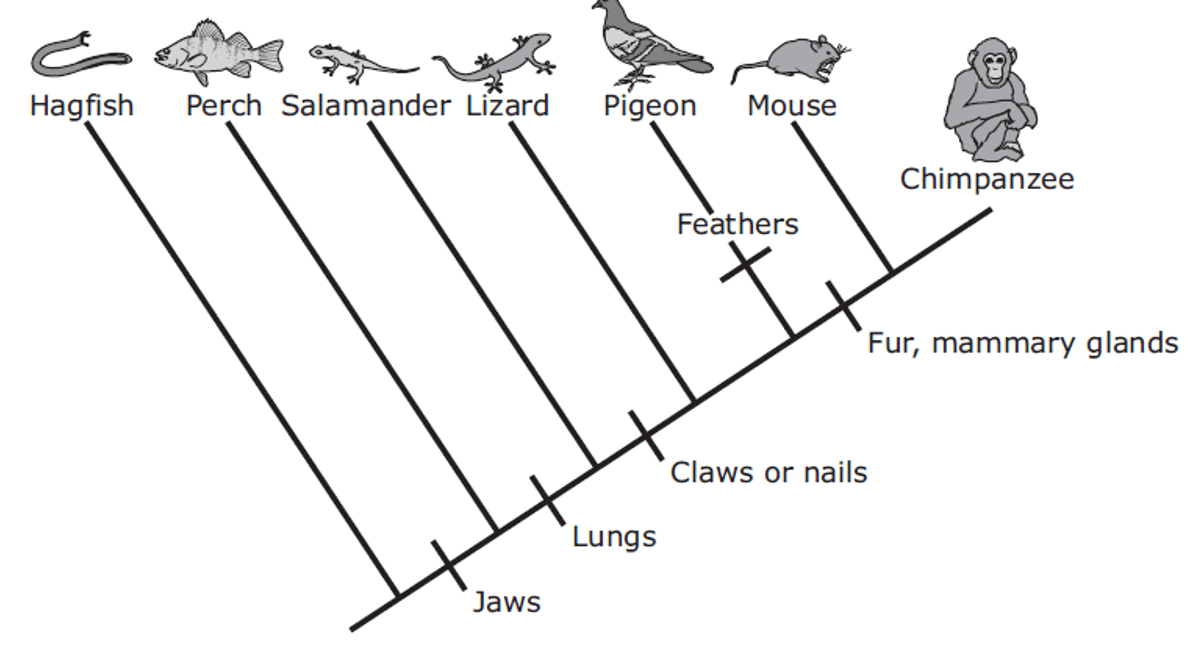
What characteristic do all the organisms on this cladogram share?
Being bi-pedal & having language
Complex brains
Fully binocular vision
Partial binocular vision & opposable thumbs