
 Worksheets
General Chemistry Concepts
Total questions: 100
Worksheet time: 1hrs 5mins
Choose the 3 fundamental sub atomic particle of matter.
photon
proton
nucleus
neutron
electron

What do you call this famous experiment that leads to the discovery of the nucleus of the atom?
Millikan Experiment
Alpha bombardment experiment
Gold foil experiment
All of the above
Subatomic particles found in the nucleus of an atom
proton
photon
electron
neutron
meson
Number of moles of sugar in 547.2 gram are:
(Mol. mass of sugar = 342 g/mole)
1.6
2.2
342
548
Atoms of the same element that have a different number of neutrons are called
ions
isotope
isomer
radioactive
Atoms that gain or lose electrons become
ions
isotopes
isopmers
radioactive
What type of bond is formed between atoms that share their valence electrons?
Hydrogen bond
James bond
Covalent bond
Ionic bond

Is chicken noodle soup a Homogeneous or Heterogeneous mixture?
Homogeneous
Heterogeneous
Neither
Both


An atom of carbon has 6 protons and 7 neutrons in its nucleus. If the atom is neutral, how many electrons does it have?
0
7
6
13
A substance with a pH of 8 is a
acid
base
neutral
The electrons in the outermost energy level are called
valence
ions
covalent
farthest out
Which of the following would be considered most acidic?
1
3
7
13

The image shows the periodic grid for SODIUM. What is Sodium's atomic mass?
11
12
23
Impossible to tell
These particles are found in the nucleus of the atom.
protons only
protons and electrons
electrons only
protons and neutrons
The mass number is the total of the protons plus the neutrons in the atom.
True
False
Which subatomic particle has a negative charge?
proton
electron
neutron
quark

How many neutrons would you expect the average gold atom to have given the information shown?
79
118
197
276

Who is the person credited with the formation of the "plum pudding" model?
Thomson
Rutherford
Bohr
Dalton
What subatomic particle represents the "plums" in the "plum pudding" model?
neutrons
protons
electrons
Chadwick is credited with discovering which part of the atom?
nucleus
protons
electrons
neutrons

Who is credited with developing model D?
Thomson
Dalton
Bohr
Rutherford
Who discovered the subatomic particle "electron"?
Dalton
Thomson
Rutherford
Bohr

Who established that "electrons move around the nucleus at fixed distances called orbitals"?
Dalton
Thomson
Rutherford
Bohr
What is the meaning of the greek word "atomos"?
Invencible
Invisible
Indivisible
Independent
1s22s22p63s2
The chemical bond formed when two atoms share electrons is call a(n)
covalent bond
ionic bond
metallic bond
electron bond
Which of the following is the reason why atoms of sodium and chlorine attract each other in a salt crystal?
Sodium has a positive charge and chlorine has a negative charge
Sodium has a negative charge and chlorine has a positive charge
Both have a positive charge
Both have a negative charge

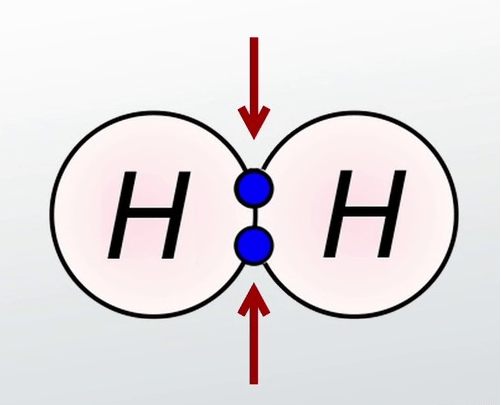
What type of bond is formed by the transfer of electrons as illustrated in this diagram?
Non-polar covalent
Metallic
Ionic
Polar covalent
Metallic
Metallic
The chemical bond formed when two atoms share electrons is call a(n)
covalent bond
ionic bond
metallic bond
electron bond
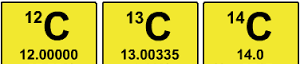
Which of the following are isotopes?
a) 14 7X b) 14 6X c) 15 7X d) 15 8X
a) and b)
a) and c)
c) and d)
a) and d)
In the following pair, are they isotopes or different elements.
Element x has 6 protons and 7 neutrons.
Element y has 7 protons and 7 neutrons.
isotopes of same element
different elements
In the following pair, are they isotopes or different elements.
Element x has 27 protons and 82 neutrons.
Element y has 27 protons and 83 neutrons.
isotopes of same element
different elements
What subatomic particle changes in an ion?
The number of electrons
The number of protons
The number of neutrons
What charge does an atom have when it GAINS electrons?
Positive
Negative
Neutral
How many protons and electrons are present: Cl−
Protons: 17
Electrons: 18
Protons: 17
Electrons: 1
Protons: 18
Electrons: 17
Protons: 1
Electrons: 17
How many protons and electrons are present: As3+
Protons: 30
Electrons: 33
Protons: 3
Electrons: 0
Protons: 33
Electrons: 30
Protons: 3
Electrons: 33
Which of the following will have a higher electronegativity than arsenic (As)?
Carbon (C)
Neon (Ne)
Antimony (Sb)
Germanium (Ge)

What is the amount of energy required to remove an electron from an atom?
atomic energy
ionization energy
ionic energy
electron energy

What is a measure of the tendency of an atom to attract a bonding pair of electrons when the atom is in a compound?
ionization energy
electropositivity
electronegativity
electron energy
What reaction has the following general formula:
A + CD --> C + AD
Combination
Decomposition
Single Replacement
Double Replacement
Combustion
What reaction has the following general formula:
CxHy + O2 −>CO2 + H2O
Combination
Decomposition
Single Replacement
Double Replacement
Combustion
What is the general reaction scheme for a single replacement reaction?
A + B --> AB
AB --> A + B
A + CD --> C + AD
AB + CD --> CB + AD
CxHy+O2 −> CO2+H2O
What is the general reaction scheme for a combination reaction?
A + B --> AB
AB --> A + B
A + CD --> C + AD
AB + CD --> CB + AD
CxHy+O2 −> CO2+H2O
What is the general reaction scheme for a double replacement reaction?
A + B --> AB
AB --> A + B
A + CD --> C + AD
AB + CD --> CB + AD
CxHy+O2 −> CO2+H2O
What reaction has the following general formula:
AB --> A + B
Combination
Decomposition
Single Replacement
Double Replacement
Combustion
What reaction has the following general formula:
A + B --> AB
Combination
Decomposition
Single Replacement
Double Replacement
Combustion
What is the mole ratio of H2O to H3PO4 in the following chemical equation?
P4O10+6H2O → 4H3PO4
1 to 6
3 to 2
4 to 6
2 to 3
In the equation Al2(SO4)3+3Ca(OH)2 → 3CaSO4 +2Al(OH)3 , , the mole ratio of calcium hydroxide to aluminum hydroxide is:
1 : 3
2 : 3
1 : 1
3 : 2
For the reaction represented by the equation N2+3H2 → 2NH3 , how many moles of nitrogen (N2) are required to produce 18 grams of ammonia (NH3)?
0.9 mol
18 grams
0.53 mol
36 grams
For the reaction represented by the equation Pb(NO3)2+2KI → PbI2+2KNO3 how many moles of lead iodide (PbI2) are produced of 300 grams potassium iodide (KI) when Pb(NO3)2 is in excess?
114.78 mol PbI2
0.904 grams PbI2
0.904 mol PbI2
114.78 grams PbI2
Which expression can be used to solve a mass-to-mole conversion for the equation HCL -----> H2 + Cl2? Given: Mass of HCl and unknown: Mol of Cl2
mass HCl x molar mass HCl1 mol HCl x 2 mol HCl1 mol Cl2
mass HCl x2 mol HCl1 mol Cl2
___KNO3 → ___KNO2 + ___O2
What coefficients are needed to balance the reaction?
2, 2, 1
2, 3, 2
1, 2, 2
1, 3, 1

What is one assumption that must be made for the kinetic molecular theory to be applied to gases?
Collisions between gas particles are inelastic.
Gases consist of closely spaced particles.
Gas particles move in constant straight line motion.
Each gas particle has a definite volume.

The pressure exerted by a gas does not depend on
temperature.
volume.
number of moles present.
the identity of the gas.
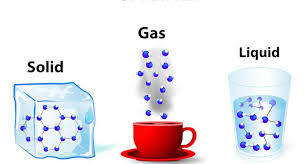

Under what temperature and pressure conditions does a gas behave the most like and ideal gas? (Choose all that apply.)
high pressure (above 1 atm)
low temperature (below 273 K)
standard temperature
(273 K)
standard pressure (1 atm)

What is one assumption that must be made for the kinetic molecular theory to be applied to gases?
Collisions between gas particles are elastic.
Gases consist of closely spaced particles.
Gas particles rarely move.
Each gas particle has a definite volume.

According to Charle's Law, volume and temperature are directly related. Explain what is meant by stating that volume and temperature are directly related. T1V1 = T2V2
Volume increases, temperature decreases.
Volume increases, temperature increases.
Volume decreases, temperature increases.
Temperature increases, volume decreases.

What units must temperature always be in for ALL the gas laws?
Celcius
Kelvin
Fahrenheit
Kelvin or Celcius
Pressure is caused by:
Gas molecules colliding with surfaces
Gas molecules reacting with each other
Gas molecules colliding with each other
Gravity

The table shows the pH of several solutions. Which solution is the most acidic?
vinegar
milk
water
bleach
Four substances were tested for pH, lemon juice (pH 2), baking soda (pH 9), bleach (pH 12), and milk (pH 6). Which of the following correctly lists the substances from most basic to acidic?
lemon juice, milk, baking soda, bleach
bleach, baking soda, milk, lemon juice
milk, lemon juice, baking soda, bleach
baking soda, bleach, lemon juice, milk
Phenolphthalein is pink in an aqueous solution having a pH of
2
7
5
12
H2CO3
Strong Acid
Weak Acid
Strong Base
Weak Base
NaOH
Strong Acid
Weak Acid
Strong Base
Weak Base
The pH scale is used to know what?
Your temperature
Know one knows
The colors of acids and bases
The strength of acids and bases
Acids have a pH of _______________.
below 7
above 7
exactly 7

