wayground logo

Free Printable Worksheets

Font size

S
M
L
XL
Worksheets

Chem SG Final Exam Practice Spring 22 version 1

Total questions: 95

Worksheet time: 1hrs 22mins

Name
Class
Date
1.

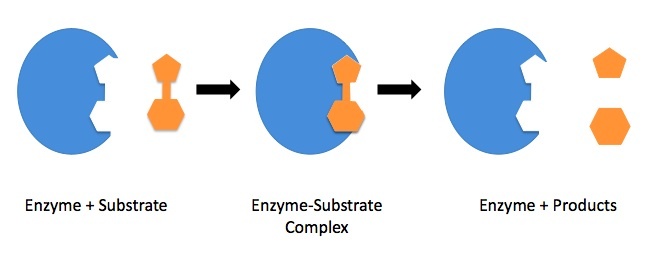
What is the purpose of an enzyme?

a)

give permission for the reaction

b)

raise activation energy

c)

speed up reactions (catalyst)

d)

control how many reactions occur

2.
Most enzymes have the ending:
a)
-ase
b)
-ose
c)
-ic acid
d)
-ate
3.
What is a substance called if it speeds up a chemical reaction?
a)
reusable
b)
catalyst
c)
specific
d)
fragile
4.

Three truths and a lie. Choose the lie.....


The Maillard reactions produce what?

a)

The great smell of baking bread

b)

The browning of the bread.

c)

The melting of the butter

d)

The toasting of the bottom of the bread.

5.

The Proteins in eggs are in nice bundles before cooking. What happens when they are cooked?

a)

They start to decompose and turn white.

b)

They unbundle and start to connect to one another.

c)

They turn yellow.

d)

They turn into water

6.

Why will cookies or chicken baked at 200o be white or yellowish with no browning?

a)

The temperature is too high for the brown Maillard reactions

b)

The temperature is too low for the brown Maillard reactions

c)

The low temp doesn't cook the food completely.

d)

The temperature is too high and the food is burned.

7.

Which characteristics describe an acid?

a)

tastes sour, litmus indicator turns red

b)

tastes bitter, litmus indicator turns blue

c)

tastes sweet and sour, litmus indicator turns red

d)

tastes sour and bitter, litmus indicator turns blue

8.

Which characteristics describe a base?

a)

tastes sour, litmus indicator turns blue

b)

tastes bitter, litmus indicator turns blue

c)

tastes bitter sour, litmus indicator turns blue green

d)

tastes bitter sour, litmus indicator turns green

9.

What property do all three of these fruits have in common?

a)

taste bitter sweet

b)

cannot conduct electricity

c)

have pH below 7

d)

turn litmus paper blue

10.

What property do all three of these household items have in common?

a)

sometimes conduct electricity

b)

taste soapy

c)

have a pH equal to or above 7

d)

turn litmus paper blue

11.

HCl reacts with Zn giving off heat. This reaction must be _________.

a)
endothermic
b)
exothermic
12.
Surrounding temperature gets cold
a)
Endothermic
b)
Exothermic
13.

Hydrocarbon combustion is considered a ____________ reaction.

a)
endothermic
b)
exothermic
14.

Boiling is considered a ______________ process since energy is being put in to make it boil.

a)
endothermic
b)
exothermic
15.

Look at the chemical equation.


How many atoms of oxygen (O) are in the reactants?

(a)  

16.

Look at the chemical equation.


How many atoms of nitrogen (N) are in the reactants?

(a)  

17.

Look at the chemical equation.


How many atoms of oxygen (O) are in the products?

(a)  

18.

How does a cation form?

a)

loses electrons

b)

gains electrons

c)

shares electrons

19.
Elements which are shiny, conduct electricity and heat are called
a)
metal
b)
nonmetal
c)
metalloid
d)
nonexistent
20.
Which is a halogen?
a)
Helium
b)
Chlorine
c)
Oxygen
d)
Neptune
21.
The atomic number of this pictured element is
a)
28
b)
58.6934
c)
Ni
d)
Nickel
22.
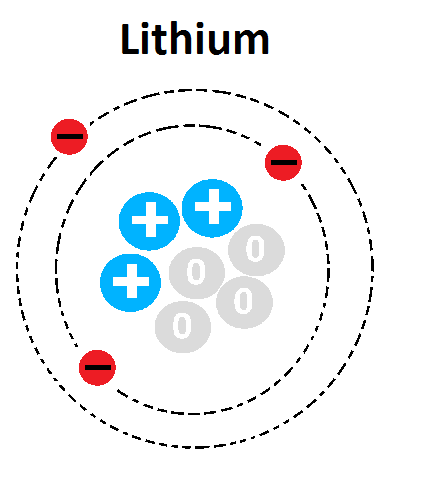
What is the atomic number of this atom?
a)
1
b)
3
c)
4
d)
7
23.

True or False: In a complete chemical equation, there must be the same number of atoms of each element on the reactants and products side.

a)

True

b)

False

24.

Look at the chemical equation.


How many atoms of mercury (Hg) are in the reactants?

(a)  

25.

Which type of bond has low melting points?

a)

Ionic

b)

Covalent

c)

Metallic

26.

Substances in food that provide nourishment essential for growth and the maintenance of life are called nutrients. What are the three main nutrients we tested for in Gizmo?

a)

Carbohydrates, Meats, and Dairy

b)

Fruits, Milk, Pork

c)

Carbohydrates, Fats, Protein

d)

Carbohydrates, Fats, Protein

27.
Which nutrient is our body's MAIN source of energy?
a)
Carbohydrates
b)
Fats
c)
Water
d)
Minerals
28.

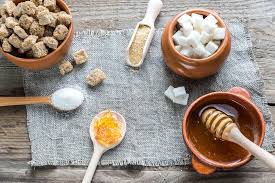
Sugars are...

a)

cholesterol

b)

complex carbohydrates

c)

amino acids

d)

simple carbohydrates

29.

If you remove heat, energy decreases so atoms move ______________

a)

faster

b)

slower

c)

stays the same

30.
When the temperature of matter decreases the particles ...
a)
speed up and move farther apart
b)
speed up and move closer together
c)
slow down and move farther apart
d)
slow down and move closer together
31.

In what direction does heat flow?

a)

higher to lower temperature

b)

lower to higher temperature

c)

constant and steady

d)

heat exchange is not possible

32.

How many different elements does CO2 contain?

a)

1

b)

2

c)

3

d)

4

33.
Is burning wood a chemical or physical change?
a)
chemical
b)
physical
34.
Is melting butter for popcorn a chemical or physical change?
a)
chemical
b)
physical
35.
The substances listed on the right side of a chemical equation are the
a)
Yields
b)
Reactants
c)
Products
d)
Precipitates
36.
The substances listed on the left side of a chemical equation are the
a)
Products
b)
Coefficients
c)
Precipitates
d)
Reactants
37.
The limiting reactant
a)
slows the reaction down
b)
is used up first
c)
is the reactant that is left over
d)
controls the speed of the reaction
38.

The excess reactant is _____.

a)

The reactant that will be completely used up

b)

The reactant that will remain after the reaction is done.

c)

The reactant with too much money

d)

another word for limiting reactant

39.

Most cars burn gasoline from the gas tank and oxygen with the air. What is the limiting reactant?

a)

Gasoline

b)

Oxygen from the Air

c)

Oil in the engine

40.

Most cars burn gasoline from the gas tank and oxygen with the air. What is the excess reactant?

a)

Gasoline

b)

Oxygen from the Air

c)

Oil in the engine

41.
When does a chemical reaction stop?
a)
When the lab is finished
b)
When the excess reactant is used up
c)
When the limiting reactant is used up
d)
Chemical reactions never stop
42.
HCl reacts with Zn giving off heat
a)
endothermic
b)
exothermic
43.
Surrounding temperature gets warmer
a)
endothermic
b)
exothermic
44.
Hydrocarbon combustion
a)
endothermic
b)
exothermic
45.
A process that absorbs heat is a(n) _______________ reaction?
a)
polythermic
b)
ergothermic
c)
exothermic
d)
endothermic
46.

True or False: In a complete chemical equation, there must be the same number of atoms of each element on the reactants and products side.

a)

True

b)

False

47.
Name the family that is made of the most reactive metals
a)
Alkali Metals
b)
Alkaline Earth Metals
c)
Transition Metals
48.
Name the family that is made of only gases that are colorless and odorless.
a)
Halogens 
b)
Transition Metals
c)
Alkali Metals
d)
Noble Gases
49.
All of the following particles are a part of an atom except
a)
Protons
b)
Neutrons
c)
Electrons
d)
Ions
50.
What is the charge assigned to the electrons?
a)
Positive
b)
Negative
c)
No Charge
51.
What is the charge assigned to the protons?
a)
Positive
b)
Negative
c)
No charge
52.
 An atom with the same number of protons, but a different number of neutrons is called a(n)___.
a)
Isotope
b)
Ion
c)
isomer
d)
iodine
53.
What are the states of matter?
a)
solid, liquid, and juice
b)
solid and liquid
c)
solid and gas
d)
solid, liquid, and gas
54.
Which of the following statements is NOT true of all different types of matter?
a)
They are made of atoms and molecules
b)
The particles are always in motion
c)
The particles always move at the same speed
d)
They are made of particles that are too small to see
55.
What happens when my glass of water is sitting in the sun and disappears into a gas?
a)
evaporation
b)
burning
c)
melting
d)
freezing
56.
Molecules are closest together in a 
a)
Solid
b)
Liquid
c)
Gas
d)
plasma
57.
The steam coming off the pot of boiling water is an example of....
a)
a solid becoming a liquid
b)
a liquid becoming a solid
c)
a liquid becoming a gas
d)
a gas becoming a liquid
58.

The energy of movement is ___.

a)

potential energy

b)

kinetic energy

c)

mechanical energy

59.

Liquid particles have more energy than ___ particles.

a)

solid

b)

gas

60.

Principle 1: All matter is made up of________

a)

space

b)

mass

c)

air

d)

atoms

61.

Principle 2: Atoms are in constant random __________

a)

molecules

b)

energy

c)

motion

d)

space

62.

Principle 3: Atoms in motion have kinetic energy and their motion __________ as they gain energy.

a)

increases

b)

decreases

c)

stays the same

63.
Why is solar energy considered renewable energy?
a)
It's cheaper than fossil fuels
b)
The sun's energy would not run out for billions of years
c)
Solar energy recharges batteries
d)
All of them
64.
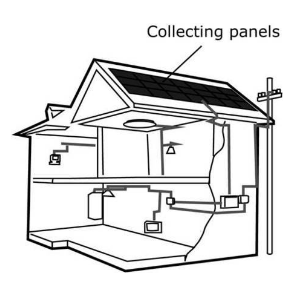
The house illustrated here uses panels on the roof to collect a natural resource and convert it into electricity that can be used.
Which alternative energy source does this house use?
a)
Water
b)
Wind
c)
Solar
d)
Geothermal
65.
Oil is a __________ energy resource.
a)
Renewable
b)
Nonrenewable
66.
What is the atomic number for carbon?
a)
12
b)
6
c)
24
d)
2
67.
The chemical symbol for iron is
a)
Fe
b)
I
c)
Ir
d)

In

68.
How many protons are there in oxygen?
a)
24
b)
32
c)
16
d)
8
69.
The smallest particle into which an element can be divided and still be the same substance is a (n)
a)
Atom
b)
Element
c)
molecule
d)
Electron
70.
What element is shown in the Bohr Model?
a)
Beryllium
b)
Boron
c)
Carbon
d)
Lithium
71.

Carbon has the symbol of __________

a)

Ca

b)

Cn

c)

C

d)

Cab

72.

The element Ca is called ____________?

a)

Carbon

b)

Calcium

c)

Calico

d)

Carbonate

73.

Gold has the symbol __________

a)

Gd

b)

Au

c)

Ag

d)

K

74.
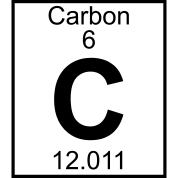
What does 12.011 represent?
a)
atomic mass
b)
atomic number
c)
element name
d)
chemical symbol 
75.
Which is an electron?
a)
A
b)
B
c)
C
76.
Which is a proton?
a)
A
b)
B
c)
C
77.
Which is a neutron?
a)
A
b)
B
c)
C
78.

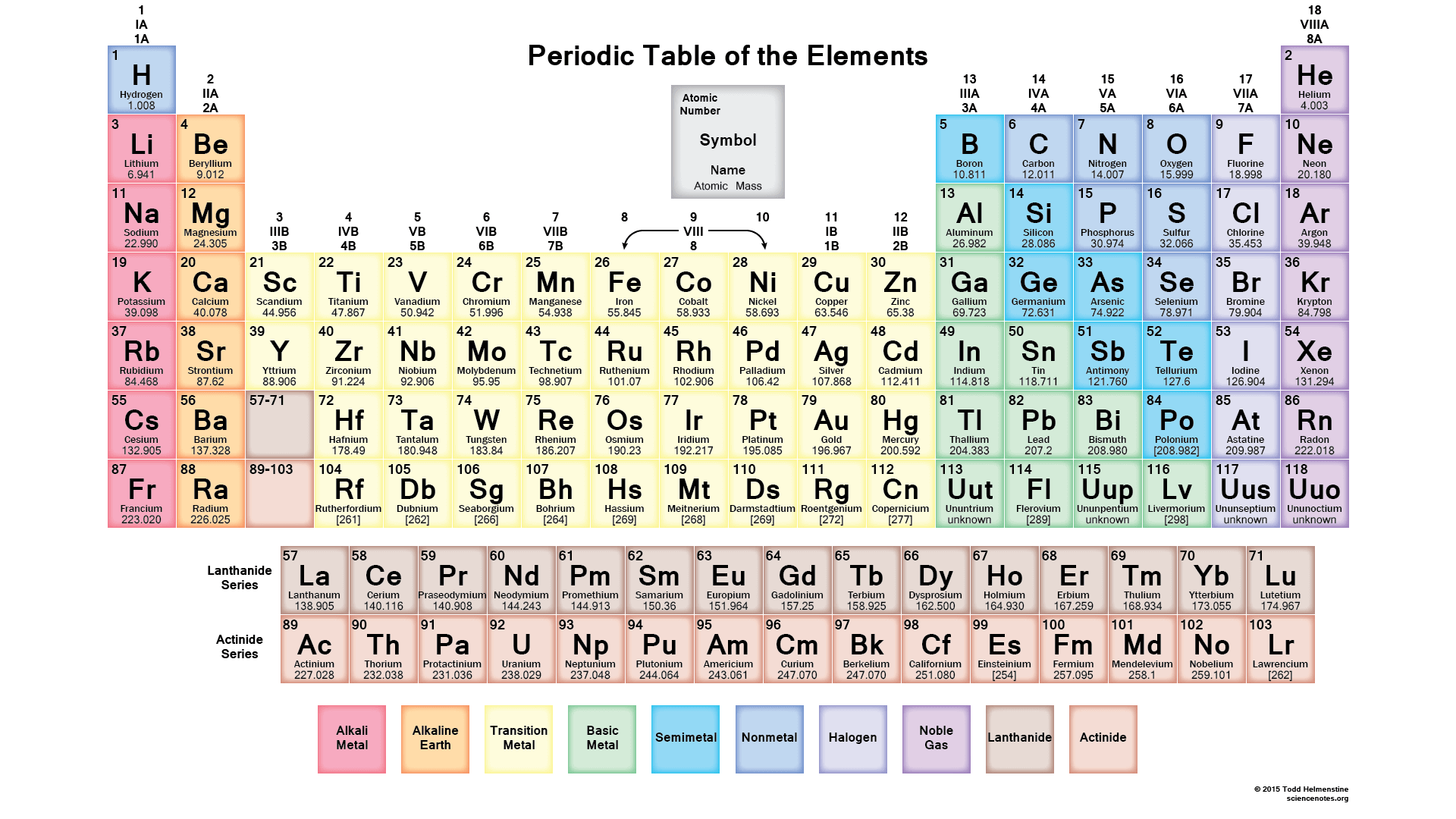
Which letter is the Alkali Metals?

a)

A

b)

B

c)

C

d)

D

e)

E

79.

Which letter is the Alkaline Earth Metals?

a)

A

b)

B

c)

C

d)

D

e)

E

80.

Which letter is the Halogens?

a)

J

b)

I

c)

H

d)

G

e)

F

81.

Which letter is the Metalloids or Semi-conductors?

a)

A

b)

B

c)

C

d)

D

e)

E

82.

Which letter is the Noble Gases?

a)

J

b)

I

c)

H

d)

G

e)

F

83.

Which letter is the Nonmetals?

a)

J

b)

I

c)

H

d)

G

e)

F

84.

Barium (Ba) is found in the ______ family. 

a)

Alkali Metals

b)

Alkaline Earths

c)

Transition Metals

d)

Halogens

e)

Non-Metals

85.

Silicon (Si) is found in the ______ family. 

a)

Alkali Metals

b)

Semi-conductor

c)

Transition Metals

d)

Halogens

e)

Non-Metals

86.

Chlorine (Cl) is found in the ______ family. 

a)

Alkali Metal

b)

Semi-conductor

c)

Transition Metal

d)

Halogen

e)

Non-Metal

87.

Iron (Fe) is found in the ______ family. 

a)

Alkali Metals

b)

Alkaline Earths

c)

Transition Metals

d)

Halogens

e)

Non-Metals

88.
What might happen if you didn't get enough carbohydrates?
a)
Your body wouldn't be able to build muscle mass
b)
Your body wouldn't have enough energy to function
c)
You would develop serious vitamin deficiencies
d)
Your bones and teeth would become weaker
89.
Carbohydrates are to the human body as what is to a car?
a)
transmission fluid
b)
antifreeze
c)
motor oil
d)
gasoline
90.
Which of the following contains complex carbohydrates?
a)
chocolate candy bar
b)
soda
c)
cookies
d)
apple
91.
How is fiber different from most other foods you eat?
a)
It doesn't contain any sugars at all
b)
Consuming it robs your body of nutrients
c)
Your body can't digest it
d)
It contains elements of all the major food groups
92.
Which food contains the most starch?
a)
pasta
b)
broccoli
c)
table sugar
d)
steak
93.
If you're hungry, but don't want your blood sugar to spike, what should you eat?
a)
a baked potato
b)
an apple
c)
sushi with white rice
d)
a candy bar
94.
Your body breaks down most complex carbohydrates into:
a)
fructose
b)
sucrose
c)
glucose
d)
starch
95.

Which polysaccharide is used by plants to store glucose?

a)

glycogen

b)

cellulose

c)

starch

d)

chitin