Worksheets
Life Science GMAS Review
Total questions: 115
Worksheet time: 2hrs 0mins
Which organelle belongs in plant cells only?
Cell Membrane
Mitochondrion
Chloroplast
Nucleus
Which organelle belongs in plant cells only?
Cytoplasm
Mitochondrion
Cell Wall
Nucleus
What organelle controls the cells activities?
Lysosome
Nucleus
Nucleolus
Chromosomes
Jelly-like substance found inside cell that acts as a medium for chemical reactions within the cell
Nuclear Membrane
Golgi Body
Cytoplasm
Ribosome
What are two major differences found in plant and animal cells?
Plant cells have a cell wall and chloroplasts, while animal cells do not.
Plant cells have a nucleus and vacuoles, while animal cells do not.
Plant cells have no mitochondria or cytoplasm, while animal cells do.
They are the same.
What does the phrase, "cells are the building blocks of life" mean?
Organ Systems rule the world
Tissues are the building blocks
Organs are found in plants and animals
All living things are made of cells
Which of the following is a correct list of structures found in both plant AND animal cells?
nucleus, cell membrane, cytoplasm
, nucleus, cell membrane, cytoplasm, cell wall, chloroplasts
nucleus, cell membrane, cell wall, chloroplasts
nucleus, cell membrane, cell wall
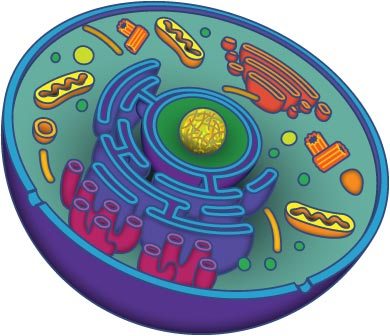
All living things are made up of...
cells
cell tissues
organ
organ systems
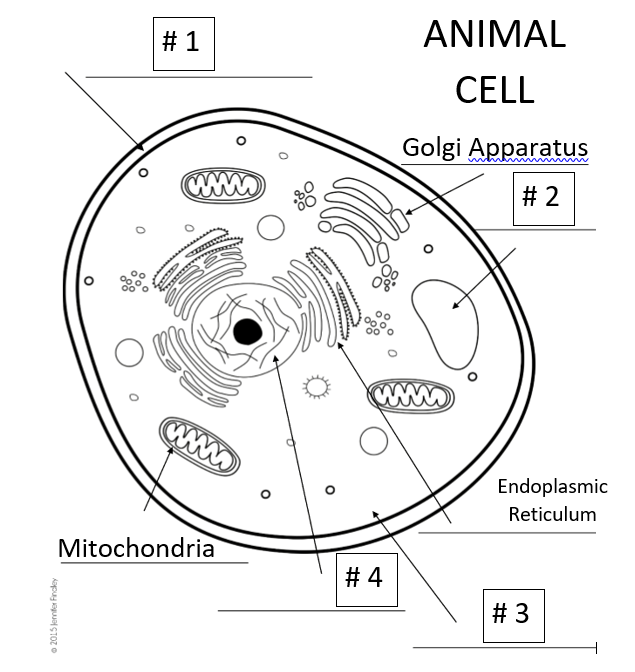
Which organelle is #1? P.S. If you know the other organelles listed for the test they might be bonus points ;)
Cell wall
Cell membrane
Nucleus
Microorganism
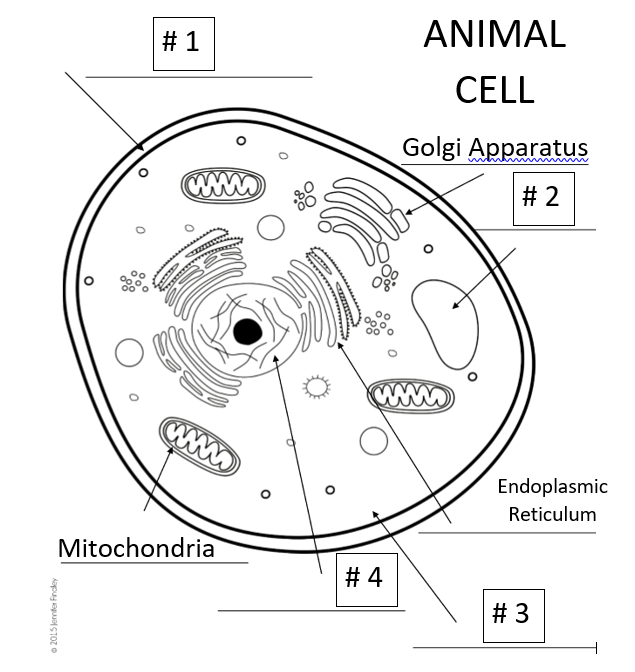
Which organelle is #3?
Cell Wall
Chloroplast
Vacuole
Cytoplasm
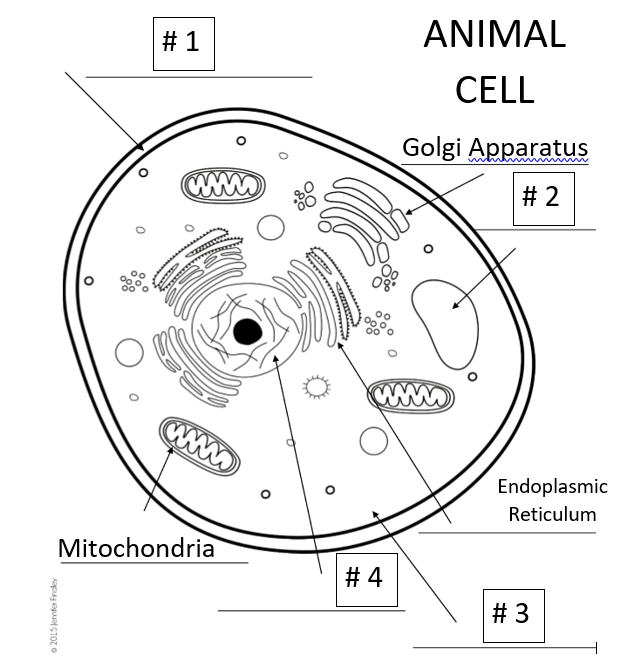
Which organelle is # 4? P.S. If you know the other organelles listed for the test they might be bonus points ;)
Cell wall
Nucleus
Organelle
Chromosome
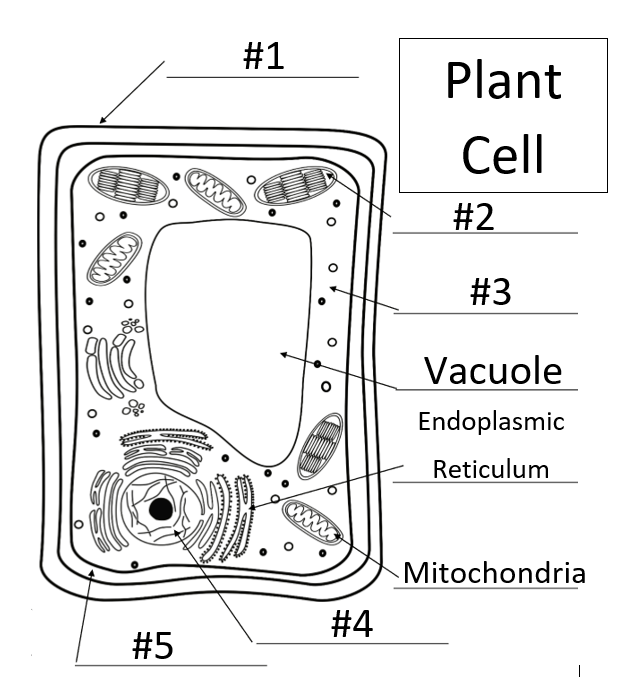
Which organelle is #1?
Vacuole
Chromosomes
Cell Wall
Nucleus
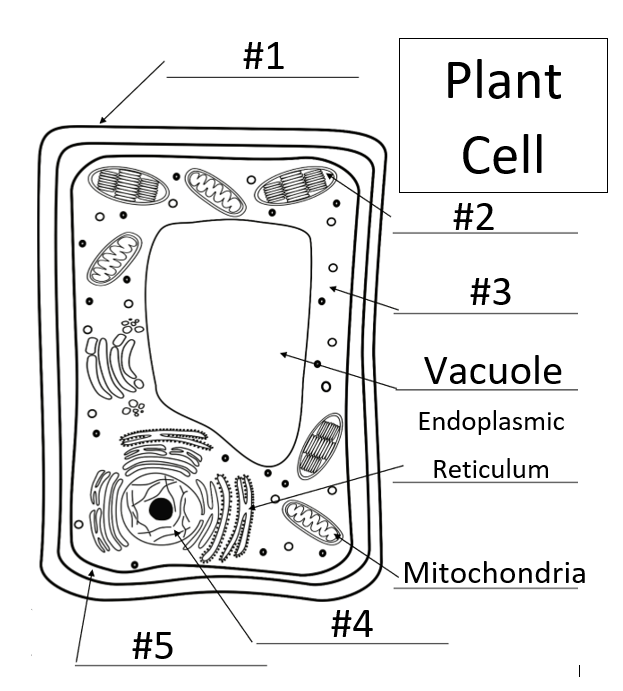
Which organelle is #3?
Cytoplasm
Chloroplast
Mitochondria
Organelle
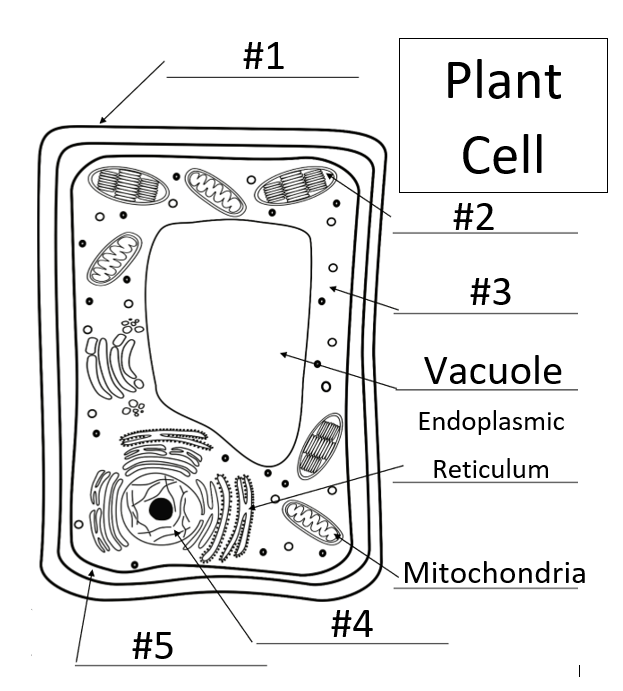
Which organelle is #2?
Chloroplast
Cytoplasm
Emilywillard
Nucleus
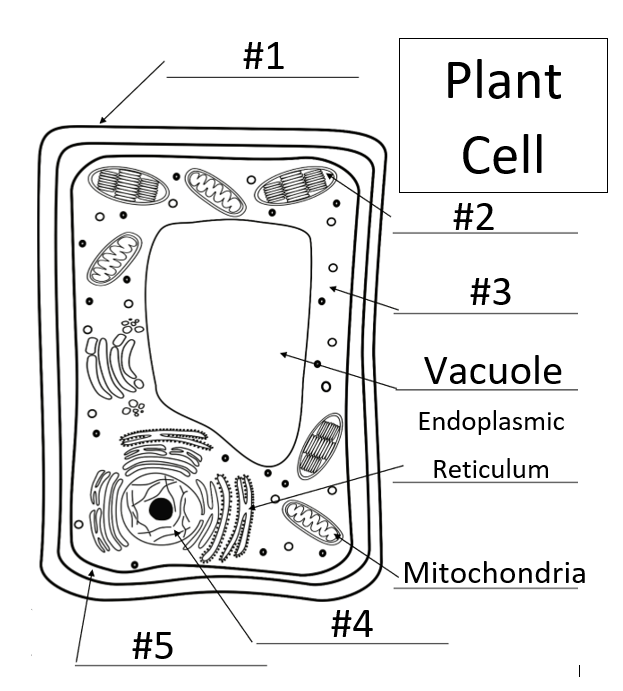
Which organelles are #4 and #5?
Cell membrane and mitochondria
Cell membrane and chloroplast
Nucleus and mitochondria
Nucleus and cell membrane


How many nucleus' are in a plant cell?
1
5
9
3
Which cell has chloroplast?
Plant cell
Animal cell
Both
Neither one of them have chloroplast

What cell part is NOT found in all cells?
Chloroplasts
Cell Membrane
Cytoplasm
Nucleus

The table lists characteristics of the duck-billed platypus, a special type of mammal.
What is the main way the platypus differs from nearly all other mammals?
It lays eggs, while other mammals give live birth.
It has fur, while other mammals have scales.
It nurses its young, while other mammals do not.
It is warm-blooded, while other mammals are cold-blooded.
Sam is hoping to classify an animal in the correct group. She knows that the animal has a backbone, is cold-blooded, and can live in the water. Which category below does the animal NOT belong to?
birds
fish
reptiles
amphibians

Which animals on the table would be classified as mammals?
X and W
Z and W
Z and Y
Z and X
What is true about birds and mammals that is NOT true about reptiles, fish, and amphibians?
Both birds and mammals give live birth.
Both birds and mammals have feathers.
Both birds and mammals have backbones
Both birds and mammals are warm-blooded.

What type of animal is described in the box?
mammal
fish
amphibian
reptile
Which box correctly identifies a mammal?


Sometimes animals may look very different but still possess a body structure that would enable scientists to group them together. What do fish, amphibians, reptiles, birds, and mammals have in common?
lungs
legs
backbones
external skeletons

Which of the following correctly matches each vertebrate to its classification?


Which of the following correctly describes the organisms in the table?
Organisms W and Z are vertebrates, and organisms X and Y are invertebrates.
All organisms in the table are vertebrates.
Organisms X and Y are vertebrates, and organisms W and Z are invertebrates.
All organisms in the table are invertebrates.

Which animals do X and Y MOST LIKELY represent?
X is a reptile and Y is an amphibian
X is an amphibian and Y is a reptile
X is a mammal and Y is a fish
X is a fish and Y is a mammal
How are animals classified as a vertebrate or an invertebrate?
Animals who have warm blood are called vertebrates, and animals with cold blood are called invertebrates.
Animals that have lungs are called vertebrates, and animals that have gills are called invertebrates.
Animals who have legs are called vertebrates, and animals that do not have legs are called invertebrates.
Animals with a backbone are called vertebrates, and animals without a backbone are called invertebrates.
Which box correctly describes a reptile?


When trying to classify an animal into a group, what is NOT a good question to ask?
Does it have a backbone?
Does it have feathers?
Does it lay eggs?
Does it move quickly?

Which group BEST describes the animal David is studying?
fish
birds
reptiles
mammals
A student is creating a model to classify organisms. Which three factors should she add to her model to classify vertebrate animals?
how their body temperature is controlled
how they move
how they breathe
where they can be found
what their body is covered with
Which of these is NOT a way to classify plants?
as vascular and nonvascular
as vertebrates and invertebrates
as seed producing and spore producing
as flowering and nonflowering
A plant having tissue made up of tubes that transport food and water through the plant
vascular plant
nonvascular plant
moss
A vascular plant that protects their seeds in cones is
Flowering
Nonflowering
A flower-producing vascular plant in which the seed is enclosed in a fruit.
Flowering
Nonflowering
Flowering plants are easily classified because of the ___ that they produce.
cones
leaves
flowers and fruits
rhizomes

Which of these is nonflowering?
tulip
daffodil
apple tree
pine tree

All plants are classified based on ...
Whether they have vascular tissue or not
Whether they have flowers or not
Whether they have cuticle or not
Whether they do photosynthesis or not
Select ALL plants that reproduce by using spores.
Gymnosperms
Angiosperms
Seedless vascular plants
Nonvascular plants
Scientists classify plants in order to...
Study them more easily
Collect them more easily
Earn more money
Fight insects that damage them more easily
Select ALL that are correct about nonvascular plants.
Transport materials through a system of tubes
Live in shady and moist environments
Low growing
Have a slow method of transporting materials
Supported by rigid cell walls
Select ALL that are correct about vascular plants.
Transport materials through a system of tubes
Can survive in a variety of environments (including dry ones)
Low growing
Have a slow method of transporting materials
Supported by rigid cell walls and vascular tissue
A biologist observes that a plant specimen has
no true roots, stems, or leaves. What term would
she use to describe this plant?
vascular
flowering
wilted
non-vascular
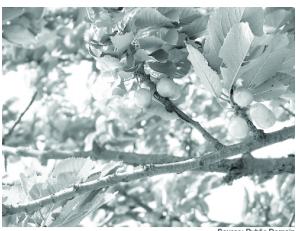
The picture above shows a cherry tree
What do cherry trees produce that helps
scientists classify them?
flowers and cones
flowers and seeds
leaves and spores
leaves and spores
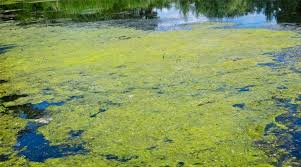
Algea
Flowering
Non Flowering
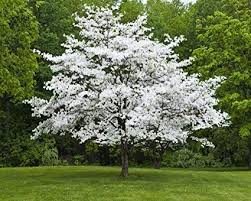
Dogwood Tree
Flowering
Non Flowering

Fern
Non Flowering
Flowering
A characteristic that a living thing gets from its parents
inherited trait
learned behavior
physical behavior
acquired trait
What is an acquired trait?
a characteristic that a living thing is born with
a characteristic that a living thing gets during its lifetime
physical appearance
heredity
Which is an example of a physical trait?
a baby crying in the crib
a squirrel gathering and saving nuts
a horse has four legs
geese fly south for the winter
Are acquired physical traits passed down from parents to offspring?
yes
no
Which is an inherited physical trait?
a girl has brown eyes
a girl has a bruise on her arm
a boy has straight teeth from braces
a child has a scar on her leg
An inherited physical trait is
a part of a behavior
more important than an acquired physical trait
a characteristic a living thing gets from its parents
a characteristic a living thing gets during its lifetime.
A dog has black fur with brown spots, a good sense of smell, a chipped tooth, and four legs. Which of these characteristics is an acquired physical trait?
black fur with brown spots
good sense of smell
chipped tooth
four legs
A girl's left arm is shorter than her right arm. Which is the BEST question to determine whether the girl's shorter arm is an acquired physical trait or an inherited physical trait?
Is the girl righthanded?
Does the girl have a scar on her right arm?
How can a girl acquire the trait for a shorter arm?
Is the left arm of the girl's parents shorter than her right arm?
A student has several rose plants. The flowers on one plant are yellow. The flowers on the other plants are red. Which is the BEST question the student could ask to determine whether yellow flowers are an inherited physical trait or an acquired physical trait?
Are the rose plants healthy?
Do roses reporduce from seeds or spores?
Did the plant with yellow roses have a parent with yellow roses?
What is the difference between an inherited physical trait and an acquired physical trait

Freckles are an _____________.
acquired trait
inherited behavior
inherited trait
acquired behavior
Micah and Carly are having a baby. Carly is a tall woman with brown eyes, red hair, freckles, and a love of Japanese food. Micah is also tall and has dark brown hair. He plays the piano and loves classical music. They are curious what their baby will be like.
Which three questions can be asked about the possible inherited characteristics of the baby?
Will the baby be tall?
Will the baby have freckles?
Will the baby love Japanese food?
What color eyes will the baby have?
What type of music will the baby like?

Which question can be asked to determine what is an acquired physical trait of the lion?
Why does the lion have yellow eyes?
How much did the lion weigh at birth?
How did the lion get scars on its face?
Why does the the lion have brown fur?
Christian knows that some of his characteristics were passed on to him by his parents, and some of his characteristics were learned from his environment. What question can be asked to learn about Christian's inherited characteristics?
What color is his hair?
What is the date of his birth?
What language does he speak?
What kind of clothes does he wear?
Mariana knows that many of her characteristics were passed on to her by her parents. She also knows that many of her characteristics were learned from her environment. What question can be asked to learn which characteristic was inherited by Mariana?
Does she have freckles?
Does she do well in school?
Does she enjoy playing sports?
Does she have a lot of friends?

Looks at the pictures. Which of the pictures does NOT show an acquired trait?
W
X
Y
Z