
 Worksheets
Assignment 5/16/22
Total questions: 157
Worksheet time: 3hrs 14mins

A cheetah can run briefly with a speed of 31.0 m/s. Suppose a cheetah with a mass of 47.0 kg runs at this speed. What is the cheetah’s kinetic energy?
1457 Joules
22,584 Joules
15 Joules
45,167Joules
The statement that "the energy within a system remains constant and cannot be created or destroyed, only transformed" best sums up _________.
Something Mr. Lance likes to say.
Life
Law of Conservation of Energy
The scientific method
Newton's Third Law
Energy stored because of gravity is called:
Gravitational Potential Energy
Kinetic Energy
Mechanical Advantage
Chemical Energy
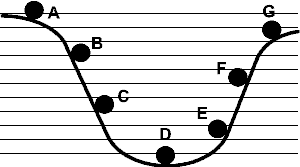
At which point does the ball has the greatest gravitational potential energy (GPE)?
A
G
D
C
G
Which would have the LEAST gravitational potential energy (GPE)?
A ball sitting on the ground
Moon viewed from the Earth
An airplane flying 30,000 feet above the ground
A rock sitting on top of Mt. Everest
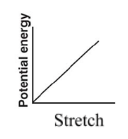
What potential energy is this graph representing?
Electric
Elastic
Magnetic
Gravitational
Two factors that determine work are...
Force
Mass
Velocity
Distance
If you push a cart with a force of 60 N for 2 m... how much work have you done?
120 J
30 J
120 N
30 N
What is the formula for work?
Force = work × distance
Distance = force × work
Work = force × distance
Work = force × mass
Fred kicks a ball with a force of 20N to George, who is 5M away.
How much work was done to the ball?
25 J
100 J
4 J
75 J
What is the ΔKE of a baseball hit with a force of 6000 N that travels 120 m across the field?
6000J
43560000J
720000J
50J
A 10.0 kg box is accelerated from 2.0 m/s to 4.0 m/s. What is the amount of work needed to accelerate the box?
50 J
60 J
20 J
45 J
What does work equal when the final change in kinetic energy equals 20,000 J?
0J
2041J
20,000J
4164931J
Which equation would you use to find distance when you know mass, Vf, Vi, and Force?
W = KEf - KEi
F⋅d = KE
W = 1/2 mvf2 - 1/2 mvi2
F⋅d = 1/2 mvf2 - 1/2 mvi2

Which letter shows the ball when it has NO potential energy?
B
C
D
E
F
Which letter shows the ball when it has THE MOST kinetic energy?
B
C
D
E
F

What is the GPE at point A
14 J
12 J
6 J
8 J

What is the KE at point B?
14 J
12 J
6 J
8 J

What is the Total Energy of the system?
14 J
12 J
6 J
8 J

What is the Total Mechanical Energy at point A?
500,000 J
400,000 J
200,000 J
50,000 J
What is the Kinetic Energy at point B?
500,000 J
400,000 J
300,000 J
50,000 J
What is the Kinetic Energy at point C?
500,000 J
400,000 J
300,000 J
50,000 J
What is the Kinetic Energy at point D?
500,000 J
250,000 J
300,000 J
50,000 J
What is the GPE at point E?
500,000 J
250,000 J
300,000 J
100,000 J
What is the GPE at point F?
500,000 J
250,000 J
300,000 J
0 J

What is the Total Energy at the top?
15,000 J
3,750 J
7,500 J
11,250 J

What is the GPE at the top?
50 J
25 J
0 J
100 J
What is the KE half way down?
50 J
25 J
0 J
100 J
What is the Total Energy at the bottom?
50 J
25 J
0 J
100 J

In an elastic collision, ______ is conserved.
Momentum only
Kinetic Energy only
Both momentum and energy


A 2200kg car travelling at 30m/s collides with another 2200kg car that is at rest. The two bumpers lock and he cars move forward together. What is their final velocity?
30 m/s
15 m/s
0 m/s
12.5 m/s
A 10kg ball moving at 13 m/s strikes a 20kg ball at rest. After the collision the 10kg ball is moving with a velocity of 7 m/s. What is the velocity of the second ball?
3 m/s
12 m/s
6 m/s
4 m/s
Determine the momentum of 1000-kg car moving northward at 20 m/s.
20000 N
20000 Joules
20000 kgms-1
20000 kgms-1 north
An impulse depends on
weight and force
force and time
electric charge and time
none of these
An object having a pi of 30kg m/s has ended with a pf of 40 kg m/s. What impulse caused this?
2kg m/s
10kg m/s
70kg m/s
5kg m/s
If the change of momentum of an object is 50kg m/s, we can say the impulse is equal to:
0 kg m/s
25 kg m/s
50 kg m/s
100 kg m/s
An object has pi of 20 kgm/s and then pf of 30 kgm/s. If it took 2s, what is the force?
10N
4N
5N
50N
An object has Pi of 20 kgm/s ends with a Pf of 40 kgm/s. How long would a 5N force need to act?
3s
8s
7s
4s
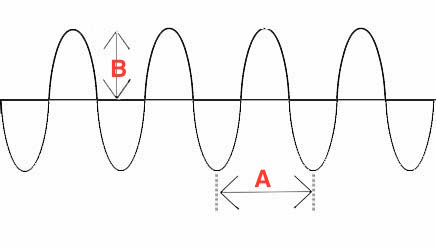
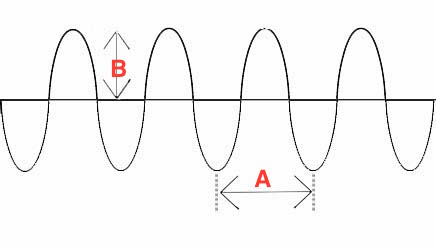


What kind of wave is pictured below?
compressional wave
transverse wave
sound wave
mechanical wave
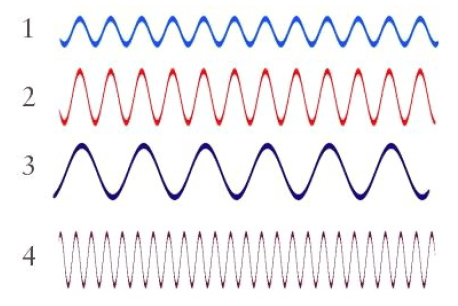
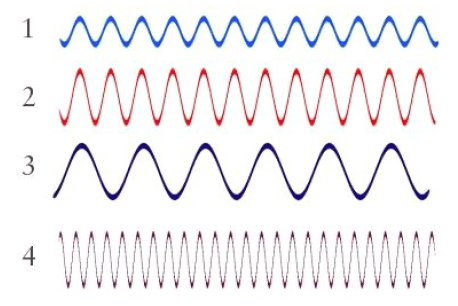


The figure represents a string of length L, fixed at both ends, vibrating in several harmonics. Which string shows the 4th harmonic?
A
B
C
D
E

The figure represents a string of length L, fixed at both ends, vibrating in several harmonics. Which string shows the 3rd harmonic?
A
B
C
D
E

The figure shows a standing wave in a pipe that is closed at one end. The frequency associated with this wave pattern is called the
first harmonic.
second harmonic.
third harmonic.
fourth harmonic.
fifth harmonic.

What type of interference is being shown in the picture?
Constructive
Destructive

What type of interference is occurring in the picture?
Constructive
Destructive
When 2 waves meet and create a bigger wave
Constructive Interference
Destructive Interference
When two waves meet and create a smaller wave
Constructive
Destructive

What type of interference is represented in this diagram?
Constructive
Destructive

What type of interference is represented in the diagram?
Constructive
Destructive
When a crest and a trough interfere, what occurs?
They combine to create a higher amplitude wave.
They counteract and the wave either lessens or stops completely.
The wave changes into a longitudinal wave.

What does the slope of a position vs time graph tell you?
Displacement
Distance traveled
Velocity
Acceleration
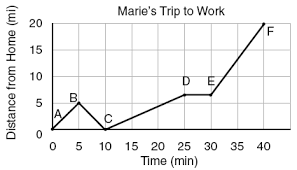
During what period of time was Marie stopped?
0-5 minutes
5-10 minutes
10-25 minutes
25-30 minutes
Which of these position vs. time graphs shows an object changing direction?


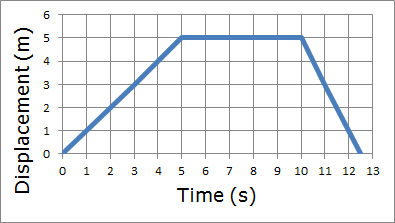
According to the graph, what was the velocity for the first 5 seconds?
1 m/s
0.5 m/s
5 m/s
2 m/s

This position vs. time graph shows an object...
not moving
moving with constant velocity
moving with changing velocity

This position vs. time graph shows an object...
not moving
moving with constant velocity
moving with changing velocity

This velocity vs. time graph shows an object...
(Hint: For this graph, the velocity is 0 m/s!)
not moving
moving with constant velocity
moving with changing velocity
This velocity vs. time graph shows an object...
(Hint: For this graph, the velocity is 0 m/s!)
not moving
moving with constant velocity
moving with changing velocity

This velocity vs. time graph shows an object...
not moving
moving with constant velocity
moving with changing velocity

This velocity vs. time graph shows an object...
not moving
moving with constant velocity
moving with changing velocity

This position vs. time graph shows an object...
not moving
moving with constant velocity
moving with changing velocity

This velocity vs. time graph shows an object...
not moving
moving with constant velocity
Accelerating
Which of these velocity vs. time graphs shows an object changing direction?


Change in position ( Δx ) means:
direction
distance
displacement

When does this object change direction?
1 second
2 seconds
3 seconds
4 seconds
When is this object going away from the origin?
1 second
3 seconds
4 seconds
4.5 seconds

Select the two correct statements that describe the object's motion.
The object is moving in the positive direction.
The object is moving in the negative direction.
The object is moving at a constant speed.
The object is speeding up.
The object is slowing down.

Select the two correct statements that describe the object's motion.
The object is moving in the positive direction.
The object is moving in the negative direction.
The object is moving at a constant speed.
The object is speeding up.
The object is slowing down.

Select the two correct statements that describe the object's motion.
The object is moving in the positive direction.
The object is moving in the negative direction.
The object is moving at a constant speed.
The object is speeding up.
The object is slowing down.


A projectile is launched with a horizontal velocity of 20 m/s and an initial vertical velocity of 20 m/s. Which graph correctly shows the vertical velocity of the projectile over time?


A projectile is launched with a horizontal velocity of 20 m/s and an initial vertical velocity of 20 m/s. Which graph correctly shows the horizontal velocity of the projectile over time?
A projectile is launched with a horizontal velocity of 20 m/s and an initial vertical velocity of 20 m/s. Which graph correctly shows the horizontal position of the projectile over time?


A projectile is launched with a horizontal velocity of 20 m/s and an initial vertical velocity of 20 m/s. Which graph correctly shows the vertical position of the projectile over time?
Which of the following pieces of ticker tape represent an object that is speeding up? (Assuming the ticker tape was pulled to the LEFT, through the device.)






Which ticker-tape diagram best shows an object moving fast, at a constant speed?
1
2
3
4
Which ticker-tape diagram best shows an object moving at a SLOW constant speed?
1
2
3
4
When the ticker tape dots are have a greater distance between them, ________________
the motion of the object is slower.
the motion of the object is faster.
the motion of the object does not change.
A force of 8 Newton’s is applied to a crate so that it moves at a constant velocity of 1.5 m/s. What is the net force?
1.5 N
8 N
12N
0 N

Is this object in equilibrium?
Yes and it's moving right
Yes and its at rest
No, it's accelerating right
No, it's at rest
Your mother is standing on a concrete floor in flat shoes. When she lifts one foot, what happens to the normal force?
it does not change
it drops to half
it doubles
If the sum of all the forces acting on a moving object is zero, the object will _____.
slow and stop
immediately stop
accelerate uniformly
continue with a constant velocity
Acceleration is _____.
inversely proportional to mass
inversely proportional to force
directly proportional to mass
directly proportional to momentum
A man standing on a scale in an elevator notices that the scale reads 40 newtons greater than his normal weight. Which type of movement of the elevator could cause this greater-than-normal reading?
accelerating upward
accelerating downward
moving upward at a constant speed
moving downward at a constant speed

Three forces of equal magnitude act on the box shown. One force is upward, one downward, and one rightward. Which of the following statements must be true based on this information? Select two answers.
The box must have a rightward component of velocity.
The box has no vertical component of velocity.
The acceleration of the box is directed to the right.
The velocity of the box is changing with time.

which box has more acceleration?
top
bottom

which box has more acceleration?
top
bottom
what happens to the acceleration when the force on an object is doubled?
acceleration also doubles
acceleration becomes half
no change in the acceleration
acceleration becomes zero
what happens to the acceleration of an object when the mass is halved? (force remains the same)
acceleration doubles
acceleration is also halves
acceleration increases 4 times
acceleration becomes zero
what happens to the acceleration of an object when the mass is halved? (force remains the same)
acceleration doubles
acceleration is also halves
acceleration increases 4 times
acceleration becomes zero


what is the correct formula for force?
F=ma
F=am
F=ma
F=a×v
use the triangle to solve the question.
Find the force required to move a box having mass 10Kg with an acceleration of 9m/s2 .
10N
90N
100N
20N

find the acceleration of the box.
12m/s2 towards right
12m/s2 towards left
40m/s2
60m/s

For every action, there is an equal and opposite reaction.
Newton's
1st
Law of Motion
Newton's
2nd
Law of Motion
Newton's
3rd
Law of Motion

When a small car pushes a big truck, the truck applies an equal and opposite force on the car.
False
True

A book pushes down on a table with a force of 5N, the table..
Pushes back with a force of 5N
Pushes back with a force less than 5N
Pushes back with a forcec greater than 5N
Does nothing. A table has no force.


moving or tending to move toward a center...
centripetal force
centrifugal force
Tangent
Curvature
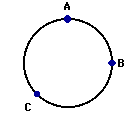
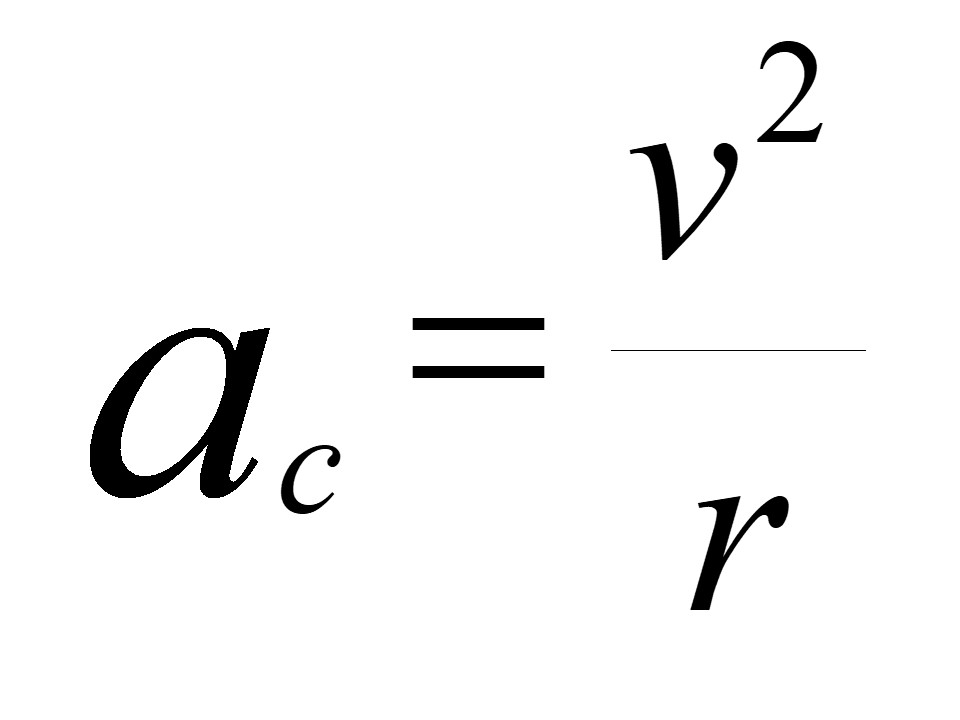
What's the centripetal acceleration of an object traveling 2.3 m/s around a circle of diameter 0.6 m?
5 m/s2
17.63 m/s2
10 m/s2
8.81 m/s2

When is the normal force the smallest on the rollercoaster?
Top of the loop
left of the loop
Right of the loop
Bottom of the loop
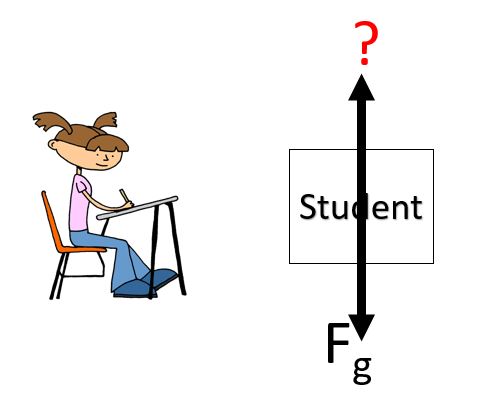
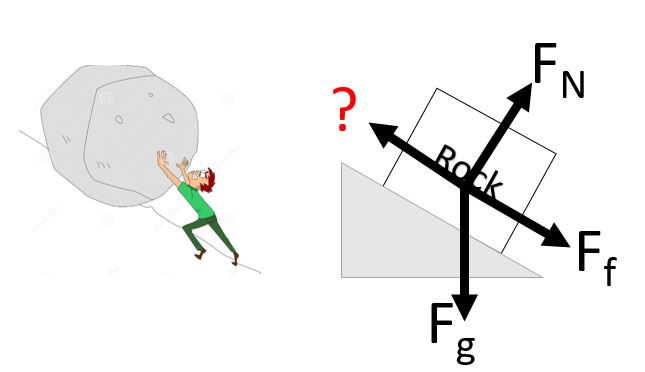
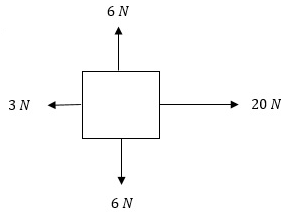
What is the NET FORCE of this diagram?
17 N, right
17 N, left
23 N, right
12 N, up
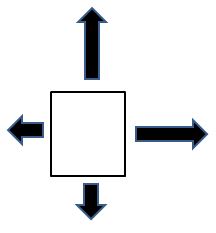
This object would be moving (pick all that are correct):
up
down
left
right
Which diagram best shows person pushing a couch (accelerating) across the floor?


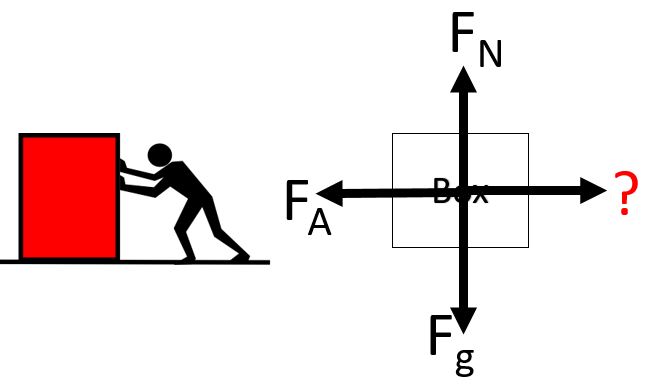


How much is Fnet on the system?
40 N
50 N
10 N
4 N

In the figure below, on which side of the pulley will the string accelerate downward?
right side
left side
will not accelerate

Calculate the acceleration of the system.
30/4 m/s2
10/4 m/s2
5 m/s2
20 m/s2

By collecting the appropriate data, the students can determine the relationship between the acceleration of the cart and the net force exerted on the cart. Which of the following graphs should the students produce to show the correct relationship?


Given the FBD, which of the following must be true?
The frictional force must be accelerating the system to the left.
The box must be accelerating to the right.
The box must be moving to the right.
The FBD is incorrectly drawn. This situation isn't possible
A man standing on a scale in an elevator notices that the scale reads 40 newtons greater than his normal weight. Which type of movement of the elevator could cause this greater-than-normal reading?
accelerating upward
accelerating downward
moving upward at a constant speed
moving downward at a constant speed
A car travels up a hill at constant speed. Which of the following diagrams best represents the forces acting on the car at this instant?


Three forces act on a box in an inclined plane as shown in the diagram below. [Vectors are not drawn to scale.] If the box is at rest, the net force acting on it is equal to
the weight
the normal force
friction
zero
The sum of all forces acting on an object and direction is called the:
Contact Force
Balanced Force
Unbalanced Force
Net Force

A leftward force is applied to a crate to push it across the floor at a constant speed. Which is the correct force diagram?



