
 Worksheets
AP World Mega Review 2
Total questions: 225
Worksheet time: 3hrs 48mins
All of the following factors contributed to significant growth in worldwide population from 1750 through 1900 EXCEPT
decline of epidemic disease
introduction of Western Hemisphere food crops to new areas
expansion of land under cultivation
new grain crops developed in the Green Revolution
All of the following have been African contributions to cultures in the Americas EXCEPT
African forms of religious observance
African musical forms
knowledge of how to grow African crops
African folklore
African monetary systems
Before 1870, the European presence in Africa was characterized primarily by
military conquests of large territories administered as military states
intense colonization and settlement of large areas
active international interaction through trade and diplomacy
coastal enclaves for trade and a few settlements
frequent coastal raids along with racial segregation imposed on conquered peoples
Between 1450 and 1750, which of the following were produced on large plantations by slave labor for the world market?
Wheat and barley
Corn and beans
Bananas and oranges
Sugar and tobacco
Between 1500 and 1800, Europeans were primarily interested in tropical colonies in the Atlantic and Indian Oceans and in the Caribbean because
large profits could be made from products like sugar, coffee, and pepper
the major European states were competing with each other for imperial hegemony
these colonies had strategic military importance
these areas had small populations and were thus easy to control
many Europeans were interested in getting away from Europe’s wintry climate
Between 1750 and 1900, which of the following industrializing states created an empire?
Japan
China
Brazil
Argentina
Darwin’s theories were interpreted by Social Darwinists to indicate that
select human groups would dominate those less fit
European countries were more nationalistic
non-White groups were better adapted to tropical climates
imperialism went against the theory of natural selection
education would lead to equality
In the late nineteenth century, European imperialism in both Africa and China was characterized by
widespread trade in opium
the encouragement of slavery
extensive conquest of territory
small military enclaves along coastlines
competition among imperialist powers
Most world historians would agree that the key to European predominance in the world economy during the nineteenth and early twentieth centuries was
the Industrial Revolution
European medical technology
Spanish control of New World silver
Portuguese naval and firearms technology
the Enlightenment
In the three centuries after Columbus’ voyages, most of the people who came to the Western Hemisphere originated in which of the following regions?
Southern Europe
Northern Europe
Western Africa
Eastern Africa
East Asia
The “second Industrial Revolution” in the last half of the nineteenth century was associated with the mass production of which of the following groups of products?
Textiles, iron, and coal
Textiles, automobiles, and plastics
Airplanes, ships, and radios
Electricity, automobiles, and airplanes
Electricity, steel, and chemicals
The Columbian Exchange involved which of the following new connections in the era 1450–1750?
European food to the Western Hemisphere; Western Hemisphere diseases to Europe; African population to Europe
Western Hemisphere technology to Africa; African food to Europe; European population to the Western Hemisphere
European technology to Africa; Western Hemisphere population to Africa; African food to the Western Hemisphere
African population to the Western Hemisphere; Western Hemisphere food to Europe and Africa; African and European diseases to the Western Hemisphere
The North and South American independence movements of the late eighteenth and early nineteenth centuries shared which of the following?
Limitation of civil rights to a minority of the population
Reliance on Christian teachings to define revolutionary demands
Industrial economies that permitted both areas to break free of European control
The desire of a majority of revolutionary leaders to create a politically united hemisphere
Political instability caused by constant warfare among the new states
The policies of the Meiji reformers brought about which of the following in Japan?
An improvement in the economic condition of the peasants
The collapse of the industrial sector of the economy
An increase in isolationism among government leaders
A reduction in military expenditures
The promotion of rapid industrialization
The success of European powers in penetrating the Asian trading system by 1600 can best be explained by the
Asian demand for luxury goods
European use of steam power
high demand for European agricultural produce in China and India
lower prices of European manufactured products
opening of rich silver mines in Peru and Mexico
The United States Bill of Rights and the French Declaration of the Rights of Man and Citizen reflect a shared concern for
physical elimination of the ruling class
confiscation of church property
protection of private property
preservation of the monarchy
establishment of a parliamentary system
Which of the following best characterizes Western imperialist expansion in the late nineteenth century?
Western fears of the spread of Japanese influence
Western investment to create self-sufficient economies in the new colonies
An unprecedented amount of territory colonized in a short period of time
The establishment of political institutions to resolve ethnic and religious conflicts within colonies
The decline of British and United States influence in international affairs

Which of the following best describes the impact on African society of the trade depicted on the map?
Gender and family roles were restructured as the male population in West Africa diminished.
Bantu peoples increasingly migrated southwards and eastwards.
African societies became increasingly monotheistic as they adopted Islam.
African states underwent significant urbanization as rural agricultural populations diminished.
Which of the following is most likely to have influenced eighteenth-century population trends in both Europe and China?
A sharp decline in average global temperatures
Introduction of Western Hemisphere crops
The rise of parliamentary governments
Innovation in birth control measures
Improvement in surgical procedures

Land based empires such as the Ottoman, Mughal and Safavid relied on this to expand and conquer
Equestrian skills
Gunpowder weapons
Repeating rifles
An army organization in units of 10

This was called the “blood tax” were the Ottomans collected Christian boys to be raised as military professionals for the state
Devshirme
Eunuchs
Unsullied
Samurai

Members of the Sultan’s guard and one of the first modern stand armies
Devshirme
Samurai
Janissaries
Petorian guard
Name of the leader of the centralized state of the Ottomans who was also the caliph ( religious leader)
Sha
Pharaoh
Sultan
Caesar
System under the Ottomans that gave Jews and Christians limited authority to address their own matters
Millet system
Janissary system
Common law
10 commandments
Tax created by Muslims that only Jews and Christians and to pay for protection
Devshemire
Jizya
Sharia
Income tax
Ottoman sultans created a series of ___ to legitimize their rule and also justify being caliphs
Churches
Temples
Minarets
Mosques

Turks conquered this city and renamed it Istanbul beginning Muslim Turk rule in Anatolia and ending Christian rule in the area
Rome
Constantinople
Baghdad
Moscow
Noble land owning class of Russia
serfs
peasants
boyars
Cossacks
peasants that were bound to the land and had little freedom in Russia
slavs
serfs
Cossacks
Mongols
How did Ivan "The Terrible" try to control the Boyars
forced them to join the military
took their land and forced them to move to Moscow
forced them to work his land and cut their beards
exiled them from Russia
The Ming Dynasty expanded towards
the Indian Ocean and South East Asia
the Pacific Ocean
Siberia
North and West towards Tibet
Ming Dynasty's fleet was abruptly docked due to
the idea that China was "the Middle Kingdom" and did not need trade from anyone
the diversion of funds to fight the Mongols
The fleet was sunk by a Monsoon
all of the above
How did the Ming attempt to centralize power
By performing Confucianist rituals
by bringing back the bureaucracy based on merit
by rebuilding the Grand Canal and farming
all of the above
What did the Ming build to legitimize their rule
St Petersburg
St Basil's Basilica
The Great Wall
The Forbidden city
The Manchu's were originally
Mongol nomads
Turks
nomads from the North of China
Korean nomads
How did the relationship between nomads and China change during the Qing Dynasty?
The Manchu conquered the nomads and forced them to again pay tribute as they had during Han times
It did not change. Nomads continued to demand tribute from China
The nomads were absorbed into Chinese society
Chinese society changed and became more nomadic
What was the main cause of Chinese expansion
to hunt for fur
to control the gold trade
to defend themselves from attacks
to control trade along the Indian Ocean
How did the Qing legitimize rule through art?
Imperial portraits
The Temple
The Forbidden City
The Great Wall
What was the main consequence of Safavid expansion?
war against the Ottomans for 100 years
Expansion to the Mediterranean
war against the Seljuk Turks
all of the above
What was the main cause of the conflict between the Ottomans and the Safavids?
Safavids were Sunni and Ottomans were Shiite
Over population
a disagreement on how to practice Islam
control of a warm water port
What was another consequence of the Protestant Reformation?
a long period of peace and acceptance
increased questioning of the church
the end of the Silk Road
increased tans regional trade
What were Martin Luther's theological disagreements with the Catholic Church?
He was against the selling of indulgences and selling positions in the church
he was for priests marring
he was against the Crusades and killing of Muslims
all of the Above
How did the Catholic Church react to the Reformation?
With the Counter reformation and reviving the Inquisition
by fixing all problems
by agreeing with Martin Luther that he could start his own church.
none of the above
Qing/Manchu continued which Ming economic practice?
Demanding taxes be paid in gold
demanding taxes be paid in silver
Demanding taxes be paid with flying cash
Demanding tribute be paid by all in China
What are zamindars
bureaucratic elite for the Mughal
bureaucratic elite for the Ottomans
bureaucratic elite for the Safavids
bureaucratic elite for Russia
The Ottoman army included 30,000 elite soldiers called ________ who were slaves that were trained to be loyal to the government.
Janissaries
Jizyas
Slavs
None of the Above
Ottoman rulers were called ________ & they governed with absolute power
Caliphates
Sultans
Monarchs
None of the Above
Safavid rulers were called ___________, using the Persian title for king
Sultans
Caliphates
Monarchs
Shahs


Which word below means the place where stores and small settlements could buy and sell their goods?
trading posts
slave trade
merchant
astrolabe
Encomienda, hacienda, and mit'a are all examples of...
Racial categories
Maritime empires
Coerced labor systems
Bureaucratic systems
This explorer was first to circumnavigate globe:
Christopher Columbus
Vasco da Gama
Jacques Cartier
Ferdinand Magellan
This explorer conquered the Inca Empire and established Lima Peru
Prince Henry
Christopher Columbus
SIr Francis Drake
Francisco Pizarro
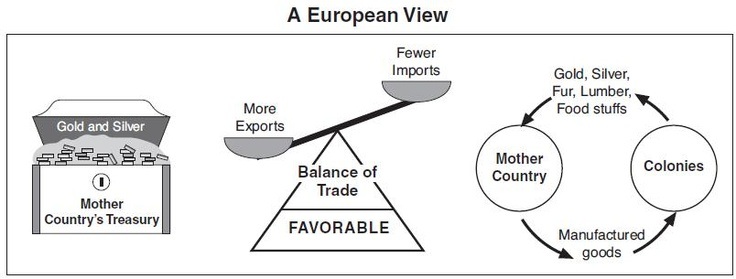
What is mercantilism?
A system where a mother countries gains money and power from natural resources that come from its colonies.
A system where colonies trade gold, silver, and products with one another.
Expansive wars that start over money and trade.
Plantation colonies trading slaves for money or products.
Which countries created the Triple Alliance?
Germany, Austria-Hungary, & Italy
Germany, Austria-Hungary, & Russia
France, Great Britain, Serbia, & Russia
France, Great Britain, United States, & Serbia
Which countries created the Triple Entente?
France, Great Britain, Russia
France, Great Britain, Russia, Serbia
Germany, Italy, Austria-Hungary
France, Germany, United Kingdom
During World War I, Germany's group changed their name from Triple Alliance to what?
Axis Powers
Central Powers
Allied Powers
Allies
What is a devotion and loyalty to one's country?
nationalism
Communism
Holocaust
superpowers
A period of tense rivalry between the United States and the Soviet Union.
World War I
World War II
Cold War
Holocaust
An agreement between countries is called?
alliance
strategy
dictator
Great Depression
After World War I, the Treaty of Versailles said that Germany had to...?
Pay billions of dollars in damages caused by the war.
Take the blame for World War I
Slash the size of its army
keep its colonies overseas.
How did Germany force America into World War I?
Germany kept attaching American ships.
Germany bombed America.
Germany attacked Washington D.C.
What new technologies were invented during World War I?
trench warfare
machine guns
poison gases
tanks
A global economic crisis in the 1930s is known as?
Holocaust
Great Depression
World War II
Cold War


Which tactic was used in both Algeria and Kenya to achieve independence?
Non-violent protests / strikes
Violent resistance / civil war
Apartheid ended in 1994 for which country?
Algeria
Ghana
South Africa
Kenya
Once it gained independence, India became the world's largest _____?
Dictatorship
Country
Empire
Democracy
The Communist Party's idea of joining small farms into larger farms was known as
collectivization
industrialization
politicizing
ownership
The Communist's plan of joining farms together to grow more and more food by competition between farms was known as
Cultural Revolution
The Chinese Communal Farm Plan
The Communist's Food Plan
The Great Leap Forward
All citizens of China during the Cultural Revolution were required to memorize and carry with them
Mao's Little Instruction Book
Mao's Letter to the People
Mao's Little Red Book
Mao's How to be a Communist Book
Deng Xiaoping becomes the new leader of China after Mao Zedong. Choose the reforms, more than one, that he changed to help China increase her economy.
farmers could own their land
private businesses
trade with foreign countries that were not Communist
government no longer controlled the media
This term means to convince others to your way of thinking.
Propaganda
Collectivization
Industrialization
Peroration
What was unique about the Chinese Civil War?
There was no side that won.
There was a break in the Civil War to fight in WW2.
It was a short war.
It was a war without any deaths.
Which of the following best describes a proxy war?
Two superpowers directly fighting
Two countries fighting without any outside assistance
Supporting sides in another country's war to oppose an enemy
Competing in sports instead of military force
Which of the following groups/governments did the Soviet Union support during the Cold War era?
the government of South Korea during the Korean War
the United Nations coalition during the Korean War
the government of South Vietnam during the Vietnam War
the Viet Cong during the Vietnam War
the mujahideen during the Soviet-Afghan War
In what way(s) did the United States support South Vietnam's government?
sending American troops to fight the Viet Cong
sending money, supplies, and weapons, but no soldiers
sending diplomats to broker a truce with the Viet Cong
What was the outcome of the Vietnam War?
U.S. troops helped South Vietnam's government successfully defeat the Viet Cong.
The U.S. withdrew its troops and North Vietnam successfully united Vietnam as a communist state.
The U.S. signed an armistice agreement with North Vietnam and Vietnam remained divided.
Which crisis saw the United States emerging as more important diplomatically and internationally as it stopped Great Britain and France from intervening to protect its economic interests.
MAD, or Mutually Assured Destruction, was an acronym coined for the destruction that would be caused world-wide by...
Nuclear Attacks
Intercontinental Ballistic Missiles
Agent Orange
Napalm
The Cuban Missile Crisis occurred when ...
The United States attempted to invade Cuba and create a revolution to overthrow Fidel Castro, but it failed.
the Soviet Union fired missiles at Cuba a long held ally of the United States.
the U.S. learned that the Soviet Union had built missile launching pads in Cuba, very close to the state of Florida.
the Soviet Union fired missiles at the U.S. from Cuba.
Indira Gandhi is famous because of...
helping the British fight World War II and her role in the Bengali Famine
the removal of British control from the Indian subcontinent through non-violent protest
abolishing caste distinctions and discrimination once in power as the first Sikh president
her controversial time as one of the first democratically elected female heads of state
The term "Pan–Africanism" can best be defined as a movement whose purpose is to
promote African unity
support cultural diversity
encourage European investment in Africa
advocate a return to colonial conditions
A similarity of the goals of Nelson Mandela and Mohandas Gandhi is that both leaders wanted to
secure political power for the majority of the people
encourage a greater degree of industrialization
improve the economy by expanding governmental control
gain independence from the Soviet Union
What African nation gained independence from France after a violent eight year war?
Algeria
South Africa
Egypt
Ethiopia

What is one explanation for the great change in the world population between 1950 and 2000?
Family planning was successful.
There was an absence of war and conflict.
New medicines and technology were discovered and applied.
Famine and other natural disasters increased.

Based on this late 20th-century map, which conclusion is accurate?
The worldwide distribution of wealth is unequal.
Social mobility between social classes is increasing.
The communist movement is growing.
Economic self-sufficiency in less developed countries is increasing.

What is a major reason for the trend illustrated by the graph?
the fall of communist governments in Eastern Europe
the formation of oil cartels, such as the Organization of Petroleum Exporting Countries (OPEC)
an increase in global interdependence resulting from modern technology and expanded trade agreements
a general decline in the standard of living for people in developing countries
How did Catholic Church leaders demonstrate sensitivity to demands of the poor for social justice in twentieth-century Latin America?
demanding special charitable contributions from the Vatican to wipe out poverty
formation of a "liberation theology"
renunciation of Christianity in favor of orthodox Marxist socialism
implementing land reform policies through representation in national elections
Which natural resource or crop have developing nations been able to trade in the global economy on terms most favorable to themselves?
cocoa
coffee
diamonds
oil
Which of the following is an impact of population growth in the developing world?
rising status of females
decreasing numbers of refugees in the developed world
declining importance of the IMF
rapid and haphazard urbanization
Neocolonialism is best-defined as
Western efforts to expand colonial holdings after WWII
post-WWII population boom in developing nations
economic dependence of developing nations after decolonization
colonization of Latin America after independence from Spain
Which of the following statements is NOT true of modern global consumption?
Consumption becomes a means of self-expression as well as a source of personal identity.
Modern consumption is shaped by wants and desires rather than by needs or necessities.
Global consumption is entirely one way: the tastes of the United States are imposed on the rest of the world.
Global consumerism threatens local and indigenous cultures.
One significant result of the electronic information age is that
English has become the primary language of global communications.
politically repressive regimes such as that of China are trying to control the Internet.
the gulf between the technological haves and have-nots has widened.
All these answers are correct.
Global warming refers to
natural variations in the global climate over time.
the rise in global temperatures caused by atmospheric pollution such as the emissions of cars and factories.
the risk of a nuclear war when the planet is politically "hot."
the increase in temperature caused by volcanic activity on the oceans' floors.
Increasing interdependence of nations and peoples across the globe.
Infrastructure
Globalization
Interdependence
Specialization
A policy in which a nation does not try to limit imports or exports by enacting tariffs (taxes on imports) or subsidies (taxes on exports).
Free Trade
Trade
Goods
Supply and Demand


The development of a worldwide economy where resources flow fairly freely across borders.
Globalization
Economy
GDP
Economic Independence
What are some negatives of globalization?
Workers are exploited in sweatshops
Pollution and deforestation
Low wages for factory workers in Asia and Africa
All of the answers are correct
What are some positives of globalization?
Cheap sneakers and clothes
Cheap electronics
Information is easy to access and it travels quickly (internet and social media)
All of the answers are correct
The exchange of goods and services by sale or barter driven by the need for resources.
Fair Trade
Globalization
Trade
Standard of Living
When the economy of two countries depend on each other, it's called:
economic interdependence
multinational cooperation
isolationism
outsourcing
Which of the following was instrumental in creating the global economy that exists today?
The use of high taxes for imports and exports
Improvements in technology such as the Internet
The creation of one form of currency (money) used to trade
The success of the Communist governments in guiding trade
This organization allows free trade among the United States, Canada, and Mexico and has helped with trade, created jobs, and encouraged the economic growth of its members.
North Atlantic Treaty Organization (NATO)
United Nations (UN)
North American Free Trade Agreement (NAFTA)
European Union (EU)
Which statement BEST describes the two events?

