
 Worksheets
Tri 3 Review
Total questions: 223
Worksheet time: 3hrs 33mins
Name
Class
Date
1.
By 1920, Minnesota's urban areas were getting smaller.
a)
True
b)
False
2.
In the early 1900s, European immigrants to Minnesota often became part of the working class
a)
True
b)
False
3.
Bohemian Flats was a wealthy neighborhood in Minneapolis.
a)
True
b)
False
4.
Immigrants can become American citizens through a process called naturalization.
a)
True
b)
False
5.
The city of Duluth boomed because of railroads, shipping and iron ore.
a)
True
b)
False
6.
Which of the following is NOT one of the ways that people can become U.S.citizens?
a)
Born in the U.S.
b)
Go through the naturalization process
c)
Ask the President for permission
d)
Born to parents that are U.S. citizens
7.
Which of the following is NOT one of the goals of the labor movement in the late 1800s and early 1900s?
a)
14 hour work days and 7 day work week
b)
limit or end child labor
c)
safe and clean workplaces required by law
d)
employers required to pay wages and medical costs for workers injured on the job
8.
A U.S. citizen has all of the following rights EXCEPT....
a)
can vote
b)
can have a U.S. passport
c)
can get green cards for their children and colse relatives
d)
can be deported or lose citizenship if they commit a crime
9.
Define reformer
a)
the belief that people should work for changes that benefit all
b)
a person who works for change
c)
the right to vote
d)
unfair treatment of people based on race, gender, or religion
10.
Define common good
a)
the belief that people should work for changes that benefit all
b)
a school at which students live, away from their familes
c)
the right to vote
d)
unfair treatment of people based on race, gender, or religion
11.
Define boarding school
a)
the belief that people should work for changes that benefit all
b)
a school at which students live, away from their familes
c)
the right to vote
d)
unfair treatment of people based on race, gender, or religion
12.
Define progressive movement
a)
the belief that people should work for changes that benefit all
b)
a school at which students live, away from their familes
c)
the right to vote
d)
a movement to solve problems through governement action
13.
Define monopoly
a)
the belief that people should work for changes that benefit all
b)
total control over the supply of a product or service in a market
c)
the right to vote
d)
a movement to solve problems through governement action
14.
Define suffrage
a)
the belief that people should work for changes that benefit all
b)
total control over the supply of a product or service in a market
c)
the right to vote
d)
a movement to solve problems through governement action
15.
Define allotment
a)
the belief that people should work for changes that benefit all
b)
total control over the supply of a product or service in a market
c)
the right to vote
d)
a share, or portion, of something that is assigned or given
16.
By 1900 women had full voting rights
a)
True
b)
False
17.
Unsafe drinking water in cities caused diseases that spread quickly and could infect many people
a)
True
b)
False
18.
Forest fires in the late 1800s and early 1900s helped lead to conservation.
a)
true
b)
false
19.
New immigrants were forces to participate in programs at settlement houses
a)
True
b)
False
20.
Which one of the following was NOT a progressive goal?
a)
monitor government corruption
b)
regulate corporations
c)
fix social issues
d)
treat animals humanely
21.
Define discrimination
a)
the belief that people should work for changes that benefit all
b)
a person who works for change
c)
the right to vote
d)
unfair treatment of people based on race, gender, or religion
22.
African Americans were welcome to work and live wherever they liked
a)
True
b)
False
23.
The Central Powers defeated the Allies in World War I.
a)
True
b)
False
24.
A certificate sold to citizens by a government in order to help pay for a war.
a)
patriotism
b)
war effort
c)
war bond
d)
propaganda
25.
Loyalty to ones country
a)
propaganda
b)
war effort
c)
trenches
d)
patriotism
26.
The organized spreading of information in order to persuade people to adopt a certain position.
a)
propaganda
b)
patriotism
c)
war effort
d)
trenches
27.
The combined work of those at home as well as those in the military to win a war.
a)
patriotism
b)
war effort
c)
trenches
d)
war bond
28.
A style of warfare commonly used during World War I required the digging of these
a)
war effort
b)
patriotism
c)
trenches
d)
propaganda
29.
You can finally afford your own home
a)
Push Factor
b)
Pull Factor
30.
Better paying jobs
a)
Push Factor
b)
Pull Factor
31.
A reason to leave your home country
a)
Push Factor
b)
Pull Factor
32.
The United States fought on the side of the Allies in World War I.
a)
True
b)
False
33.
During World War I, feelings towards German-Americans living in Minnesota ...
a)
Improved - German-Americans were more popular and respected
b)
Worsened - German-Americans were viewed with suspicion
c)
Did not Change - German-Americans were not viewed any differently than before the war
34.
The Commission of Public Safety still exists today.
a)
True
b)
False
35.
Minnesota supported the war effort by raising money and buying war bonds
a)
True
b)
False
36.
One new weapon used in World War I was chemical gas.
a)
True
b)
False
37.
The Central Powers defeated the Allies in World War I.
a)
True
b)
False
38.
Loyalty to ones country
a)
propaganda
b)
war effort
c)
trenches
d)
patriotism
39.
Economic problems for farmers started before the great depression
a)
False
b)
True
40.
The American Indian protestors took over the Twin Cities Naval Air Station because they wanted to stop navy planes form flying.
a)
True
b)
False
41.
Dr. Martin Luther King Jr's message was...
a)
If necessary, use violence to make change happen
b)
Non-violence is the only way we make change happen.
42.
All of the following were ways students and administrators reacted to the takeover of Morril Hall at the University of MN except
a)
Administrators used police to put protestors in jail.
b)
Some students supported the takeover.
c)
Some students responded with insults and racial slurs.
d)
The administrators wanted a peaceful solution to the situation.
43.
The goals of Rose Mary Freeman and the Afro-American Committee was to start a class to the University of MN to study African American history and cuilture.
a)
True
b)
False
44.
Kathy and Charlotte Striebel fought discrimination against girls in school sports by which of the following ways....
a)
Starting a girls' swim team
b)
Wrote a law called Title IX
c)
Boycotted the school
d)
Told the school they could have a boys' team
45.
College students participated in the antiwar movement by doing which of the following....
a)
They held demonstrations at their college campuses.
b)
They boycotted classes.
c)
They gave speeches against the war.
d)
All of the above.
46.
The following are all examples of discrimination women and girls faced, which led to the women's movement except...
a)
Women were paid less than men.
b)
Women were not hired for prestigious jobs.
c)
Women were able to eat at any restaurant without a man.
d)
Girls could not participate in school sports with boys.
47.
Activists marched, protested, boycotted, and went to court to fight for their rights.
a)
True
b)
False
48.
All Americans were against the Vietnam War.
a)
True
b)
False
49.
A U.S. law requiring equal rights for women and men in programs and activities that receive federal financial assistance.
a)
women's rights
b)
Title IX
c)
civil rights
d)
boycott
50.
Economic, legal, and social rights for women equal to those for men.
a)
boycott
b)
civil rights
c)
movement
d)
women's rights
51.
The forced separation of people, usually based on race.
a)
civil rights
b)
boycott
c)
segregation
d)
activist
52.
An organized effort to draw attention to a problem or to change public opinion.
a)
civil rights
b)
boycott
c)
segregation
d)
movement
53.
Refusal to have dealings with a person, business, or country.
a)
movement
b)
segregation
c)
boycott
d)
civil rights
54.
Rights belonging to a person because he or she is a citizen.
a)
boycott
b)
civil rights
c)
minority group
d)
activist
55.
By 1920, Minnesota's urban areas were becoming smaller.
a)
True
b)
False
56.
Which of the following is NOT a reason that new immigrants formed communities with others from the same countries?
a)
Learning the ways of a new country can be difficult
b)
They were forced to live together so that the U.S. knew where they originally came from
c)
Many immigrants liked being near others like themselves
d)
They could speak their own language and practice their own customs
57.
Which of the following is NOT a reason iron miners went on strike?
a)
Miners wanted to be able to work 7 days a week
b)
Miners' work was very dangerous
c)
Miners were paid by the amount of ore they mined
d)
Miners worked up to 14 hours a day
58.
A U.S. citizen has all of the following rights EXCEPT....
a)
can vote
b)
can have a U.S. passport
c)
can get green cards for their children and colse relatives
d)
can be deported or lose citizenship if they commit a crime
59.
What are two ways to become a US citizen?
a)
get a passport and a drivers license
b)
apply for social security or pay taxes
c)
vote in every election or don't get arrested
d)
naturalization or born in US
60.
Why did people move to urban areas around 1900?
a)
free farm land, wheat farming
b)
opportunity, jobs, live with family, and adventure
c)
to get an education
d)
to get rich
61.
Define urban
a)
relating to the city
b)
relating to the countryside
c)
people who work for hourly wages
d)
growth spurts
62.
Define rural
a)
relating to the city
b)
relating to the countryside
c)
people who work for hourly wages
d)
growth spurts
63.
Define labor union
a)
relating to the city
b)
an organization that fights for better wages and working conditions for workers
c)
people who work for hourly wages
d)
growth spurts
64.
Define working class
a)
relating to the city
b)
relating to the countryside
c)
people who work for hourly wages
d)
growth spurts
65.
Define strike
a)
when workers refuse to work until demands are met
b)
a group of workers who come together to fight for a better working environment
c)
people who work for hourly wages
d)
growth spurts
66.
Define boom
a)
when workers refuse to work until demands are met
b)
a group of workers who come together to fight for a better working environment
c)
people who work for hourly wages
d)
growth spurts
67.
Define reformer
a)
the belief that people should work for changes that benefit all
b)
a person who works for change
c)
the right to vote
d)
unfair treatment of people based on race, gender, or religion
68.
Define common good
a)
the belief that people should work for changes that benefit all
b)
a school at which students live, away from their familes
c)
the right to vote
d)
unfair treatment of people based on race, gender, or religion
69.
Define boarding school
a)
the belief that people should work for changes that benefit all
b)
a school at which students live, away from their familes
c)
the right to vote
d)
unfair treatment of people based on race, gender, or religion
70.
Define progressive movement
a)
the belief that people should work for changes that benefit all
b)
a school at which students live, away from their familes
c)
the right to vote
d)
a movement to solve problems through governement action
71.
Define monopoly
a)
the belief that people should work for changes that benefit all
b)
total control over the supply of a product or service in a market
c)
the right to vote
d)
a movement to solve problems through governement action
72.
A monopoly is when...
a)
a company makes goods with machines
b)
a company makes goods by hand
c)
a company takes control of a product or service
d)
government takes over a business
73.

Which was NOT a problem encountered by factory workers?
a)
Long hours
b)
Pay for working overtime hours
c)
Unsafe working hours
d)
Low wages
74.

Factory owners used child labor because children--
a)
Read better than their parents
b)
Are more efficient than other workers
c)
Can be paid less than adults
d)
Needed jobs to support parent
75.
True or False
Women in MN had the right to vote in 1919
Women in MN had the right to vote in 1919
a)
True
b)
False
76.
True or False
In 1920 women in the U.S. could vote along with American Indians.
In 1920 women in the U.S. could vote along with American Indians.
a)
True
b)
False
77.
True or False
American Indians had a choice to be sent to a boarding school while new immigrants could choose to go to a settlement house.
American Indians had a choice to be sent to a boarding school while new immigrants could choose to go to a settlement house.
a)
True
b)
False
78.
True or False
Assimilation is being forced to adopt to another group values, dress, religion and their ways of doing things.
Assimilation is being forced to adopt to another group values, dress, religion and their ways of doing things.
a)
True
b)
False
79.
Why were books like The Shame of the Cities (government corruption) and The Jungle (meat packing plants) written?
a)
to share stories about their past
b)
to expose how happy people are in the work place
c)
to expose the corruption and bad things that were put into food
d)
to expose people to what it would be like in the jungle
80.
define corruption
a)
dishonest or illegal dealings in the government
b)
rust on the outside of your car
c)
to fall apart
d)
to erode
81.
taking control over a supply of a product or a service in a certain market area
a)
discrimination
b)
allotment
c)
monopoly
d)
corruption
82.
A contagious disease spread through water
a)
measles
b)
typhoid
c)
small pox
d)
chicken pox
83.
This started World War I
a)
an assassination
b)
a revolution
c)
the invasion of a neutral country
d)
a formal treaty
84.
When did the U.S. join WWI (1914-1918)
a)
1918
b)
1915
c)
1916
d)
1917
85.

What was not a weapon that was used during WWI?
a)
Tanks
b)
Airplane
c)
Subs
d)
Atomic bomb
86.
The United States entered WWI in what year?
a)
1914
b)
1915
c)
1916
d)
1917
87.
Who won WWI?
a)
Allied powers
b)
Central Powers
88.
France, Russia, and Britain were known as
a)
Central
b)
Southern
c)
Allied
d)
Northern
89.
Why did Americans grow their win victory gardens at home after the US joined WWI?
a)
Food was too expensive
b)
farmers were being drafted
c)
allowed more crops to go to soldiers in the war
d)
It was a way of showing their support for the troops
90.
What is an alliance?
a)
an agreement between countries to help each other out
b)
not taking sides
c)
a type of metal
d)
friendship
91.
In what year did WWI begin?
a)
1814
b)
1912
c)
1914
d)
1917
92.

Which event sparked World War I?
a)
the German-French dispute over Alsace-Lorraine
b)
Russia’s quest for a warm water port
c)
assassination of the heir to the Austro-Hungarian throne
d)
sinking of the Lusitania
93.

The United States was a...
a)
Central Power
b)
Allied Power
c)
Neutral (not in the war)
94.

France was a...
a)
Central Power
b)
Neutral
c)
Allied Power
95.

Belgium was a...
a)
Neutral
b)
Central Power
c)
Allied Power
96.

Japan was a...
a)
Central Power
b)
Allied Power
c)
Neutral
97.

Germany was a...
a)
Central Power
b)
Allied Power
c)
Neutral
98.

The Ottoman Empire was the country we call...
a)
Turkey
b)
Hungary
c)
Austria
d)
Azerbaijan
99.
The Ottoman Empire was a...
a)
Central Power
b)
Allied Power
c)
Neutral
100.
Which of the following was used in World War I?
a)
Agent Orange
b)
napalm
c)
missiles
d)
chemical warfare (gases)
101.
Soldiers that used their own language as a code during WWII
a)
Navajo
b)
Iroquois
c)
Lakota
d)
Apache
102.
Government limiting the amount of goods people could buy during WWII
a)
Rationing
b)
Embargo
c)
Draft
d)
Appeasement
103.

Like WWI, women during WWII left their homes to work in the factories.
a)
True
b)
False
104.
What did people on the homefront do to support the war effort?
a)
Ration gas, bread, metal, ect
b)
Work in factories creating war materials
c)
Recycle and donate old usable materials
d)
All of the above
105.
How did Truman's decision to drop the atomic bombs impact the outcome of the war?
a)
Germany surrendered and fighting ended in Europe
b)
Thousands of Americans died fighting in Japan after their retaliation
c)
Japan was forced to surrender ending WWII
d)
America surrendered and WWII ended
106.
Which three countries were known as the Axis powers of WWII?
a)
Japan, England, Italy
b)
Japan, Italy, Germany
c)
Russia, Japan, Germany
d)
Europe, Japan, Czechoslovakia
107.
Name the three major countries that formed the alliance known as the Allied Powers.
a)
Great Britain, Soviet Union, United States
b)
Great Britain, Japan, United States
c)
Germany, France, United States
d)
Japan, Germany, Italy
108.
These were places that women and children were encouraged to grow their own food.
a)
Green House Gardens
b)
Victory Gardens
109.
The event that started World War II in Europe was
a)
Bombing of Pearl Harbor
b)
Assassination of Archduke Franz Ferdinand
c)
Germany invades Poland
d)
The Soviet Union invades Korea
110.
Allied Powers during WWII included:
a)
Great Britain, France, the Soviet Union, and the United States
b)
Great Britain, Japan, the Soviet Union, and the United States
c)
Germany, France, the Soviet Union, and the United States
d)
Germany, Japan, Italy, and the United States
111.

Axis Powers during WWII included:
a)
Great Britain, Germany, and the Soviet Union
b)
Germany, Italy, and Japan
c)
Great Britain, France, and Japan
d)
Germany, Japan, and the Soviet Union
112.

Working in factories gave women more confidence outside of the home, changing the way women were viewed in the U.S.
a)
True
b)
False
114.

African American soldiers fighting in WWII:
a)
were given equal rights after returning from war
b)
made major contributions to the war
c)
were commonly promoted to officers in the military
d)
Were called Hiawathan Airmen
114.
African American soldiers fighting in WWII:
a)
were given equal rights after returning from war
b)
made major contributions to the war
c)
were commonly promoted to officers in the military
d)
Were called Hiawathan Airmen
115.
Which of these is NOT an Axis Power?
a)
Italy
b)
France
c)
Germany
d)
Japan
116.
Why was there a food shortage in MN?
a)
The economy was bad
b)
The population was increasing
c)
Farmers had gone off to war
d)
Food was too expensive
117.
What kind of "war work" was done in MN?
a)
Fighting in the war
b)
Work in factories
c)
Helping at home
d)
Both B and C
118.
What did Hitler do that alarmed the U.S.?
a)
Concentration Camps
b)
He invaded many countries
c)
Threatened the U.S.
d)
Bombed the U.S.
119.
What caused the U.S. to enter World War II?
a)
Germany invading Poland
b)
Sinking of the Lusitania
c)
Attack on Pearl Harbor
d)
France being taken over
120.
In what way(s) did WWII impact MN?
a)
Brought new jobs
b)
Food shortage
c)
Companies created new military products
d)
All of the above
121.
What kind of "war work" was done in MN?
a)
Fighting in the war
b)
Work in factories
c)
Helping at home
d)
Both B and C
122.
Which product did MN companies NOT contribute to the war effort?
a)
SPAM
b)
Life rafts
c)
Weapons and Ammunition
d)
Clothing
123.
Which product did MN companies NOT contribute to the war effort?
a)
SPAM
b)
Life rafts
c)
Weapons and Ammunition
d)
Clothing
124.
Who was forced to work on MN farms?
a)
Women
b)
German prisoners
c)
Children
d)
Young men
125.
Limiting the amount of certain foods or materials people were allowed to buy
a)
Distribution
b)
Rationing
c)
Apportioning
d)
Starving
126.
What are some things Minnesota industries made to help the war effort?
a)
All the weaponry used in WWII
b)
SPAM, portable bridges, huts
c)
Rubber, paper, ammunition
d)
SPAM, soap, helmets
127.
What is a victory garden?
a)
a garden for athletes
b)
garden to help relieve food shortages during war
c)
a garden for only growing the best food
d)
the president's garden
128.
What was the draft?
a)
a list of volunteer soldiers
b)
a group of women volunteers
c)
people required people to serve in military
d)
a guide on how to be a soldier
129.
What was the home front?
a)
areas of civilian activity (regula life/ non-fighting)
b)
area where the most fighting took place
c)
the president's home
d)
military training
130.
What is rationing?
a)
refusing to buy goods from stores
b)
reusing or recycling items
c)
using the most of an item you can
d)
limiting the amount of goods
131.
What did all people do in addition to rationing?
a)
Made use of what they already had
b)
Repaired and conserved
c)
They began to use public transportation
d)
All of the above
132.
How many Minnesotans fought in WWII?
a)
8000
b)
3000
c)
800,000
d)
300,000
133.
What is a POW?
a)
People of War
b)
Prisoner of War
c)
Proud of War
d)
Prisoner on Water
134.
How did POWs help MN in WWII?
a)
They became soldiers for the U.S.
b)
They helped work in industries
c)
They gave us information about our enemies
d)
They worked in factories
135.
This ended World War II.
a)
U.S. was bombed
b)
U.S. dropped atomic bombs on Germany
c)
U.S. dropped atomic bombs on Japan
d)
Japan attacked Pearl Harbor
136.
an economic system in which property & businesses are owned by the government for the benefit of all citizens.
a)
communism
b)
capitalism
c)
superpower
d)
cold war
137.
economic system where property & businesses are owned by citizens like you & me
a)
communism
b)
capitalism
c)
superpower
d)
cold war
138.
economic system where property & businesses are owned by citizens like you & me
a)
communism
b)
capitalism
c)
superpower
d)
cold war
139.
ongoing conflict between the U.S & Soviet Union (russia) from 1945-1991
a)
communism
b)
capitalism
c)
superpower
d)
cold war
140.
an extremely powerful country that influences or controls its allies
a)
communism
b)
capitalism
c)
superpower
d)
cold war
141.
A make believe kitchen expert who gave advice to women about cooking & baking. Her "job" was to help women get back into the kitchen after WWII & buy more flour.
a)
Wonder Woman
b)
Betty Sue
c)
Betty Crocker
d)
General Mills
142.
This company sold many cans of MPF (multi-purpose food) & created Betty Crocker in order to sell more flour after WWII.
a)
Honeywell
b)
General Mills
c)
3M
d)
Hormel
143.
after wwii women to encouraged to return to their homes as housewives & cook & bake as they had done before they worked in the war.
a)
true
b)
false
144.
a place where people could go in the event of a nuclear war to be protected from radiation
a)
fallout shelter
b)
under their desk
c)
duck & cover shelter
d)
bomb squad
145.
Many women returning to the home after WWII did not know how to cook and bake and were not purchasing flour, this caused problems for which MN company?
a)
Hormel
b)
Honeywell
c)
3M
d)
General Mills
146.
General Mills sold cookbooks, convenience appliances and betty crocker's image in order to sell more...
a)
pictures
b)
dishes
c)
flour
d)
food
147.
treating people differently because of their race, religion, ethnicity or sex
a)
discrimination
b)
movement
c)
activist
d)
civil rights
148.
an organized effort to promote a certain cause or reach a specific goal (to try to make a change)
a)
activist
b)
discrimination
c)
movement
d)
civil rights
149.
The women's movement in MN's main goal/objective was to...
a)
gain the right to vote for president
b)
allow women to wear pants in public
c)
get women's sports in schools
d)
celebrate women
150.
This social movement brought the Department of African American Studies to the U of M after protests in January of 1969.
a)
Takeover at the University
b)
Hanging of the Banner at the Foshay Tower
c)
Women's Rights
d)
American Indian Movement
151.
This man originated from Atlanta is known for his fight against segregation. He made many famous speeches including the "I have a dream speech".
a)
hubert h humphrey
b)
richard nixon
c)
woodrow wilson
d)
martin luther king jr.
152.
a person who works for changes that are intended to improve society
a)
movement
b)
activist
c)
civil rights
d)
segregation
153.
rights belonging to a person because he or she is a citizen
a)
movement
b)
activist
c)
civil rights
d)
minority group
154.
the separation of a group of people from the rest of society
a)
segregation
b)
civil rights
c)
discrimination
d)
minority groups
155.
a group that is considered different from the majority of society
a)
activist
b)
movement
c)
segregation
d)
minority group
156.
this man was a former vice president & senator from MN who fought for civil rights and worked hard to improve opportunities for MN's minority groups.
a)
Martin Luther King Jr.
b)
Woodrow Wilson
c)
Richard Nixon
d)
Hubert H. Humphrey
157.
a community built in an area surrounding a city (often houses all look very similar)
a)
GI Bill of Rights
b)
suburb
c)
urban sprawl
d)
urban renewal
158.
the process of improving inner cities in order to attract new businesses & new residents
a)
urban sprawl
b)
suburb
c)
gi bill of rights
d)
urban renewal
159.
This man was responsible for building affordable housing in large numbers... he built suburbs in MN.
a)
martin luther king jr
b)
hubert h humphrey
c)
orrin thompson
d)
woodrow wilson
160.
3M, Honeywell and Hormel were all businesses that aided the economy of MN.
a)
true
b)
false
161.
Which would be an example of rural?
a)
a wheat farm
b)
owning all the fidget spinners
c)
Minneapolis
d)
boarding schools
162.
What is suffrage?
a)
controlling a product or service
b)
treating a group unfairly
c)
assigning a portion of something
d)
the right to vote
163.
What is suffrage?
a)
controlling a product or service
b)
treating a group unfairly
c)
assigning a portion of something
d)
the right to vote
164.
Which is an example of urban?
a)
a wheat farm
b)
owning all the fidget spinners
c)
Minneapolis
d)
boarding schools
165.
Which group was discriminated against?
a)
women
b)
African Americns
c)
Ojibwe
d)
all
166.
A new chemical weapon created during WWI that caused blisters, burned eyes, and breathing problems
a)
mustard gas
b)
mayonnaise gas
c)
tobasco gas
d)
ketchup gas
167.
WWI ended - this day is also known as Veterans Day
a)
November 11, 1917
b)
November 11, 1918
c)
December 11, 1917
d)
July 4, 1918
168.
Why was the New Deal created?
a)
to end prohibition
b)
to fix the economy
c)
to stop organized crime
d)
to end World War II
169.
What city was a haven for gangsters in Minnesota?
a)
Minneapolis
b)
St. Paul
c)
Anoka
d)
New York
170.
What did the New Deal do?
a)
It created jobs
b)
It helped get electricity to rural areas
c)
It got a lot of new buildings and structures built
d)
All of these
171.
What was true during the Great Depression in Minnesota?
a)
Many homes and farms foreclosed.
b)
People struggled to find work.
c)
People lost money on investments.
d)
All of the above.
172.
Why did Prohibition end?
a)
The stock market crashed.
b)
It was successful and people loved it.
c)
It caused the Great Depression.
d)
It didn't work.
173.
How did women change during the 1920s?
a)
Started voting
b)
Wore shorter dresses and hair
c)
Attended college and got jobs
d)
All of these
174.
How did the finances in urban areas compare to rural areas in the 1920s?
a)
Urban - making and spending money Rural - losing money
b)
Urban - losing money Rural - losing money
c)
Urban - making and spending money Rural - making and spending money
d)
Urban - losing money Rural - making and spending money
175.
Economic crisis that began with the stock market crash of 1929
a)
boom and bust
b)
Great Depression
c)
World War II
d)
Dust Bowl
176.
A share of ownership in a company
a)
boom and bust
b)
stock
c)
stock market
d)
welfare
177.
When a money lender takes ownership of a property because of a failure to make payments
a)
flappers
b)
foreclosure
c)
welfare
d)
stock market
178.
Aid for people experiencing financial hardships
a)
foreclosure
b)
gangsters
c)
speakeasy
d)
welfare
179.
A place where stocks are bought and sold
a)
speakeasy
b)
stock market
c)
stock
d)
welfare
180.
These people controlled the bootlegging of illegal alcohol
a)
flappers
b)
gangsters
c)
speakeasy
d)
bootleg
181.

Since the early 1900s farms have become increasingly...
a)
smaller
b)
larger
c)
less productive
d)
extinct
182.

The process of bringing together societies and economies of the world.
a)
Globalization
b)
Technology
c)
Hijack
d)
Terrorist
183.

Taking over a moving vehicle.
a)
Globalization
b)
Technology
c)
Hijack
d)
Terrorist
184.

Controlling people with fear usually for political gain.
a)
Globalization
b)
Technology
c)
Hijack
d)
Terrorism
185.

The use of science to solve practical problems.
a)
Globalization
b)
Technology
c)
Hijack
d)
Terrorist
186.

Which one of these is not a benefit of globalization
a)
increase goods sold
b)
less jobs for Americans
c)
cost companies less to make goods
d)
cheaper labor
187.

Which one of these was invented in Minnesota?
a)
Pacemaker
b)
Refrigerator
c)
Corn dogs
d)
Hairspray
188.

3M is known for its tape products and Post It Notes.
a)
True
b)
False
189.

Cow milking robots make a cows life better.
a)
True
b)
False
190.
Technology is NOT found on farms.
a)
True
b)
False
191.
Where did the US go to war after 9/11?
a)
Germany
b)
Japan
c)
Afghanistan
d)
Russia
192.
Which of the following is not a Minnesota based company?
a)
3M
b)
Target
c)
Medtronic
d)
Mc Donalds
193.
Milking robots give farmers a more flexible schedule.
a)
True
b)
False
194.
Technology has hardly changed in the past 20 years.
a)
True
b)
False
195.
Why did America go to war in Afghanistan?
a)
9/11
b)
Vietnam
c)
The Cold War
d)
WWII
196.
MN's mine workers formed labor unions to fight for higher pay and safer working conditions.
a)
true
b)
false
197.

When was Title IX first put into action (used).
a)
2000
b)
1927
c)
1972
d)
1954
198.

What is Title IX
a)
A Law allowing males to have the same opportunities as females
b)
A Law allowing women to have the same opportunities as males
c)
A law
d)
Title IX doesn't exsist
199.

Title IX affected?
a)
School
b)
Workplace
c)
Sports
d)
All of the above
200.
ALL citizens have always had the right to vote in the U.S..
a)
TRUE
b)
FLASE
201.
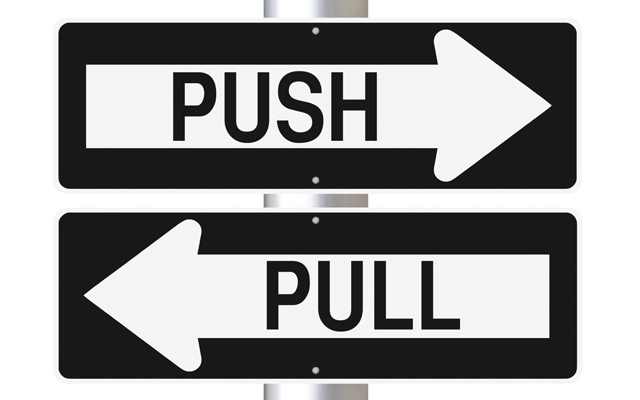
Pull factors are....
a)
good things that draw a person to another country.
b)
reasons people leave an area
c)
reasons that drive a person out of their country
202.

Better education- provision is better and more accessible is a .....
a)
push factor
b)
pull factor
203.

Opportunity to make more money is a .....
a)
push factor
b)
pull factor
204.
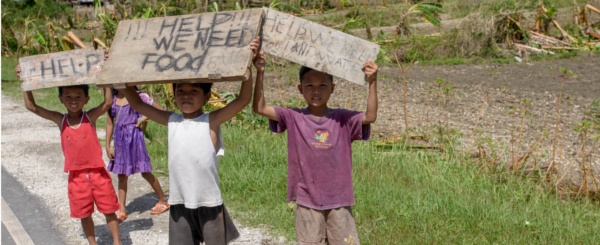
Limited food is a ....
a)
pull factor
b)
push factor
205.
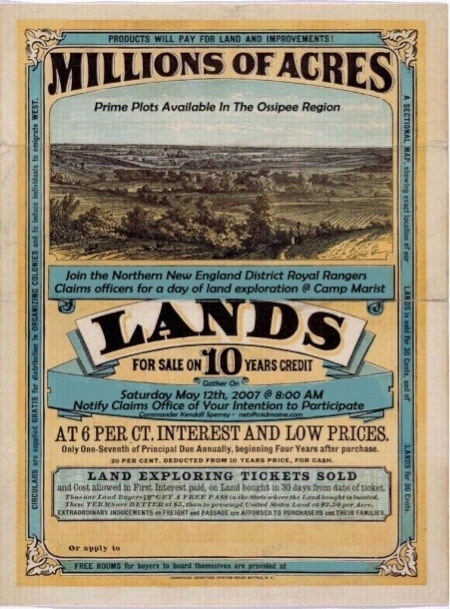
This image represents a push factor of pull factor?
a)
push factor
b)
pull factor
206.
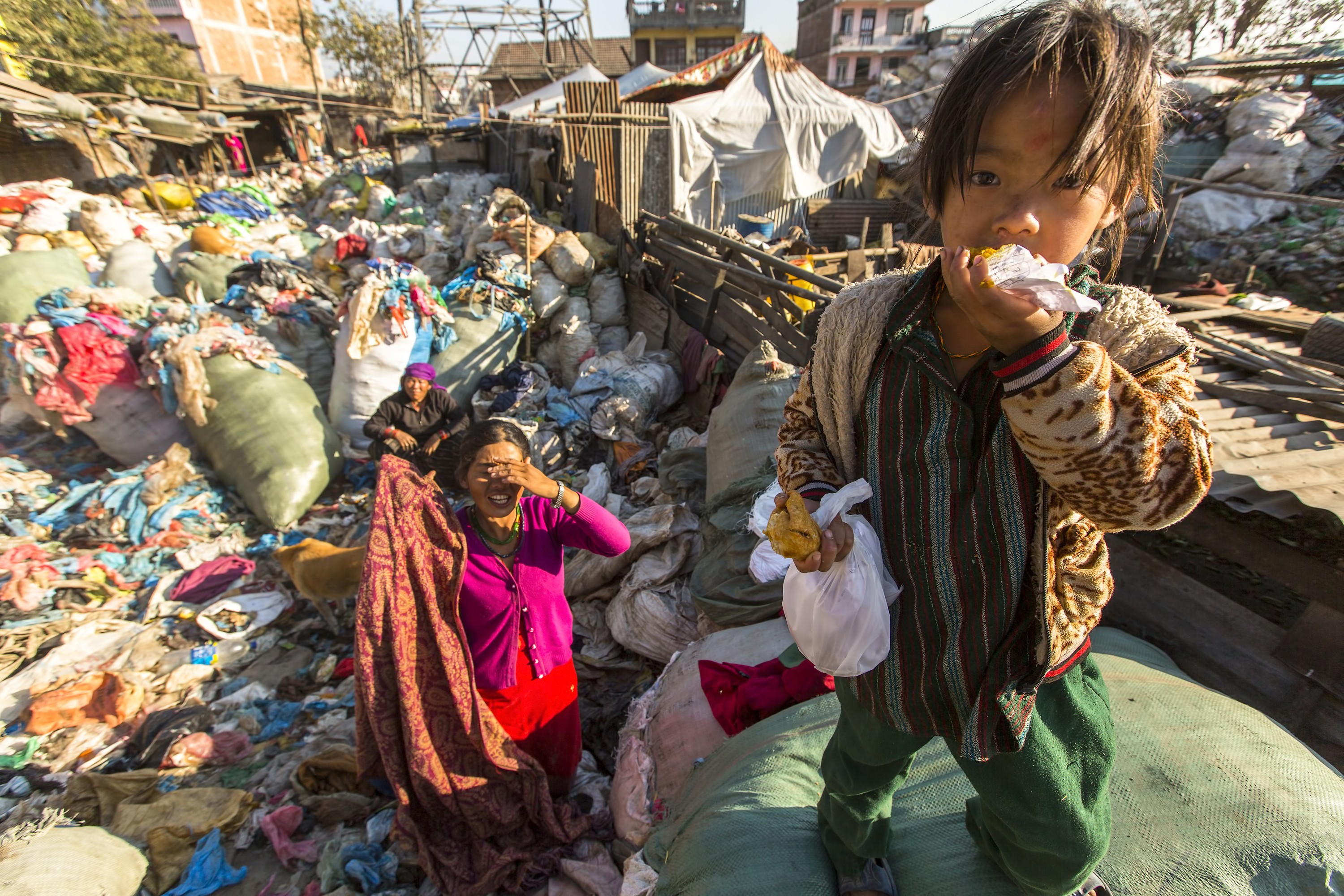
This image represents a push factor or a pull factor?
a)
push factor
b)
pull factor
207.
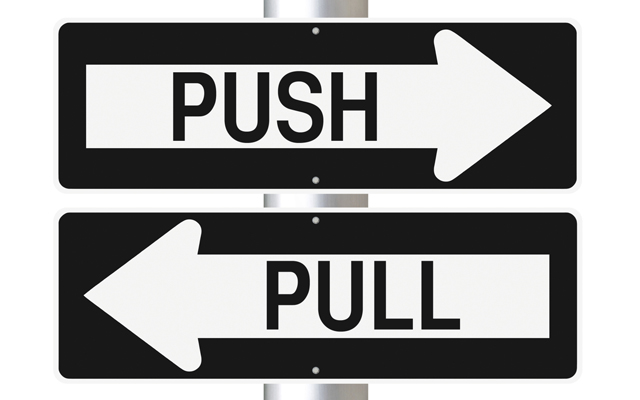
Push factors are....
a)
good things that draw a person to another country
b)
reasons that drive a person out of their country
c)
reasons people migrate to a new area
208.

The crime rate in New York city is one of the highest in the nation.
a)
push factor
b)
pull factor
209.
What is a migrant worker?
a)
One who moves from place to place
b)
The son of an immigrant
c)
-
d)
-
210.
What other name has Veterans Day been known as?
a)
Thanksgiving
b)
Armistice Day
c)
Hero Day
d)
The Day of Honor
211.

What is a veteran?
a)
people currently serving in the military
b)
people who served in the military
c)
only brave men
d)
only brave men
212.

The graph below shows the number of sunny days and rainy days in a city during four months.
Based on the graph,how many more sunny days than rainy days did this city have during the months of April, May, and June?
Based on the graph,how many more sunny days than rainy days did this city have during the months of April, May, and June?
a)
21
b)
56
c)
26
d)
20
213.
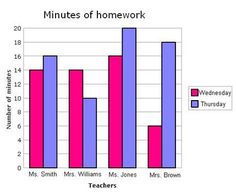
Which day had more minutes of homework?
a)
Wednesday
b)
Thursday
c)
Friday
d)
Ms. Jones
214.

At which age do the least amount of teens have a cell phone?
a)
18
b)
14
c)
13
d)
15
215.
What is the number of teens that have a cell phone at age 16?
a)
341
b)
430
c)
590
d)
642
216.
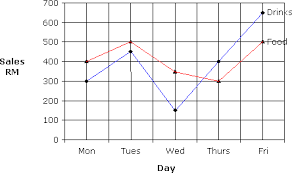
People buy more drinks on ____ than any other day.
a)
Monday
b)
Tuesday
c)
Thursday
d)
Friday
217.
What are the three MAIN reforms of the progressive movement?
a)
Drinking, women's rights, parking spaces
b)
Low wages, drinking, work hours
c)
Low wages, safe working conditions, child labor
d)
Friends, family, food
218.
Define suffrage:
a)
Right to laugh
b)
Right to suffer
c)
Right to have safe work
d)
Right to vote
219.
Define progressive:
a)
Change in hopes of ruining lives
b)
Change in hopes of bettering lives
220.

Which Progressive President provided the MOST change in the US?
a)
Teddy Roosvelet
b)
Wilson
c)
Taft
221.
What did the New Deal do?
a)
create new jobs
b)
feed homeless people
c)
mark down prices
222.
Franklin D. Roosevelt's plan for helping the country's economy was called:
a)
The Great Society
b)
The Constitution
c)
The Great Depression
d)
The New Deal
223.
Franklin D. Roosevelt's plan for helping the country's economy was called:
a)
The Great Society
b)
The Constitution
c)
The Great Depression
d)
The New Deal
100 %

