
Font size
 Worksheets
CFE Review
Total questions: 159
Worksheet time: 2hrs 45mins
The independent variable
Changes due to other factors
The change that you are making on purpose
Is an individual step of the experiment
Can be different when repeating the same experiment
The dependant variable
Is the thing you measure
Depends on the people/place doing the experiment
Must not change during the experiment
Is the thing you change on purpose
An experiment is reliable if
The experiment is done 3 times with big differences in results
You made a mistake in one trail but did not change it in the next
The same/similar results are obtained from 3 or more trials
It takes the same amount of time to complete each trail

In science class, Michalea was studying the vascular system of plants. She cut the bottom off a stalk of celery and then placed the celery in colored water. She left the celery in the cup for 24 hours. When she observed the celery, she noticed that there were colored tubes in the celery stalk, which she knew was the xylem tissue. She cut off a piece of the celery and observed it under a dissecting microscope and drew her observations.
Experimental
Descriptive
Comparative

In science class, Jackson learned that the underside of many leaves contained structures called stomata. Water vapor and other gases exit the plant through the stomata. Jackson wondered if the leaves of a hibiscus plant or the leaves from an ivy plant had more stomata. He used clear fingernail polish to paint a 2 cm square area on the underside of each leaf. He then placed clear packing tape on each painted area and lifted the tape and removed an impression of the leaf. He placed the clear packing tape on microscope slides and then observed the impressions and counted the number of stomata on each leaf.
Comparative
Descriptive
Experimental

Robert was asked to determine how temperature affects enzyme activity. Potatoes placed in hydrogen peroxide were used as a source of the enzyme catalase. Robert tested the potatoes under three different conditions: potatoes at room temperature, potatoes that had been placed in an ice bath, and potatoes that had been placed in boiling water. The potatoes at room temperature served as his control group. He counted the bubbles that formed to determine enzyme activity.
Descriptive
Experimental
Comparative
The purpose of this type of investigation is to determine relationships, it requires a hypothesis and variables but no controls.
Experimental
Comparative
Descriptive
The purpose of this investigation is to draw conclusions. The scientists' main tools are video and photography documentation and a scientific journal. It does NOT utilize a hypothesis, variables or controls.
Descriptive
Comparative
Experimental
The purpose of this type of investigation is determine causal relationships and utilizes a hypothesis, variables and a control.
Descriptive
Comparative
Experimental
What is the dependent variable?
In 1897, Joseph Thomson discovered that atoms contained electrons. He proposed a change in the atomic theory of that time, and the theory was modified because of his discovery. Since Thomson’s discovery, atomic theory has been further modified. What is the best explanation for why scientific theories are modified?
Theories more than ten years old are usually out of date.
Scientists want to prove that the work of other scientists is wrong.
New evidence that supports a change prompts scientists to modify earlier theories.
So much information is available today that it is harder to focus research and disprove theories.
Joe tells Gabby his theory about why sea turtles nest on the beach instead of in the ocean. He says, “The turtle eggs would sink to the bottom of the ocean, and the baby turtle would drown. I know this because my uncle is a fisherman, and he told me this information. Gabby tells Joe that his theory is not scientific. Why does Joe’s idea not meet the requirements to be a scientific theory?
Joe’s idea is already a scientific law.
Joe’s idea is not supported by scientific evidence.
Joe’s idea is a good guess that can be tested by experiments.
Joe and his uncle are not scientists.
The law of universal gravitation states that both mass and distance of objects affect the gravitational force between them. Gravitational force increases as the mass of the objects increase. Gravitational force decreases as distance between the objects increases. Why are these statements considered scientific law, and not scientific theory?
The statements tells what happens, and not why it happens.
The statements involve mass and distance measurements.
The statements explain the attractive force between two objects.
The statements predict what will happen under certain conditions.
Lilly was trying to explain to her friend the difference between a theory and a law in science. She used the theory of plate tectonics and the law of superposition as examples. Lilli explained the difference by using non-scientific language. Which statement could Lilly use to correctly describe the difference between a theory and a law in science?
A theory describes a natural event, while a law explains it.
A theory explains a natural event, while a law predicts it.
A theory explains a natural event, while a law describes it.
A theory predicts a natural event, while a law explains it.
SC.6.N.1.2
Experiments are often repeated many times by the same or different scientists. What is the most important reason more than one scientist should conduct an investigation using the same methods?
a. If the results are the same, replication of the investigation helps to confirm the results.
b. The competition makes the scientists work more carefully.
c. More than one scientist is interested in the problem.
d. Different scientists might perform the experiment differently.
a
b
c
d
SC.6.N.1.4
Ty and Crystal are working together to learn about surface tension. They each add pennies to their own cup of water to see how many they can add before the cup overflows. Ty is able to add 15 pennies. Crystal is able to add 38. What should their next step be?
a. They should discuss differences in their methods.
b. They should each claim that their answer is right.
c. They should record their results and move on to a different investigation.
d. They should repeat the experiment using different pennies.
a
b
c
d
What is the BEST reason you always repeat an experiment?
Make sure your data is consistent and accurate
Make sure your data supports your prediction
Make sure your experiment is easy to do
Make sure your experiment has lots of data
1. How does wind cause weathering?
Wind cannot cause the weathering of rocks.
Wind can blow sand and create new landforms.
Wind picks up sand or dry soil and carries it from one place to another.
Blowing sand can wear away a rock's surface and break it into smaller pieces.
2. Weathering is a process that helps make soil. All but one statement describes how rocks may be weathered. That is:
Water fills tiny spaces inside a rock.
Rock pieces are moved from place to place.
Plant roots can grow between cracks in rocks.
Living things, like moss and lichens, chemically break down rocks.

3. Erosion in this area is most likely caused by
wind.
water.
gravity.
action of animals.
4. How do wind and water change rocks over time?
They add minerals to the rocks.
They change the shape of the rocks.
They increase the mass of the rocks.
They build up the rocks with small sand particles.

Jane was looking at a cliff made up of several layers of different kinds of rock. Near the top of the cliff, she found a fossilized bone. Near the middle, she found the fossil of a fern. At the bottom, she found a fossilized shell.
What process was critical in the formation and preservation of the fossils?
plate tectonics
deposition
chemical weathering
abrasion
Many processes help to shape Earth’s surface. Starting with a rock, in what order would you expect the following Earth processes to occur?
deposition, eruption, weathering
erosion, weathering, deposition
eruption, erosion, weathering
weathering, erosion, deposition
Weathering and erosion are two processes that shape Earth’s surface. Which of the following sets of factors causes both weathering and erosion?
moving water, plants, wind
glaciers, waves, wind
acids, tree roots, waves
acids, plants, ice
Marsha places a sealed plastic bottle of water in a freezer. The next day she discovers that the water has frozen and split the sides of the bottle. What process does this phenomenon best represent?
chemical weathering
deposition
mountain building
physical weathering
Sand dunes form along some coastlines. Which factor is most responsible for forming sand dunes?
rain
wind
water
ice
Many thousands of years ago, glaciers covered large areas of Earth’s surface. Glaciers are large blocks of ice that flow slowly over the land. Portions of the ice melted and refroze many times over the years. Which explanation best describes how glaciers contributed to the formation of coastal plains?
Water from the melting ice elevated the shoreline, forming plateaus.
Water from the melting ice flooded the plains, causing plants to die
Water from the melting ice smoothed sediments along the shore.
Water from the melting ice deposited sand on the ocean floor.

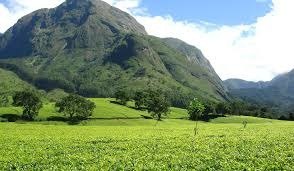
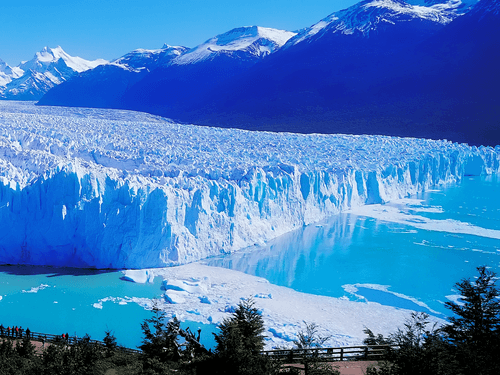
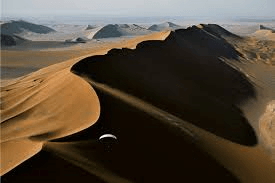
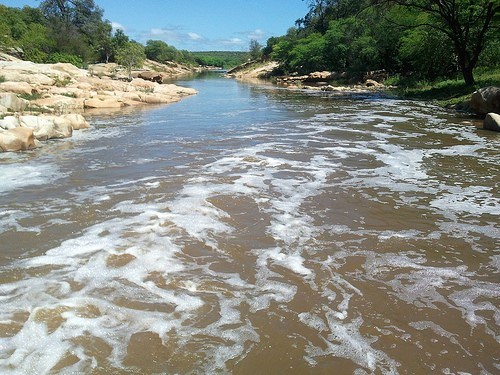
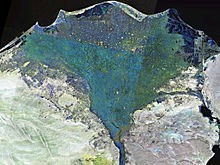

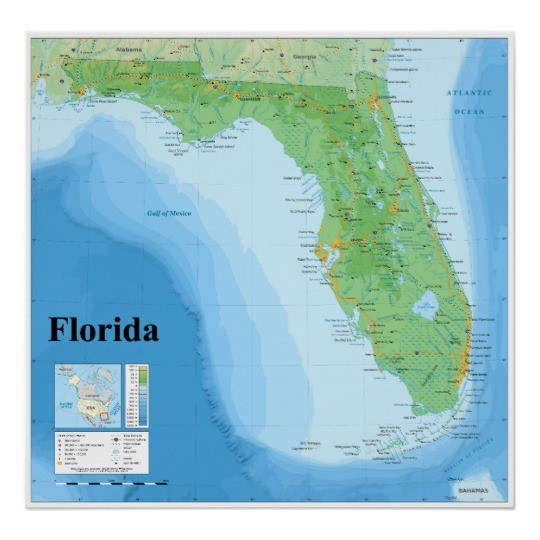
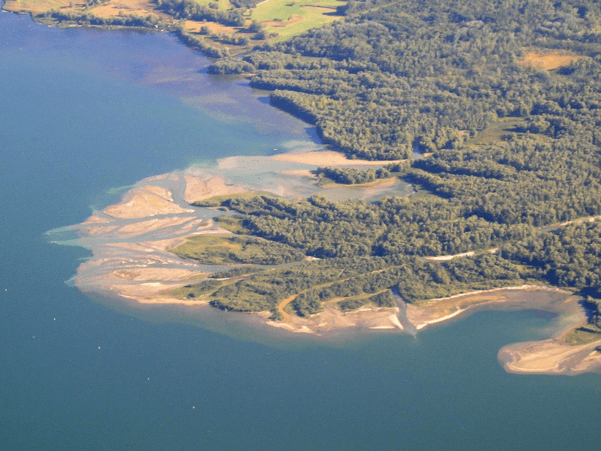

The state of Florida is a peninsula. What type of landform borders the Florida peninsula on three sides?
river
delta
coastline
mountain
Sand dunes can have many shapes and sizes. How is a natural sand dune formed?
Windblown sand piles up on an open beach.
Windblown sand is trapped by beach grass
or other objects
Sand is washed up on shore from the
ocean and forms hills.
Animals push sand into small hills as
they burrow along a beach.
How does a delta form?
It forms when sediments are deposited at the mouth of a river
It forms when sediments are carried away
from an ocean or lake.
It forms when sediments are deposited at the base of a mountain
It forms when sediments are deposited along the banks of a river
The interaction between the cryosphere and hydrosphere can have an impact on Earth’s oceans. Which of the following is an example of an interaction between the cryosphere and hydrosphere?
evaporation of water from oceans at the equator
release of fresh water into ocean water as icebergs melt
decomposition of organic matter at the bottom of oceans
release of large amounts of salt from icebergs into the ocean

Ice from glaciers carves parts of Earth’s crust, changing V-shaped river valleys into broad, U-shaped valleys. Which of the following spheres are interacting?
geosphere and biosphere
cryosphere and geosphere
biosphere and hydrosphere
hydrosphere and cryosphere
Each of Earth's spheres is distinguished by the materials from which it is made. Plants and animals make up part of which sphere?
biosphere
cryosphere
atmosphere
hydrospheres
Each of Earth’s spheres is characterized by specific processes. What is one example of how the cryosphere interacts with the hydrosphere?
Sea ice melts, adding water to the oceans.
Ice reflects 50% more sunlight than does water.
Strong winds cause sea ice to change directly to water vapor.
The ice covering Antarctica provides breeding sites for penguins.

Look at the illustration. The volcanic eruption is sending out clouds of dust and ash. An interaction between which two spheres is being demonstrated?
biosphere and geosphere
cryosphere and biosphere
geosphere and atmosphere
atmosphere and hydrosphere
Electromagnetic waves produced by the sun travel through space to Earth. What is this method of energy transfer called?
CONVECTION
CONDUCTION
INSULATION
RADIATION
Conduction results in the transfer of energy as heat. Which of the following is the best example of energy transfer by conduction?
Sunlight shines on the ocean warms the surface water.
Cold surface water is warmed by warm air directly above it.
Cold ocean water sinks deep into the ocean while warm ocean water rises upward
Water in the shallow parts of the ocean is warmer than waters in the deeper parts of the ocean.
Earth’s atmosphere is not uniform in temperature. What is the primary method by which energy as heat can be rapidly transferred and cycled through different elevations in Earth’s atmosphere?
convection
conduction
insulation
radiation
Solar energy does not warm Earth’s surface evenly. For example, during the day, land areas warm up faster than nearby bodies of water. How does this uneven warming affect the movement of air over land and water?
The cooler, denser air above the water flows toward the warmer, less dense air above the land, causing a sea breeze.
The warmer, less dense air above the land flows toward the cooler, denser air above the water, causing a land breeze.
The cooler air over the water would absorb water vapor and rise, resulting in rainy conditions over the shoreline.
The warmer air over the land would transfer energy to the cooler air by conduction, leading to a uniform air temperature.
Sunlight does not reach all parts of Earth's surface equally. This results in uneven heating of Earth’s surface and the formation of wind. Why does the uneven heating of Earth's surface produce wind?
It causes condensation in the atmosphere.
It causes pressure differences in the atmosphere.
It causes differences in the level of water vapor in the atmosphere.
It causes cooler air to rise, creating a partial vacuum near the surface.
During a summer day on the beach, the sand on the beach and the air temperature feel hot, but the ocean water feels cold. This is because the land and air change temperature much faster than the ocean water, making the land and the air warmer than the ocean water. At night, why would the ocean water be warmer than the air?
As a cool breeze blows off the water onto the land, the water warms up.
The heat from the air transfers to the water during the night, making the water warmer than it was during the day.
Air changes temperature faster than water, so the water is warmer and the air is much cooler than it was during the day.
Air stays warmer longer than water so your body is warm when you jump into the water.
Which detail about Earth’s atmosphere is true?
It has no effect on surface temperatures.
It shields life forms on the surface from radiation.
It allows meteors to strike the surface.
It is thicker over places where there are high elevations.
The sun emits harmful ultraviolet radiation, some of which reaches Earth's surface. Scientists recommend that people who plan on being outdoors for at least 20 minutes apply sunscreen to protect their skin from ultraviolet radiation. What blocks most of the sun’s ultraviolet radiation from reaching Earth's surface?
wind
precipitation
clouds
atmosphere

What is found at letter E?
Polar Easterlies
Prevailing Westerlies
Doldrums
Tradewinds
How does wind move?
From areas of low pressure to areas of high pressure.
From areas of high pressure to areas of low pressure.
From areas of high temperature to areas of low tempreture
From areas of low temperature to areas of high temperature
Identify the correct hierarchical organization of an organism
Atoms, molecules, cells, tissues, organs, organ systems, organisms
Organisms, atoms, molecules, cells, tissues, organs, organ systems
Organ systems, organisms, atoms, molecules, cells, tissues, organs
Organs, organ systems, organisms, atoms, molecules, cells, tissues

Structures in the human body work together to perform specific functions. The diagram below shows the organization of structures found in the human body.
A picture of which of the following structures belongs in the box above?
Cell
Organ
Organelle
Tissue

Eugene drew the following diagram to describe the levels of structural organization of an animal’s body. At the top of the pyramid he put the animal’s body. The level of organization that is least specialized will be at the bottom.
Which of the following should Eugene list at the bottom of his diagram?
Organ
Tissue
Cell
Organ system

Which term best fits the level of organization pictured in the diagram?
Organ
Tissue
Single cell
Organ system

The diagram shows parts of the human body. These parts work together to help you digest the food you eat.
Which term best describes the entire group of parts that are labeled?
Organ
Tissue
Cell
Organ system
In a human body, which of the following represents the highest level of structural organization?
Lung tissue
The lungs
The respiratory system
An atom in the lung
Which of these statements describes an organ system?
Many cells working together to perform a function
Many organs working together to perform a function
Many cells working separately to perform different functions
Many organs working separately to perform different functions
Cells exchange materials with their environment. What is the main reason for this?
To replace damaged and dying cells
To keep the cell membrane functioning
To release energy into their environment
To get rid of wastes and take in nutrients
Which of the following is something that all living organisms have in common?
They all contain at least one cell.
They all need a source of oxygen.
They all use other organisms for food.
They all find mates to reproduce.
Which of the following is not part of the cell theory?
Cells come from other cells.
All living things are made of cells.
Cells can be seen through a microscope.
Cells are the units of structure and function in living things.
Homeostasis is necessary for a cell to survive.
What is the definition of homeostasis?
The elimination of wastes
The process by which energy from the sun is used to make food
The maintenance of a stable internal environment
The division of cells to form new cells

The cell theory applies to all organisms, including the five shown above.
Which of the following statements describes how these organisms are an example of the cell theory?
The cells of the organisms undergo photosynthesis.
The organisms are made of one or more cells.
The cells of the organisms are identical to each other.
The organisms have cells that lack a nucleus.
What is homeostasis?
The body's tendency to keep an internal balance
Cell wall
Peninsula
Staying hydrated

Plant cells are different from animal cells. The diagram below identifies four different structures in a plant cell.
Compared to the structures in an animal cell, which of the following structures is found only in a plant cell? .
Cytoplasm
Cell Wall
Mitochondrion
Nucleus

The diagram shown is a useful scientific model because it shows:
An animal cell as it really looks.
A plant cell as it really looks.
The structures of a typical plant cell.
How the structures of a cell function.
A cell can be seen by looking through a microscope.
Seeing which of these organelles would let you know that you are looking at a plant cell?
Mitochondria
Chloroplast
Cell membrane
Nucleus
In biology class, Zach observes cells. Each cell has a structure that separates the inside of the cell from the environment.
Which structure is Zach observing?
Nucleus
Cytoskeleton
Cell membrane
Genetic material

My cell is prokaryotic, what kingdom do I belong to?
Fungi
Bacteria
Plant
Protist

A cell with a nucleus is
Autotrophic
Prokaryotic
Eukaryotic
Heterotrophic

Kingdom with the following characteristics: eukaryotic cells, unicellular or multicellular, autotrophic or heterotrophic
Fungi
Archaebacteria
Protist
Plant

Nutrition that consists of obtaining nutrients from other living being
Autotrophic
Photosynthesis
Interaction
Heterotrophic

Kingdom with the following characteristics: eukaryotic cells, with tissues and autotrophic
Archaebacteria
Fungi
Bacteria
Plant
Most organisms are known by their common names, which vary by region and language. They also have scientific names based on their classification. How are scientific names determined?
by using trinomial nomenclature, where the first part of an organism's name is its order, the second part is its kingdom, and the third part is its phylum
by using polynomial nomenclature, where the first part of organism's name its it order, followed by its domain, species, and kingdom
by using binomial nomenclature, where the first part of an organism's name is its genus, and the second part is its species
by using uninomial nomenclature, where the single name is a combination of the kingdom and
(Taxonomy) An organism's scientific name includes its...
Family & Genus
Kingdom & Family
Genus & Species
Class & Genus
Which domain(s) include only prokaryotic cells? (without nucleus)
Eukarya & Bacteria
Archaeabacteria
Bacteria & Archeabacteria
Bacteria
Which domain(s) include organisms that have eukaryotic cells? (has nucleus)
Eukarya
Eukarya & Bacteria
Bacteria
Archaeabacteria
Members of this kingdom are multicellular and heterotrophic, and most can move:
Protista
Animalia
Plantae
Fungi
Which kingdom contains organisms that are mostly multicellular, have cell walls of chitin, reproduce by spores, and obtain nutrients by absorbing?
Fungi
Plantae
Animalia
Protista
Mushrooms, bread molds, and yeasts are classified together in the fungi kingdom. Specific characteristics are used to classify these organisms. Which of the following is a characteristic used to classify these organisms as fungi?
They are parasites.
They are unicellular
They are prokaryotes.
They are heterotrophs.
A biologist discovers a new organism. What helps the biologist classify the new organism into a specific group?
how long the organism lives
where the organism lives
common traits with other organisms
how recently the organism was discovered
Plant cells are different from animal cells.
Compared to the structures in an animal cell, which of the following structures is found only in a plant cell?
Cell Wall
Nucleus
Cytoplasm
Mitochondria
Which cell organelle controls all the activities of the cell?
Cell Wall
Cell Membrane
Chloroplasts
Nucleus
A cell can be seen by looking through a microscope. Seeing which of these organelles would let you know that you are looking at a plant cell?
Cell Membrane
Chloroplasts
Mitochondria
Nucleus
The presence of which organelles causes many plants to appear green?
Cytoplasm
Cell Membrane
Vacuoles
Chloroplasts
Controls what enters/leaves a cell
cell membrane
vacuole
cell wall
cytoplasm

Which of the following converts food into energy for the cell?
vacuole
mitochondria
cytoplasm
cell membrane

Some skateboarders use a structure called a half-pipe, like the one shown, to perform impressive tricks. Which of the positions will provide a skateboarder with the GREATEST potential energy?
1
2
3
4
Some skateboarders use a structure called a half-pipe, like the one shown, to perform impressive tricks. Which of the positions will provide a skateboarder with the GREATEST kinetic energy?
1
2
3
4
Mechanical energy is the sum of two types of energy—kinetic energy and potential energy of position. Which of the following is an example of an object that has kinetic energy?
a snail crawling across a leaf
a computer monitor sitting on a desk
a tightly wound spring in a windup toy
a roller coaster car just before it goes downhill
Mechanical energy is the sum of two types of energy—kinetic energy and potential energy of position. Which of the following is an example of an object that has potential energy?
a snail crawling across a leaf
a computer monitor sitting on a desk
a jumping windup toy
a roller coaster car going downhill

The table shows the speed and height over time of a ball that starts at rest, then is dropped from the top of a building, which is 60 meters (m) tall. Use the table to answer any questions that follow.
At which time is the ball's potential energy at its maximum?
0.0 s
0.5 s
2.0 s
2.5 s
The table shows the speed and height over time of a ball that starts at rest, then is dropped from the top of a building, which is 60 meters (m) tall. Use the table to answer any questions that follow.
At which time is the ball's kinetic energy at its maximum?
0.0 s
0.5 s
2.0 s
2.5 s

The diagram illustrates four phases of a model rocket's flight. Use the diagram to answer any questions that follow.
When is the rocket's potential energy decreasing and its kinetic energy increasing?
when the rocket's motor is burning and when the rocket is free falling
when the rocket's motor is burning and when the rocket is ascending
when the rocket is at the peak of flight, only
when the rocket is free falling, only
The diagram illustrates four phases of a model rocket's flight. Use the diagram to answer any questions that follow.
When is the rocket's potential energy increasing and its kinetic energy decreasing?
when the rocket's motor is burning and when the rocket is free falling
when the rocket's motor is burning and when the rocket is ascending
when the rocket is at the peak of flight, only
when the rocket is free falling, only
Which of the following examples of a cheetah has the most kinetic energy?
The cheetah that is sitting
The cheetah that is running
The cheetah that is eating
The cheetah that is walking
Which of the following examples of a cheetah has the most potential energy?
The cheetah that is sitting
The cheetah that is running
The cheetah that is eating
The cheetah that is walking

The picture shows a train as it approaches a hill. This train can only make it over the hill if it approaches at its top speed because it will lose speed as it climbs.
What changes are taking place in the train’s potential and kinetic energy as it climbs the hill?
The train’s potential energy is increasing, and its kinetic energy is increasing
The train’s potential energy is increasing, and its kinetic energy is decreasing
The train’s potential energy is decreasing, and its kinetic energy is increasing
The train’s potential energy is decreasing, and its kinetic energy is decreasing
The picture shows a train as it approaches a hill. This train can only make it over the hill if it approaches at its top speed because it will lose speed as it climbs.
What changes are taking place in the train’s potential and kinetic energy as it goes down the hill?
The train’s potential energy is increasing, and its kinetic energy is increasing
The train’s potential energy is increasing, and its kinetic energy is decreasing
The train’s potential energy is decreasing, and its kinetic energy is increasing
The train’s potential energy is decreasing, and its kinetic energy is decreasing
The table shows the speed and height over time of a ball that starts at rest, then is dropped from the top of a building, which is 60 meters (m) tall. Use the table to answer any questions that follow.
What is happening to the ball's energy at a time of 1.5 seconds?
The ball's kinetic energy is decreasing and its potential energy is decreasing
The ball's kinetic energy is increasing and its potential energy is decreasing
The ball's kinetic energy is decreasing and its potential energy is increasing
The ball's kinetic energy is increasing and its potential energy is increasing

The picture shows the path of a ball on a track. Use the picture to answer any questions that follow. Which series shows decreasing potential energy and increasing kinetic energy?
T, Y, Z
W, X, Y
S, T, U
V, X, Z
The picture shows the path of a ball on a track. Use the picture to answer any questions that follow. Which series shows decreasing kinetic energy and increasing potential energy?
T, Y, Z
W, X, Y
S, T, U
V, X, Z

1. Damon made the graph below to compare the speed limits on four different roads in his county. He converted the speed limits from miles per hour to miles per minute to get a closer comparison. Which road has the slowest speed limit?
Road A
Road B
Road C
Road D


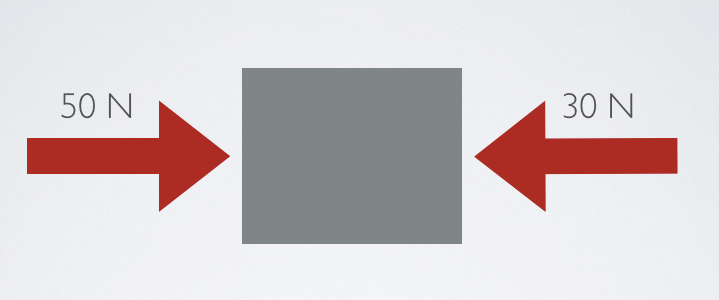


A contact force is from
objects physically touching
far apart objects
not touching object
always a pull
A non-contact force is between
two objects that aren't touching
two objects that are touching
the ground and wheels
you and me

Gravity is a
Contact Force
Myth
Non-contact Force
as the mass of an object increases, the pull of gravity...
Increases
Decreases
Stays the same
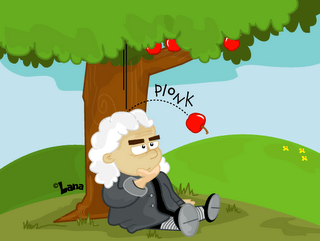
Energy stored because of gravity is called:
Gravitational Potential Energy
Kinetic Energy
Mechanical Advantage
Chemical Energy

Are forces applied when the objects involved are in direct contact.
Contact forces
Normal forces
action-at-a-distance forces
When a body moves another.
Normal force
Friction
Elastic
Pushing or pulling
Generated between two bodies in contact with each other by resistance to rubbing between them.
Push or pull
Tension
Elasticity
Friction
Is the force of attraction that the body with mass exerts on another.
Tension
Push or pull
Gravity
Normal force


Why is the gravity on Earth greater than the gravity on Mars?
Mars has less mass than Earth.
Mars has a smaller radius than Earth.
Earth has less surface area than Mars.
Earth has a thicker atmosphere than Mars.
A student drops a bowling ball and an apple from a third-story window. Both objects hit the ground at the same time. From the experiment, the student should conclude that
the apple weighs more than the bowling ball
more air friction is acting on the apple than on the bowling ball
gravity pulls on both objects, causing them to fall at the same time.
Which is needed to determine the amount of gravitational force between two objects?
distance and mass
weight and time
area and weight

