
NEW
Font size
 Worksheets
Fossils Review
Total questions: 25
Worksheet time: 25mins
The hardened remains of a living thing that died long ago.
fossil
extinct
endangered
minerals
Which is an imprint fossil?
bone
a cast
an animal track
amber fossil

An animal has sharp, pointy teeth, what can we infer about this animal?
The animal lived in the water
The animal lived near the beach.
The animal is a carnivore.
The animal only ate plants.
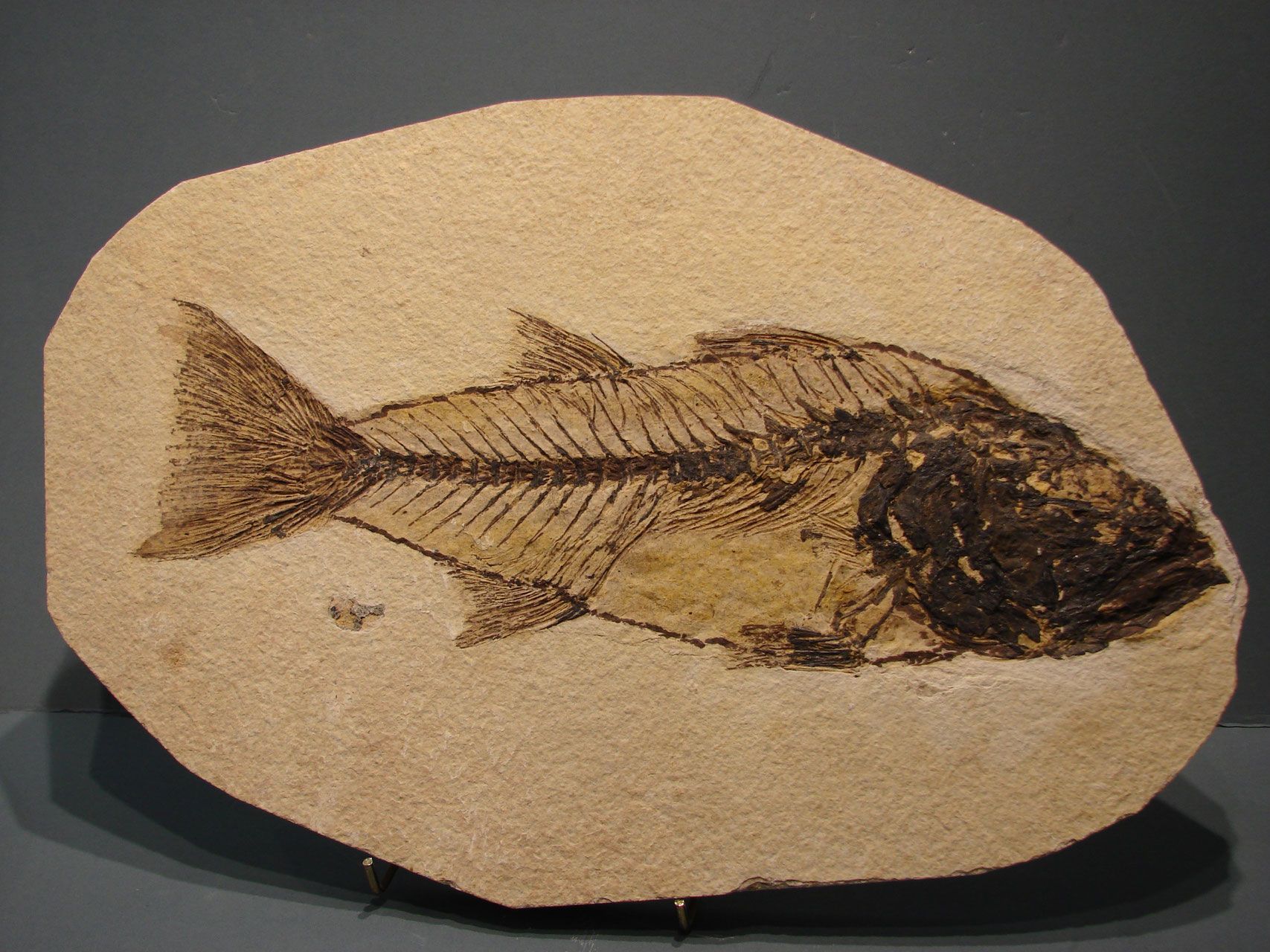
If a scientist found a fish fossil in the desert, what can they infer?
An animal ate the fish.
The water covered the area long ago.
Today's fish looks the same
The fish is endangered.
What statement is true about fossils?
All living organisms leave behind fossils.
Fossils show that camels never change.
Some living things have not really changed in millions of years.
Plant fossils have never changed.
What needs to happen FIRST for a fossil to form?
A plant or animal must be covered by sediment.
A plant or animal must die and decompose.
Sediments fill a a mold to form a cast.
An earthquake shifts the land up.
How can you make a mold of an ancient seashell?
Press the seashell in model clay.
Draw the seashell
Press the seashell in model clay to make a mold then fill it in.
Trace the seashell

This type of fossil is tree sap hardened and replaced by minerals.
Petrified wood
Imprint
Amber
Mold
Turtles look much like they did millions of years ago. What can we infer about turtle fossils?
They did not change over time.
The turtle survived the ice age.
Turtles went extinct.
Turtles were never endangered.

What can we infer about animals with dull teeth?
They ate other animals.
They ate only plants.
They ate nothing.
They only ate fish.
In which kind of rock do we usually find a fossil?
sedimentary rock
metamorphic rock
igneous rock
If you know the age of a rock, you know the relative age of the _________________ that was found inside.
sticky tar
fossil
amber
ice
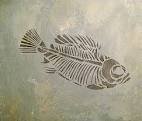
If scientists found this fossil in a desert, what could they infer?
what fish are like today
that this fish lacked oxygen
that water once covered the area where this fossil was found
_______________is a scientist who studies fossils.
geologist
fossilologist
paleontologist
extinct
The remains of an organism studied by scientists is called a ____________.
paleontologist
fossil
dinosaur
shark
When something is _____________________ it no longer
exists.
extinct
preserved
endangered
rotting
Which is NOT a reason scientists study fossils?
They tell us how long a species existed on Earth.
To learn how organisms are related to each other.
How organisms communicated with each other.
Fossils tell scientists the types of environments that organisms lived in.
Which would be an example of a fossil?
Sedimentary Rock
Dinosaur Footprint
Oyster Pearl
Rotting Log
Which type of fossil is created when an organism gets trapped in tree resin?
Trace
Mold/Imprint
Amber
Cast
Which is NOT a way an organism could become a fossil?
It can be frozen in ice.
It can be quickly buried in sediment after death.
It can be trapped in the resin of a tree.
It can be left out in the sun to decompose.
An organism should be buried quickly after it dies if it has a chance of becoming a fossil
True
False
How do scientists learn about dinosaurs?
by studying fossils
by reading about them
by watching movies
by looking at pictures
Which is NOT a step in the process an organism goes through to become a fossil?
Layers of sediment build up on the buried body.
A organism dies and is buried quickly.
Minerals fill the spaces of the decaying bone.
An organism becomes extinct.

