wayground logo

Free Printable Worksheets

NEW

Font size

S
M
L
XL
Worksheets

Honors Nuclear Quiz

Total questions: 21

Worksheet time: 43mins
Name
Class
Date
1.
The splitting of a nucleus into smaller nuclei is
a)
fusion
b)
fission
c)
half-life
d)
gamma radiation
2.
How is nuclear fusion different from nuclear fission?
a)
In fusion, the product is a larger atomic nucleus.
b)
Fission produces energy but fusion does not.
c)
Fusion produces energy but fission does not.
d)
In fission, the product is a larger atomic nucleus.
3.
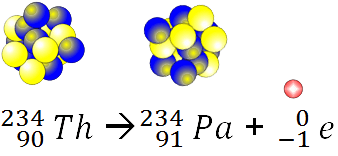
Which type of nuclear radiation is being emitted here?
a)
Alpha
b)
beta
c)
gamma 
d)
none
4.
This is an example of ---
a)
Radioactive Decay
b)
Nuclear Fission
c)
Nuclear Fusion
d)
Fossil fuel reaction
5.
Which type of nuclear radiation is being emitted here?
a)
alpha
b)
beta
c)
gamma
d)
none
6.
What particle completes this reaction?
a)
alpha particle
b)
beta particle
c)
gamma particle
d)
neutron
7.

Which best represents nuclear fission?

a)

F

b)

G

c)

H

d)

J

8.
What makes something radioactive?
a)
elements with an atomic number above 81
b)
an unstable nucleus
c)
contaminated sewage
d)
It decays over time
9.

The radioactive nucleus Rubidium (of mass number 87 and proton number 37) decays with the emission of a beta-particle. How many protons and neutrons are left in the nucleus?

a)

protons = 37, neutrons = 49

b)

protons = 37, neutrons = 50

c)

protons = 38, neutrons = 49

d)

protons = 38, neutrons = 87

10.

Plutonium (of mass number 240 and proton number 94) decays with the emission of alpha-particle. What is the new proton number and mass number of the new nucleus?

a)

proton number = 92, mass number = 236

b)

proton number = 92, mass number = 240

c)

proton number = 91, mass number = 240

d)

proton number = 91, mass number = 236

11.

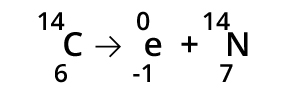
What type of decay is shown here?

a)

alpha decay

b)

beta decay

c)

gamma decay

12.
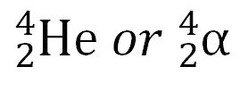
What do these symbols represent?
a)
alpha particle
b)
beta particle
c)
neutron
d)
gamma ray
13.
What type of nuclear equation is this?
a)
fusion
b)
fission
c)
alpha
d)
beta
14.
Arrange in order of increasing ability to penetrate matter.
a)
Beta, gamma, alpha
b)
Alpha, gamma, beta
c)
Gamma, beta, alpha
d)
Alpha, beta, gamma
15.
What is meant by the statement that 15P32 has a half life of 14 days
a)
It takes 7 days to go down to 50% radioactivity each time
b)
It takes 14 days to go down to 50% radioactivity each time
c)
After 14 days it starts to become less radioactive
d)
It takes 14 days to go up by 50% radioactivity each time
16.

The half life of Thorium-234 is 24 days. How many grams of a 120 g sample of the element remains after 96 days

a)

0 g

b)

15 grams

c)

7.5 g

d)

60 g

17.
Gamma rays have a _____ charge
a)
0
b)
+1
c)
-1
d)
+2
18.
What type of decay is this?
7534Se + 0-1e --> 7533As
a)
Electron Capture
b)
Positron Emission
c)
Alpha Decay
d)
Beta Decay
19.
Solve this equation for alpha decay.
85209At = ___ + 24He
a)
83205Bi
b)
86209Rn
c)
81207Tl
d)
85208At
20.

If 1,000 g of iodine-131 is given to a patient, how much is left after 24 days? The half-life of iodine-131 is 8 days.

a)

125g

b)

1,500g

c)

1.25g

d)

25g

e)

50g

21.

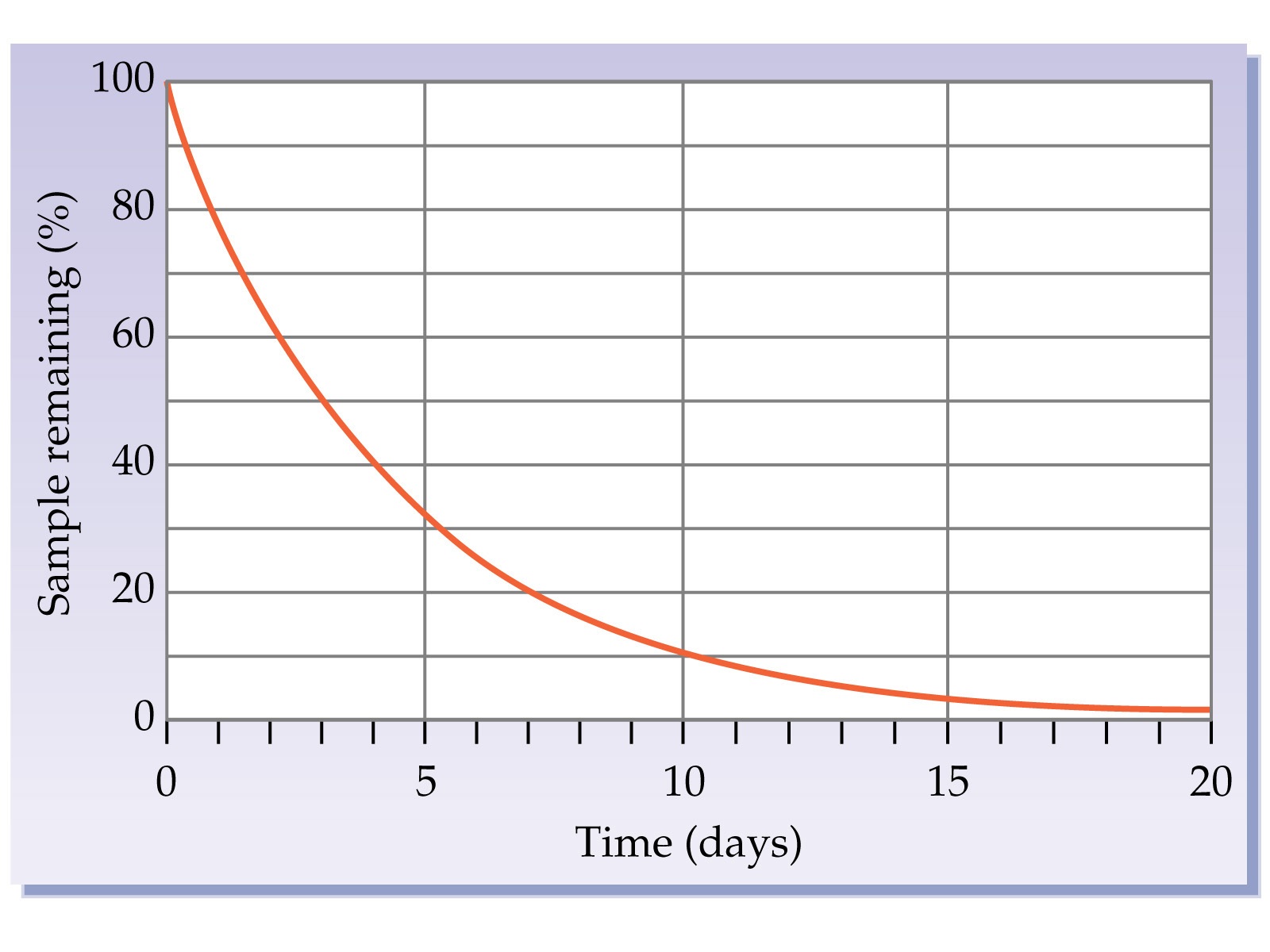
What is the Half Life of this isotope?

a)

3 days

b)

5 days

c)

8 days

d)

10 days

e)

1 day