Wayground logo

Free Printable Worksheets

Font size

S
M
L
XL
Worksheets

Q4 Exam Review (Taxonomy, Immunity/Behavior, Ecology)

Total questions: 50

Worksheet time: 47mins

Name
Class
Date
1.
The scientific name for an organism is made from the:
a)
class and family name
b)
genus and species name
c)
domain and kingdom name
d)
kingdom and phylum name
2.
An illustration and a dichotomous key are given. What is the correct classification for this organism?
a)
Class Insecta
b)
Order Amblygygi
c)
Order Araneae
d)
Order Scorpiones
3.

Which organism in the table shown is most closely related to the common dolphin?

a)

human

b)

killer whale

c)

giant kelp

d)

bat star

4.
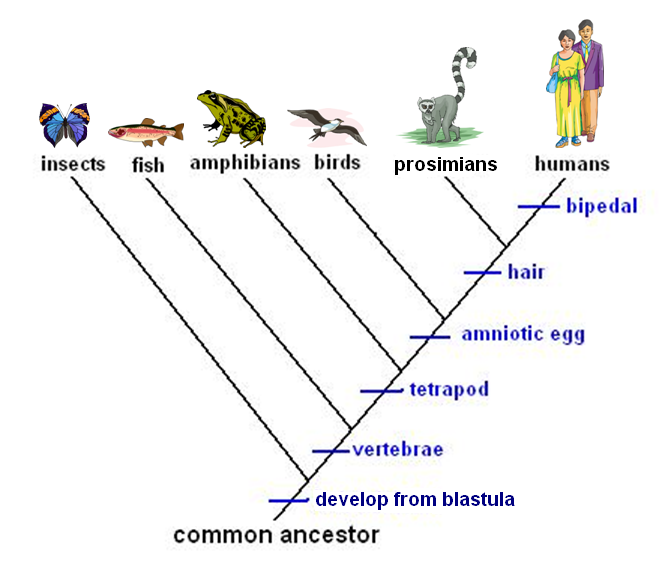
Which organisms pictured on the cladogram have hair?
a)
prosimians only
b)
prosimians and humans
c)
humans only
d)
prosimians and birds
5.
I have a nuclear membrane, can do photosynthesis and am multicellular. What kingdom do I belong to?
a)
Animalia
b)
Archaebacteria
c)
Plantae
d)
Protista
6.

The 7 levels of classification, broadest to most specific.

a)

Genus, Family, Order, Class, Phylum, Kingdom, Species

b)

Species, Genus, Family, Order, Class, Phylum, Kingdom

c)

Kingdom, Phylum, Class, Order, Family, Genus, Species

d)

Kingdom, Species, Domain, Phylum, Family, Class, Genus

7.

This organism is multicellular, heterotroph, that has a cell wall made of chitin and long hyphae used for food absorption. What kingdom does it belong in?

a)

fungi

b)

plantae

c)

animalia

d)

eubacteria

8.
Which of the following is NOT a rule of binomial nomenclature?
a)
Entire name should be written in capital letters.
b)
First name is genus, second name is species.
c)
Must be italicized or underlined.
d)
First name is capitalized, second name is lowercase.
9.
According to the diagram, the dog shares the LEAST number of characteristics with what organism?
a)
Plant
b)
Wolf
c)
Cat
d)
Insect
10.
Using this dichotomous key, identity the name of the circled fish.
a)
band-tail puffer
b)
spotted goat fish
c)
peacock flounder
d)
trumpet fish
11.

How are gymnosperms different from angiosperms?

a)

Gymnosperms produce flowers, while angiosperms produce cones.

b)

Gymnosperms have vascular tissue, while angiosperms have no vascular tissue.

c)

Gymnosperms produce seeds located on a cone, while angiosperms produce seeds enclosed in a fruit.

d)

Gymnosperms have broad, flat leaves, while angiosperms have leaves that develop into needles.

12.
What kingdom do unicellular, prokaryotic organisms that live in extreme environments?
a)
Animal
b)
Archaebacteria
c)
Eubacteria
d)
Plant
13.
Which organisms are most closely related?
a)
Equus caballas (Horse) & Equus burchellii (Zebra)
b)
Cyanea artica (Jellyfish) &
Ctenodiscus crispatus (Mud Starfish)
c)
Naja naja (cobra) & Glycine max (soya bean)
d)
Ophiocomina nigra (black brittle star) & Brassica nigra (black mustard)
14.

Which is the correct classification of humans from largest to smallest classification?

a)

Animalia, Chordata, Mammalia,

Primates,

Hominidae,

Homo

sapiens

b)

Animalia, Chordata, Mammalia,

Sapien,

Hominidae,

Homo

primate

c)

Animalia, Mammalia, Chordata,

Primates,

Hominidae,

Homo

sapiens

d)

sapiens,

Homo,

Hominidae,

Primates,

Mammalia,

Chordata,

Animalia

15.
I am prokaryotic and am found everywhere. What kingdom do I belong to?
a)
Eubacteria
b)
Archaebacteria
c)
Fungi
d)
Protista
16.
Which is an example of a learned behavior?
a)
A bear cub practices catching salmon the way its mother does
b)
A baby gazelle rises to its feet within a few minutes of its birth
c)
A baby kangaroo climbs into its mother's pouch as soon as it is born
d)
An adult salmon returns to its freshwater stream when it is time to reproduce 
17.
In an experiment, Pavlov caused a dog to salivate when it heard the ring of a bell. Which type of learning was demonstrated by the dog?
a)
habituation
b)
imprinting
c)
conditioning
d)
trial and error
18.
A student receives a new video game for Christmas which is very challenging.  He is constantly dying.  Every time he dies though he tries a new method to get through the level.  What type of behavior is this an example of?
a)
Habituation
b)
Imprinting
c)
Courtship
d)
Trial and Error
19.
What is a behavior in which newborn animals recognize and follow the first moving object they see?
a)
courtship
b)
mimicry
c)
imprinting
d)
conditioning
20.
Which of the following is an example of an animal using chemical communication?  
a)
pheromone production
b)
social grooming
c)
making an alarm call
d)
showing teeth as a sign of agression
21.
These cells are responsible for identifying the "enemy" in an immune response.
a)
Killer-T Cells
b)
B Cells
c)
Helper-T Cells
d)
Antibodies
22.
What do antibodies attach to on the pathogen?
a)
Anti inflammatory
b)
Antigens
c)
Antiseptic
d)
Antibodies
23.
Which is NOT considered FIRST line of defense?
a)
White Blood Cells
b)
Skin
c)
Hair
d)
Mucous Membranes
24.
Disease-causing microorganism, such as fungi, bacteria, or a virus.
a)
pathogen 
b)
allergen
c)
prion 
d)
antigen 
25.
A weakened or dead virus can act as a-
a)
vaccine
b)
leukocyte
c)
allergen
d)
macrophage
26.
____ occurs when the antibodies that fight the pathogen come from another source rather than from a person's own body. (ex. babies get immunity from breast milk)
a)
Passive immunity
b)
Active immunity
c)
Diarrhea
d)
vomiting
27.
___ occurs when a person's own immune system makes antibodies in response to the pathogen.  (ex. If you get the chicken pox you will not get it again in life.) 
a)
Passive immunity
b)
Sneezing and coughing
c)
Active immunity
d)
Distant immunity
28.
This picture would represent which type of tropism?
a)
+ Phototropism
b)
+ Geotropism
c)
- Hydrotropism
d)
- Thigmotropism
29.
What kind of response is this?
a)
- Gravitropism
b)
+ Gravitropism
c)
- Hydrotropism
d)
+ Hydrotropism
30.
What type of tropism response to touch? 
a)
Geotropism
b)
Phototropism
c)
Thigmotropism
d)
Hydrotropism
31.
The amount of energy that usually transfers from one trophic level to the next...
a)
10%
b)
20%
c)
80%
d)
50%
32.
The picture represents a _______?
a)
Pyramid of Numbers
b)
Pyramid of Food
c)
Pyramid of Energy
d)
Pyramid of Biomass
33.
In this food chain, who is the secondary consumer?
a)
grass
b)
mouse
c)
snake
d)
hawk
34.
The arrows in a food chain or web represents what?
a)
They point to the organism that is being eaten.
b)
It shows how sunlight flows within an ecosystem.
c)
They show what direction the energy is flowing between organisms. 
d)
They represent how water is transferred within a habitat.
35.
In the energy pyramid here, how much of the energy in each level gets lost as heat or used by the organism for survival?
a)
80%
b)
90%
c)
10%
d)
20%
36.

The ecological role an organism performs in their specific environment is considered the organism's...

a)

Habitat

b)

Population

c)

Biome

d)

Niche

37.
Which of the following removes carbon from the atmosphere?
a)
Combustion
b)
Respiration
c)
Photosynthesis
d)
Death
38.

What converts nitrogen gas into a usable form for plants and animals?

a)

bacteria

b)

rain

c)

fungi

d)

car exhaust

39.

What is the process of combining nitrogen gas with other elements to make nitrogen into usable compounds?

a)

nitrogen composition

b)

nitrogen fixation

c)

ammonia

d)

denitrification

40.
Cold, dry biome where the soil stays frozen the entire year. Very little precipitation.
a)
savannah
b)
taiga
c)
tundra
d)
desert
41.
Cattle egrets forage (feed) in fields among cattle. The egret gets easy access to flying insects stirred up by the cattle, and the cattle don't care if they are there or not.
a)
mutualism
b)
commensalism
c)
competition
d)
parasitism
42.
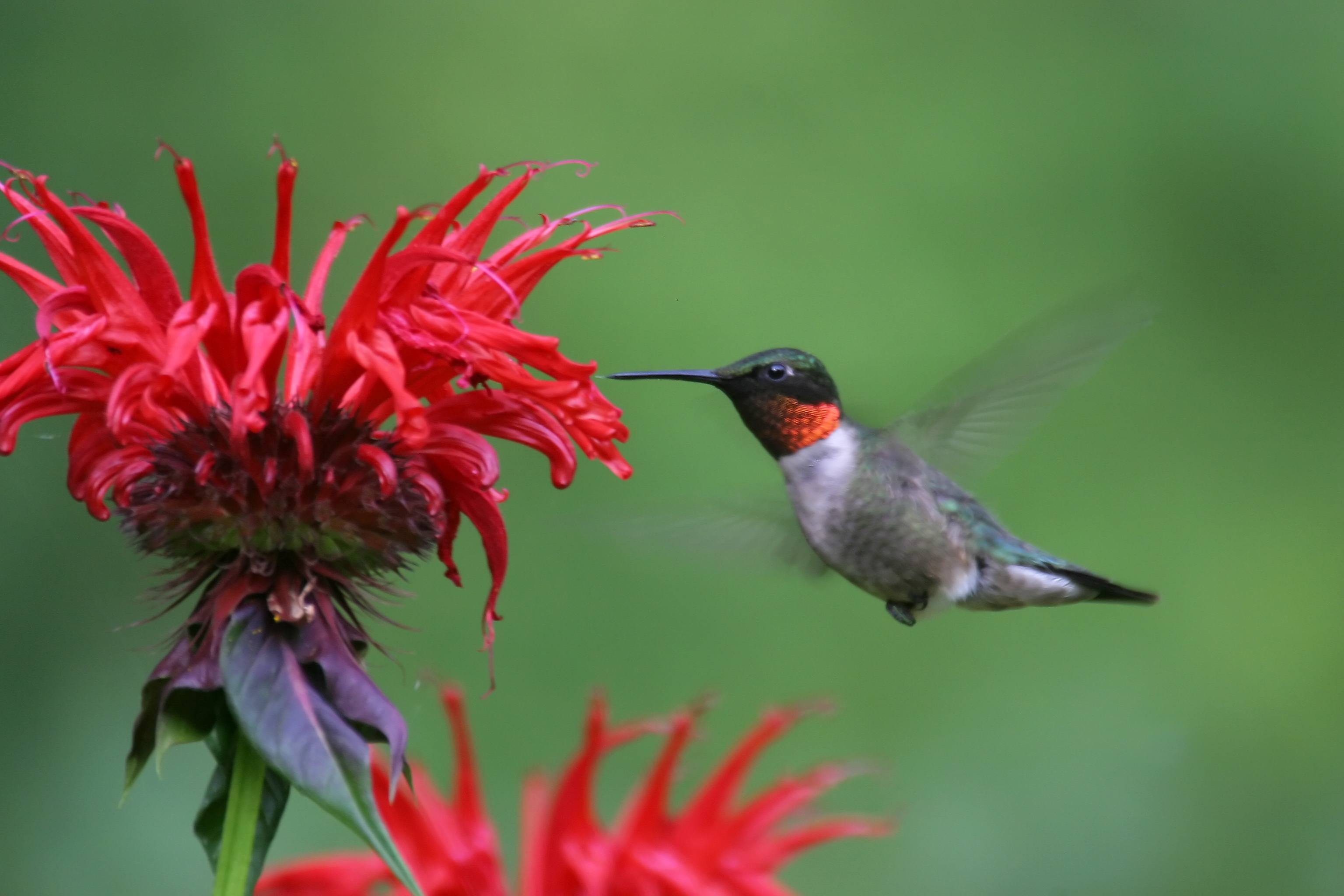
What type of symbiosis?  Hummingbirds feed on nectar from flowers.  The flowers are pollinated by hummingbirds as they move from flower to flower.
a)
commensalism
b)
mutualism
c)
parasitism
d)
predation
43.
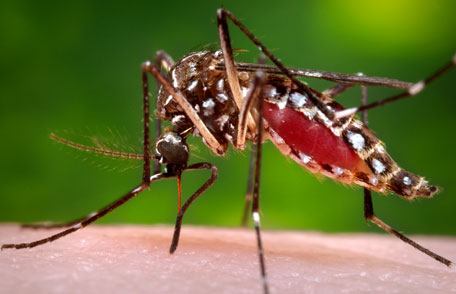
When a mosquito bites you, you are the __________ and the mosquito is the  ____________.
a)
host, hostess
b)
parasite, host
c)
host, parasite
d)
prey, predator
44.

Aphids are tiny insects that live on and eat the leaves of plants, removing vital nutrients from the plants.

a)

Predation

b)

Parasitism

c)

Commensalism

d)

Mutualism

45.

Which of the following is NOT an example of a Density Dependent Factor?

a)

Parasitism

b)

Natural Disasters

c)

Predation

d)

Competition

46.

Emigration is:

a)

When a population continues to increase.

b)

When individuals move into an area.

c)

When individuals move out of an area.

d)

The study of human popuations.

47.

The maximum amount of organisms of a species that can be supported by an environment is:

a)

exponential growth

b)

logistic growth

c)

population growth

d)

carrying capacity

48.

Caused by too much atmospheric carbon dioxide

a)

Deforestation

b)

Desertification

c)

Global warming

d)

Ozone depletion

49.

What is a habitat destruction?

a)

cities getting bigger

b)

the improvement of an ecosystem

c)

a reduction of the area in which a population lives in

d)

a type of land

50.

Which organism would have the most bioaccumulation?

a)

grass

b)

rabbit

c)

snake

d)

hawk