wayground logo

Free Printable Worksheets

Font size

S
M
L
XL
Worksheets

Biology EOC Review - Ecology

Total questions: 36

Worksheet time: 26mins

Name
Class
Date
1.
What does every food chain start with? (Even if it's not drawn or written there!)
a)
producers
b)
sun
c)
consumer
d)
decomposers
2.
An organism that needs to eat other organisms to obtain energy is known as a:
a)
Autotroph
b)
Producer
c)
Consumer
d)
Mutualist
3.
What does a food web represent?
a)
All connections of energy flow throughout all organisms in a habitat.
b)
The specific ways that mutualism is carried out.
c)
A single pathway or energy flow between organisms. 
d)
How carnivores get their food. 
4.
The rabbit in this food web would be considered a:
a)
Decomposer
b)
Producer
c)
Secondary Consumer
d)
Primary Consumer
5.
In this Food Web Pyramid Which type of consumer gets only 10% of the energy stored in plants?
a)
Herbivore
b)
Carnivore
c)
Omnivore
d)
Secondary Consumer
6.
The amount of energy that usually transfers from one trophic level to the next...
a)
10%
b)
20%
c)
80%
d)
50%
7.
The nonliving aspects of an ecosystem.
a)
Abiotic factors
b)
Biotic factors
8.
The living portions of the ecosystem.
a)
Biotic factors
b)
Abiotic factors
9.
A graphic illustration that shows each trophic level and the amount of useable energy contained within.
a)
Food chain
b)
Food web
c)
Energy Pyramid
d)
All of these
10.
A collection of organisms that make up a community as well as all of the nonliving aspects of the environment.
a)
Population
b)
Community
c)
Habitat
d)
Ecosystem
11.
As you move upward, from level to level, in an energy pyramid, energy _____.
a)
increases
b)
decreases
c)
stays the same
d)
increases exponentially
12.
 plants that convert energy from the sun
a)
decomposer
b)
primary consumer
c)
secondary consumer
d)
producer
13.
What are the Abiotic factors in this image? 
a)
water, sunlight, dirt, air
b)
birds and plants
c)
birds, water, dirt
d)
plants, water
14.

What would happen if the population of zebras decreased?

a)

There would be less grass for other animals.

b)

Populations of lions & hyenas would decrease.

c)

Termites would have no food.

d)

Baboons would have more competition for food.

15.

If more lions were introduced to the ecosystem

a)

the amount of hyenas would increase

b)

the amount of giraffes would decrease

c)

the amount of zebras would decrease

d)

the cheetahs would have less competition

16.

Which organism fills more than one role in this ecosystem?

a)

carrots

b)

owls

c)

birds

d)

grasshoppers

17.

The graph shows

a)

logistic growth

b)

exponential growth

18.

The graph shows

a)

logistic growth

b)

exponential growth

19.

What is the carrying capacity of this population?

a)

2

b)

6

c)

10

d)

unlimited

20.

Any species that has a major role in maintaining their ecosystem is known as a

a)

keystone species

b)

dominant species

c)

dependent species

d)

producer

21.

This image shows

a)

primary succession

b)

secondary succession

22.

This image shows

a)

primary succession

b)

secondary succession

23.

In ecology, a population includes (choose all options)

a)

same species

b)

same place

c)

same gender

d)

same time

24.

Which of the following is NOT a density-dependent factor?

a)

disease

b)

natural resources

c)

competition

d)

natural disaster

25.

Density independent factors

a)

affect a population no matter the size

b)

only affect large populations

c)

include natural disasters

d)

have no effect on populations

26.
Cattle egrets forage (feed) in fields among cattle. The egret gets easy access to flying insects stirred up by the cattle, and the cattle don't care if they are there or not.
a)
mutualism
b)
commensalism
c)
competition
d)
parasitism
27.

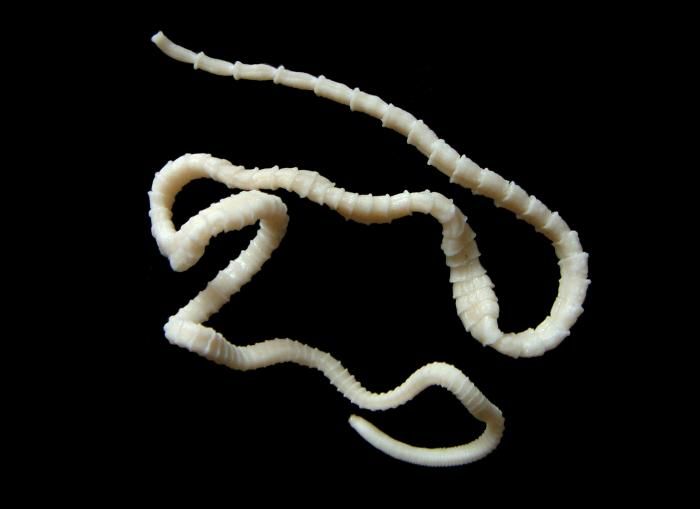
A tapeworm lives in the intestine of a cat absorbing nutrients through its skin. A tapeworm and a cat have this type of relationship.

a)

mutualism

b)

parasitism

c)

commensalism

d)

competition

28.
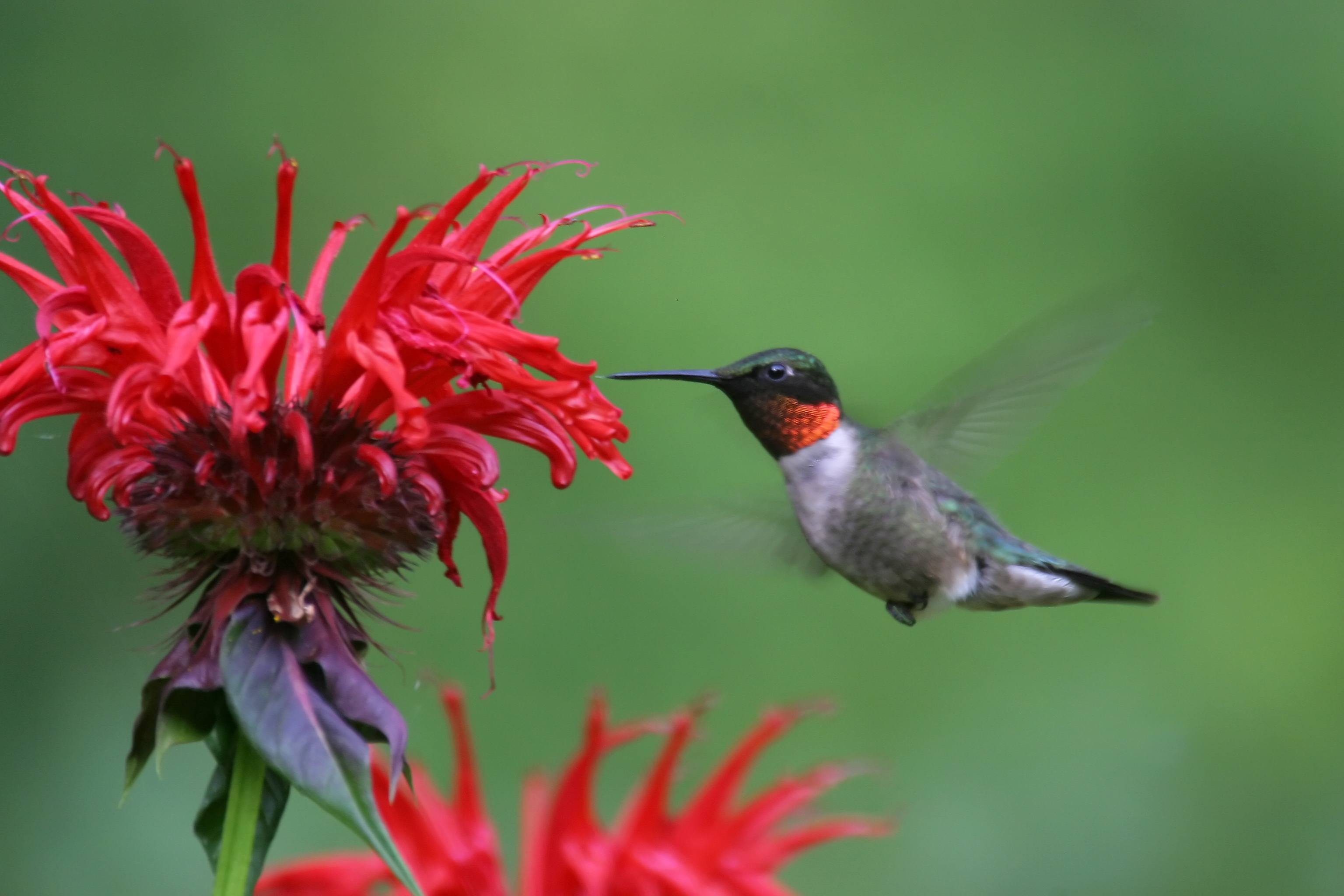
What type of symbiosis?  Hummingbirds feed on nectar from flowers.  The flowers are pollinated by hummingbirds as they move from flower to flower.
a)
commensalism
b)
mutualism
c)
parasitism
d)
predation
29.
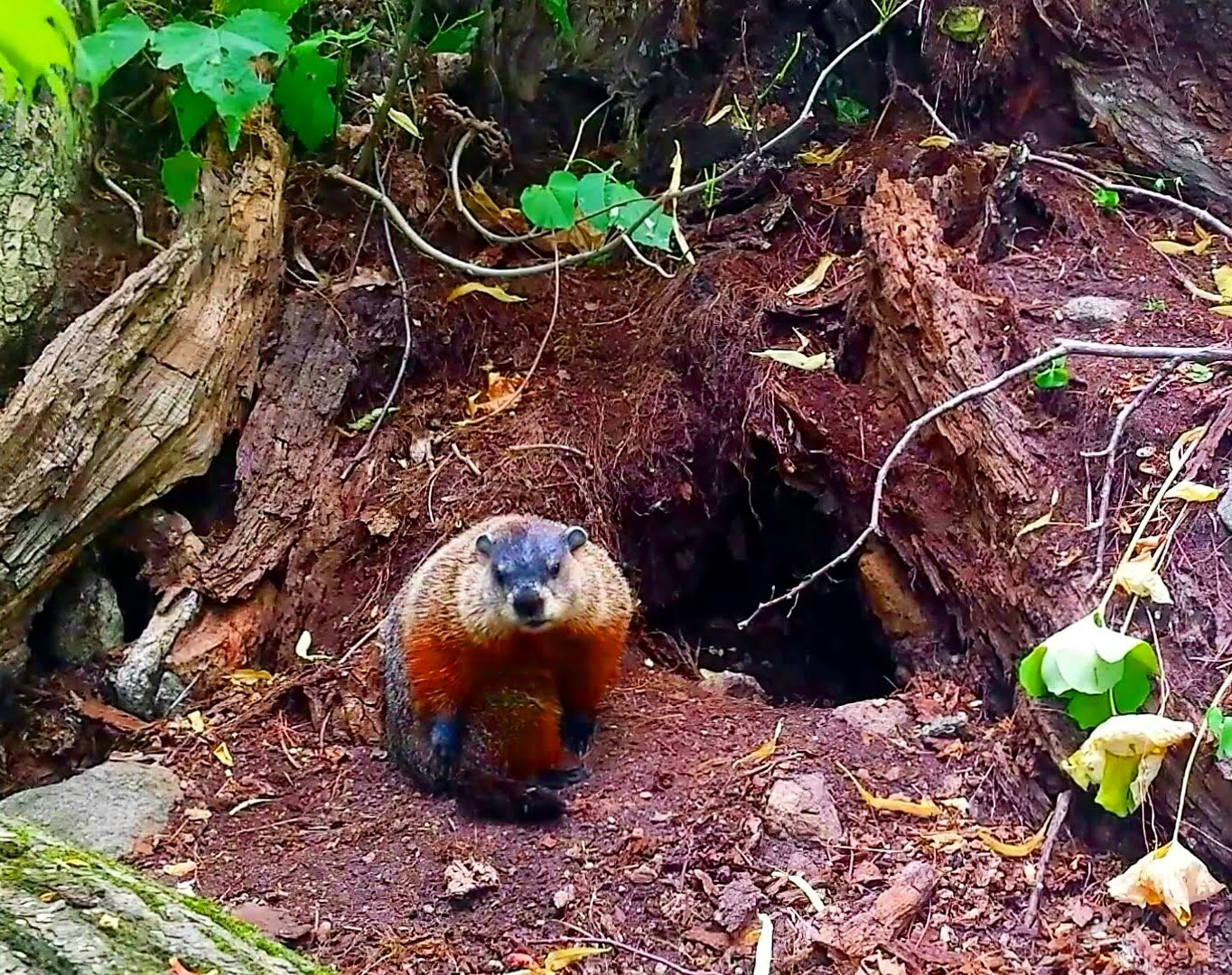
What type of symbiosis?  Skunks often live in burrows that have been dug and abandoned by woodchucks.  
a)
commensalism
b)
mutualism
c)
parasitism
d)
predation
30.
Which symbols best describe parasitism?
a)
+,+
b)
+,-
c)
+,0
d)
-,0
31.
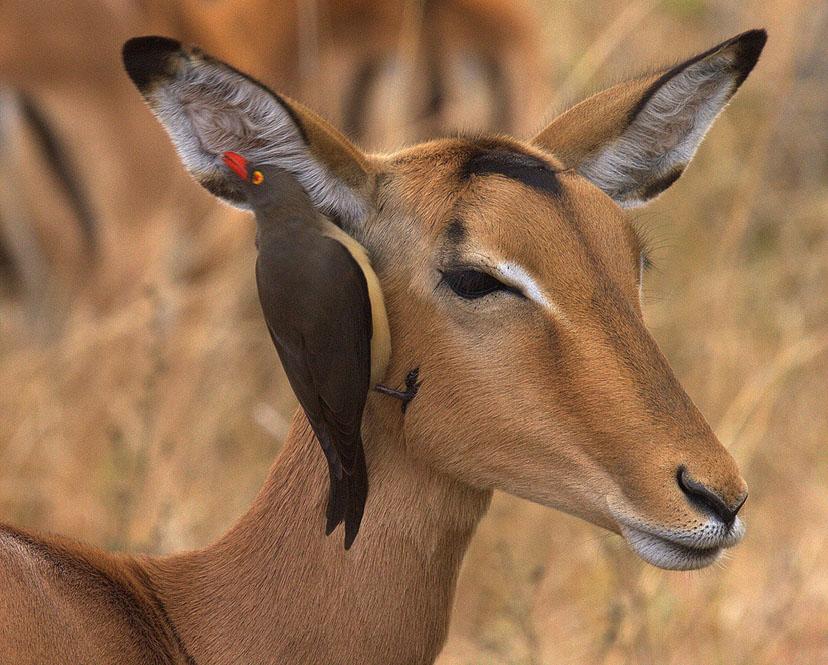
Red-billed oxpeckers are birds that often feed on parasites that infest impala.  This is an example of _______.
a)
commensalism
b)
mutualism
c)
neutralism
d)
competition
32.
A relationship between two organisms in which both organisms benefit. 
a)
Mutualism 
b)
Competition
c)
Parasitsm 
d)
Commensalism 
33.
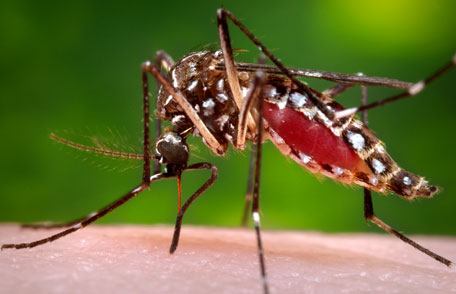
When a mosquito bites you, you are the __________ and the mosquito is the  ____________.
a)
host, hostess
b)
parasite, host
c)
host, parasite
d)
prey, predator
34.

Clown fish live among anemones, acting as a lure for the sea anemone's prey. The clown fish get protection and shelter from the anemone. This is an example of which type of symbiosis?

a)

Commensalism

b)

Mutualism

c)

Parasitism

35.

Lichens are close associations of fungi and algae. The fungi hold the water supply and the algae perform photosynthesis to manufacture carbohydrates for both organisms.

a)

mutualism

b)

commensalism

c)

parasitism

36.

When energy travels from one trophic level of an energy pyramid to the next, some energy is always lost as

a)

heat

b)

solid waste

c)

carbon dioxide

d)

oxygen