wayground logo

Free Printable Worksheets

Font size

S
M
L
XL
Worksheets

Y7 revision

Total questions: 89

Worksheet time: 56mins

Name
Class
Date
1.
The image shown represents which Moon phase?
a)
Waxing gibbous
b)
Waning gibbous
c)
Waning crescent
d)
Waxing crescent
2.
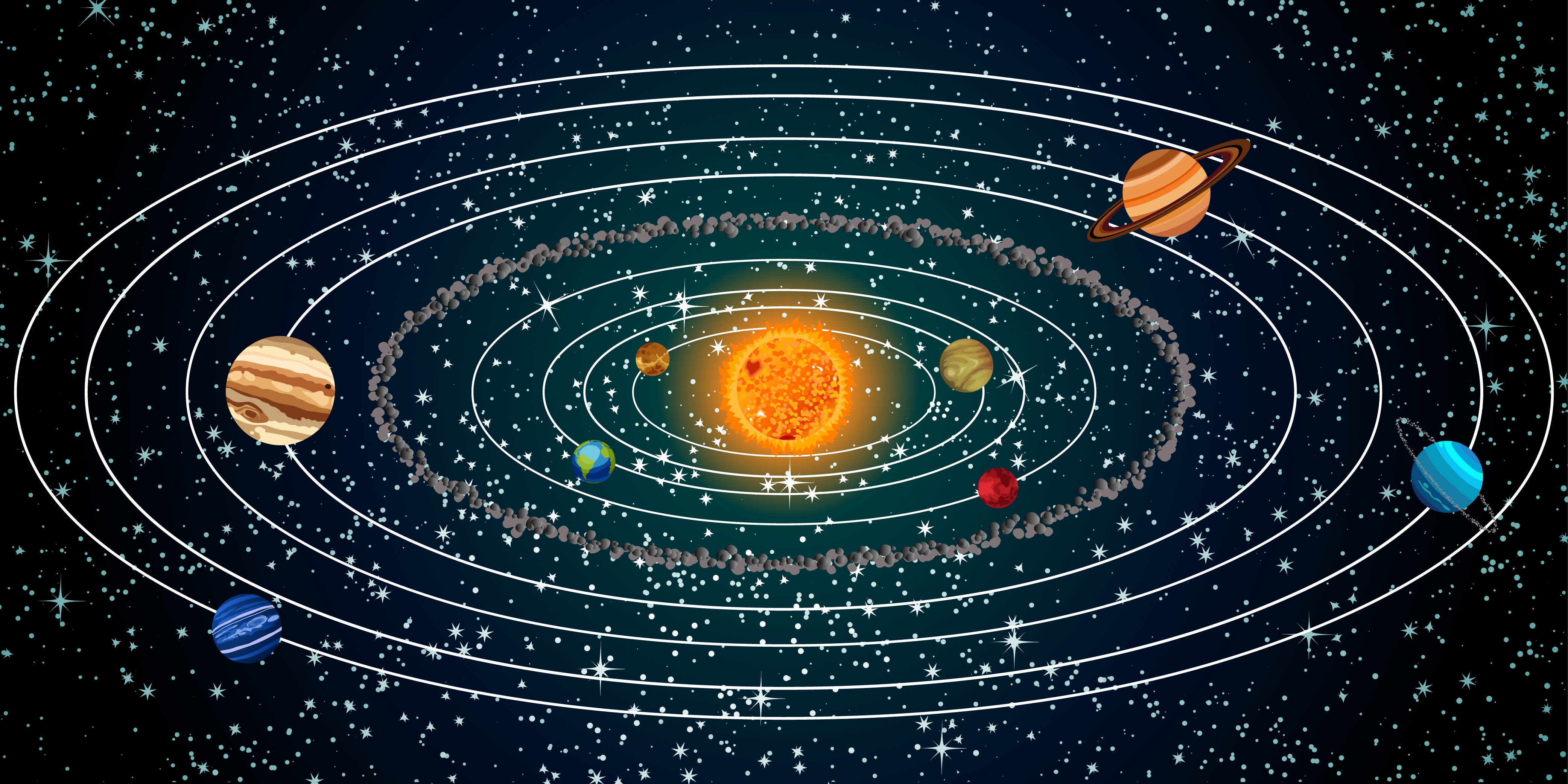
Why do planets orbit the sun (and not float around in space)?
a)
the moons are keeping them in place
b)
They were hit by an asteroid
c)
they were hit by a comet
d)
the sun's gravity keeps them in place
3.
It takes Earth _____________ to make one revolution or orbit around the Sun.
a)
365 days
b)
365 hours
c)
28 days
d)
24 hours
4.
The lunar cycle begins with which moon phase?
a)
New Moon
b)
Full Moon
c)
Waxing Crescent
d)
Waning Gibbous 
5.

What Galaxy is Earth located?

a)

Andromeda

b)

Milky Way

c)

Sagittarius

d)

Snickers

6.
What are the products of photosynthesis?
a)
water and carbon dioxide
b)
oxygen and glucose
c)
oxygen and carbon dioxide
d)
oxygen and water
7.
What molecule absorbs sunlight for photosynthesis?
a)
chloroplast
b)
thylakoid
c)
grana
d)
chlorophyll
8.
Most plants appear green because chlorophyll
a)
absorbs green light.
b)
absorbs violet light.
c)
does not absorb green light.
d)
does not absorb violet light.
9.
Which of the following is the correct equation for PHOTOSYNTHESIS?
a)
CO+ light + H2O --> O+ Sugar
b)
CO+ sugar + H2O --> O+ light
c)
O2 + light + H2O --> CO+ Sugar
d)
CO+ O2 + H2O --> Light+ Sugar
10.
Which of these conditions would decrease the rate of photosynthesis in a plant?
a)
Above average precipitation
b)
Changing the daylight hours from 14 hrs to 10 hrs
c)
Changing the CO2 concentration from 380 ppm to 410 ppm
d)
All of these choices
11.

The number of protons in the nucleus of an atom is called the --

a)

atom

b)

proton

c)

atomic mass number

d)

atomic number

12.

A subatomic particle that has a negative charge is called --

a)

a proton

b)

a neutron

c)

an electron

d)

the nucleus

13.

A neutron is ---

a)

a subatomic particle with a negative charge.

b)

a subatomic particle with a neutral charge.

c)

the center of the atom where subatomic particles are found.

d)

a subatomic particle with a positive charge.

14.

An arrangement of elements in order of their atomic numbers such that elements with similar properties fall in the same column or group.

a)

Atomic Number

b)

Electron Cloud

c)

Periodic Table

d)

Nucleus

15.

An atom's central region, which is made up of protons and neutrons is called--

a)

Electron Cloud

b)

Nucleolus

c)

Nucleus

d)

Atomic Number

16.
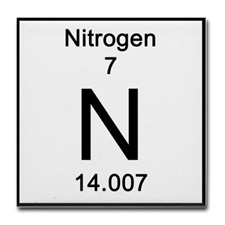
What is the number of protons that the element in this image contain?
a)
14
b)
7
c)
15
d)
18
17.
The particles that are found in the nucleus of an atom are _____.
a)
Neutrons and electrons
b)
Electrons only
c)
Protons and neutrons
d)
Protons and electrons
18.
Which statement best describes an electron?
a)
Smaller mass than a proton and a negative charge
b)
Smaller mass than a proton and a positive charge
c)
Greater mass than a proton and a negative charge
d)
Greater mass than a proton and a positive charge
19.

What is the atomic mass of Oxygen?

a)

8

b)

16

c)

0

20.

If Carbon has an atomic mass of 12 and has 6 protons, how many electrons does it have?

a)

18

b)

6

c)

12

21.

Which of the following represents an element?

a)

H2O

b)

NaCl

c)

H2

d)

CaCO3

22.

Which of the following is not a compound?

a)

HCl

b)

NaCl

c)

Cl

d)

CO2

23.

Salt has a chemical formula of NaCl. Salt is a...

a)

Compound

b)

Mixture

c)

Element

d)

None of the Above

24.

What cannot be broken down into other substances?

a)

Compound

b)

Solids

c)

Mixture

d)

Element

25.

What is made up two or more elements that are chemically combined?

a)

Element

b)

Compound

c)

Mixture

d)

Solids

26.

How many elements are represented in the compound?

Na2CO3

a)

1

b)

2

c)

3

d)

4

27.

A combination of substances that are not chemically combined is called a(n)____________.

a)

mixture

b)

compound

c)

element

d)

metal

28.

An element is made up of only one kind of _____.

a)

isotope

b)

atom

c)

plastic

d)

metal

29.

What is H2SO4

made up of?

a)

2 hydrogen, 1 sulfur, 4 oxygen

b)

2 hydrogen & 4 sodium

c)

1 hydrogen, 2 sulfur, 4 oxygen

d)

1 hydrogen & 6 sodium

30.

How many atoms are there TOTAL in:

H2SO4

a)

3

b)

5

c)

6

d)

7

31.

This picture represents which of the following?

a)

element

b)

mixture of elements

c)

compound

d)

mixture of compounds

32.

This picture represents which of the following?

a)

element

b)

mixture

c)

compound

33.

In this diagram, X represents...

a)

A compound

b)

An atom

c)

A mixture

d)

An element

34.

In this diagram, Y represents...

a)

An element

b)

A compound

c)

A molecule

d)

A mixture

35.
The red numbers in the image below represent ________
a)
subscripts
b)
coefficients
c)
I don't know, and don't want to try
d)
None of the answers are correct
36.
The blue numbers in the image below represent ________
a)
I don't know, and don't want to try
b)
coefficients
c)
subscripts
d)
none of the answers are correct
37.
The substances at the beginning of a chemical equation are called the ____
a)
product
b)
yield
c)
chemical symbol
d)
reactants
38.

What is the right part of a chemical equation called...

H2 + O2 --> H2O

a)

Reactants

b)

Products

c)

Yields

d)

Chemical Equation

39.
What is the right ratio of chemicals for the BCE (Balanced Chemical Equation)?__Al + __O2--> __Al2O3
a)
4,1 --> 2
b)
4,3 --> 4
c)
3,4 --> 1
d)
4,3 --> 2
40.
What is the right ratio of chemicals for the BCE (Balanced Chemical Equation)?__H2SO3 + __KOH--> __H2O+ __K2SO3
a)
2,1 --> 2,1
b)
1,2 --> 1,1
c)
1,2 --> 1,2
d)
1,2 --> 2,1
41.
What is the right ratio of chemicals for the BCE (Balanced Chemical Equation)?__H2 + __S --> __H2S
a)
1,1 --> 1
b)
2,2 --> 2
c)
1,2 --> 1
d)
1,2 --> 2
42.
What is the right ratio of chemicals for the BCE (Balanced Chemical Equation)?__CH4 + __O2 --> __CO2+ __H2O
a)
2,1 --> 2,1
b)
1,2 --> 1,1
c)
1,2 --> 1,2
d)
1,2 --> 2,1
43.
Number of C's in 2Na₂CO₃
a)
1
b)
2
c)
3
d)
5
44.
How many Elements are in the compound C2H8O ?
a)
2
b)
1
c)
3
d)
0
45.
How many total atoms are in the compound C2H8O ?
a)
11
b)
2
c)
8
d)
1
46.
How many Aluminum are in Al2O3?
a)
3
b)
2
c)
5
47.
How many Magnesium are in 10MgCl2?
a)
10
b)
5
c)
20
48.
What are the coefficient used to balance the equation below?
__Ag2O →__ Ag +___O2
a)
2,4,1
b)
1,1,1
c)
2,1,2
d)
2,2,2
49.
Is this equation balanced?
a)
yes
b)
no
c)
Not enough information
50.
Is the equation balanced?: 2H2O + O2 --> 4MgO + 3Fe
a)
Yes
b)
No
51.
Balance this equation
_N+ _H--> _NH3
a)
1,2,3
b)
1,3,2
c)
1,1,2
d)
2,1,1
52.

An ionic compound forms between a _______ and _______.

a)

metal and non-metal

b)

two metals

c)

two non-metals

53.

Name the ionic compound, LiCl

a)

lithium chlorine

b)

lithium chloride

c)

lithium chlorate

d)

lithium monochloride

54.
K20 - name?
a)
potassium dioxide
b)
potassium oxide
c)
potassium oxygen
d)
dipotassium dioxide
55.

CaF2- name?

a)

calcium fluorate

b)

calcium fluoride

c)

fluoride calcite

d)

fluorine calciumate

56.

HCl- name?

a)

hydrogen chloride

b)

chlorine hydrogen

c)

hydrogen chlorine

d)

hydrogen chlorate

57.
What pushes food from the mouth to the stomach?
a)
Stomach
b)
Gall bladder
c)
Esophagus
58.
Digestion starts in the 
a)
Mouth 
b)
Esophagus
c)
Stomach 
d)
Intestine
59.
The tube that connects the mouth to the stomach (number 2 in the diagram) is called the
a)
Epiglotis
b)
Esophagus
c)
Entry
d)
Elimination tube
60.
Which organ absorbs most of the nutrients using small fingerlike structures called villi?
a)
Gall Bladder
b)
Pancreas
c)
Large Intestine
d)
Small Intestine
61.
Which organ absorbs water and is the last stage of the digestive process.
a)
Gall Bladder
b)
Pancreas
c)
Large Intestine
d)
Small Intestine
62.
Number 1 is the 
a)
Mouth 
b)
Esophagus
c)
Pancreas
d)
Gall Bladder
63.

Which organ breaks down food mechanically and chemically and is labeled number 3 in the diagram?

a)

Liver

b)

Pancreas

c)

Gall Bladder

d)

Stomach

64.

The tiny little structures that line the small intestine are called

a)

Fingers

b)

bile

c)

Acid

d)

Villi

65.

Which organ releases digestive enzymes into the small intestine?

a)

pancreas

b)

small intestine

c)

esophagus

d)

salivary glands

66.

The teeth and tongue of the oral cavity break foodstuff down physically. This is an example of

a)

mechanical digestion

b)

chemical digestion

c)

absorption

d)

peristalsis

67.
This is a tube about 12cm long with c-shaped rings of cartilage to keep it open
a)
Nasal cavity
b)
Trachea
c)
Mouth Cavity
d)
Pharynx
68.
Two short tubes that carry air into the lungs
a)
Trachea
b)
Bronchioles
c)
Lungs
d)
Bronchi
69.
Clusters of tiny air sacs that allow the exchange of oxygen and carbon dioxide
a)
Pharynx
b)
Diaphragm
c)
Alveoli
d)
Lungs
70.
Muscular structure that helps to expand and contract the lungs, forcing air in and out
a)
Pharynx
b)
Nasal cavity
c)
Alveoli
d)
Diaphragm
71.
This is a tube-like pasage used for food, liquid, and air
a)
Larynx
b)
Trachea
c)
Pharynx
d)
Lungs
72.
Passage way that moistens the air and has hairs to trap dust and particles
a)
Nasal cavity
b)
Bronchi
c)
Mouth cavity
d)
Larynx
73.
What is the function of the respiratory system
a)
Take in O2 only
b)
Remove CO2 only
c)
Take in O2 ad remove CO2
d)
Make sugar
74.
This is the airway that has two pairs of vocal chords attached to it
a)
Lungs
b)
Diaphragm
c)
Pharynx
d)
Larynx
75.
How many types of blood vessels are in our body?
a)
1
b)
2
c)
3
d)
4
76.

The job of the heart is to . . .

a)

pump blood around the body.

b)

send food to the small intestines.

c)

break down food.

d)

give energy to the body.

77.

Your heart rate, or pulse, is the number of times your heart beats per (a)   .

78.

The (a)   is the largest artery in the body.

79.

These blood vessels help fight infection and other diseases.

a)

Red Blood Cells

b)

White Blood Cells

c)

Platelets

d)

Plasma

80.

(a)   is the liquid part of blood.

81.

(a)   help form clots to stop bleeding.

82.

The upper part of the heart is made up of two chambers called what?

a)

Ventricles

b)

Atria

83.

(a)   are the tiniest blood vessels.

84.

The type of blood vessel that normally carries de-oxygenated blood back to the heart from body cells?

a)

arteries

b)

capillaries

c)

veins

85.

The type of blood vessel that normally carries oxygenated blood from the heart to the body cells?

a)

arteries

b)

capillaries

c)

veins

86.

The type of blood vessel where exchange of gases, nutrients, and wastes occurs?

a)

arteries

b)

capillaries

c)

veins

87.

State the general relationship between exercise and heart rate in humans.

a)

If a person exercises, then their heart rate will not change

b)

If a person exercises, then their heart rate will increase

c)

If a person exercises, then their heart rate will decrease

d)

Person exercising and heart rate are not related

88.

Identify one way to determine a person's heart rates.

a)

put a hand on the heart to measure pulse

b)

put a thumb on the wrist to measure pulse

c)

put a thumb on the neck to measure pulse

d)

put two fingers on the wrist to measure pulse

89.

Select the structure and explanation of how it contributes to the way the human system functions.

a)

heart replaces carbon dioxide with oxygen

b)

blood vessels transport nutrients and oxygen

c)

heart replaces oxygen with carbon dioxide

d)

blood vessels pump heart rate