
 Worksheets
Big Bang Prior Knowledge Presentations test
Total questions: 84
Worksheet time: 43mins
The old and incorrect model of the universe in which Earth is at the center of the our solar system with the planets and sun revolving around it
Meteor
Geocentric
Satellite
Heliocentric
This is a model of the solar system in which Earth & the other planets revolve around the sun:
Comet
Heliocentric
Satellite
Geocentric
Who first proposed the Heliocentric system?
Copernicus
Ptolemy
Aristotle
Galileo
Who supported Copernicus's Heliocentric Model
Galileo
Plato
Ptolemy
No one

Which scientific instrument did Galileo use to change the world?
telescope
spyglass
mirror
magnifying glass
What does the Heliocentric system look like?


What is the biggest difference between the Geocentric Model and the Heliocentric Model?
the shape of the planets' orbits are different
the movement of the moon around them are different
what is at the center of the system is different
The order of the planets is different
Kepler's first law states that the orbits of the planets are in the shape of a/an...
perfect circle
ellipse
spiral

Stars, like our Sun, form from nebulae. How long ago did our Sun form?
4.6 million years ago
46 million years ago
4.6 billion years ago
46 billion years ago
How old is our star the SUN?
Which statement best describes a galaxy?
A cloud of gas that is the birthplace of stars
A system of billions of stars, gas and dust held together by gravity
A ball of plasma that experiences nuclear fusion in its core
A mass of dust and ice that orbits a star in elliptical pattern
60 minutes
30-31 days
52 weeks

What is responsible for the smaller objects in space being pulled toward and orbiting larger objects?
The curved path in which a planet, satellite, or spacecraft moves in around another object is called an ________.
Two variables that affect the magnitude(amount) of pull toward each other (universal gravitation) are the 2 objects ________ and _________.
Also called our "sister planet" this planet is almost Earth’s twin in size and mass, and has a very thick atmosphere.
What energy does the sun NOT give off?
Heat
Light
Mechanical
Solar
What type of stars are the hottest?
yellow
white
red
blue
Most stars, like our sun, are_________.
Red giants
White dwarfs
Main sequence
Supergiants
If tides alternate back and forth from high tide to low twice a day, about how many hours will generally be between each different tide?
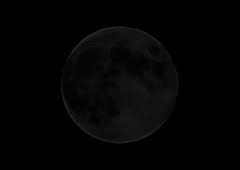
When the moon is in between the earth and the sun we can't see its surface. This is called a _______.
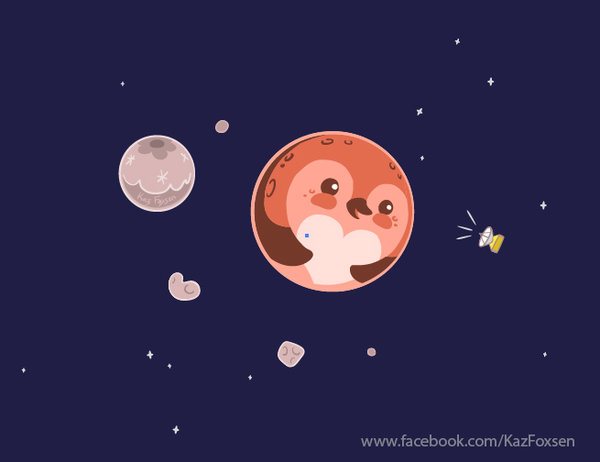
A moon that is "Waxing" means the amount of surface we can see is ________.

In POSITION #4, Which season is taking place in the Northern Hemisphere?


A Period of 24 hours or the time it takes Earth to make one complete spin around on its axis is called a _________.

What is an object that orbits a planet?
Comet
Meteor
Star
Satellite
___________ is a loose collection of ice & dust that orbits the sun, typically in a long narrow orbit.
Meteor
Ellipse
Comet
Planet
The SHAPE of the path that planets follow around a sun may be egg shaped or nearly circular. This shape is called a ___________
Constellation
Heliocentric
Ellipse
Geocentric
What word describes using your five senses to notice the world around you?
Geocentric
Observation
Ellipse
Comet

Find the standard equation of the given ellipse


Daily motion that repeat on a 24 hour cycle are called ___ motions. Examples are sunrise and sunset, moonrise and moonset, and the rising and setting of the planets.
proper
diurnal
rotational
precession
According to Kepler's 1st Law, planets orbit the sun in _____ orbits.
circular
oval
elliptical
epicycle
Earth has a variety of motions.
It orbits the sun, with a period of 1 year.
It rotates on it's axis once a day.
It also "wobbles" on its axis over a period of 26,000 years.
Our north pole used to point at Thuban and now points at Polaris.
This "wobble" is called _____.
nutation
precession
retrograde motion
revolution
What is an astronomical unit (AU)?
a light year
a parsec
the average distance from the Earth to the Sun
the average distance from the Earth to the Moon
What are the Sun's layers of atmosphere from lowest to highest layer?
Core, Radiative Zone, Convection Zone
Corona, Chromosphere, Photosphere
Convection Zone, Radiative Zone, Core
Photosphere, Chromosphere, Corona
When we see the sun out during the day, we are viewing light that is coming from the ___________.
Core
Convection Zone
Chromosphere
Photosphere
Where the color of the Sun comes from.
Core
Chromosphere
Corona
Photosphere
The reason that most solar winds do not disrupt electricity on the Earth is due to the Earth’s ______.
poles
magnetic field
stratosphere
auroras

During the phases of the Moon, the Moon appears to change shape. This change in appearance is due to the Moon...
physically changing size and shape.
moving closer and then farther away from Earth.
reflecting a different amount of light due to alignment with Earth and the Sun.
having craters on its surface.


Does the picture show the formation of magma or lava?
Magma because it is formed under the Earth's surface in the upper mantle and lower crust
Lava because it is formed on the Earth's surface

What happens to the pressure the further you go down into the Earth's crust and mantle?
It decreases because there isn't that much rock above to push down (from above)
It increases because the weight of the rock above presses down
Water has a high specific heat capacity. This means that water can _____
Absorb a lot of heat energy
Absorb very little heat energy

What are the small bodies in the early stages of development of the solar system called?

What was an source of heat on the early earth?
Radioactivity
Gravitation Pressure
Accretion (collisions with other materials)
All of the above
What is the force that pulls all things in the universe together?
(a)
What is the process called that allowed dust to progress to planetesimals, then protoplanets, and finally planets
(a)

