
 Worksheets
Creating the Constitution
Total questions: 88
Worksheet time: 1hrs 10mins
What Proved the Articles of Confederation was a weak form of government because the government had no power to stop it?
Shays Rebellion
American Revolution
French Revolution
Revolutionary War Debt
Representatives from the 13 states met to write a new constitution in 1787 in?
Philadelphia
New York
Boston
Valley Forge
Who was elected President of the Constitutional Convention in 1787?
George Washington
John Adams
Alexander Hamilton
Thomas Jefferson
The Virginia Plan that was offered at Constitutional Convention included in it? (please select all)
3 Branches of Government
Two House Legislature
Two House Legislature Representation would be based on the Population size of each State
One House Legislature
Legislature Representation would be Equal among the States
Which Branch of the Government "Makes the Laws?"
Legislative
Executive
Judicial
Which Branch of the Government "Enforces the Laws?"
Legislative
Executive
Judicial
Which Branch of the Government "Interprets the Laws?"
Legislative
Executive
Judicial
The New Jersey Plan that was offered at Constitutional Convention included in it? (please select all)
3 Branches of Government
Two House Legislature
Two House Legislature Representation would be based on the Population size of each State
One House Legislature
Legislature Representation would be Equal among the States
The Great Compromise that was offered at the Constitutional Convention included in it? (please select all)
3 Branches of Government
Two House Legislature
Two House Legislature where one House, the House, would be based on Population, and the other, the Senate, would be Equal
One House Legislature
Legislature Representation would be Equal among the States
This Compromise at the Convention between North and South made slaves counted as 3/5 the population when calculated for each state's number of House of Representatives?
3/5 Compromise
The Great Compromise
The Virginia Plan
How many of the 55 delegates at the Constitutional Convention signed the Constitution approcing it to then be sent to the States?
39
33
55
56
Who is considered the "Father of the Constitution" since he wrote most of it?
James Madison
George Washington
Thomas Jefferson
Benjamin Franklin
Select everything that applies to being a Federalist?
Led by Alexander Hamilton
Supported the Constitution & Stronger Government
Had 85 articles written to support ratification of Constitution by the States
Supported idea of President
Felt the States or Congress should have power in Govt.
Select everything that applies to being an Anti-Federalist?
Led by Thomas Jefferson
Suspicions of the Constitution & Stronger Government
Wanted the States or Congress (Legislature) to have power in the government
Would not ratify Constitution w/o a Bill of Rights added
Big Business was the future of America
The Constitution became the official law of the land when 9 out of the 13 States ratified it; what year?
1788
1776
1783
1787
How many Branches/Parts are there in the U.S. Government?
3
2
1
We supported removing power from states & giving more to a national government.
Federalists
Anti-Federalists
We wanted the legislative branch to have more power than the executive branch.
Federalists
Anti-Federalists
We did not want a single leader of the executive branch.
Federalists
Anti-Federalists
We believed in American independence from Great Britain and freedom for our citizens.
Federalists
Anti-Federalists
We opposed/were against the Constitution’s first draft, without a list of rights.
Federalists
Anti-Federalists
We wanted the Constitution's first draft approved, without a list of rights.
Federalists
Anti-Federalists
We feared a strong central government.
Federalists
Anti-Federalists
We believed citizens had rights that should be protected.
Federalists
Anti-Federalists
We thought the Constitution needed a list of protected rights.
Federalists
Anti-Federalists
We thought the Constitution, with checks and balances already in it, was enough to preserve the citizens' rights without a list.
Federalists
Anti-Federalists
We didn't want a list of rights because we worried it might be the ONLY rights that citizens had.
Federalists
Anti-Federalists
We agreed to the Bill of Rights as a COMPROMISE to get the Constitution ratified/approved
Federalists
Anti-Federalists

People who supported the Constitution and favored a stronger national government were called:
Radicals
Activists
Federalists
Anti-Federalists

People who opposed the Constitution because they felt it created a national government that was too strong were called:
Federalists
Anti-Federalists
Radicals
Activists

Federalists believed:
That there are safeguards in the constitution that will never allow the government to be tyrannical like Britain.
That they would not ratify the constitution without a bill of rights.
That the Constitution gives the government too much power and the power should remain in the states.
All of the above

Which group believed that the Constitution gave the national (central) government too much power and states too little power?
Radicals
Advocates
Anti-Federalists
Federalists

Which group would agree with this quote," ...after so recent a triumph [win] over the British king, after blood has been spent, it is truly astonishing [surprising] that a set of men among our Americans would champion [support] a government that would destroy our liberties."
Federalist
Anti-Federalist

Which group fears the Constitution gave too much power to the executive branch of government--The president could end up like a king.
Radicals
Advocates
Anti-Federalists
Federalists

Anti-Federalists...
Would not ratify the Constitution without a Bill or Rights or a list of rights of all citizens.
Represented farmers led by Jefferson, Henry, and Adams.
Were not in support of a strong national government.
All of the Above
The Constitution does not include a bill of rights, which is essential for protecting individuals against the power of the national government
Federalist
Anti- Federalist
The powers of the national government are separated and balanced among the three branches so no one can dominate the others.
Federalist
Anti-Federalist
The Constitution gives the Congress and the Supreme Court ways to check the use of power by the executive branch so it cannot become a monarchy.
Federalist
Anti-Federalist
The Constitution gives too much power to the executive branch of government. It would soon become a monarchy.
Federalists
Anti-Federalists
A bill of rights is unnecessary because the powers of government are limited by the Constitution.
Federalists
Anti-Federalists
The Constitution gives the national government too much power at the expense of the state governments
Federalist
Anti-federalist
A large republic, where the government was organized on the basis of checks and balances, and power was divided between the national and state governments, would be better. Under such a government, it would be more difficult for special interests to attain their goals and violate the common welfare.
federalist
anti-federalist
Alexander Hamilton and James Madison
Federalist
Anti Federalist
George Mason and Patrick Henry
Federalist
Anti-Federalist
Articles of Confederation
First government, Congresscan negotiate treaties and declare war, noe executive branch.
Unalienable Rights
Rights that all people have from birth: life, liberty, pursuit of happiness
Three Fifths Compromise
Agreement over how slaves would count for representation purposes
Great Compromise
Agreement that decided how many representatives large and small states woul.d have in Congress
The Constitution provides adequate protections for the state governments to prevent their being destroyed by the national government.
Federalist
anti-federalist
The Articles of Confederation had how many branches of government?
0
1
2
3
Which of the below scenarios would NOT accurately fall under the beliefs of the Articles of Confederation
States having the right to make their own decisions
Equal Representation 1 state = 1 vote
No President
Central bank to mint money
Which was a weakness of the Articles of Confederation?
Congress had no power to levy or collect taxes
US Bank regulated currencies
There was a bicameral congress
States & Federal Government split rights & responsibilities evenly
Mostly urban; merchants, skilled workers, and laborers. Many lived in New England
Federalists
Anti-Federalists
Who were the two most influential members of Washington's Cabinet that went on to be the main representatives of the first 2 political parties
John Adams & James Madison
Alex Hamilton & Thomas Jefferson
John Adams & Alex Hamilton
Sam Adams & Thomas Jefferson
Hamilton formed which party? (Supported strong central government & loose interpretation of constitution)
Federalist's
Democratic Republicans
Anti-Federalists
Republicans
Jefferson formed which party? (supported strong state governments & strict interpretation of the constitution)
Federalist's
Democratic Republicans
Anti-Federalists
Republicans

Which did the Federalists believe in and which did the Anti Federalists believe?
Federalists
Supported the Constitution
Anti Federalists
Were against approving the Constitution
Anti Federalists
Wanted small local governments
Federalists
Wanted to have a strong national republic
What was the main task of the Constitutional Convention?
To regulate interstate commerce
To raise taxes
To replace the Articles of Confederation
To end Shays's Rebellion
Who were the authors of the Federalist Papers?
John Jay, Alexander Hamilton, and James Madison
Thomas Jefferson, Benjamin Franklin, and George Washington
John Adams, Patrick Henry, and Thomas Paine
Samuel Adams, John Hancock, and Paul Revere
Who expressed the fear against the Bill of Rights in Federalist No. 84?
John Jay
Alexander Hamilton
James Madison
Thomas Jefferson
What did Shays's Rebellion reveal about the federal government?
Its ability to regulate interstate commerce
Its power to raise taxes
Its inability to put down an insurgency
Its support for political corruption
What did opponents of the Constitution draft in response to The Federalist Papers?
The Anti-Federalist Papers
The Federalist Amendments
The Constitution Revisions
The Articles of Confederation
What did Shays's Rebellion demand an end to?
The unjust economic policies of the federal government
The political corruption of the state legislature in Boston
The existence of the Articles of Confederation
The power of the federal government to regulate interstate commerce
What did the Federalist Papers aim to convince opponents of the Constitution to do?
Oppose ratification
Support Shays's Rebellion
Draft their own series of essays
Ratify the Constitution
Which document includes the phrase, "Each state retains its sovereignty, freedom, and independence"?
The U.S. Constitution
Articles of Confederation
Federalist No. 51
Declaration of Independence
Match the following documents with their purposes.
The U.S. Constitution
Gives Congress the power to lay and collect taxes
Articles of Confederation
First governing document of the United States
Declaration of Independence
Announces the American colonies' separation from Britain
Federalist No. 51
Discusses the structure of government and checks and balances
"This new national government will have the power to overwhelm the states and exercise tyranny over the people."
Which group would make such a statement about the Constitution?
Federalists
Enlightenment thinkers like John Locke
Democrats
Anti-Federalists
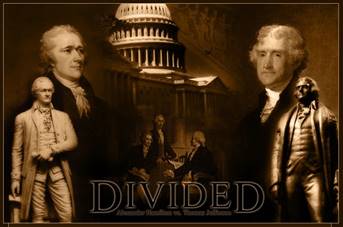
The Anti-Federalists wanted to:
ratify the new constitution and establish a powerful central government.
fix the Articles of Confederation.
Replace the Articles of Confederation.
get rid of strong State governments.
Ratification (approval) of the Constitution happened once __/___ states agreed.
13/13
7/13
9/13
10/13
What was the main argument of Federalist No. 84 written by Alexander Hamilton?
"I go further, and affirm that bills of rights, in the sense and to the extent in which they are contended for, are not only unnecessary in the proposed Constitution, but would even be dangerous."
The need for a strong state government
The necessity of a Bill of Rights
The dangers of a Bill of Rights
The importance of a National Bank
According to Federalist No. 45, how are powers divided between the federal and state governments?
"The powers delegated by the proposed Constitution to the federal government are few and defined. Those which are to remain in the State governments are numerous and indefinite."
Equally divided
Federal government has all powers
State governments have all powers
Federal powers are few and defined; state powers are numerous and indefinite
What is a concern raised by Brutus No. 1 regarding a large republic?
"In a large republic, the public good is sacrificed to a thousand views; it is subordinated to exceptions, and depends on accidents."
It would be too close to the people
It would lead to a loss of personal freedoms
It would have too many representatives
It would be too democratic
According to Federalist No. 51, what must be made to counteract ambition?
“But the great security against a gradual concentration of the several powers in the same department consists in giving to those who administer each department the necessary constitutional means and personal motives to resist encroachments of the others. Ambition must be made to counteract ambition.”
Laws
Checks and balances
Treaties
Appointments
James Madison, Alexander Hamilton and John Jay were....
Federalists
Anti-Federalists
George Mason, Patrick Henry and Thomas Jefferson were...
Federalist
Anti-Federalists
Your Liberty is at Stake!
The states are, and should remain, the core of our republic. It is there that the people can be properly represented. When states have to bend to the central government's will, the people will pay with their liberty.
Federalist
Ant-Federalist

Which group of people tended to be Anti-Federalists?
Bankers
Small farmers
Businessmen
People who lived in cities

What effect did the Federalist Papers have?
More people thought war with Britain was a good idea
It encouraged people to overthrow the government
It increased support for the Constitution
It made more people distrust the Constitution

What did Federalists do to encourage Anti-Federalists to support the Constitution?
Promised to add a bill of rights
Change the way representation was determined
Give states the power to elect members of the Supreme Court
Institute a luxury tax
This founding fathers is known as the "Father of the Constitution"
George Washington
Thomas Jefferson
Alexander Hamilton
James Madison
This founding father was commander-in-chief during the American Revolution and the 1st president of the United States
James Madison
George Washington
Benjamin Franklin
John Jay
The delegates restructured the federal government by -
writing the Constitution
rewriting the AOC
writing the Second Treatise on Government
writing the Bill of Rights
An agreement in which both sides give up something.
Compromise
Conclusion
Argument
Declaration
Which two things did the Great Compromise create?
Two Houses in Congress, one equal and one based on population
One house system, equal representation
Two House system all proportional represenation
Two House system, all equal representation
What proportion of slaves were counted for determining population in the House of Representatives in the US?
Match the following
known as the “Father of the Constitution.”
James Madison
Refused to attend at first, but became the leader
George Washington
one of the most respected men in America. He had a long and distinguished career as a printer, inventor, writer, revolutionary, peacemaker, and diplomat. Primary role during the convention was to encourage the delegates to cooperate with each other when they disagreed
Benjamin Franklin
Against the new Constitution
Samuel Adams
Called for the convention
Alexander Hamilton

