
 Worksheets
SOCIAL STUDIES SUMMER TERMTEST PRACTICE FOR YEAR FIVE
Total questions: 60
Worksheet time: 45mins

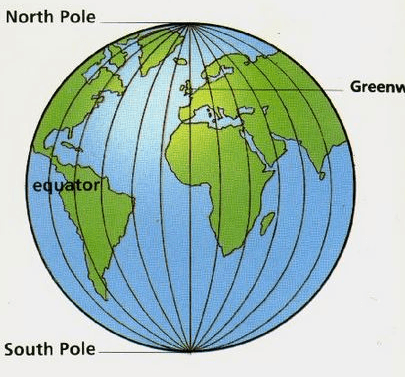
Location D is located at which coordinates?
30oN, 90oW
90oN, 30oW
10oN, 40oW
30oN, 90oE
Location H is located at which coordinates?
60oN, 120oE
90oN, 30oE
10oS, 40oW
30oN, 90oE
Location L is located at which coordinates?
15oS, 60oW
45oS, 60oW
15oS, 60oE
45oS, 60oE
Location E is located at which coordinates?
30oS, 30oE
30oS, 30oW
10oS, 40oW
30oN, 90oE
Which point is located at 30oS, 150oE?
K
D
E
G


Which of the following best defines a myth?
a story that is made up and not to be believed at all.
a traditional story, especially one concerning the early history of a people or explaining some natural phenomenon, and typically involving supernatural beings or events.
a movie that involves the retelling of true events.
a story that has some supernatural elements, but does not explain a natural phenomenon.
Select ALL of the pantheon of gods that appear in the Yoruba creation myth?
Orisha
Obatala
Tepeu the Maker
Gucumatz the Feathered Spirit
Orunmila
All these are characters in the Yoruba creation myth except-------------------------------------.
Sango
Obatala
Olorun
Olokun
The first village in Yoruba land is __________________
Akure
Ikeja
Ibadan
Ife
What character flaw did Obatala possess?
Sleeping late
Drunkenness
Laziness
Over sleeping
The prime meridian is drawn through a town called __________.
Greenwich in London
Jatujak in Thailand
What is the meaning of GMT?
Greedy Mean Time
Greenwich Mean Time

Where is all time measured from?
Greenwich Meantime
0o longitude
Prime Meridian
All of the above
How many time zones exist in the world?
24
12
15
36
How many degrees are in each time zone?
60
360
180
15

What continent did the Trans-Saharan Trade Routes cross?
Indian Ocean
Asia
Africa
Europe
The Trans-Saharan trade mostly saw the exchange of
Gold and Salt
Silk and Iron
Spices and Ivory
Rugs and Perfume
What religion spread into West Africa from the Trans-Saharan Network?
Judaism
Buddhism
Islam
Buddhism

What is the origin?
West Africa
Europe
China
India
What was central Africa's most popular export?
Ivory
Gold
Textiles
Copper
Each of these conditions was an obstacle to crossing the Sahara, except:
Intense heat
Sandstorms
Earthquakes
Little water
The Transatlantic Slave Trade is also known as:
The Triangular Trade
The Columbian Exchange
The Middle Passage
The Colonization
The sea journey undertaken by slave ships from Africa.
Middle Passage
The Transatlantic Slave Trading
The Columbian Exchange
Mercantilism
To meet the massive demand for labor where did the Europeans look for slaves?
Europe
Africa
Asia
Australia
The majority of slaves that were brought to the American colonies were brought to...
Work on building houses
Work on Plantations
Work on the railroad
Work on building ships
How did the Atlantic Slave Trade affect Africa's future?
Africa's economy collapsed and empire's power declined
Africa's villages stopped to exist
Africa's population increased
Africans abandoned their cities
In your own opinion, what was the major reason why the North Americans needed slaves ?
To be their friend
To work in their companies
To work on their plantations(cheap labor)
To preach Islam
During the Trans-Atlantic Trade the major means of transport was by ------------
land
air
train
water

What does partitioning mean?
to divide up
to take over
to cause conflict
to teach
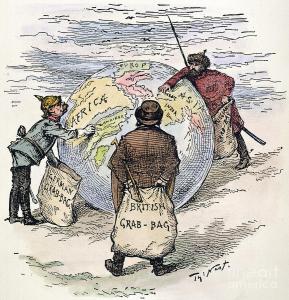
What is Imperialism?
when one nation is able to control other, usually smaller or weaker, nations
loyalty and devotion to a nation especially as expressed in a glorifying of one nation above all others
shared or governmental ownership and administration of the means of production and distribution of goods

(select all that apply) Why did Europeans set up colonies in Africa?
No country wanted to be without colonies (considered “weak”)
They wanted to solve ethnic and tribal disputes
To build ports along the trade route between Europe and Asia
They wanted raw materials found in Africa

(select all that apply)
The European division of Africa caused:
Tribal conflicts
Civil war
Desire for independence
Economic inequality
Long-lasting peace

The modern day political boundaries, civil wars, and conflicts found in Africa can often be traced back to which of the following event?
European partitioning and colonization
Ancient African trading empires
European cooperation in the late 1800s
Asian invasions in the 1800s

True or False?: European countries failed to consider differences in ethnic groups, cultures, and political traditions when making artificial political borders in Africa.
True
False

What two European countries gained the most land in Africa during the time of Imperialism?
Spain and Germany
Great Britain and France
United States and Great Britain
China and Japan

Which phrase below best describes the following statement: "European nations took control of almost all African territory"?
Discovering the New World
The Age of Exploration
Scramble for Africa
Assimilating Africans to European Culture

How many African countries were invited to the Berlin Conference?
0
1
5
30

Which of the following are valuable natural resources found in many African countries?
diamonds
gold
oil
copper
__________________ is the practical use of scientific knowledge to solve problem.
Technology
Transportation
Modernity
What did Thomas Edison invent?
The photograph.
The phonograph.
The assembly line.
The phonograph AND lightbulb.
What did the Wright Brother invent?
Cars.
Airplanes.
Trains.
Transportation.
The first engine-powered airplane was invented by
Orville and Wilbur Wright
Thomas Edison
Charles Kettering
Granville Woods
In what way did Thomas Edison have the most significant effect on the country?
Electrical devices transformed homes and businesses.
ndoor activity became possible after dark.
Automobiles could be built more efficiently and cheaply.
This person changed the world because he made it easier for people to communicate.
None of the Above
Alexander Graham Bell
Samuel Morse
Thomas Jefferson

