
 Worksheets
Science BM 2 Review
Total questions: 45
Worksheet time: 2hrs 15mins

To complete the circuit, a wire should be placed from —

__________ is the process that plants use to breathe and make food.
Photographs
Oxygen
Hydrogen
Photosynthesis
If plants breathe in carbon dioxide, what do they breathe out?
Nitrogen
Oxygen
Carbon monoxide
Helium
Sunlight is the main source of energy that drives photosynthesis process.
True
False
Photosyntheis is the process in which humans, and animals use energy from sunlight to produce sugar.
True
False
Which of the following uses electrical energy?
a volleyball
a lamp
a broom
a ladder
How are deltas formed?
When a river deposits large amounts of sediment from land erosion.
When a river dries out.
They are man made.
They are made by heavy rain.
Which of the following is an example of a reflection of light?
Seeing a reflection in a silver spoon.
Shining a flashlight in the dark.
Looking up at the sun.
Light passing through a window.
Where do plants and trees get most of their energy from?
grass
dirt
sunlight
plant food
Solids are _____ soluble in water.
not
very
How long does it take the Earth to make one complete rotation?
30 days
1 month
24 hours
365 days
Complete the following life cycle: Egg, _____, Grasshopper.
beetle
Nymph
baby grasshopper
tadpole
What would happen if a part of the food chain, like producers, were removed?
The animals would either die or move away.
There would not be any more sunlight.
The producers would die.
The producers would be happy.
Which of the following is a learned behavior?
size of ears
how to dress
eye color
hair color
Boiling a mixture to evaporate the water and pouring mixtures through paper filters are all ways to __________.
make tea
separate mixtures
create mixtures
create solutions
How are sedimentary rocks formed?
Deposition, Compaction, and Cementation
Evaporation, Precipitation, and Condensation
Precipitation and collection
Weathering, Erosion, and Deposition
What special inherited trait do caterpillars have?
They do not have any special inherited traits.
They can eat toxic leaves and not be harmed.
Is oil soluble in water?
yes
no
Plants and trees need sunlight and _____ to be able to make their own food throughout the year.
oil
gas
water
food
An inherited trait is something that is passed down from parents to their offspring.
True
False
The ______ causes day and night on Earth.
The sun's rotation.
The rotation of the Earth.
The rotation of the moon.
The orbit of the moon.
Valleys are formed by ______.
glaciers
hurricanes
tornadoes
rain
What is an important part of the water cycle that keeps it going?
The sun
lakes
rivers
sand
Which of the following items uses the same form of energy as a computer mouse?
headphones
mouse pad
a broom
the sun
Water evaporating from a swimming pool is an example of _____.
light energy
solar energy
kinetic energy
mechanical energy
Fossil Fuels are
pieces of rock that have been compacted many times
rock that contains 50% plant and animal remains
metamorphic rock
fuels that form from the remains of plant and other organisms that were buried and altered over million of years
Is sugar soluble (can dissolve)?
yes
no
Which of the following would float in water and why?
A paper cup because it is less dense.
A rock because it is more dense.
Coins because they are less dense.
A water hose because it is more dense.
Which of the following does not depend on other organisms to survive?
A palm tree
A dog
A person
A fish
Climate is the weather conditions in an area over _______.
a week
a few days
a very long period of time
a month
How do decomposers help plants?
They help return the nutrients back to the soil.
They eat up the dead animals.
They help make space for new plants.
They are harmful to plants.
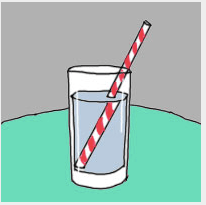
Why does the straw appear to be bent?
light is reflected
light is absorbed
light is turned
light is refracted
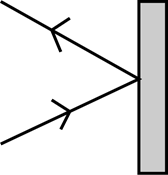
In the illustration, the light ray striking the object is-
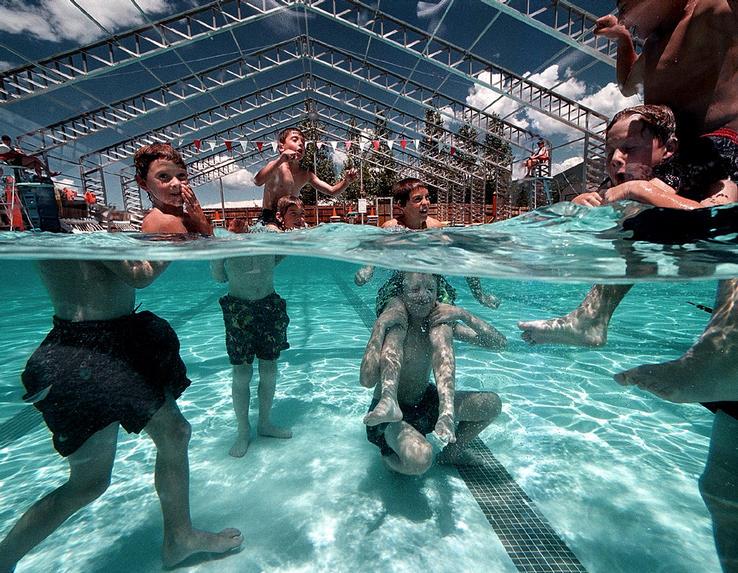
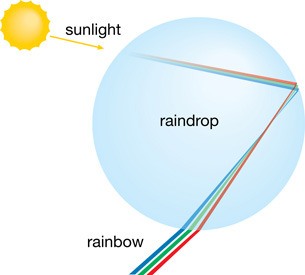
Reflection is when light...
Bends
Bounces
Absorbs
transmits
Refraction is when light...
Bounces
Transmits
Bends
Absorbs
When a string of light works and turns on, it is an example of a ________.
incomplete circuit
sound wave
mechanical energy
complete circuit
Which of the following is the best conductor of energy?
a napkin
a penny
a blanket
a plastic bottle

