wayground logo

Free Printable Worksheets

Font size

S
M
L
XL
Worksheets

Chemistry EOC Review 2022 Part 2

Total questions: 75

Worksheet time: 2hrs 57mins
Name
Class
Date
1.
Organic compounds are compounds contain ______________.
a)
O
b)
C
c)
N
d)
S
2.
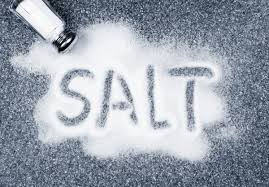
Is NaCl (table salt) a Organic or Inorganic Compound?
a)
Inorganic
b)
Organic
3.

Carbon is the basis for formation of organic compounds such as carbohydrates. The structural formula represents molecules as lines and angles, and carbon atoms are understood to be at the apex of each angle in the figure. If you were building a model of the monosaccharide depicted, how many carbon atoms would you need to form the ring?

a)

3

b)

4

c)

5

d)

6

4.

A scientific theory provides and explanation for how or why an event occurred.

a)

True

b)

False

5.

A scientific theory can become a law if it has enough evidence to support it.

a)

True

b)

False

6.

A scientific law is a repeatable pattern in nature

a)

True

b)

False

7.

A scientific law can be demoted to a theory if information is produced questions it's validity.

a)

True

b)

False

8.

A scientific law states that an event will occur.

a)

True

b)

False

9.

Check all the statements that apply to a scientific law.

a)

States that an event will occur

b)

A repeatable pattern in nature

c)

Can be rejected or modified

d)

Based on repeated observations

e)

Explains how or why an event occurred
10.
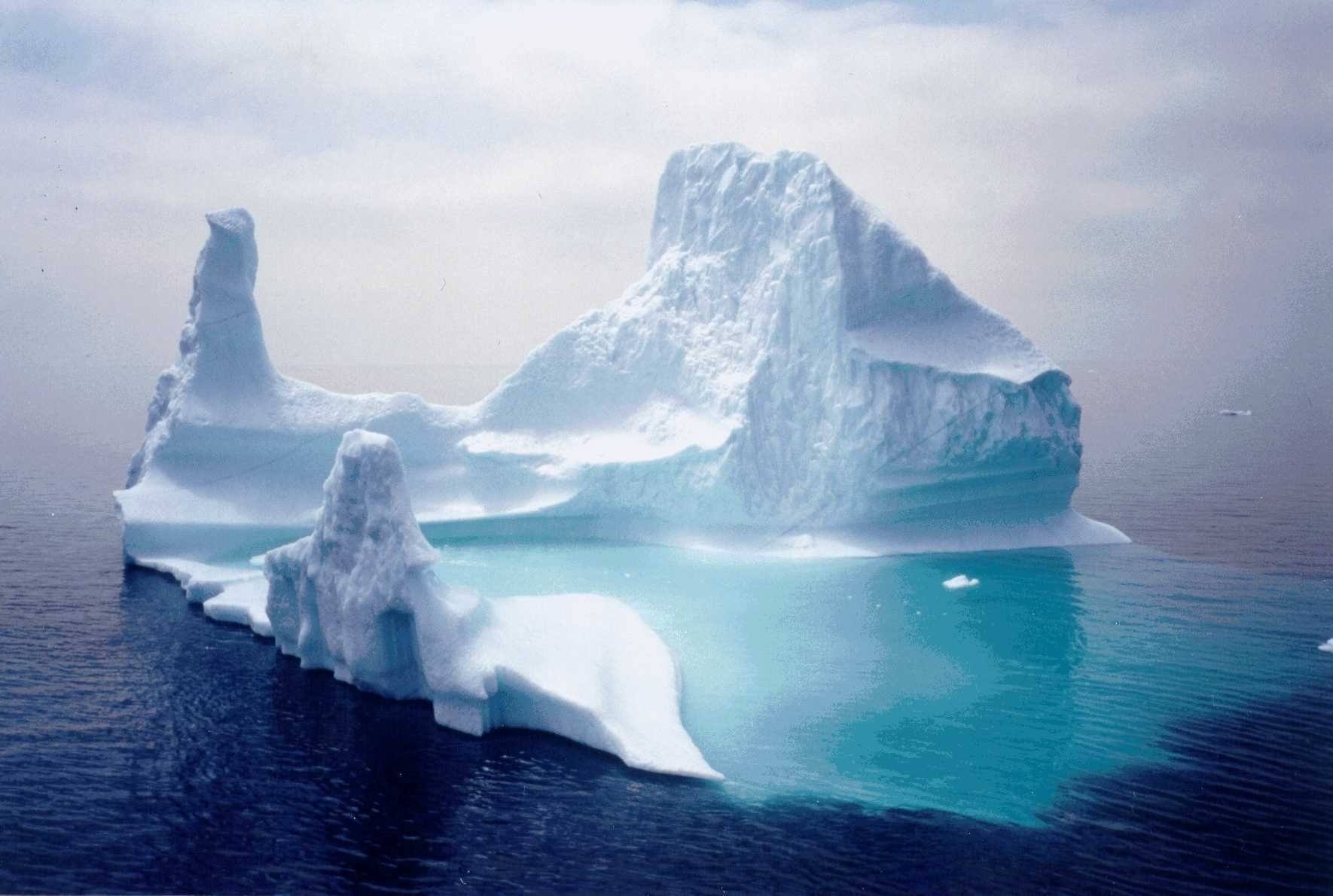
Matter changes state when...
a)
energy is added or removed
b)
energy is added
c)
energy is removed
d)
there is no energy
11.
When a gas forms directly into a solid, skipping the liquid phase
a)
deposition
b)
sublimation
c)
evaporation
d)
condensation
12.
What happens to a substance when it changes from a liquid to a solid?
a)
it gains mass
b)
it gains energy
c)
it loses mass
d)
it loses energy
13.

Which color has the longest waves?

a)

red

b)

orange

c)

yellow

d)

green

14.

Rutherford's gold foil experiment resulted in

a)

the idea that negative and positive charges are spread evenly throughout the atom.

b)

alpha particles have a positive charge.

c)

gold is not a dense as previously thought.

d)

the idea of a nuclear atom, -- a dense positively charged nucleus at the center of an electron cloud.

15.
What scientist first developed 4 rules for atomic theory, and helped kick start modern chemistry?
a)
J.J. Thomson
b)
Ernest Rutherford
c)
John Dalton
d)
Democritus
16.
Who stated that all atoms of the same element are exactly alike?
a)
Democritus
b)
Dalton
c)
Thomson
d)
Borh
17.
How did Rutherford discover the proton?
a)
Cathode tube ray experiment
b)
Gold Foil Experiment
c)
Planetary Model
d)
Plum Pudding Model
18.
Ernst Rutherford discovered which part of the atom through the use of gold foil?
a)
Proton
b)
Neutron
c)
Electron
d)
Orbitals
19.
Niels Bohr suggested that electrons.......
a)
are found in specific orbits
b)
electrons are scattered throughout the atom
c)
electrons move according to their energy level
d)
electrons are positive
20.

Which TWO postulates of Dalton's atomic theory have been proven false by later research?

a)

All matter is made up of atoms

b)

Atoms are indivisible and indestructible

c)

All atoms of the same element have identical properties

d)

Atoms combine in fixed, whole-number ratios to form compounds

21.

Scientists ___________ experiments to make sure the results are meaningful.

a)

perform

b)

repeat

c)

conclude

d)

communicate

22.

Before a scientific theory is accepted and supported, it has

a)

been tested by only one scientist.

b)

been published in scientific journals.

c)

been tested many times by different scientists.

d)

been approved by the International Committee of Scientists.

23.
An atom of fluorine has an atomic mass of 19 u. Keeping in mind that its atomic number is 9, what can you infer about this atom?
a)
it has 9 neutrons
b)
it has 10 electrons
c)
it has 10 neutrons
d)
it has 10 protons
24.
What do carbon-12 and carbon-14 have in common?
a)
they have same number of protons
b)
they have the same number of neutrons
c)
they have the same atomic mass
d)
they have the same atomic weight
25.
How many neutrons does the isotope of lithium have?
a)
8
b)
3
c)
4
d)
5
26.
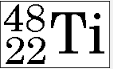
How many protons does this isotope of titanium have?
a)
48
b)
22
c)
26
d)
70
27.
How many neutrons in C-14?
a)
6
b)
7
c)
14
d)
8
28.
How many neutrons does an atom of the isotope Neon-22 have?
a)
12
b)
10
c)
22
d)
20
29.

Carbon-13 and Carbon-14 are two possible isotopes of carbon. Atoms of these forms will be the same in every way except that they will have a different number of...

a)

Protons

b)

Neutrons

c)

Electrons

d)

Grams per mole

30.
What is the charge on a lithium atom that looses 1 electron?
a)
+1
b)
0
c)
-1
d)
-2
31.

How many electrons does this magnesium ion have?

a)

24

b)

12

c)

10

d)

14

32.
Hydrogen bonding occurs when hydrogen is bonded to N, O, or F.  Which of the following has hydrogen bonding?
a)
CBr4
b)
NO2
c)
H2S
d)
NH3
33.
Does H2O have hydrogen bonding?
a)
yes
b)
no
34.
What explains the very high melting and boiling point of water
a)
Strong dipole-dipole bonds between water molecules
b)
Strong hydrogen bonds between water molecules
c)
Dispersion forces which are present in all molecules
d)
Asymmetrical shape of the polar bonds.
35.
Does CH4 have hydrogen bonding?
a)
yes
b)
no
36.
Ionic Bonding involves...
a)
The transfer of protons
b)
The transfer of nuetrons 
c)
The transfer of electrons
d)
None Of the above
37.
Intermolecular forces are the forces
a)
within molecules
b)
between molecules
38.

SI unit for Temperature scale

a)

Celsius

b)

Kelvin

c)

Rankine

d)

Fahrenheit

39.

Temperature is a form of energy

a)

True

b)

False

40.

When a cold object is placed beside a hot one, heat flow is from

a)

Cold to hot

b)

hot to cold

c)

both cases as above

d)

nothing happens between them

41.

Which of the following best explains why the sand at the beach is hotter than the water?

a)

Sand has a higher specific heat than water.

b)

Sand has a lower specific heat than water.

c)

There is more water than sand at the beach.

d)

There is more sand than water at the beach.
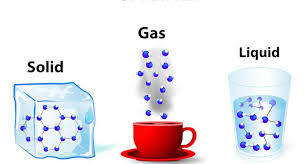
42.
Of these three states of matter, which one has the most kinetic energy? 
a)
Solid 
b)
Liquid 
c)
Gas
43.

Which state of matter has more kinetic energy than liquid

a)

gas

b)

solid

44.

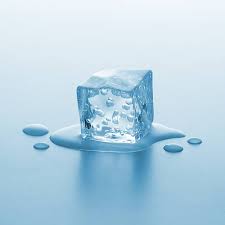
If you are holding an ice cube, where will the heat go?

a)

into the ice cube

b)

into your hand

45.

To freeze a liquid into a solid..

a)

heat must be removed

b)

coldness must be added

46.
Convert: 186.5 K to C
a)
-86.4 C
b)
-50 C
c)
-68.4 C
d)
180 K
47.

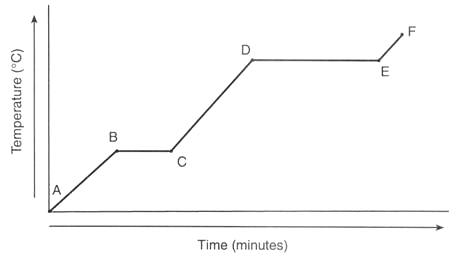
What is happening to the particles in the substance between points D and E?

a)

Melting

b)

Freezing

c)

Vaporizing

d)

Sublimating

48.
The faster molecules move, 
a)
the higher the temperature
b)
the less temperature
c)
the same temperature
d)
I don't know
49.

Temperature is a measure of the average _____________ energy of the particles of a substance.

a)

potential

b)

kinetic

c)

gravitational

d)

heat

50.

_____________ is a dynamic condition in which two opposing changes occur at equal rates in a closed system.

a)

equilibrium vapor pressure

b)

sublimation

c)

equilibrium

d)

volitile liquid

51.
When a substance melts, the kinetic energy _____________.
a)
decreases
b)
stays the same
c)
increases
d)
decreases then increases
52.

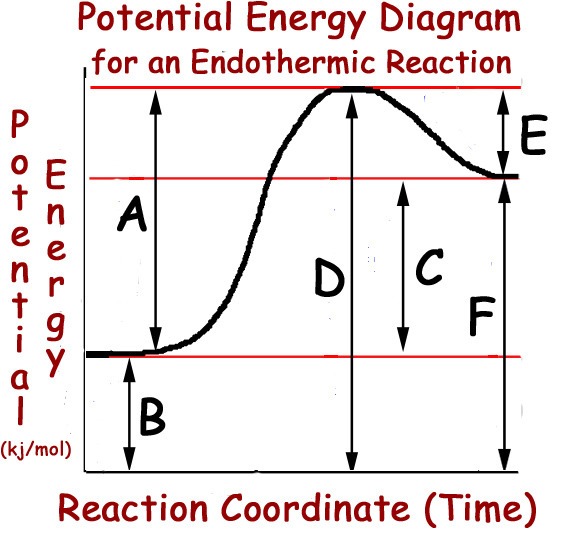
Which of the following process is endothermic process

a)

freezing

b)

condensation

c)

Melting

d)

Solidification

53.

Which is a finding attributed to Rutherford's Gold Foil Experiment?

a)

atoms are indivisible and have a dense positive nucleus.

b)

atoms are divisible and have multiple layers of electrons scattered uniformly about the atom.

c)

atoms are like plum pudding with positive and negative charges uniformly scattered throughout the atom.

d)

atoms are mostly empty space with a dense positive nucleus.

54.
How are covalent bonds explained?
a)
When one atom takes the other atom's electron
b)
When the atom shares an electron with an another atom
c)
When the two nucleus merge
d)
When the neutrons leave the nucleus
55.
High frequency waves have _________ wavelengths.
a)
varying
b)
long
c)
the same
d)
short
56.
Which wave has a greater frequency?
a)
A
b)
B
57.
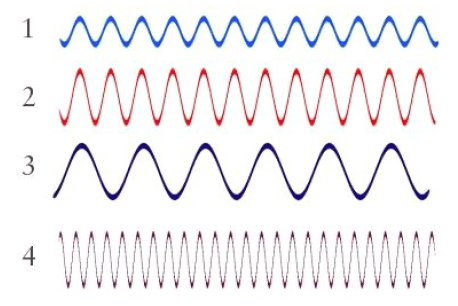
Which wave in the diagram has the greatest wavelength?
a)
1
b)
2
c)
3
d)
4
58.
All waves carry
a)
energy
b)
light 
c)
matter
d)
particles
59.
Look carefully at the waves.  Which carries the most energy?
a)
microwave
b)
infrared
c)
ultraviolet
d)
x-ray
60.
The relationship between wavelength and frequency is λ=c/f.  Calculate the wavelength of light that has a frequency of 5.2 x 10¹² 1/s. The speed of of light is 3.0x 10⁸ m/s.
a)
5.8 x 10 -5 m
b)
5.8 x 10 -7 m
c)
5.19 x 10 14 m
d)
1.56 x 10 23 m
61.
Solve this problems using the equation: 
C = λν
If an AM radio station broadcasts at
9.95 x 10⁵ Hz, what is the wavelength of this radiation?
a)
6.59 x 10⁻²⁸ m
b)
1.01 x 10⁻⁶ m
c)
3.32 x 10⁻³ m
d)
302 m
62.
An argon ion laser emits light at 488 nm. What is the frequency of this radiation?
a)
4.07 x 10⁻¹⁹ Hz
b)
6.15 x 10¹⁴ Hz
c)
1.46 x 10² Hz
d)
2.05 x 10⁶ Hz
63.

In a ___________change, a substance changes into a different substance.

a)

Physical

b)

Chemical

64.

In a chemical reaction atoms are

a)

rearranged

b)

created

c)

destroyed

d)

dissolved

65.
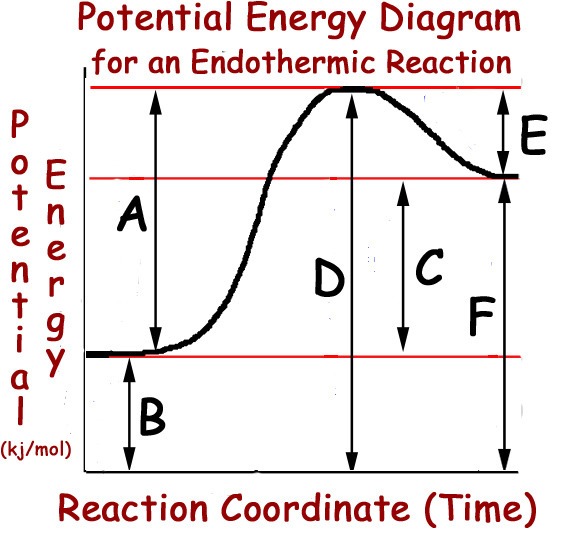
What is the activation energy?
a)
The energy of the products
b)
The energy of the reactants
c)
The minimum energy needed by the reactants to form the products.
d)
The energy lost in the reaction
66.

When barium hydroxide and ammonium chloride react, the temperature of the mixture decreases. What kind of reaction is this?

a)

Endothermic

b)

Decomposition

c)

Exothermic

d)

Indothermic

67.

What has to happen before a reaction takes place?

a)

Product molecules must collide

b)

Product molecules must collide with enough power
c)

Reacting molecules must collide with enough energy

d)

Molecules must collide with enough power
68.
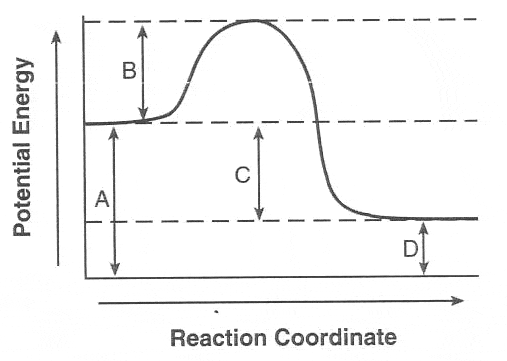
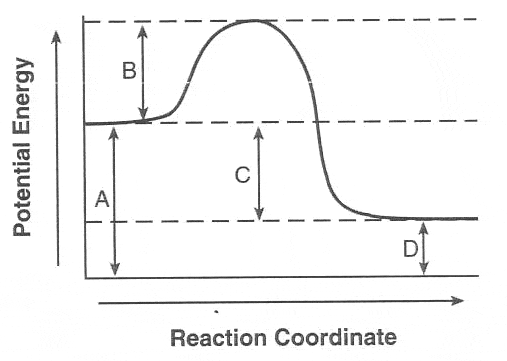
What letter represents the activation energy?
a)
A
b)
B
c)
C
d)
D
69.
What letter represents the energy of the products?
a)
A
b)
B
c)
C
d)
D
70.
What type of reaction is this?
a)
Endothermic
b)
Exothermic
71.
Is this reaction endothermic or exothermic?
a)
endothermic 
b)
exothermic
72.

the result of billions of rapidly moving particles in a gas simultaneously colliding with an object.

a)

Gas volume

b)

Gas pressure

c)

Gas temperature

d)

none of them

73.
In what direction(s) does air exert pressure?
a)
everywhere
b)
no where
c)
there is no pressure
d)
downward
74.

Fewer air particles means ----------- collisions resulting in lower air pressure

a)

higher

b)

more

c)

fewer

d)

increase

75.

A student carried out an investigation to see how pumping a squash ball in their hand multiple times affected the temperature of the air inside the ball.

The method is below

1. Use a digital thermometer inserted in a small cut in the squash ball and record the temperature of the air in the ball. Record it in the table below

2. Remove the thermometer. Hold the ball in your hand and squeeze it as hard as you can 20 times.

3. Check the temperature in the squash ball and record it in the table below

4. Repeat steps 2 and 3 until you have squeezed the ball 120 times

5. Graph the data.

What is the independent variable in this investigation ?

a)

The temperature of the ball

b)

Using the same squash ball

c)

The same person doing the squeezing

d)

The number of times the ball is squashed