wayground logo

Free Printable Worksheets

Font size

S
M
L
XL
Worksheets

Unit 3 and 4 Final Exam Review

Total questions: 207

Worksheet time: 6hrs 3mins
Name
Class
Date
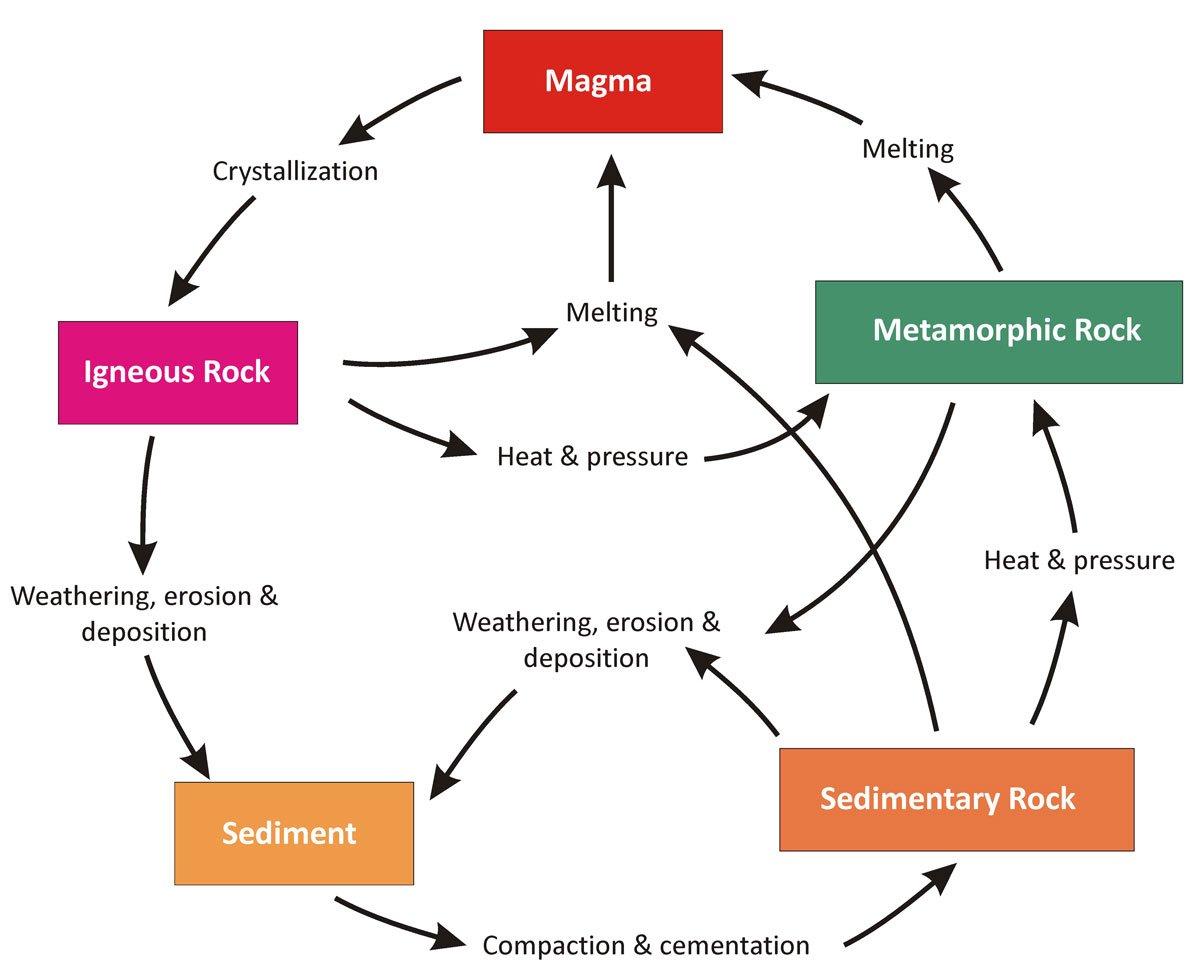
1.
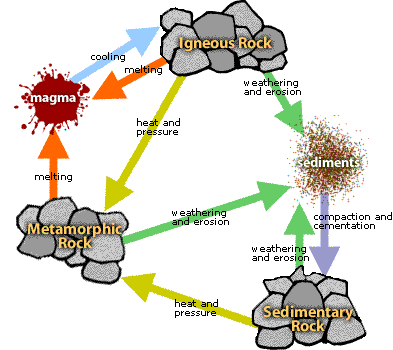
Formed by heat and pressure
a)
Sedimentary
b)
Metamorphic
c)
Extrusive Igneous
d)
Intrusive Igneous
2.
Formed by cooling & solidification of lava
a)
Sedimentary
b)
Metamorphic
c)
Extrusive Igneous
d)
Intrusive Igneous
3.
Formed by cooling & solidification of magma
a)
Sedimentary
b)
Metamorphic
c)
Extrusive Igneous
d)
Intrusive Igneous
4.
Formed by compacting & cementing of sediments
a)
Sedimentary
b)
Metamorphic
c)
Extrusive Igneous
d)
Intrusive Igneous
5.
Formed by weathering & erosion
a)
magma
b)
sediments
c)
sedimentary rock
d)
intrusive igneous
6.
Formed by melting
a)
magma
b)
sediments
c)
sedimentary rock
d)
intrusive igneous
7.
Has large crystals because of slow cooling
a)
sedimentary rock
b)
metamorphic rock
c)
intrusive igneous rock
d)
extrusive igneous rock
8.
Has small or no crystals because of rapid cooling
a)
sedimentary
b)
metamorphic
c)
extrusive igneous
d)
intrusive igneous
9.
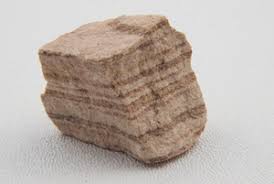
Has wavy bands.
a)
sedimentary rock
b)
metamorphic rock
c)
extrusive igneous rock
d)
intrusive igneous rock
10.
Contains fossils. 
a)
sedimentary rocks
b)
metamorphic rocks
c)
extrusive igneous rocks
d)
intrusive igneous rocks
11.
A rock formed from fragments of other rocks is a(n)
a)
Metamorphic Rock
b)
Sedimentary Rock
c)
Extrusive Rock
d)
Igneous Rock
12.
An igneous rock containing large crystals is most likely a(n)
a)
Chemical Rock
b)
Foliated Rock
c)
Extrusive Rock
d)
Intrusive Rock
13.
A metamorphic rock in which the grains line up in parallel bands is a
a)
Clastic Rock
b)
Nonclastic Rock
c)
Nonfoliated Rock
d)
Foliated Rock
14.
If heat and pressure inside the Earth cause a rock to melt, the material that formed would be
a)
Metamorphic
b)
Magma
c)
Sedimentary
d)
Igneous
15.
You find a rock in which the grains are arranged in parallel bands of white and black crystals.  The rock is probably a(n)
a)
Igneous rock
b)
Sedimentary rock
c)
Metamorphic rock
d)
Extrusive rock
16.
As lava cools and crystallizes, what type of rock will form?
a)
Sedimentary
b)
Metamorphic
c)
Extrusive Igneous
d)
Intrusive Igneous
17.
The parent rock of Gneiss is
a)
Marble
b)
Granite
c)
Obsidian
d)
Biotite
18.
When minerals line up in bands within a metamorphic rock, this rock is...
a)
Nonfoliated
b)
Foliated
c)
Igneous
d)
Sedimentary
19.
Which of the following is not a rock
a)
Pumice
b)
Lava
c)
Halite
d)
Sandstone
20.
The three groups of rocks are classified by
a)
How they form
b)
Color
c)
Grain size
d)
Chemical Composition
21.
The igneous rock texture that is characterized by two distinctly different crystal sizes is called
a)
Coarse grained
b)
Fine grained
c)
Glassy
d)
Porphyritic
22.
Fossils are only found in
a)
Sedimentary rocks
b)
Foliated Metamorphic rocks
c)
Igneous Rocks
d)
Nonfoliated Metamorphic rocks
23.

Which is the process that breaks up rock on Earth’s surface?

a)

deposition

b)

melting

c)

compaction

d)

weathering

24.

Geologists have classified rocks into three major groups of rocks which are:

a)

inorganic, organic and chemical rocks

b)

igneous, sedimentary and metamorphic rocks

c)

metamorphic, chemical and non chemical rocks

d)

sedimentary, inorganic and igneous rocks

25.

Any rock that forms from another rock as a result of changes in heat or pressure (or both) is a:

a)

chemical rock

b)

igneous rock

c)

sedimentary rock

d)

metamorphic rock

26.

Streak is the color of a mineral’s

a)

fracture

b)

luster

c)

powder

d)

cleavage

27.

What kind of igneous rock usually contains large crystals?

a)

clastic

b)

extrusive

c)

organic

d)

intrusive

28.

You find a deposit of organic limestone. In what type of rock setting did it probably form?

a)

the ocean

b)

a volcano

c)

a swamp

d)

sand dunes

29.

A rock that forms from many small fragments of other rocks is a(n)

a)

igneous rock

b)

metamorphic rock

c)

sedimentary rock

d)

extrusive rock

30.

The process by which metamorphic rock changes to igneous rock begins with

a)

melting

b)

erosion

c)

deposition

d)

crystallization

31.

Which rock cycle process causes many sedimentary rocks to have visible layers?

a)

eruption

b)

intrusion

c)

crystallization

d)

deposition

32.

If heat and pressure inside Earth cause the texture and crystal structure of a rock to change, what new material is formed?

a)

sedimentary rock

b)

metamorphic rock

c)

igneous rock

d)

chemical rock

33.

You find a rock in which the grains are arranged in wavy, parallel bands of white and black crystals. What kind of rock have you probably found?

a)

igneous

b)

sedimentary

c)

metamorphic

d)

extrusive

34.

A substance that flows and whose shape can change, but

not its volume is a:

a)

solid

b)

liquid

c)

volume

d)

matter

35.

A substance that resists to change its shape is a:

a)

liquid

b)

solid

c)

matter

d)

volume

36.

The amount of space that a matter occupies is its:

a)

volume

b)

liquid

c)

solid

d)

length

37.

A naturally occurring solid that can form by inorganic processes and that has a crystal structure and a definite chemical composition.

a)

It´s a rock

b)

It´s a crystal

c)

It´s a mineral

d)

It´s a substance

38.

The particles of a mineral line up in a pattern that repeats over and over again with a pattern of a mineral’s particles that forms a translucent or transparent solid is a:

a)

granite

b)

crystal

c)

solid

d)

sand

39.

An element is a substance composed of

a)

many particles

b)

a single kind of atom

c)

a crystal arrangement

d)

many layers

40.

All minerals are substances that where formed by

a)

volcano activity

b)

human intervention

c)

natural processes

d)

rock deposition

41.

To be classified as a mineral, a substance must satisfy this

requirement

a)

have a definite chemical composition

b)

naturally occurring

c)

be a solid

d)

all the above

42.

The streak of a mineral is the

a)

color of the rock

b)

when it carved a line in a surface

c)

is the color of it´s powder

d)

is its hardness

43.

Which is the process that breaks up rock on Earth’s surface?

a)

deposition

b)

melting

c)

compaction

d)

weathering

44.

Geologists have classified rocks into three major groups of rocks which are:

a)

inorganic, organic and chemical rocks

b)

igneous, sedimentary and metamorphic rocks

c)

metamorphic, chemical and non chemical rocks

d)

sedimentary, inorganic and igneous rocks

45.

Any rock that forms from another rock as a result of changes in heat or pressure (or both) is a:

a)

chemical rock

b)

igneous rock

c)

sedimentary rock

d)

metamorphic rock

46.

Streak is the color of a mineral’s

a)

fracture

b)

luster

c)

powder

d)

cleavage

47.

What kind of igneous rock usually contains large crystals?

a)

clastic

b)

extrusive

c)

organic

d)

intrusive

48.

You find a deposit of organic limestone. In what type of rock setting did it probably form?

a)

the ocean

b)

a volcano

c)

a swamp

d)

sand dunes

49.

A rock that forms from many small fragments of other rocks is a(n)

a)

igneous rock

b)

metamorphic rock

c)

sedimentary rock

d)

extrusive rock

50.

The process by which metamorphic rock changes to igneous rock begins with

a)

melting

b)

erosion

c)

deposition

d)

crystallization

51.

Which rock cycle process causes many sedimentary rocks to have visible layers?

a)

eruption

b)

intrusion

c)

crystallization

d)

deposition

52.

If heat and pressure inside Earth cause the texture and crystal structure of a rock to change, what new material is formed?

a)

sedimentary rock

b)

metamorphic rock

c)

igneous rock

d)

chemical rock

53.

You find a rock in which the grains are arranged in wavy, parallel bands of white and black crystals. What kind of rock have you probably found?

a)

igneous

b)

sedimentary

c)

metamorphic

d)

extrusive

54.

A substance that flows and whose shape can change, but

not its volume is a:

a)

solid

b)

liquid

c)

volume

d)

matter

55.

A substance that resists to change its shape is a:

a)

liquid

b)

solid

c)

matter

d)

volume

56.

The amount of space that a matter occupies is its:

a)

volume

b)

liquid

c)

solid

d)

length

57.

An element is a substance composed of

a)

many particles

b)

a single kind of atom

c)

a crystal arrangement

d)

many layers

58.

All minerals are substances that where formed by

a)

volcano activity

b)

human intervention

c)

natural processes

d)

rock deposition

59.

Which layer is made (mostly) of LIQUID iron and nickel?

a)

crust

b)

mantle

c)

outer core

d)

inner core

60.

Which layer is made (mostly) of SOLID iron and nickel?

a)

crust

b)

mantle

c)

outer core

d)

inner core

61.

Which layer of the Earth is the THINNEST?

a)

crust

b)

mantle

c)

outer core

d)

inner core

62.

Which layer of the Earth is the THICKEST?

a)

crust

b)

mantle

c)

outer core

d)

inner core

63.

Which layer is the hottest?

a)

crust

b)

mantle

c)

outer core

d)

inner core

64.

Which layer is the coolest?

a)

crust

b)

mantle

c)

outer core

d)

inner core

65.

What two layers make up the core?

a)

Lithosphere and

Asthenosphere

b)

Inner and Outer core

c)

Lithosphere and Outer Core

d)

Inner core and Mantle

66.

What is the middle part of the mantle that is partially molten rock, or putty like, or semisolid.

a)

Asthenosphere

b)

Mesosphere

c)

Lithosphere

d)

Crust

67.

What layer is made of mostly iron?

a)

Mantle and crust

b)

Mantle and core

c)

Inner core and outer core

d)

Crust only

68.

What is the outer most layer of the earth?

a)

Core

b)

Mantle

c)

Crust

d)

Asthenosphere

69.

Which of Earth's layers is best described as liquid metal?

a)

crust

b)

mantle

c)

outer core

d)

inner core

70.

Which of the following is true regarding the composition of the lithosphere?

a)

The lithosphere is mostly liquid, with some medium-density materials, such as silicon.

b)

The lithosphere is more plastic and flows slowly compared to the solid crust of Earth.

c)

The lithosphere includes the core and the lower portion of the mantle.

d)

The lithosphere includes the crust and the uppermost portion of the mantle, which is sold and rigid.

71.

Which of the following correctly lists the layers from innermost to outermost?

a)

inner core, outer core, lower mantle, upper mantle, crust

b)

lower mantle, upper mantle, crust, inner core, outer core

c)

lower mantle, inner core, upper mantle, outer core, crust

d)

crust, inner core, lower mantle, upper mantle, outer core

72.

As you travel from the crust to the core, how would temperature, pressure and density of the material change?

a)

They would all increase

b)

They would all decrease.

c)

Nothing, the layers are made of the same material throughout

d)

Temperature would decrease, but pressure and density would increase

73.
Scientists determine what Earth’s interior looks like by using:
a)
Volcanoes
b)
Seismic Waves
c)
Continental Drift
d)
Convection Currents
74.

The continental crust is

a)

thinner than the oceanic crust

b)

thicker than the oceanic crust

c)

the same thickness as the oceanic crust

75.
Which layer of Earth has the GREATEST density?
a)
crust
b)
mantle
c)
outer core
d)
inner core
76.
Which layer of the earth is under the highest pressure?
a)
Crust
b)
Mantle
c)
Outer Core
d)
Inner Core
77.

Earth's crust is about

a)

2900 kilometers deep

b)

410 kilometers deep

c)

15 kilometers deep

d)

50 kilometers deep

78.

This zone divides the upper and lower mantle and is a layer of soft and weak rock

a)

Crust

b)

Middle mantle

c)

Lithosphere

d)

Asthenosphere

79.

This layer is made of hot flowing rock (magma).

a)

Crust

b)

Mantle

c)

Core

80.

The layer made of iron and nickel.

a)

Crust

b)

Mantle

c)

Core

81.

This layer is made of soil and rocks.

a)

Crust

b)

Mantle

c)

Core

82.

This layer is divided into two: the inner and outer.

a)

Crust

b)

Mantle

c)

Core

83.

The layer is divided into two: the continental and oceanic.

a)

Crust

b)

Mantle

c)

Core

84.

This layer is divided into two: the upper and lower.

a)

Crust

b)

Mantle

c)

Core

85.

This layer in the center of the Earth.

a)

Crust

b)

Mantle

c)

Core

86.

We live on this layer.

a)

Crust

b)

Mantle

c)

Core

87.

This layer is below the crust.

a)

Crust

b)

Mantle

c)

Core

88.

This is the coolest layer.

a)

Crust

b)

Mantle

c)

Core

89.

Two thirds of the Earth’s mass is in this layer.

a)

Crust

b)

Mantle

c)

Core

90.

The layer with the highest temperatures.

a)

Crust

b)

Mantle

c)

Core

91.
Created by a divergent boundary.
a)
Rocky Mountains
b)
Mariana Trench
c)
Mid Atlantic ridge
92.
Mountains form from ...
a)
plates sliding past one another
b)
collision of plates
c)
plates moving away from each other
93.
During sea floor spreading, molten material rises up from the mantle...
a)
along the continents
b)
at the mid ocean ridges
c)
deep ocean trenches
d)
at north and south poles
94.
Which of the following is where one plate slides under another plate?
a)
submarine zone
b)
divergence zone
c)
subduction zone
d)
lower zone
95.
The area around the pacific plate where boundaries form is called...
a)
death ring
b)
fire zone
c)
ring of fire
d)
zone of fire
96.
Associated with transform boundaries.
a)
Volcanoes
b)
mountains
c)
trenches
d)
earthquakes
97.
This land formation occurs at a divergent continental/ continental boundary.
a)
mid ocean ridge
b)
deep ocean trench
c)
pacific hot spot
d)
rift valley
98.
What happens to temperature as you go deeper in the Earth?
a)
decreases
b)
increases
c)
fluctuates
d)
remains the same
99.
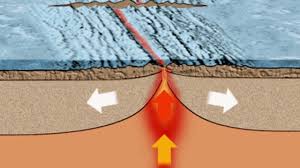
Name the boundary
a)
convergent boundary
b)
divergent boundary
c)
transform boundary
d)
sergent boundary
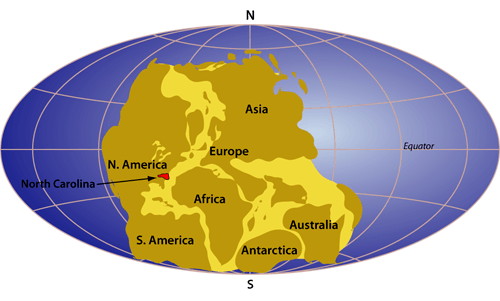
100.
What is represented by the picture? 
a)
Sea-floor spreading
b)
Pangea
c)
How the continents are arranged today
d)
Volcanoes
101.
Name the boundary
a)
convergent boundary
b)
divergent boundary
c)
transform boundary
d)
sergent boundary
102.
Name the boundary
a)
convergent boundary
b)
divergent boundary
c)
transform boundary
d)
sergent boundary
103.
Which type of crust is more dense and thinner?
a)
Continental
b)
Asthenosphere
c)
Oceanic
d)
Byers
104.
What was Wegener's hypothesis called?
a)
The Pangea 
b)
Moving Continents 
c)
The Continental Drift
d)
Techtonic Plates
105.
Why was Alfred Wegner's theory of Continental Drift not immediately accepted by scientists?
a)
there was no mechanism to explain how Continental Drift happened.
b)
The theory of Continental Drift was immediately accepted by the scientific community.
c)
there was no evidence to support his theory.
d)
Scientists did not think it was possible for the Continents to move.
106.
A location where two tectonic plates collide is known as a _________ boundary.
a)
Convergent
b)
Divergent
c)
Transform
d)
Spreading
107.
Which answer below correctly describes the formation of a volcanic island arc?
a)
Islands are created along the mid ocean ridge as new oceanic crust is formed.
b)
Islands are created one at a time as the plate moves across a hot spot in the mantle.
c)
Islands are created along a subduction zone as oceanic crust is forced back down in to the mantle.
d)
Islands are created as pressure is released when two tectonic plates are pulled apart.
108.

What is the correct order (starting from the surface) of Earth’s layers?

a)

crust, outer core, inner core, mantle

b)

mantle, outer core, inner core, crust

c)

crust, mantle, outer core, inner core

d)

outer core, inner core, crust, mantle

109.

In sea-floor spreading, molten material rises from the mantle and erupts

a)

along the edges of all the continents.

b)

along mid-ocean ridges.

c)

in deep-ocean trenches.

d)

at the north and south poles.

110.

The process by which the ocean floor sinks beneath a deep-ocean trench and back into the mantle is known as _______

a)

convection.

b)

continental drift.

c)

subduction.

d)

conduction.

111.

Most geologists think that the movement of Earth’s plates is caused by _______

a)

convection.

b)

continental drift.

c)

subduction.

d)

conduction.

112.

The geological theory of _______ states that pieces of Earth’s lithosphere are in constant, slow motion.

a)

subduction

b)

plate tectonics

c)

deep-ocean trenches

d)

sea-floor spreading

113.

A place where two plates slip past each other, moving in opposite directions, is known as a _______

a)

transform boundary

b)

divergent boundary.

c)

convergent boundary.

d)

rift valley.

114.

Scientists think that convection currents flow in Earth’s

a)

continents.

b)

mantle.

c)

lithosphere.

d)

inner core.

115.

The place where two plates come together is known as a _______

a)

transform boundary.

b)

divergent boundary.

c)

convergent boundary.

d)

rift valley.

116.

Below is a picture of sea-floor spreading. How are the ocean crusts moving?

a)

Converging

b)

Diverging

c)

Sliding

d)

No movement

117.

The San Andreas Fault in California is known as an active earthquake area. What type of

boundary is it?

a)

Converging

b)

Diverging

c)

Transform

d)

Sea Floor Spreading

118.
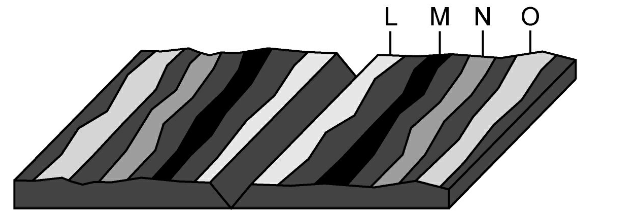
Where would the oldest rock be found?
a)
L
b)
M
c)
N
d)
O
119.
How is it possible for new crust to be formed without increasing the surface area of the Earth?
a)
Crust is destroyed at the same time it is created
b)
New crust is underwater where it sinks
c)
New crust breaks more easily than old crust
120.
This layer of Earth is the thickest part
a)
crust
b)
outer core
c)
mantle
d)
inner core
121.
What are the two types of crust
a)
continental and oceanic
b)
ocean and upper
c)
lower and upper
d)
pizza and subway
122.
The Himalayas in Asia are an example of what type of plate boundary?
a)
divergent
b)
continent-to-continent convergent
c)
ocean-to-continent convergent
d)
transform
123.
What type of boundary is the SAN ANDREAS FAULT on?
a)
Covergent
b)
Transformers
c)
Divergent
d)
Transform
124.
What are Tectonic Plates?
a)
A continent 
b)
The Trees in Vietnam 
c)
ThE PlaTES That MoVE uNdERGRound :)
d)
The Plates that move the Continents
125.
What is Pangaea?
a)
the name of a German scientist
b)
the name of the super-continent that existed millions of years ago
c)
another name for continental drift
d)
the name of an ancient fossil
126.
What are the two types of crust?
a)
continental and oceanic
b)
ocean and basin
c)
lower and upper
d)
thick and thin
127.
Mountains form from ...
a)
plates sliding past one another
b)
collision of plates
c)
plates moving away from each other
128.
Who is the German Scientist that came up with the theory of the Continental Drift? 
a)
Albert Einstein 
b)
Ms. Stukel 
c)
Galileo
d)
Alfred Wegener
129.
Originally the Continental drift theory was not well received by other scientist.  Why? 
a)
There was a competing theory at the time that was more believable. 
b)
There was no data showing the continents ever moved. 
c)
The scientists did not know the force responsible for moving the continents. 
d)
The scientist presenting the data was unreliable.  
130.
What is this a picture of?
a)
plate tectonics
b)
continental drift
c)
pangea
d)
glacier scaring
131.
Identify the Major Plate labeled B
a)
African Plate
b)
Antarctic Plate
c)
Pacific Plate
d)
Eurasian Plate 
132.
Identify the Major Plate labeled I
a)
African Plate
b)
Antarctic Plate
c)
Pacific Plate
d)
Eurasian Plate 
133.
Identify the Major Plate labeled N
a)
African Plate
b)
Antarctic Plate
c)
Pacific Plate
d)
Eurasian Plate 
134.
Which of these explains that Earth's outer layer is broken into large slowly moving pieces? 
a)
Plate Tectonic Theory
b)
Continental Drift 
135.
Which explains that the continents were once joined together and over time they broke up and then drifted apart?
a)
Plate Tectonic Theory
b)
Continental Drift 
136.
Pangaea was an ancient supercontinent made up of...
a)
America, Greenland, and Europe.
b)
Antarctica, India, and America.
c)
all of Earth’s continents.
d)
South Africa, India, Australia, and South America.
137.
Peer scientists reviewing Wegener’s hypothesis of continental drift rejected his notion because
a)
His evidence was too few to make a valid conclusion 
b)
He did not explain how continents move and what moves them
c)
His evidence was not clear in showing  how continents were joined
d)
He lied by including false evidence
138.
The rejection of Mr. Wegener's hypothesis  teaches us that
a)
Indirect evidence is not sufficient to prove a hypothesis
b)
Direct evidence is hard to find 
c)
Hypotheses are hard to prove
d)
Scientists of the early 1900s were not smart enough
139.
Evaluating the relationship between scientific laws, theories, and hypothesis, one can say
a)
Scientific hypothesis can became laws
b)
Scientific theories can became laws
c)
Scientific laws can be changed
d)
Scientific hypothesis can became theories
140.

When did the first birds appear?

a)

Cambrian

b)

Permian

c)

Cretaceous & Triassic

d)

Mesozoic and Jurassic

141.

The second broadest category of geologic time is______________?. The Cenozoic is one of them.

a)

era

b)

eon

c)

epoch

d)

period

142.

The period of geologic time when the biodiversity of life on the planet increased dramatically was

a)

Jurassic

b)

Triassic

c)

Permian

d)

Cambrian

143.

There have been how many major extinction events on planet Earth?

a)

3

b)

4

c)

5

d)

2

144.

The epoch we are currently living in is the

a)

Holocene

b)

Quaternary

c)

Cambrian

d)

Pleistocene

145.

The worst mass extinction event in the history of the Earth wiping out 96% of all life was the

a)

Permian-Triassic

b)

Holocene

c)

Triassic-Jurassic

d)

Ordovician-Silurian

146.

During which periods did the first land plants, vertebrates, and insects appear?

a)

Jurassic-triassic

b)

Ordovician-silurian

c)

Hadean-acheon

d)

Tertiary-quaternary

147.

When did this creature live?

a)

Triassic-Jurassic

b)

Jurassic-Silurian

c)

Cretaceous-Tertiary

d)

Eocene-Oligocene

148.

What are the names of ALL parts of the geologic time scale in correct order from broadest to narrowest?

a)

era, period, eon

b)

eon, era, period, epoch

c)

era, eon, epoch, period

d)

eon, era, epoch, period

149.

The Cenozoic is a

a)

eon

b)

era

c)

period

d)

epoch

150.

The Phanerozoic is a

a)

eon

b)

era

c)

period

d)

epoch

151.

The period of time where conditions were harsh and no life forms existed was the

a)

Pleistocene

b)

Cambrian

c)

Hadean

d)

Holocene

152.

The period when trilobites and eurypterids appeared was the

a)

Hadean

b)

Cambrian

c)

Holocene

d)

Jurassic

153.

The time when the first jawed fishes and amphibians appeared

a)

Devonian

b)

Jurassic

c)

Cambrian

d)

Hadean

154.

The period when huge land plants were dominant and eventually became the coal and oil we use today.

a)

Cambrian

b)

Carboniferous

c)

Jurassic

d)

Miocene

155.

When large land reptiles first appeared.

a)

Jurassic

b)

Permian

c)

Cambrian

d)

Holocene

156.

Known as the age of reptiles

a)

Mesozoic

b)

Cenozoic

c)

Phanerozoic

d)

Cambrian

157.

The time when mammals became dominant

a)

Jurassic

b)

Oligocene

c)

Cambrian

d)

Hadean

158.
Soil is made of
a)
weathered rocks and minerals
b)
dead plants and animals
c)
air and water
d)
all of the above
159.

Soil formation begins with the weathering of_______.

a)

Humas

b)

Subsoil

c)

Litter

d)

Bedock

160.
The layer of soil which the topsoil is found.
a)
Horizon A
b)
Horizon B
c)
Horizon C
d)
Horizon D or R
161.
What is a soil problem all farmers face?
a)
soil hardening
b)
soil erosion
c)
soil spoiling
d)
soil pollution
162.
According to the settling tube experiment, which soil is the heaviest and fell to the bottom of the tube?
a)
clay
b)
humus
c)
sand
d)
silt
163.

Which soil component makes up about 5% of a loamy soil?

a)

Water

b)

Organic Matter

c)

Air

d)

Minerals

164.

Which soil component makes up about 45% of a loamy soil?

a)

Water

b)

Organic Matter

c)

Air

d)

Minerals

165.

Which soil component makes up about 25% of a loamy soil?

a)

Water

b)

Organic Matter

c)

Air

d)

Water & Air

166.

Which soil horizon is contains decomposed plants and animals?

a)

A Horizon

b)

B Horizon

c)

C Horizon

d)

O Horizon

167.

Soil sample that is 60% clay, 30% silt, and 10% sand has which texture?

a)

clay

b)

clay loam

c)

sandy loam

d)

silt

168.

What type of soil is in our area (North Carolina)?

a)

Andisoils

b)

Ultisols

c)

Gelisols

d)

Entisols

169.

Soil sample that is 10% clay, 20% silt, and 70% sand has which texture?

a)

clay

b)

clay loam

c)

sandy loam

d)

silt

170.

What soil conservation method refers to forming steps in a hill to prevent water erosion?

a)

windbreaks

b)

contour plowing

c)

terrace farming

d)

strip cropping

171.
The two main factors that determine the rate of weathering are the TYPE of rock and_____.
a)
Music
b)
Climate
c)
Size of rock
d)
Weight of rock
172.

Soil is formed by the breaking down of rocks by the action of wind, water and climate. This process is called

a)

Humification

b)

Weathering

c)

Soil erosion

d)

None of the above

173.

Soil erosion is the process by which the

a)

the land surface(top soil) is removed by wind, water or ice

b)

formation of soil form rocks

c)

rusting of soil

d)

None of the above

174.
Which of the following is the correct order of soil particles in order of increasing particle size?
a)
clay-sand-silt
b)
sand-clay-silt
c)
silt-clay-sand
d)
clay-silt-sand
175.
The Richter scale measures:
a)
the amount of radon gas released
b)
the movement of plates
c)
the strength of an earthquake
d)
the weight of tectonic plates
176.
Which travels fastest, always being the first detected by seismic stations?
a)
P waves
b)
S waves
177.
An instrument that detects and measures earthquakes is a 
a)
seismogram
b)
focus seismic map
c)
focus
d)
seismograph 
178.

Most earthquakes happen along _________________.

a)

the coast

b)

faults

c)

the desert

d)

mountain ranges

179.
Earthquakes under the water can cause _________________________________.
a)
tornadoes
b)
tsunamis
c)
lightening
d)
hailstorms
180.

Many earthquakes happen along the borders of...

a)

Countries

b)

Tectonic Plates

c)

Climate Zones

d)

None of the above.

181.

Second waves to arrive in an earthquake

a)

P waves

b)

S waves

c)

Surface waves

182.

First waves to arrive in an earthquake

a)

P waves

b)

S waves

c)

surface waves

183.
The distribution of earthquakes on Earth’s surface is evidence that Earth’s crust is divided into ____.
a)
dishes
b)
oceans
c)
plates
d)
mantle
184.

The crack in the surface of the Earth along which rocks break and earthquakes sometime occur:

a)

focus

b)

fault

c)

epicenter

d)

hypocenter

185.

The place where an earthquake originates inside the Earth's surface is called...

a)

Epicenter

b)

Focus

c)

Underground

d)

Crust

186.

The place on the Earth's surface, above the origin of the earthquake.

a)

Epicenter

b)

Focus

c)

Surface

d)

Crust

187.

What is the instrument used to measure earthquakes?

a)

Seismograph

b)

Seismologist

c)

Scale

d)

Seismogram

188.

Which city is closest to the epicenter?

a)

A

b)

B

c)

C

189.

5. Which type of wave travels the fastest?

a)

Primary Wave

b)

Secondary Wave

c)

Long Wave

190.

This is created by earthquakes that occur on the ocean floor.

a)

longshore current

b)

gulf stream

c)

tsunamis

d)

high tide

191.

What is the minimum number of seismograph stations needed to locate an earthquake epicenter?

a)

1

b)

2

c)

3

d)

5

192.

Measures the magnitude or size, of an Earthquake

a)

epicenter

b)

focus

c)

Richter scale

d)

Mercalli Scale

193.

What is the measure of the amount of energy released in an earthquake?

a)

Intensity

b)

Epicenter

c)

Magnitude

d)

Seismogram

194.
In which direction is Mill River flowing?
a)
Southeast
b)
Southwest
c)
Northeast
d)
Northwest
195.
What is the elevation of Y?
a)
Between 120-140 meters
b)
Between 100-120 meters
c)
Between 140-160 meters
d)
Between 80-100 meters
196.
What is the highest elevation on this map?
a)
Over 320 meters
b)
Over 450 meters
c)
Over 220 meters
d)
Over 380 meters
197.
What is the elevation of the peak of the small island on the left side?
a)
About 20 meters
b)
About 40 meters
c)
About 60 meters
d)
About 200 meters
198.
What feature is formed at B?
a)
river
b)
rift valley
c)
sink hole
d)
mountain
199.
Which side of Holland Hill is the steepest?
a)
North
b)
South
c)
East 
d)
West
200.
If we were in a plane, Path B --> C is about the same distance as path E --> N. But, which path is the easier walk? 
a)
B --> C is the easier walk
b)
E --> N is the easier walk
c)
B --> C and E --> N are the same walking distance
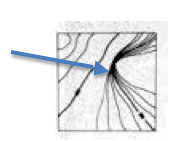
201.
What feature is at the arrow?
a)
volcano
b)
mountain
c)
cliff
d)
river
202.
Which topographic map matches formation C?
a)
1
b)
2
c)
3
d)
4
203.
If contour lines are close together, then the slope is
a)
gentle
b)
steep
c)
flat
d)
going up and down
204.
On a topographic map of a mountain, you walk a longer distance to get to the top when the contour lines are
a)
spread out
b)
close together
c)
going down
d)
going up
205.
Which events describe slow changes to earth's surface?
a)
volcanoes
b)
earthquakes
c)
landslides
d)
chemical weathering
206.
Which events are rapid, or fast, changes to earth's surface?
a)
tree roots
b)
freezing water
c)
flash floods
d)
chemical weathering
207.
The height above sea level is called
a)
topographic
b)
contour
c)
elevation
d)
depth