wayground logo

Free Printable Worksheets

Font size

S
M
L
XL
Worksheets

4th IPC D.A.

Total questions: 86

Worksheet time: 1hrs 7mins

Name
Class
Date
1.

What do all waves transfer?

a)

Matter

b)

Heat

c)

Electricity

d)

Energy

2.

What is the number of complete waves passing a fixed point in a given amount of time?

a)

Amplitude

b)

Intensity

c)

Wavelength

d)

Frequency

3.

What is the frequency of this wave?

a)

1 Hz

b)

5 Hz

c)

10 Hz

4.

Which type of waves have the longest wavelength?

a)

Visible light

b)

Radio waves

c)

X-rays

d)

Gamma-Rays

5.

What is the distance between the calm sea and the highest wave called?

a)

Wave

b)

Frequency

c)

Amplitude

d)

Magnitude

6.


Waves that require a medium to travel are:

a)

Mechanical

b)

Transverse

c)

Electromagnetic

d)

Longitudinal

7.
What types of waves carry energy at a right angle or perpendicular to the direction of the energy flow?
a)
Longitudinal waves
b)
Transverse waves
c)
Sound waves
d)
P-waves
8.
What is the formula to calculate speed?
a)
S = t/d
b)
S = d/t
c)
S = d x t
d)
S = t x d
9.

What is the speed of a bus that travels 250 km in 2 hours?

Formula ?

Answer ?

a)

S= D/T

125km/hr

b)

S= T/D

521km/meters

c)

S=D/T Km/hr

d)

All fo the above

10.
Reese can run 10 meters in 5 seconds. What is her speed?
a)
5 meters/sec
b)
2 meters/sec
c)
5 miles/hour
d)
2 miles/hour
11.

A reference point is

a)

the object that appears to stay in place.

b)

the number to the right of the decimal point.

c)

the object that appears to be in motion.

d)

is calculated by using speed, distance, and time.

12.

The best reference points are stationary (not moving).

a)

true

b)

false

13.
Which runner won the race?
a)
A
b)
B
c)
C
14.
How long did it take this object to travel 10 m?
a)
0 s
b)
10 s
c)
15 s
d)
20 s
15.
What is the person doing from 5 seconds to 10 seconds?
a)
Walking at a constant speed
b)
Running fast
c)
Not moving
d)
Walking slow
16.
What does this graph represent?
a)
Constant speed
b)
Acceleration
c)
Not moving
17.

protons

a)

negative charge, nucleus

b)

positive charge, shells

c)

positive charge , nucleus

d)

neutral charge, nucleus

18.

neutrons

a)

no charge, shells

b)

positive charge, nucleus

c)

neutral, no charge, nucleus

d)

negative charge, shells

19.

electrons

a)

no charge, nucleus

b)

positive charge, nucleus

c)

negative charge, shells

d)

negative charge, nucleus

20.

atomic number

a)

number of protons/stands for an element

b)

number of neutrons

c)

number of electrons

d)

number of protons and neutrons

21.

mass number

a)

number of protons

b)

number of electrons

c)

number of protons and electrons

d)

number of protons and neutrons

22.

lst shell holds

a)

2

b)

8

c)

18

d)

32

23.

2nd shell holds

a)

2

b)

8

c)

18

d)

32

24.

same number of protons, different number of neutrons

a)

atomic number

b)

mass number

c)

isotope

d)

ion

25.

a charged atom

a)

neutral

b)

isotope

c)

ion

d)

nucleus

26.
What is a pure substance that cannot be broken down into any other substance by physical or chemical means. Ex: Gold, Silver, Oxygen, & Nitrogen
a)
element
b)
compound
c)
mixture
d)
salad
27.
What is a  pure substance made of two or more elements chemically combined in a set ratio. Ex: CO2 has a set ratio of 1:2, meaning for every one carbon atom there are two oxygen atoms.
a)
element
b)
compound
c)
mixture
d)
salad
28.
What type of property can only be observed by changing the substance into a new substance. Ex: Flammability, oxidation
a)
chemical
b)
physical
29.
In a mixture items can be separated __________
a)
chemically
b)
physically
30.
Phase changes (going from a solid to a liquid to a gas) are what types of changes?
a)
chemical
b)
physical
31.
A row across the Periodic Table where each element has the same number of energy shells
a)
column
b)
family
c)
period
32.
In a family or column, the elements have similar properties because they all have the same number of
a)
protons
b)
neutrons
c)
valence electrons
d)
electrons
33.
What is the octet rule?  How many valence electrons can the first three periods hold?
a)
8
b)
2
c)
2 8 8
d)
2 8 16
34.
Whether or not bonds form is due to the ?????
a)
valence electron configurations
b)
protons
c)
atomic mass
d)
chance
35.
In what type of bond are electrons gained or lost?  This happens between a metal and a non-metal?
a)
ionic
b)
covalent
c)
subatomic
36.
In this type of bond electrons are shared by two non-metals
a)
ionic
b)
covalent
c)
subatomic
37.
The Law of Conservation of Matter says
a)
Matter can be created, but not destroyed
b)
matter can be destroyed, but not created
c)
matter cannot be created or destroyed
38.
When heat is added to matter, the molecules tend to 
a)
move faster and farther apart
b)
slow down
c)
nothing, heat has no impact on the state of matter
d)
freeze
39.
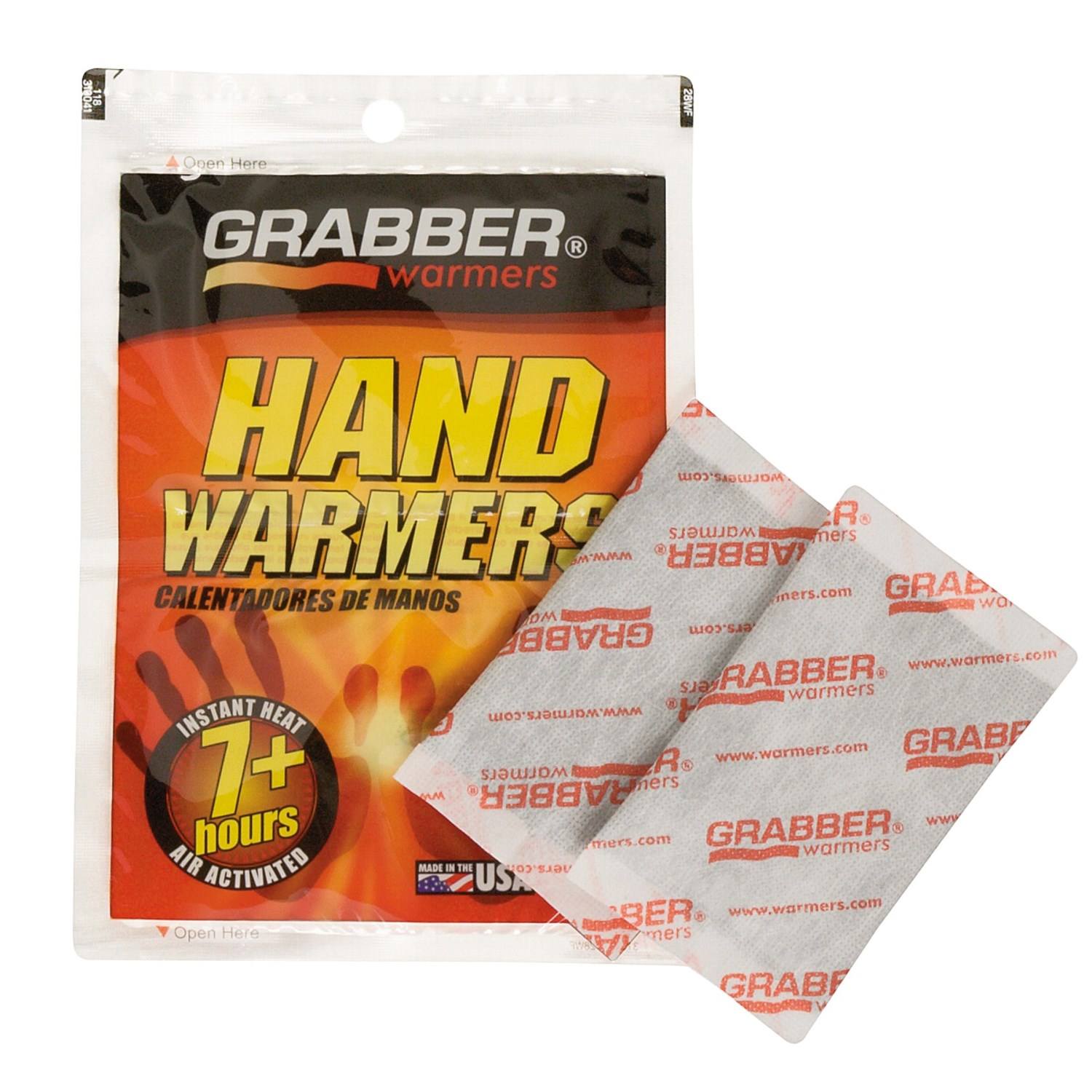
What type of reaction occurs in a hand warmer
a)
exothermic
b)
endothermic
40.
Exothermic reactions...
a)
Absorb energy
b)
Release energy
c)
Release Color
d)
Absorb Color
41.
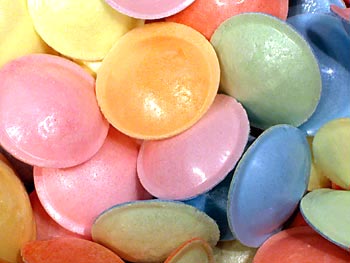
Have you ever eaten sherbet sweets candy? They fizz in your mouth and your tongue feels cold. Why do you think that is?
a)
It is an exothermic reaction
b)
It is an endothermic reaction
c)
It is made of ice
d)
It is dissolving your mouth
42.

O2(g) + 2 H2 (g)  2 H2O (g) + EnergyO_2\left(g\right)\ +\ 2\ H_2\ \left(g\right)\ \rightarrow\ 2\ H_2O\ \left(g\right)\ +\ Energy  

a)

endothermic

b)

exothermic

43.

6 CO2+ 6 H2O + Energy  C6H12O6 + 6 O26\ CO_2+\ 6\ H_2O\ +\ Energy\ \rightarrow\ C_6H_{12}O_6\ +\ 6\ O_2

a)

endothermic reaction

b)

exothermic reaction

44.
According to Newton’s first law of motion, a moving object that is not acted on by an unbalanced force will
a)
remain in motion.
b)
eventually come to a stop.
c)
change its momentum.
d)
accelerate.
45.
Which law explains when a magician pulls a tablecloth out from under dishes and glasses on a table without disturbing them.
a)
Law 1
b)
Law 3
46.
A person steps out of the boat and onto the dock.  As the person moves forward onto the dock, the boat moves backward.  Which statement best describes the backward motion of the boat as the person steps forward?
a)
For every action there is an equal and opposite reaction.
b)
Every mass exerts a force on every other mass.
c)
An object at rest tends to stay at rest.
d)
Friction opposes the motion of an object.
47.
A person in car  slides to the right when going through a very sharp left turn on the highway. 
a)
1st Law
b)
2nd Law
c)
3rd Law
48.
 267.5 N unbalanced force applied to push a stuffed chair across the room, causing an acceleration of 4.2 m/s2. What is the mass of the chair?
a)
26.75 kg
b)
63.69 kg 
c)
263.3 kg 
d)
1123.5 kg
49.
An empty truck and a fully loaded truck are next to each other at a traffic light. When the light turns green, the lighter truck increases speed more quickly. Which of these best explains this situations
a)
Newton's first law
b)
Newton's second law
c)
Newton's third law
d)
Conservation of momentum
50.
What is the net force and the direction of movement?
a)
50 Newtons, Left
b)
50 Newtons, Right
c)
500 Newtons, RIght
d)
450 Newtons, LEft
51.
What is Newtons 2nd law of motion?
a)
Pancakes 
b)
Force= Mass multiplied by acceleration
c)
For every action there is a equal and opposite  re-action.
d)
Law of gravity 
52.
__________ is the sum of all forces acting on an object. It is capable of accelerating a mass. 
a)
velocity
b)
gravity
c)
net force
d)
distance
53.

In the equation shown, what are the reactant(s)?

a)

N2 + H2

b)

NH3

54.

In the equation shown, what are the product(s)?

a)

N2 + H2

b)

NH3

55.

Is this equation balanced?

a)

Yes

b)

No

56.

Is this equation balanced?

a)

Yes

b)

No

57.

To balance an equation you should:

a)

ONLY change subscripts.

b)

ONLY change coefficients.

c)

Change BOTH subscripts and coefficients.

58.

Which type of reaction does the diagram illustrate?

a)

Fission

b)

Fusion

c)

Alpha Decay

d)

Beta Decay

59.

In which process does a heavy nucleus split into two lighter nuclei?

a)

freezing

b)

condensation

c)

fission

d)

fusion

60.

In which type of reaction do two lighter nuclei combine to form one heavier nucleus?

a)

combustion

b)

oxidation

c)

nuclear fission

d)

nuclear fusion

61.

Nuclear fusion differs from nucleus fission because nucleus fusion reactions

a)

form heavier isotopes from lighter isotopes

b)

form lighter isotopes from heavier isotopes

c)

convert mass to energy

d)

convert energy to mass

62.
The type of bond where valence electrons are SHARED is called: 
a)
Covalent
b)
Ionic
c)
Hydrogen
d)
Isotope 
63.
The type of bond where valence electrons are TRANSFERRED is called: 
a)
Covalent
b)
Ionic
c)
Hydrogen
d)
Isotope
64.
Between metals and nometals
a)
Ionic Bonds
b)
Covalent Bonds
c)
Both bonds
d)
Neither bond
65.
H2O
a)
Ionic Bond
b)
Covalent Bond
c)
Both bonds
d)
Neither bond
66.
This picture shows a...
a)
Ionic Bond
b)
Covalent Bond
c)
Both bonds
d)
Neither bond
67.
This picture shows a...
a)
Ionic Bond
b)
Covalent Bond
c)
Both bonds
d)
Neither bond
68.

Is the molecule overall polar or nonpolar?

a)

Polar

b)

Nonpolar

69.

Is the molecule overall polar or nonpolar?

a)

Polar

b)

Nonpolar

70.

Is the molecule overall polar or nonpolar?

a)

Polar

b)

Nonpolar

71.

Is the molecule overall polar or nonpolar?

a)

Polar

b)

Nonpolar

72.

A type of mixture that forms when one substance dissolves in another is known as a

a)

heterogeneous mixture

b)

solution

c)

solute

d)

solvent

73.
What does it mean to dilute a solution?
a)
lower the concentration of solute per solvent
b)
increase the concentration of solute per solvent
74.
What is a solvent
a)
the liquid in which a solute is dissolved to form a solution.
b)
Another word for solution
c)
A thing that make drinks turn colors
d)
Its a metal molecole
75.

Which substance is least soluble at 0 ºC?

a)

KI

b)

KNO3

c)

KClO3

d)

Ce2(SO4)3

76.

When 40 grams of NaCl is dissolved in 100 grams of water at 90 ºC, the solution can be correctly described as:

a)

supersaturated

b)

saturated

c)

unsaturated

77.
You can make a solution more concentrated by adding __________.
a)
solute
b)
solvent
c)
water
78.
Solution where more solute can still be dissolved at the given temperature. 
a)
Saturated
b)
Unsaturated
c)
Supersaturated
d)
Homogeneous solution
79.
If I dissolve sugar in water, what is the solute?
a)
Water
b)
Hydrogen
c)
Sugar
d)
Carbon
80.
What will allow more solute to be dissolved in a solvent.
a)
adding more solute
b)
stiring
c)
cooling solution
d)
heat
81.

Which of the following best explains an electric current?

a)

An electric current is the flow of positive charges in a circuit.

b)

An electric current is the flow of atoms in a circuit.

c)

An electric current is the flow of electrons in a circuit.

d)

An electric current is the flow of neutrons in a circuit.

82.

A higher resistance in a circuit causes a _____________.

a)

higher voltage

b)

larger current

c)

smaller current

d)

lower voltage

83.
Lightning is an example of _________.
a)
static electricity
b)
current electricity
c)
watts
d)
voltage
84.
Thicker wires have _______ resistance than thinner wires.
a)
more
b)
less
c)
the same
85.
Which formulas represents Ohm's law?
a)
V=IR
b)
R=IV
c)
I=RV
86.
What type of circuit is pictured?
a)
series
b)
Parallel