
 Worksheets
Nuclear Review
Total questions: 35
Worksheet time: 51mins
Name
Class
Date
1.
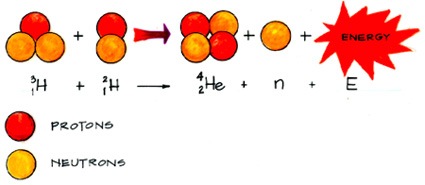
Which process involves the joining of small nuclei?
a)
Beta decay
b)
Alpha decay
c)
Nuclear fission
d)
Nuclear fusion
2.

Which process involves the splitting of large nuclei?
a)
Beta decay
b)
Alpha decay
c)
Nuclear fission
d)
Nuclear fusion
3.
The nuclear process occurring at a nuclear power plant.
a)
Nuclear fusion
b)
Nuclear fission
c)
Combustion
d)
Multiplication
4.
Complete the sentence: As time passes the level of radiation produced by a radioactive material...
a)
Decreases
b)
Increases
c)
Remains constant
5.

Classify this process.
a)
Nuclear fission
b)
Nuclear fusion
c)
Alpha decay
d)
Beta decay
6.
The half life of iodine-131 is 8.040 days. What percentage of an iodine-131 sample will remain after 40.20 days?
a)
312.5%
b)
31.25%
c)
.3125%
d)
3.125%
7.
Has a mass of 4 and a charge of +2
a)
Alpha
b)
Beta
c)
Gamma
8.
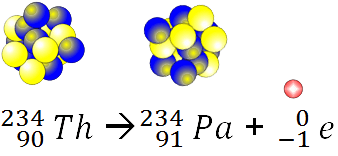
Which type of nuclear radiation is being emitted here?
a)
Alpha
b)
beta
c)
gamma
d)
none
9.

Has the symbol
a)
Alpha
b)
Beta
c)
Gamma
10.
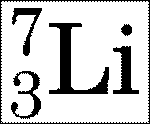
How many protons are in this atom?
a)
3
b)
4
c)
6
d)
10
11.
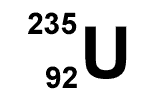
How many neutrons are in this isotope of Uranium?
a)
235
b)
92
c)
327
d)
143
12.
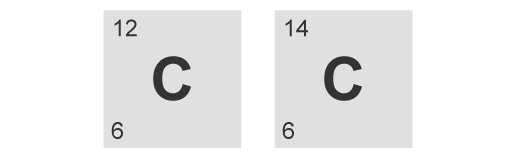
How are these isotopes different?
a)
Different atomic numbers
b)
Different number of protons
c)
Different number of neutrons
d)
Different number of electrons
13.
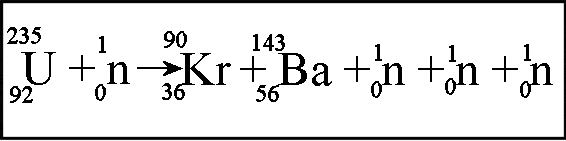
What process is modeled by the equation?
a)
alpha decay
b)
beta decay
c)
fission
d)
fusion
14.

What process is modeled with this equation?
a)
alpha decay
b)
beta decay
c)
fission
d)
fusion
15.
What is the mass number of at isotope that has 20 protons, 21 neutrons and 18 electrons?
a)
18
b)
20
c)
21
d)
41
16.
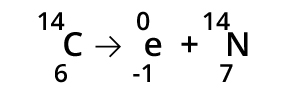
What type of nuclear equation is this?
a)
fusion
b)
fission
c)
alpha
d)
beta
17.
The technetium-99 isotope has a half-life of 6.0 hours. If 100.0 mg were injected into a patient how much remains after 18 hours?
a)
33.0 mg
b)
12.5 mg
c)
.33 mg
d)
15.8 mg
18.
Which type of radiation has the greatest penetrating power?
a)
Alpha
b)
Beta
c)
Gamma
d)
Microwaves
19.
What happens to the atomic number during alpha decay?
a)
The atomic number decreases by 4
b)
The atomic number increases by 1
c)
The atomic number decreases by 2.
d)
The atomic number stays the same.
20.
Balance the following equation:
146C --> 0-1e + ________
146C --> 0-1e + ________
a)
145B
b)
146C
c)
147N
d)
42He
21.
In the symbol 167N what the 7 stand for?
a)
Mass number
b)
Atomic number
c)
Atomic mass
d)
Number of neutrons
22.
The half life of Thorium-234 is 24 days. What fraction of the element remains after 96 days
a)
1/2
b)
1/4
c)
1/8
d)
1/16
23.
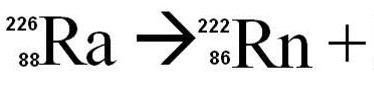
Complete the nuclear equation and determine the type of decay that is occurring in this reaction.
a)
alpha
b)
beta
c)
gamma
d)
none
24.
Barium-122 has a half-life of 2 minutes. A fresh sample weighing 80 g was obtained. If it takes 10 minutes to set up an experiment using barium-122, how much barium-122 will be left when the experiment begins?
a)
0.25g
b)
2.5g
c)
25g
d)
80g
25.
What does it mean when an element is radioactive?
a)
atom emits radiation
b)
nucei unstable due to uneven p to n ratio
c)
nuclei changes to become stable
d)
all of the above
26.
What is the missing isotope that will balance the following nuclear equation?
94Be + 11H → _____ + 42He
94Be + 11H → _____ + 42He
a)
105B
b)
105Ne
c)
63Li
d)
63C
27.
The time taken for half of an amount of radioactive atoms to decay.
a)
Nuclear fusion
b)
Full-life
c)
Dead time
d)
Half-life
28.
If Thorium-234 undergoes a beta decay, What element will be left in its place?
a)
Actinium-234
b)
Thorium-233
c)
Protactinium-234
d)
Radium-230
29.
The formation of elements is known as _________.
a)
nucleotides
b)
Synthogenesis
c)
nuclear fission
d)
nucleosynthesis
30.
The key ratio found in the universe that confirms the Big Bang is _______.
a)
25% hydrogen and 75% helium
b)
75% hydrogen and 75% helium
c)
75% hydrogen and 25% lithium
d)
75% hydrogen and 25% helium
31.
When a star builds up too much iron, it ______.
a)
regenerates
b)
starts over burning hydrogen
c)
dies
d)
starts unmaking iron and goes backwards
32.
The rest of the elements on the periodic table (after hydrogen) are cooked together in the massive star explosion called a ___________.
a)
supernova
b)
superduper nova
c)
nova
d)
big bang
33.
What is responsible for 85% of the energy from the sun?
a)
the break down of heavy elements by fission
b)
the burning of plasma
c)
hydrogen fusing into helium in the sun's core
d)
the burning of electrons from the outsides of atoms
34.
What is nucleosynthesis?
a)
How the sun creates new hydrogen atoms out of dark matter
b)
How helium atoms are broken down by nuclear fission to produce hydrogen
c)
How a nucleus is produced during the big bang
d)
How new elements are created in stars by combining the nuclei of atoms
35.
A reaction in which two or more nuclei combine to form heavier nuclei.
a)
combustion
b)
nuclear fission
c)
nuclear fusion
d)
nuclear synthesis
100 %

