
 Worksheets
Conceptual Physics Sem 2 Final Review
Total questions: 75
Worksheet time: 44mins
How can you charge an object?
Conduction
Polarization
Conservation
Force
The gravitational force exerted by an object depends on its
volume
mass
weight
If I double the distance between two objects, what happens to their gravitational Force?
4x bigger
1/4
2x bigger
1/2
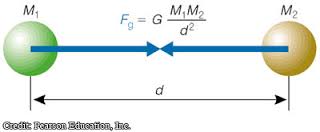

How is the gravitational force between to objects related to their mass
They are directly proportional
They are inversely proportional
They do not affect each other
They are equal

If the distance between 2 masses is increased then the force of gravitation between them will...
increase
decrease
stay the same

If the mass of either m1 or m2 is increased then the force of gravitation between them will...
increase
decrease
stay the same
The planets in our solar system all have ______________ orbits.
spherical
elliptical
circular
highly eccentric
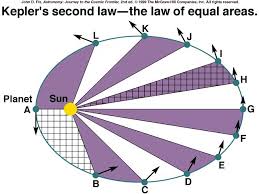
Where does the planet have the most velocity?
Position A
Position B
Position G
Position I

What would cause all of the planets to continue moving in a straight line based on their velocity (direction and speed)?
the sun disappearing
the sun's mass increasing
the distance between the planets and the sun decreasing
the distance between the planets and the sun increasing

Kinetic Energy is constant.
Circular, Elliptical, or Both?
Circular
Elliptical
Both
Velocity changes throughout the orbit.
Circular, Elliptical, or Both?
Circular
Elliptical
Both
Total Energy is constant throughout the orbit.
Circular, Elliptical, or Both?
Circular
Elliptical
Both
Gravity is keeping the planet in orbit.
Circular, Elliptical, or Both?
Circular
Elliptical
Both
Potential Energy changes throughout the orbit.
Circular, Elliptical, or Both?
Circular
Elliptical
Both
Where does the planet have the most Potential Energy?
Position A
Position B
Position G
Position I
Which wave has the longest wavelength?
Radio waves
Infrared
Ultraviolet
X-Rays
A wave has wavelength of 0.5m. What type of wave is it?
Radiowaves
Microwaves
Ultraviolet
X-Rays
Which wavelengths can be the size of a soccer field?
Radio waves
Microwaves
Infrared
Ultraviolet
Which wavelength can humans see?
Microwaves
Radio waves
Visible light
Gamma rays
Which wavelength do x-ray machines use?
Radio
Microwave
Ultraviolet
X-rays
Which has the highest frequency?
Gamma Rays
Visible Light
Microwaves
Radiowaves
Which has a longer wavelength?
Red
Orange
Blue
Violet
Which has a lower frequency?
Red
Orange
Blue
Violet
Which of the following is true?
A long wavelength means a low frequency
A long wavelength means a high frequency
All of the electromagnetic spectrum has the same wavelength
A long wavelength means high energy
What are true about EM waves?
Part Electric and Magnetic
They are traverse waves
All are true
transfer energy, not matter
Which waves have the highest frequency?
Microwaves
Radio waves
Visible light
Gamma rays
Sunburns come from ___________waves.
Microwaves
Radio waves
Visible light
Ultraviolet
True or False: Most of the EM Spectrum is visible to humans.
False
True
True or False: Light acts both as a wave and a particle.
False
True
What is the speed of light?
100,000,000 m/s
300,000,000m/s
100,000,000mph
100,000,000kph
Why do things appear green
They reflect green wavelengths of light
They absorb green wavelengths of light
Only green wavelengths of light hit it
What color has a longer wavelength?
Red
Yellow
Blue
Violet
What is true about electromagnetic waves with a higher frequency? (Choose all that apply)
They have a longer wavelength
They have more energy
They have less energy
They have a shorter wavelength
What color has the highest frequency?
violet
red
blue
green
What part of the electromagnetic spectrum is given off by the sun?
Only visible light
Visible light, Ultraviolet light, Radio waves
All of the electromagnetic spectrum
Why do some objects look black?
Light never hits those objects
They reflect all wavelengths of visible light
They absorb all wavelength of visible light
They absorb every wavelength of visible light except they reflect black wavelengths
Why do some objects look white?
They reflect all wavelengths of visible light
Only white light hits the object
They relect white wavelengths of visible light
They absorb all wavelengths of visible light
What kind of wavelength does radar use?
Radio waves
Microwaves
Ultraviolet
X-Rays
Cyan is a combination of what two colors?
Green and Yellow
Blue and Green
Red and Green
Red and Blue
What best describes a penumbra?
The fuzzy border
The clear border
There is a no shadow
A lunar eclipse occurs when
the earth casts a shadow on the moon
the moon casts a shadow on the earth
the moon casts a shadow on the sun
the sun casts a shadow on the earth
When un-polarized light reflects off of a surface, the light reflected will be polarized
perpendicular to the surface
parallel to the surface
randomly polarized
at a 45 degree angle to the surface
Which of the following is NOT an electromagnetic wave?
Sound
Radio
Light
Microwaves
Why do we see things in 3-D?
Both eyes see the same image and the brain interprets them as a 3-D image.
Each eye sees a different image and the brain synthesizes them to form a 3-D image.
The mechanism behind 3-D vision depends on a person’s genetic make-up.
It’s magic
What does a wave carry from place to place?
energy
matter
people
The highest point on a transverse wave is the
compression
crest
rest position
trough
The lowest point on a transverse wave is the
compression
crest
rest position
trough

#1 refers to the
wavelength
amplitude
crest
trough
#2 refers to the
wavelength
amplitude
crest
trough
#4 refers to the
wavelength
amplitude
crest
trough

The type of wave that travels perpendicular to energy is...
Longitudinal Wave
Transverse Wave
Rouge Wave

What is the type of wave that travels parallel to the energy?
Longitudinal wave
Transverse Wave
Rouge Wave

An area of bunched up particles (bottom blue arrow) in a longitudinal wave is an area of ________________ .
rarefaction
compression
amplitude

An area of spread out particles (bottom red arrow) of a longitudinal wave is an area of ________________.
rarefaction
compression
amplitude
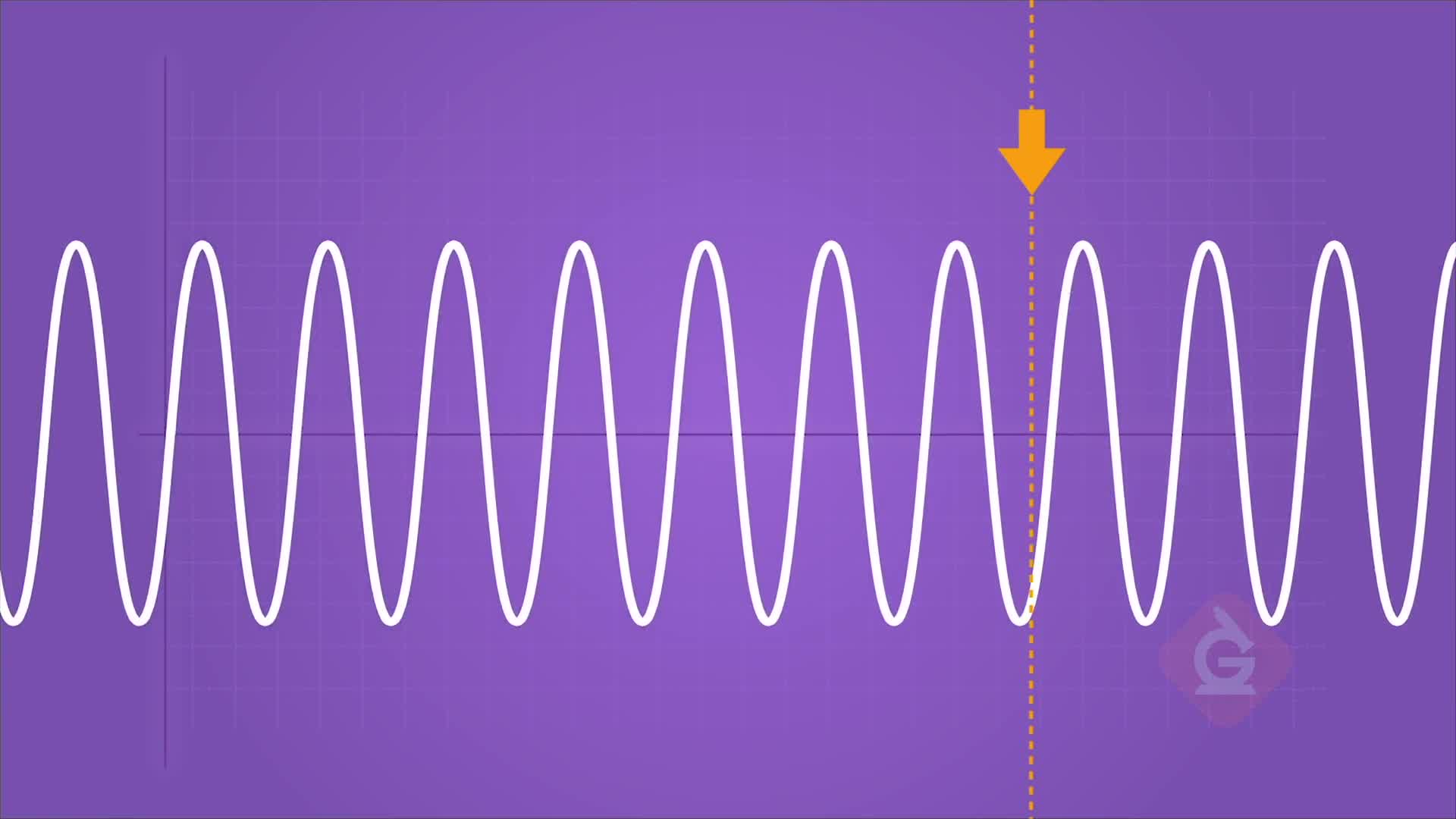

Which of the following has the longest wavelength?
microwaves
UV rays
Infrared
Gamma rays

Which of the following would have the highest frequency?
Gamma rays
The color red
X-rays
UV rays


Which wave has the highest frequency?
1
2
3
4

Examine the picture and answer the following; when frequency increases, then what happens to the wavelength?
Increase; wavelength gets bigger/longer
Decreases; wavelength gets shorter/smaller

Which wave has the LOWEST frequency?
Red
Blue
Green

Examine the picture. What happens to the period of a wave as frequency increases?
Increases
Decreases
The period of a wave is 4 seconds. What is the frequency?
1/4 Hz
1/4 sec
4 Hz
2 Hz

