
 Worksheets
MEGA SCIENCE REVIEW
Total questions: 201
Worksheet time: 3hrs 7mins
Sound is a form of _________________________________.
light
energy
precipitation
fuel
Which of these is a word to describe sound?
color
shape
volume
weight
How do we hear sound?
Sound vibrations travel through air and other forms of matter.
The air heats up sound so it can reach us.
The air cools down sound so it can reach us.
Gravity pushes sound toward our ears.
The __________________________ of a sound describes how low or high it is.
pitch
volume
force
tension
Alex and Jenny each put a rubber band around a box and plucked it to make a fun sound. Alex’s box was much bigger so his rubber band was stretched much tighter than Jenny’s. Which statement below is correct?
Jenny's sound had a higher pitch because her tension was greater.
Alex's sound had a higher pitch because his tension was greater.
Jenny's sound had lower pitch because her tension was greater.
Alex's sound had a lower pitch because his tension was greater.
True or False? A typical dog's growl produces a lower pitch than a typical bird's song.
False
True
True or False? Force and distance can change the volume of sounds.
True
False
True or False? Sound moves the same through all materials.
True
False
True or False? The closer the source of the sound is, the louder it will be.
True
False
True or False? A greater force will create a louder sound.
True
False
True or False? Tension does not change pitch.
True
False
True or False? Shorter objects produce lower pitches.
True
False
True or False? Thinner strings, or wires, vibrate faster than thicker strings, making a higher pitch.
True
False
True or False? The faster the vibration of an object, the higher the pitch of sound.
True
False
Nick made a harp. He used the same wire for all the strings. Which statement describes the shortest string?
It made the quietest sound.
It made the highest sound.
It made the lowest sound.
It made the loudest sound.
Abby was playing her flute on the back row of her music class. Her teacher was having a difficult time hearing her. To adjust her volume, Abby moved to the front row, so the teacher could hear her better. What variable did Abby change that effected volume?
force
tension
length
distance
The _____________________________ of an object describes how tight it is.
thickness
length
tension
volume
James plays a bongo drum for fun on the weekends. His sister asked him to lower the volume because she was having trouble studying. What could James do to lower his volume?
He could apply more force to the drum as he hits it.
He could move the drum closer to his sister's room.
He could apply less force to the drum as he hits it.
He could apply more force and move the drum into his sister's room.

Ben is shown in the picture above. He is thinking about using a bucket and fishing line to make a homemade instrument. Which statement is true about the sound it will make?
There is no way to change the sound of this instrument.
Thicker string makes higher pitches sounds than thinner string
Pulling the string so it's under greater tension will produce a lower pitch.
Changing the length of the string will change the pitch.

The picture below shows pots hanging in Kelly’s garden. She tapped each pot with a pencil. Which pot had the lowest pitch?
1
3
5
2
Sound travels fastest in...
solids
liquids
gases
air

A place where no sound exists is...
in the air
under water
space
all of the above
clouds
Sound travels faster in objects that have a greater.....
Mass
Density
Volume
Yards

Sarah and Maria made a telephone using two cans and a string. It was a very long string. Maria went upstairs in her house and Sarah stayed downstairs. Maria spoke softly into the can. "I can hear you!' Sarah said back. How can this happen?
Sound waves travel through a vacuum.
Sound waves travel from high to low.
Sound waves travel through solids like the string.
Maria talked so loudly that Sarah could hear her without the phone.
When people speak their ________ vibrate.
ear drums
vocal chords
ears
tongue
A sound wave can travel through....
Solids only
Liquids only
Solids, Liquids, and Gas
Gas only
Sound waves move faster when the medium is
warm
cold
Sound waves move slower when the medium is
warm
cold
4. How does sound energy travel?
Sound energy travels in sound waves
Sound energy travels in light waves
Sound energy travels in a straight line.
__________ is the loudness or softness of a sound.
Echo
Volume
Pitch
Vibration

Can sound travel through water?
Yes
No
I have no idea!
All sounds make
a movement
a vibration
a song
How can the planets that orbit the Sun best be split into two categories?
A. The inner four are small and rocky while the outer four are large and made of gas.
B. Half of the planets can sustain life while the other half cannot.
C. All of the planets revolve slowly around the sun.
D. Most of the planets are natural satellites that give off light.

The arrow in this picture separates the rocky planets from the gas planets. What is this area known as?
A. The inner planets
B. The outer planets
C. The asteroid belt
D. The Constellation area
Which of the following tools was most likely used to generate the information in the above illustration?
A. an electromagnet
B. a microscope
C. a telescope
D. an anemometer
Which is the correct sequence of planets from the Sun outward?
A. Mercury, Venus, Mars, Earth, Jupiter, Saturn, Uranus and Neptune
B. Neptune, Uranus, Saturn, Jupiter, Mars, Earth, Venus and Mercury
C. Mercury, Venus, Earth, Mars, Jupiter, Saturn, Uranus and Neptune
D. Sun, Mercury, Venus, Earth, Moon, Mars, Jupiter, Saturn, Uranus
Which of the following is a true statement about Earth’s surface compared to the surfaces of the sun and moon?
A. The Earth’s surface has the hottest temperatures.
B. The Earth has the most water on its surface.
C. The Earth’s surface is the largest.
D. The Earth’s surface has no atmospheric gases.
Identify the object described by the following list of characteristics: rocky, dusty surface, has craters and no atmosphere.
A. Sun
B. Moon
C. Earth
D. Saturn
What do the Earth and Sun have in common?
A. They both have similar surface temperatures.
B. They both give off their own light.
C. They both have a natural satellite that revolves around them.
D. They both have a rocky surface

This diagram illustrates which of the following causes of the Earth to change from day to night?
A. the Earth’s gravitational pull
B. the tilt of Earth on its axis
C. the rotation of Earth on its axis
D. the revolution of Earth around the Sun
Describe how your shadow would change through the course of one day.
A. Your shadow would be long, shorten and then grow longer again.
B. Your shadow would remain the same size.
C. You would only have a shadow if it was summer.
D. Your shadow would be darker in the morning and lighter at night.
Predict the time of day based on Jim’s description of his shadow, “It is short and directly below me.”
A. midnight
B. dinner time
C. lunch time
D. breakfast time
In which list below could all the tools be used for astronomy studies?(4 Points)
D. Telescope, weather vane, anemometer, I-Phone
C. Telescope, sextant, astrolabe, weather vane
B. Telescope, compass, anemometer, thermometer
A. Telescope, astrolabe, compass, sextant
Tony is camping with his family. He uses a tool that helps him locate the North star and reference the four cardinal directions in relation to where Earth is located. It helps his family to stay on track and not get lost. Which astronomy tool is Tony using?
C. Compass
D. Sextant
B. Astrolabe
A. Telescope
While camping, Tony notices a constellation in the night sky that appears to look like a small bear. What constellation is he looking at?
A. Ursa Major
B. Ursa Minor
C. Polaris
D. Orion
A _________________________ is a group of visible stars that form a pattern in the sky when viewed from Earth.
A. Planet
B. Moon
C. Meteor
D. Constellation
What explanation best describes why constellations are only visible during certain seasons of the year?
A. The constellations move often.
B. Earth’s orbit around the sun
C. The number of planets revolving.
D. Different moon phases change the constellations.
Which of the following is responsible for providing the Earth with the energy necessary for plants and animals to survive?
A. the orbit of the moon around the earth
B. the orbit of the sun around the earth
C. the release of light and heat by the sun
D. the gravitational pull of the earth on the moon
Which of the following is responsible for providing the Earth with the energy necessary for plants and animals to survive?
A. the orbit of the moon around the earth
B. the orbit of the sun around the earth
C. the release of light and heat by the sun
D. the gravitational pull of the earth on the moon

According to this diagram, the Earth’s seasons are determined by which of the following?
A. the dates printed on a yearly calendar
B. the daily rotation of the earth on its axis
C. the direction with which the sun shines its rays
D. the tilt of the earth’s axis and its orbit around the sun
What two variables cause the seasons to occur?
A. rotation and the earth’s tilt
B. revolution and the earth’s tilt
C. rotation and revolution
D. gravity and the moon
The sun’s energy causes which of the following process?
A. evaporation
B. condensation
C. runoff
D. precipitation
Which of these is a result of the Sun’s effect on Earth?
It is a source of almost all of the energy on Earth.
It has no effect on the Earth.
It causes magnetic attraction on the Earth.
It creates craters on the moon’s surface.
How does the Sun contribute to the creation of fossil fuels such as coal, oil, and natural gases?
A. The Sun’s heat turns the coal into oil and natural gas.
B. The Sun’s light provides for day and night on Earth.
C. The Sun’s gravitational pull keeps the planets in orbit.
D. The Sun’s energy is stored in dead plants and animals.
When the northern hemisphere is tilted towards the sun and experiencing summer, what season is it on the opposite side of the world, or in the southern hemisphere?
A. Fall
B. Spring
C. Summer
D. Winter
Which accurately describes one revolution of Earth?
A. 365 days
B. 24 hours
C. one month
D. six months
The cycle of day and night is an effect of which of the following?
A. Earth’s revolution
B. Earth’s rotation
C. Earth’s tides
D. Earth’s tilt
Because the Earth rotates west to east, how does the sun appear to move in the sky?
B. north to south
C. south to north
D. east to west
A. west to east
How many planets are there in the Solar System?
Nine
Fifteen
Eight
Eleven
What does Earth orbit around?
Pluto
The moon
The Solar System
The Sun
An orbit is...
The spinning of the Earth
The path that Earth follows around the Sun
How long it takes the Earth to revolve around the Sun
The path that the Sun follows around the Earth
One full orbit is called a...
Axis
Rotation
Inertia
Revolution
How long does Earth's revolution around the Sun take?
24 hours
365 days
10 years
30 minutes
How long does the Moon's revolution take?
365 days
One month
10 years
30 minutes
What keeps planets in orbit around the Sun?
Nothing
Force and motion
Friction
Gravity and inertia
What keeps you on Earth?
Gravity
Inertia
Friction
Magnetism
Neptune
Which of the following determines if an object is visible?
A. It separates light into colors.
B. It changes the path of light.
C. It gives off or reflects light.
D. It gives off both heat and light.
Which of the following is a true statement about light?
A. It is a form of energy that is made of many colors.
B. It is a strong pull between two objects.
C. It is a form of energy made of one color which is white.
D. It is a form of energy that does not give off heat.
If a car is traveling toward you at night, which statement below would describe the brightness of its headlights?
A. The headlights would appear brighter as they got closer to you.
B. The headlights would appear less bright as they got closer to you.
C. The brightness of the headlights would not change as they traveled toward you.
D. The headlights would give off less light as they traveled toward you.

Look at diagram again. Based on the path of light, Surface A is most likely made up of which material?
A. Reflective
B. Opaque
C. Transparent
D. Translucent

Look at the diagram. Which of the following surfaces would be most useful if you wanted to look at your new haircut?
A. Surface A
B. Surface B
C. Surface C
D. Surface D
________________________ is the ability to make something move, happen, or change.
A. Energy
B. Light
C. Colors
D. Prisms
Wood, metals, and thick paper are all examples of materials that are _____________________.
A. Opaque
B. Translucent
C. Transparent
D. Invisible

Look at the diagram below. What label should go where the question mark is to make it complete?
A. Roy G. Biv
B. White light
C. Rainbow
D. Color Spectrum
The intensity of light, or its ____________________, is related to the amount of light being seen.
A. brightness
B. visibility
C. energy
D. color
Light travels in a ______________________ path/line.
A. bent
B. round
C. straight
D. crooked
Which answer shows two properties of light?
A. color and mass
B. brightness and mass
C. color and brightness
D. energy and volume
An object’s color is determined by the color of the light it _______________________.
A. Absorbs
B. Reflects
C. Produces
D. Radiates
A ray of light contains all of the colors of the spectrum. Objects appear different colors because they either absorb the colors or the colors bounce off the surface. If this is true, why does grass appear green?
A. The only color grass absorbs is green.
B. The grass absorbs the other colors of the spectrum and the color green bounces off its surface.
C. The colors of the spectrum mix together to form green.
D. The color green is the prettiest color for green.
ROY G BIV is a made up name used to remember all of the colors of the color spectrum. What does the B. stand for in this?
A. Blue
B. Beige
C. Brown
D. Black
Which type of object does not allow light to pass through?
A. translucent
B. transparent
C. opaque
D. reflection
Which object below is translucent?
A. a tree trunk
B. a piece of wax paper
C. reading glasses
D. a solid wood table
The students at the aquarium watched the sharks swim by looking through a clear glass window.
Which answer below describes the window?
A. It was opaque.
B. It was translucent.
C. It was transparent.
D. It was different colors.
A. It was opaque.
B. It was translucent.
C. It was transparent.
D. It was different colors.
When light bounces back from a surface, it allows objects that do not produce their own light to be seen. What is this called?
A. reflection
B. refraction
C. absorption
D. distraction
Which of the objects demonstrates refraction of light?
a bathroom mirror
a straw in a clear glass of liquid
light coming inside an open door
a shadow of your hand on the ground
Which object/tool separates white light into different colors?
A. camera
B. binoculars
C. telescope
D. prism


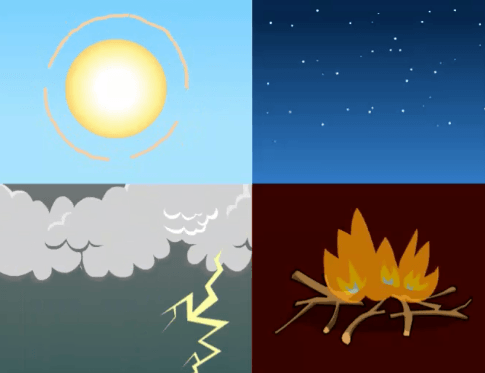
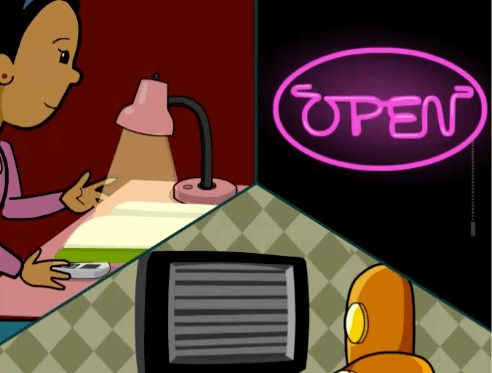

(bounces)


What is the energy source that drives the water cycle?
The moon T
The heat from our home in the winter all around the world
The sun
he heat generated solely from the core of the earth

What are formed when water vapor condenses?
Clouds
Mountains
Transpiration
Valleys
Water in its gas form is called ____________________,
water vapor
precipitation
ice
air
Which of the following is an example of precipitation?
sleet
hail
snow
all of the above

Earth’s atmosphere is a layer of _________________________ that surrounds the planet and make conditions on Earth suitable for living things.
water
gases
soil
fire
A severe storm with lightning, thunder, heavy rain, and strong winds
blizzard
hurricane
thunderstorm
tornado
A large storm that forms over warm ocean water with strong winds that blow in a circular pattern
blizzard
hurricane
thunderstorm
tornado
Small, funnel-shaped storm with very high wind speeds
tornado
hurricane
thunderstorm
blizzard
Which is an image of a tornado?


Which is an image of a hurricane?
Which is an image of a thunderstorm?
During a tornado, you should...
stay in your car
find a safe place away from windows
drive to the hospital
Where are hurricanes most likely to form?
over a lake
Arctic Ocean
anywhere over land
Atlantic Ocean
A hurricane rotates around the center of the storm, which is also known as...
the "eye"
the "calm"
the "funnel"
Weather maps may show large masses of warm or cold moving air. Lines between the air masses are called ____________________________
fronts
humidity
air pressure
temperature
When a warm front passes an area, the air temperature __________________________.
increases
decreases
stays the same
In which part of the water cycle does liquid change from a liquid to a gas form?
evaporation
precipitation
runoff
condensation
What should you do to stay safe during a thunderstorm?
Take shelter under a tree.
Stay inside and away from windows.
Travel towards the coast.
During evaporation, water changes from a _________ to a __________.
solid, liquid
gas, liquid
liquid, gas
liquid, solid
Which part of the water cycle changes liquid water to water vapor?
condensation
evaporation
precipitation
transpiration
What is the process called when water vapor turns to liquid water?
evaporation
condensation
precipitation
transpiration

What step of the water cycle does this picture show?
Condensation
Runoff
Precipitation
Evaporation

What is it called when water droplets form on the outside of a cool glass?
Condensation
Transpiration
Precipitation
Evaporation

What step of the water cycle is shown in this picture?
Condensation
Runoff
Precipitation
Evaporation

What step of the water cycle is shown in this picture?
Condensation
Runoff
Precipitation
Evaporation


The place where an animal lives
habitat
planet

An inherited trait that helps those organisms that have it to survive
niche
structure
characteristic
adaptation

What adaptation is represented by the image?
Dormancy
Camouflage
Hibernation
Seed Dispersal

How do adaptations help animals?
To escape animals
to hunt for food
to survive in their habitats
All of these are correct

An animal that is hunted as food
prey
predator
decomposer
producer

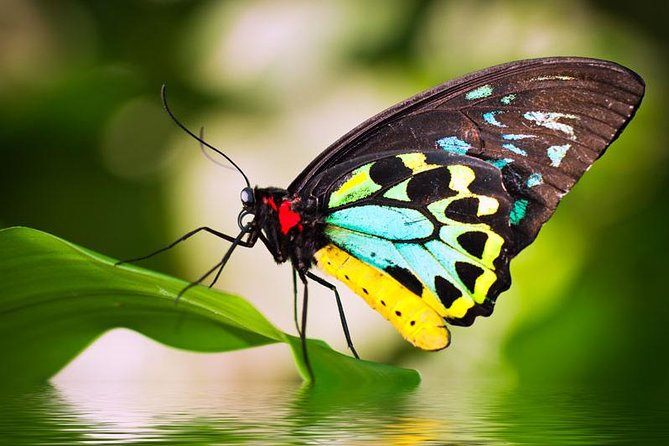
Vertabrate
Invertabrate
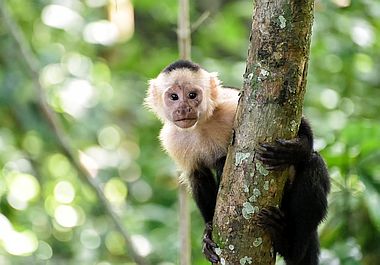
Vertabrate
Invertabrate
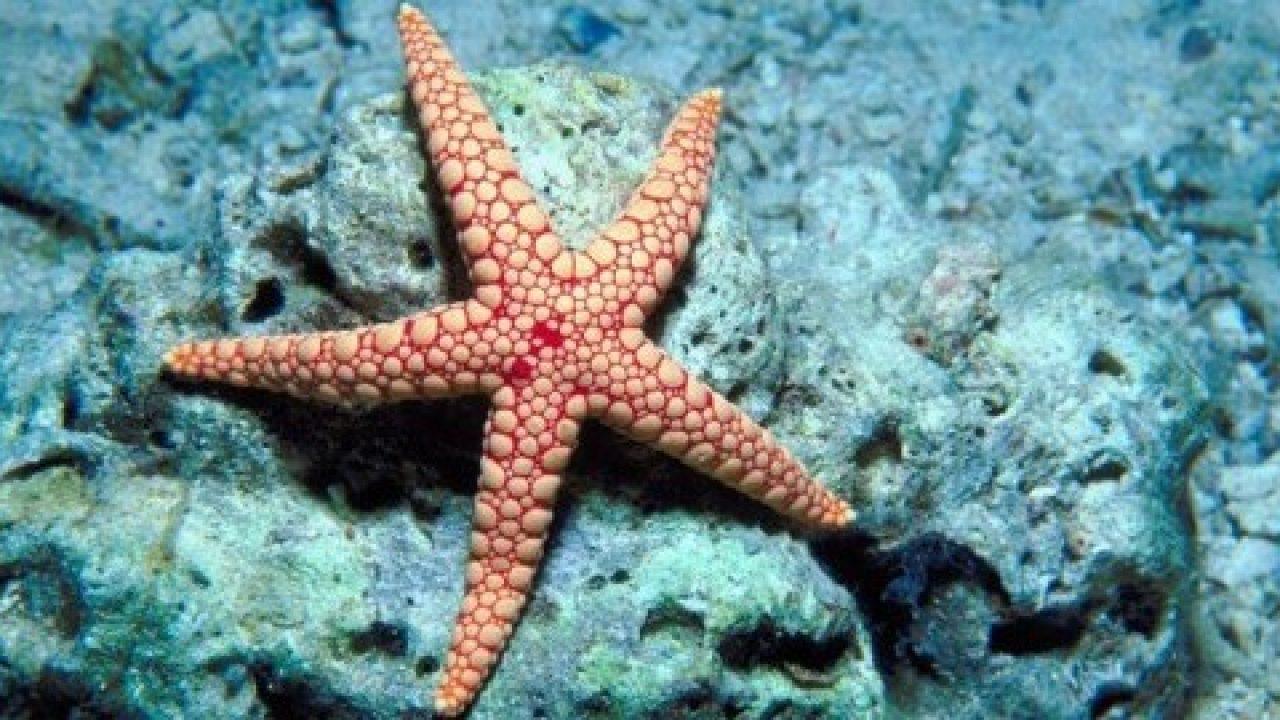
Vertebrate
Invertabrates
Characteristics of invertabrates
multicellular
don't have a backbone
They reproduce by two
none
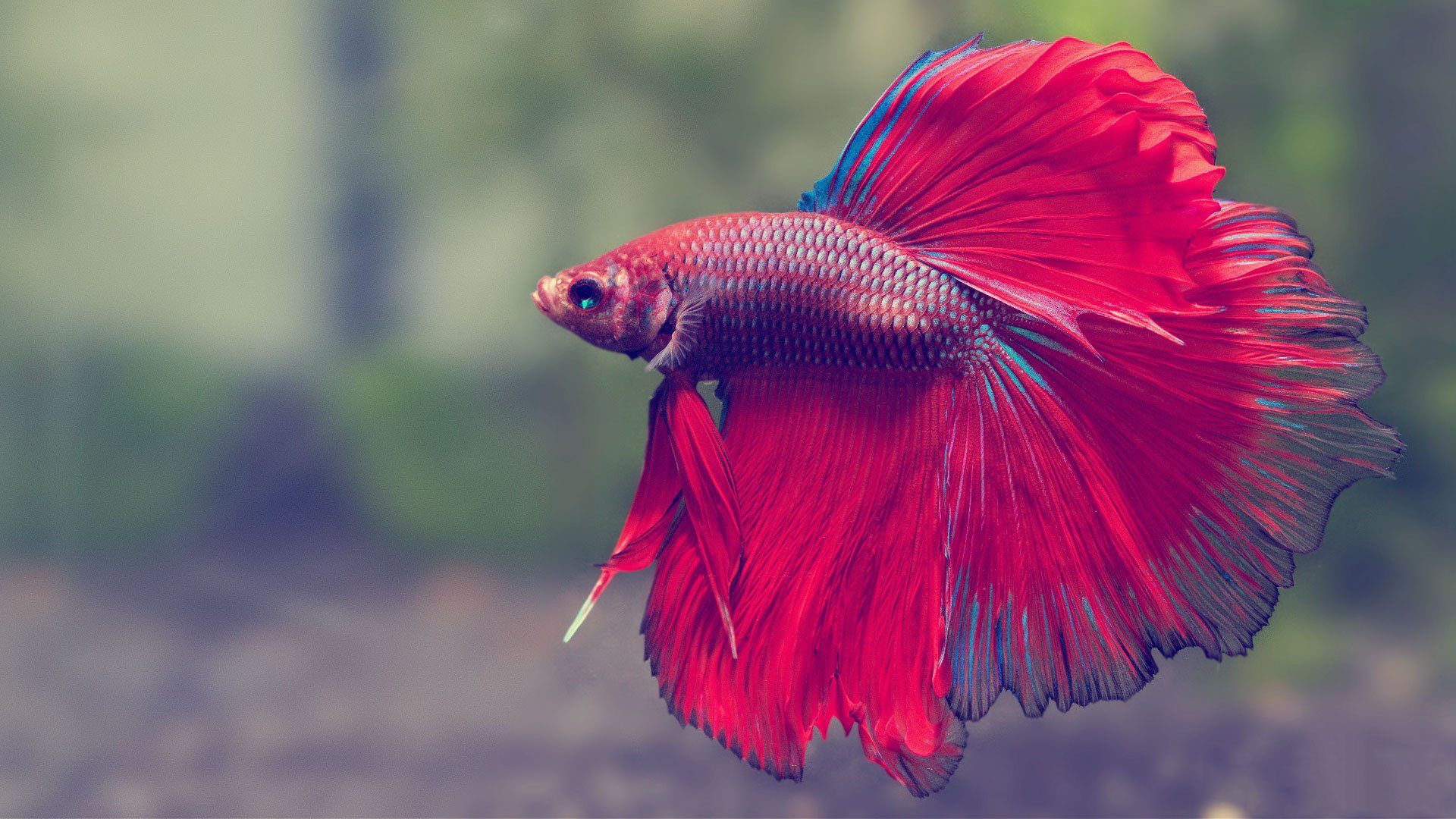
Vertebrate
Invertebrate
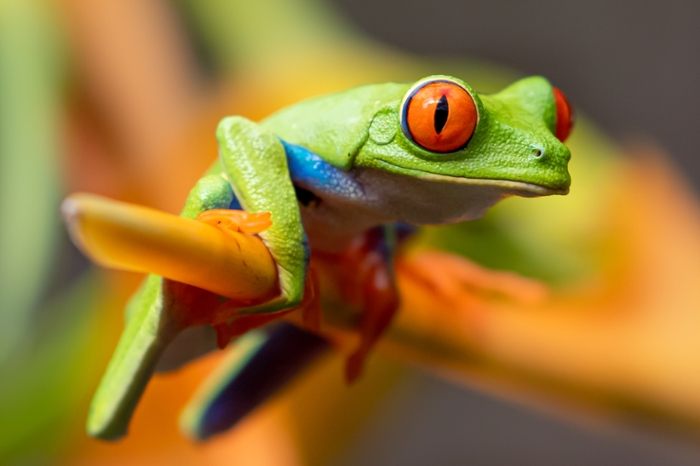
Vertebrate
Invertebrate
What animals here are vertabrates?
Fish
Worm
Crab
Starfish
Dog

