
 Worksheets
#3-4: Atoms, Elements, Molecules & Periodic Table of Elements
Total questions: 50
Worksheet time: 36mins


A nucleus of an atom contains what two parts?
Electrons and Protons
Neutrons and Electrons
Protons and Neutrons
How many neutrons does Chlorine (Cl) with an atomic number of 17 and an atomic mass of 35.
17
18
19

Which statement correctly describes the location and charge of the electrons in an atom?
The electrons are inside the nucleus and have a negative charge
The electrons are inside the nucleus and have no charge
The electrons are outside the nucleus and have a negative charge
The electrons are outside the nucleus and have no charge
How do you calculate the number of neutrons?
Mass number- atomic number
mass number/atomic number
mass number + atomic number
mass number x atomic number
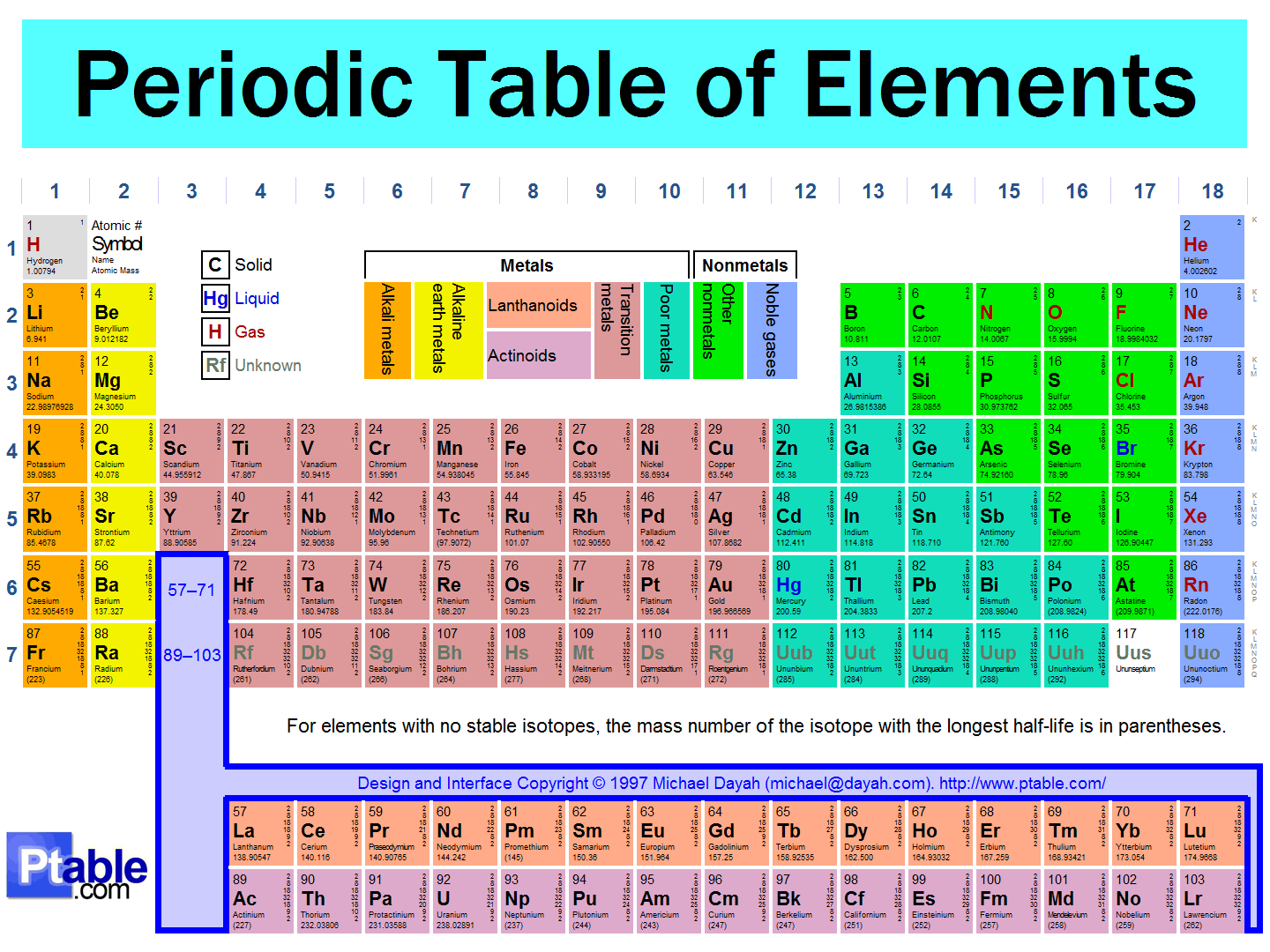
The horizontal rows on the periodic table are called
groups
families
periods
atomic numbers
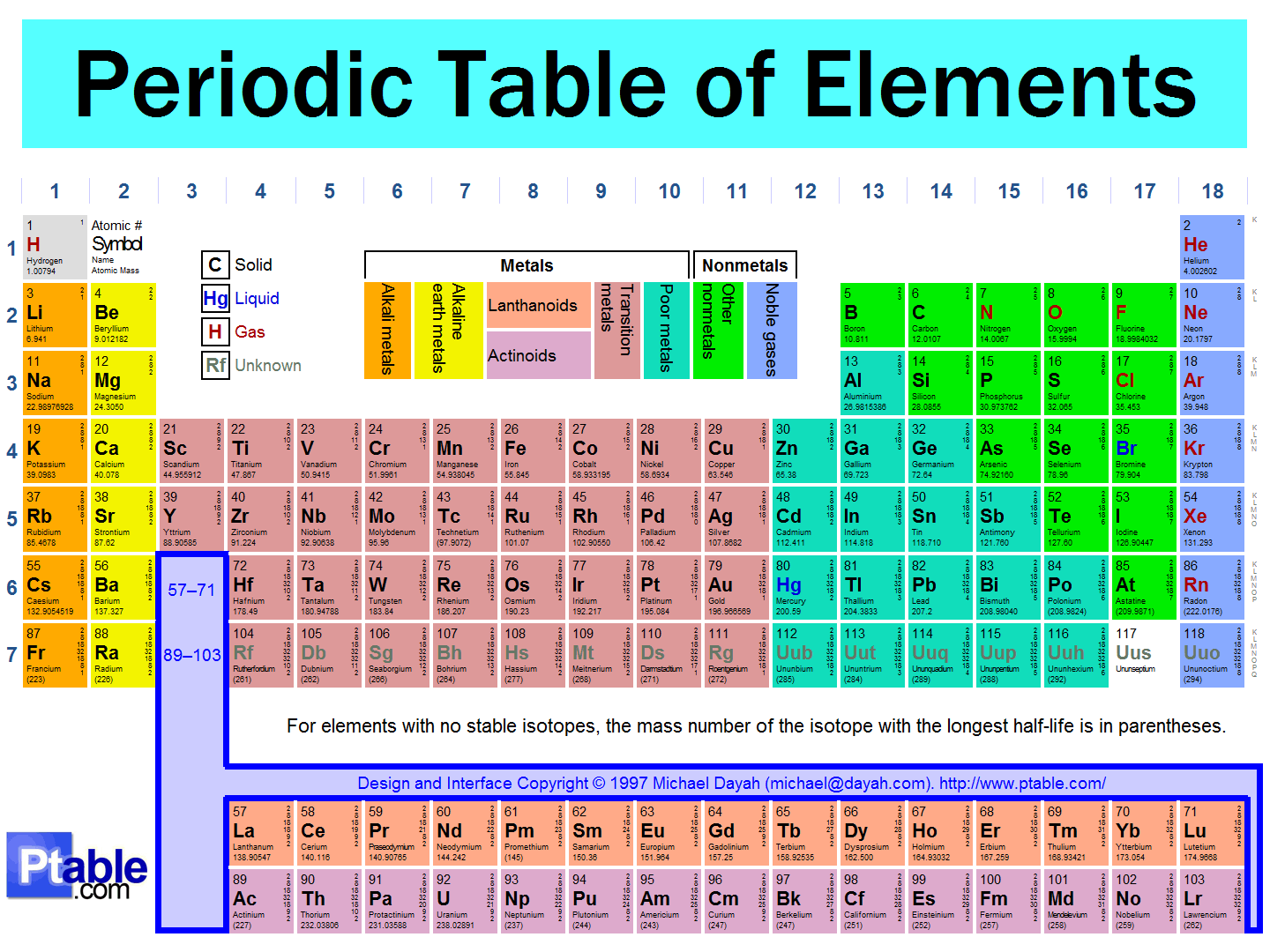
Each vertical column on the periodic table is called a...
group
tower
period
crew
Periodic Table organizes elements by __.
atomic mass
atomic number
number of neutrons
size of atom
C, Fe, He, and Na are the elements' __.
abbreviations
formulas
symbols
short cuts
What is the electrical charge of the electron?
positive
negative
neutral
What does the Atomic Number tell us about an element's atom? (Check ALL that are correct.)
how many protons
how many electrons
how many neutrons
how many protons and neutrons in nucleus

Which particle has a positive charge?
neutron
electron
proton
megatron
The elements are in order by ____________ atomic number.
increasing
decreasing
Which is true about Groups on the periodic table? Check all that apply
Also called families.
Are the vertical columns (up & down) on the table
Have the same number of electrons in outer energy level
Are in alphabetic order
Metals can be described with the following. (check all that apply)
hard and solid
shiny or lustrous
good conductors
give away electrons
a gas
Non-metals can be described with the following. (check all that apply)
Can be a liquid
Can be a gas
Take electrons from other atoms
Are good insulators
Are very shiny
The electrons in the outermost shell (main energy level) of an atom; these are the electrons involved in forming bonds
alkali metals (group 1)
Halogens (Group 17)
atomic number
valence electrons
Which is the best description of an element?
A substance that cannot be broken down into simpler substances
A collection of atoms that have different abilities when joined together
A man-made mineral
A mixture of substances

Elements in the same group or family have the same number of
neutrons
valence electrons
electrons
energy levels

"Na" is the element's
Chemical Formula
Compound
Name
Chemical Symbol


What is a mixture?
A substance that is made up of one type of atom and can't be reduced to simpler substances.
A substance made of two or more different atoms chemically bonded to one another. They can only be destroyed by chemical processes.
A material containing two or more elements or compounds that are in close contact and are mixed in any proportion. They can be separated by physical means.
Which statement is true about compounds?
a pure substance where two or more elements are chemically combined
a homogenous mixture of 2 or more elements
a pure substance containing only one type of atom
a heterogeneous mixture of 2 or more elements chemically combined
What type of matter has an non-uniform existence?
pure substance
homogeneous mixture
heterogenous mixture
All the above
A pure substance that cannot be broken down into any other substance.
Elements
Compounds
Mixtures

Chex mix is a
Mixture
Compound
Element
the basic structural unit of matter
atom
matter
element
nucleus
a subatomic particle, contained in the nucleus of an atom, having the same mass as a proton but no electrical charge
proton
neutron
electron
matter
a unique number for each element that equals the number of protons in an atom of that element
element name
element symbol
atomic number
atomic mass
what is the biggest group on the table
metals
nonmetals
metaloids
halogens
an arrangement of the elements according to their atomic numbers so that elements with similar properties are in the same column and properties repeat from row to row
Periodic Table of Elements
Atomic Theory
Isotopes
Subatomic Particles

